



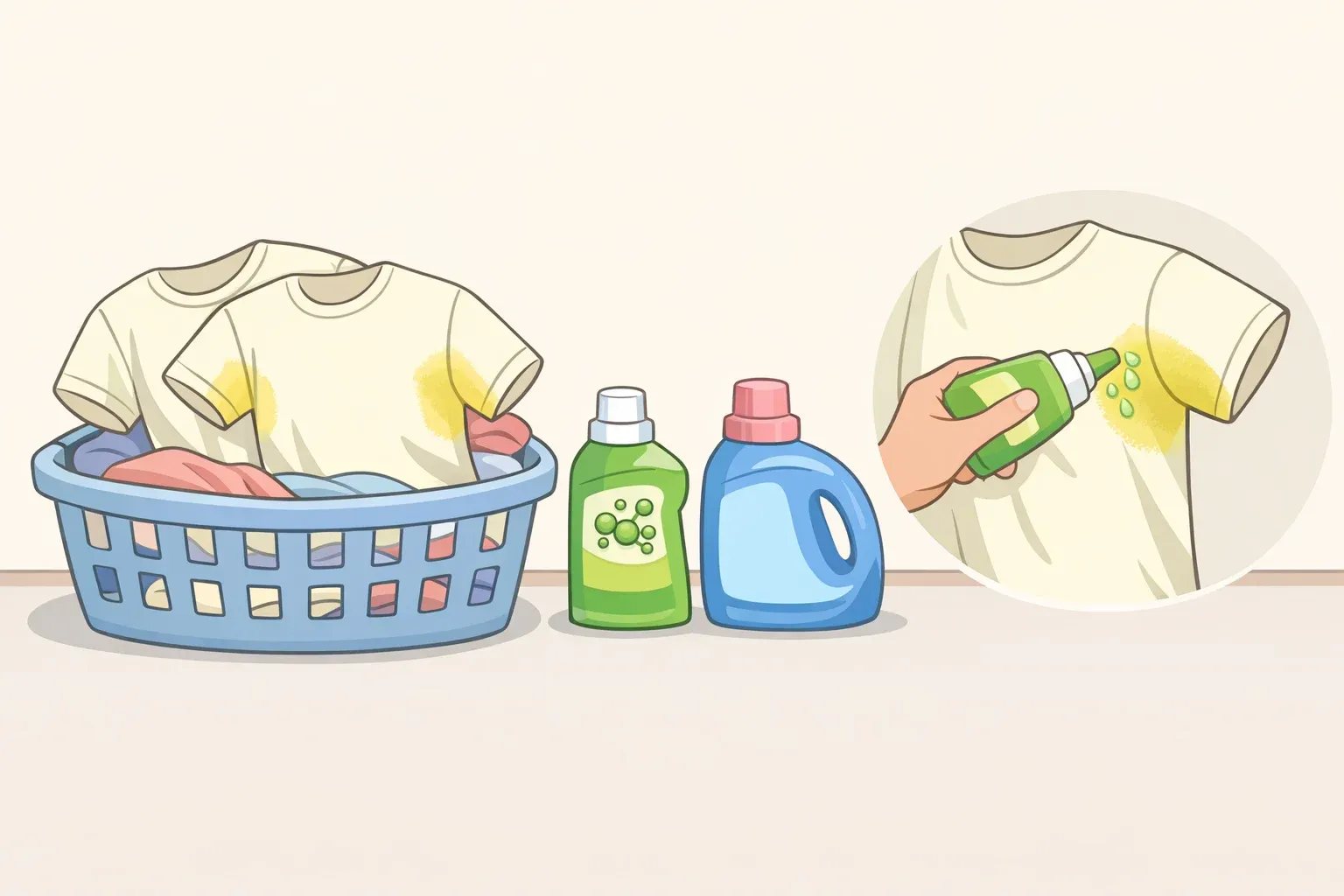
Yellow underarm marks are one of laundry's more stubborn problems, and the fix starts with matching the treatment to the stain. For most washable shirts, the best detergent for sweat stains is a liquid enzyme detergent that can break down the body oils, proteins, and deodorant residue left behind in fabric. For older yellowing that has survived multiple washes, pair that detergent with a fabric-safe oxygen booster.
The stains themselves are not caused by sweat alone. Sweat is mostly colorless. Yellowing usually forms when body oils, skin proteins, and deodorant or antiperspirant residue build up in fabric. Aluminum-based antiperspirants can make the problem more noticeable because they leave residue that bonds with sweat and body soils over time.
Before you start, check the care label. Dry-clean-only garments should go to a professional. For everything else, test vinegar, oxygen bleach, chlorine bleach, or any stain remover on a hidden seam first. Avoid oxygen bleach on silk, wool, leather, or garments with delicate trim unless the product label specifically says it is safe.
Best products by stain type
Best overall: Enzyme-based liquid detergent for most washable cotton, polyester, and blended fabrics, especially fresh or light stains
Best for older yellowing: Enzyme detergent plus a fabric-safe oxygen booster
Best for whites with stubborn marks: Enzyme detergent plus oxygen booster; chlorine bleach only if the garment is bleach-safe
Best for colored shirts: Enzyme detergent plus a color-safe oxygen booster; no chlorine bleach
Best for activewear odor: A sports detergent made for synthetic fibers, which can hold odor-causing residue more stubbornly than cotton
Among widely available detergents, Tide Original Liquid is a reasonable pick if you want a mainstream enzyme detergent. But the more important buying cue is the formula: look for a liquid detergent that lists enzymes, stain-fighting enzymes, or similar language and can be used at the water temperature allowed by the care label.
What to look for in a sweat-stain detergent
The key factor is not fragrance, concentration, or brand. It is whether the formula contains enzymes.
Enzymes help break down the compounds left behind after sweat dries, so those soils can rinse away instead of accumulating cycle after cycle. Protease enzymes target protein-based soils, while other enzymes can help with starches, oils, and mixed residue that cling to fabric.
The situation determines what to reach for:
Fresh stain, any washable fabric color: Enzyme-based liquid detergent with direct pretreatment
Set-in stain, white fabric: Enzyme pretreatment plus an oxygen booster soak
Set-in stain, colored fabric: Enzyme pretreatment plus a color-safe oxygen booster
Activewear with persistent odor: Sports-specific enzyme detergent formulated for synthetic fibers
Three rules before you wash
These apply no matter what product you use or how old the stain is.
Pretreat before using heat. Hot water can help with some oily residue, but it can also make protein-based stains harder to remove if the stain has not been loosened first. If you are unsure, start cooler during pretreatment, then wash at the warmest temperature allowed by the care label and product directions.
Measure the detergent. Too little leaves soil behind; too much can create excess suds that trap dirt in fabric instead of rinsing away. Follow the amount listed on the bottle.
Air-dry before using the dryer. Dryer heat can set remaining stains into fabric. After washing, check the underarm area before tumble-drying. If discoloration remains, repeat the treatment first.
For fresh stains: Pretreat with enzyme detergent
For newer stains, pretreatment does most of the work.
Step 1: Apply enzyme detergent directly to the stain.
Work a small amount of liquid enzyme detergent, or an enzyme-based stain remover, into the stained area using your fingers or a soft brush. Apply it full-strength, not diluted.
Step 2: Let it sit for at least 15 minutes.
Laundry experts at the Good Housekeeping Institute recommend rubbing liquid enzyme detergent into sweat stains and letting it sit before washing. If the product directions specify a longer wait time, follow the label.
Step 3: Wash at the warmest safe temperature.
Use the warmest temperature the care label and detergent directions allow. If the shirt is delicate, dark, synthetic, or prone to shrinking, cooler water may be the safer choice. Real Simple's laundry guidance notes that protein-based stains such as sweat are often better started in cold water so heat does not bind them more deeply into fabric.
Step 4: Air-dry and inspect.
If discoloration remains, repeat the pretreat-and-wash steps. Do not run the garment through the dryer until the mark is gone or as faded as it is likely to get.
For synthetic performance fabrics, use a sports-specific enzyme detergent if odor lingers. Standard formulas may remove visible soil but leave behind some odor-causing residue because synthetic fibers can hold buildup more stubbornly than cotton.
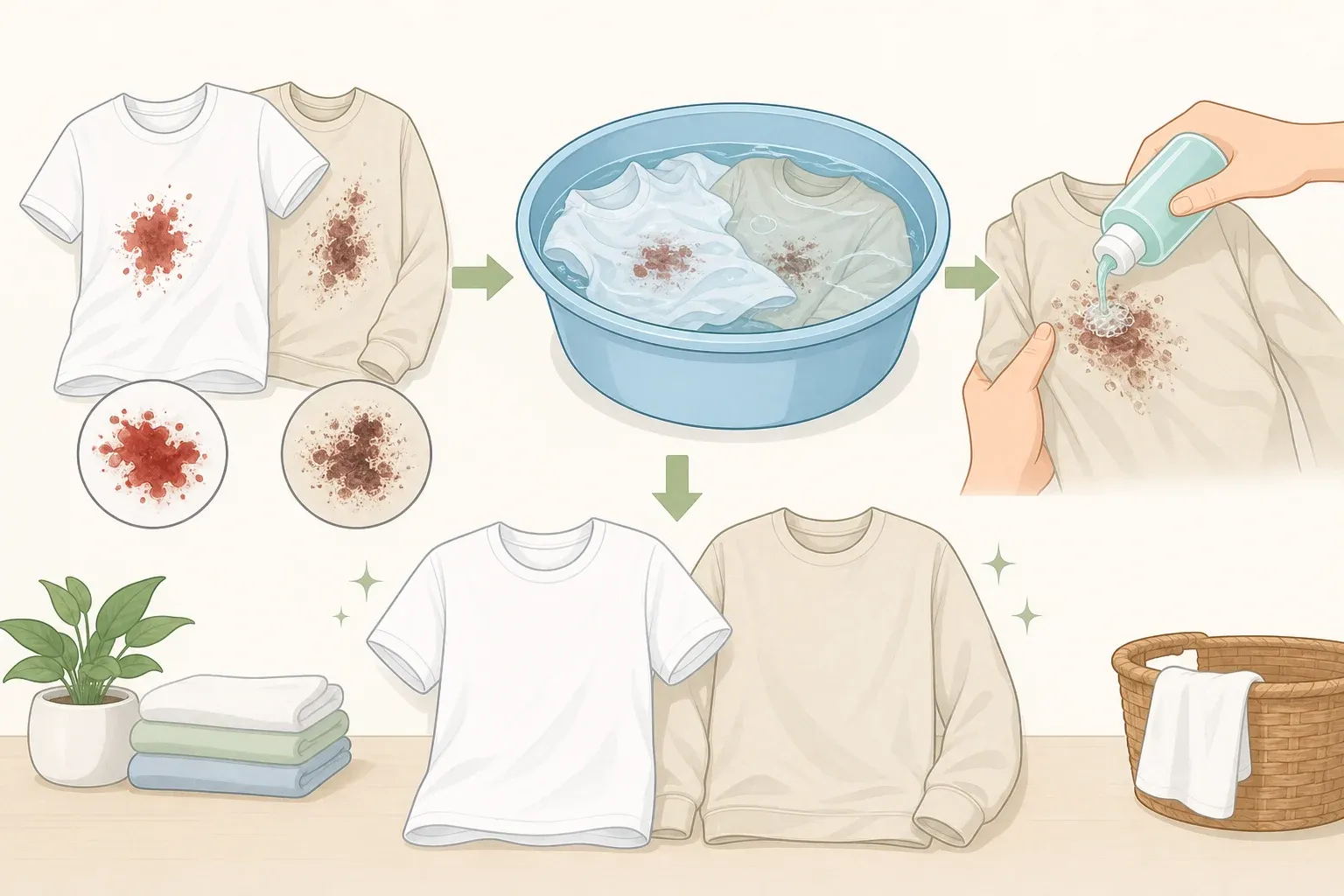
For set-in yellow stains: Soak with oxygen booster
Older yellow stains usually need more than enzyme detergent alone. After pretreating, add a fabric-safe oxygen booster soak to help loosen discoloration that has built up through repeated wear, washing, or dryer heat.
Step 1: Pretreat with enzyme detergent.
Follow the same method used for fresh stains. Do not skip this step, even for set-in stains; it helps loosen surface buildup before soaking begins.
Step 2: Soak for 30 to 60 minutes.
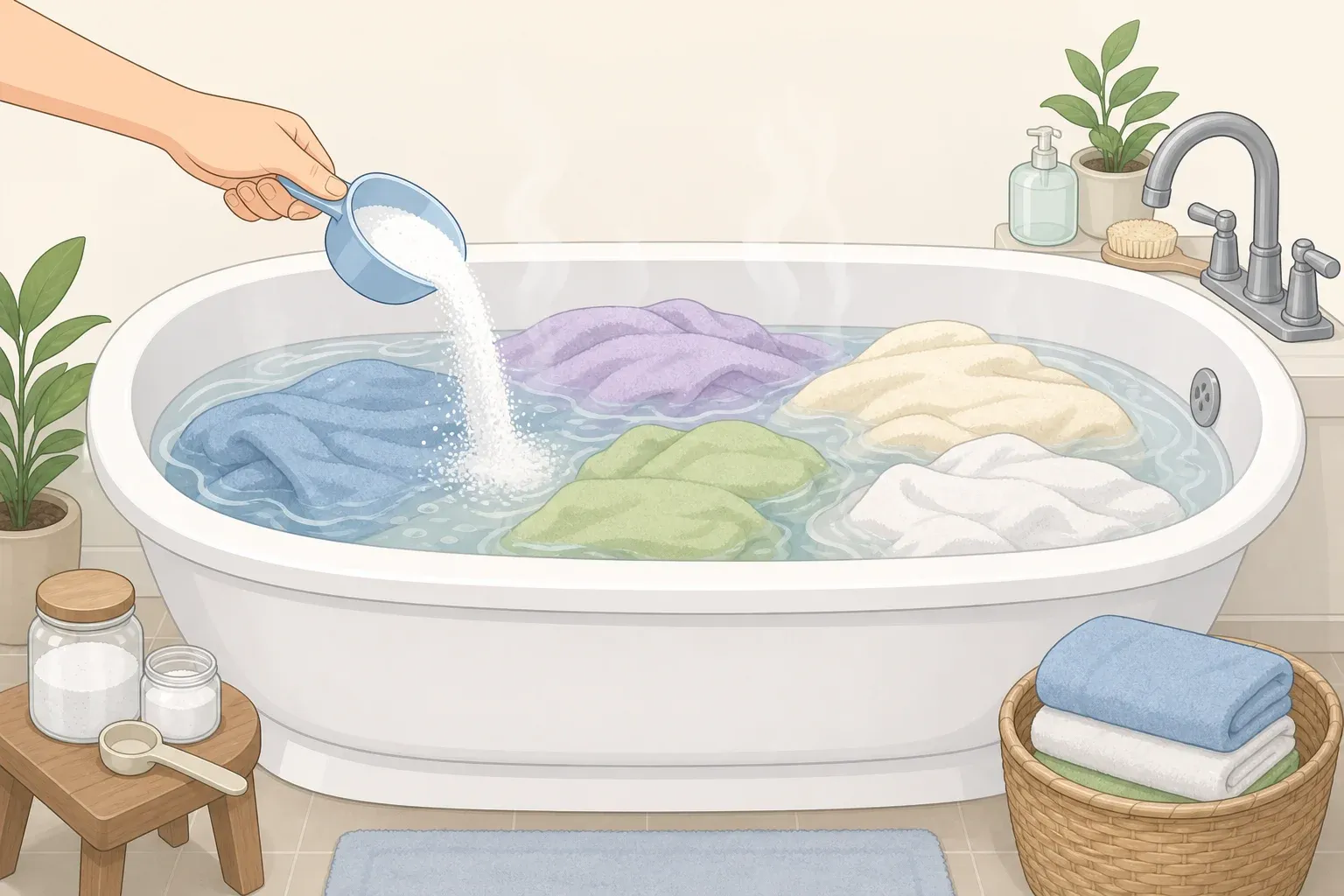
Submerge the garment in a basin of warm water with two to three tablespoons of liquid enzyme detergent. For washable white fabrics, add an oxygen-based powder such as OxiClean if the product label and care label allow it. For colored fabrics, use only a color-safe oxygen booster.
Oxygen boosters generally work better with enough soak time and, when the garment label allows it, warm water. Better Homes & Gardens notes that oxygen bleach works more slowly than chlorine bleach and is often useful as a soaking agent for dingy, yellowed, or deeply stained fabrics.
Step 3: Wash and inspect.
Run a full cycle at the warmest safe temperature. Air-dry and check the underarm area before using the dryer. If yellowing persists, repeat the soak rather than layering multiple products without rinsing between applications; that combination can damage fabric, particularly fine knits.
When to use bleach
Color-safe oxygen bleach can usually be used as a laundry booster when the garment and product labels allow it. It is not the same as chlorine bleach.
Use chlorine bleach only on bleach-safe whites and only according to the bleach label and washer instructions. Better Homes & Gardens explains that a bleach-safe garment is one that can tolerate chlorine bleach without fabric damage or color loss, and the care label is the best place to check.
Never combine chlorine bleach with vinegar, ammonia, or other stain treatments. Real Simple warns that bleach and vinegar can create dangerous chlorine gas.
When vinegar helps
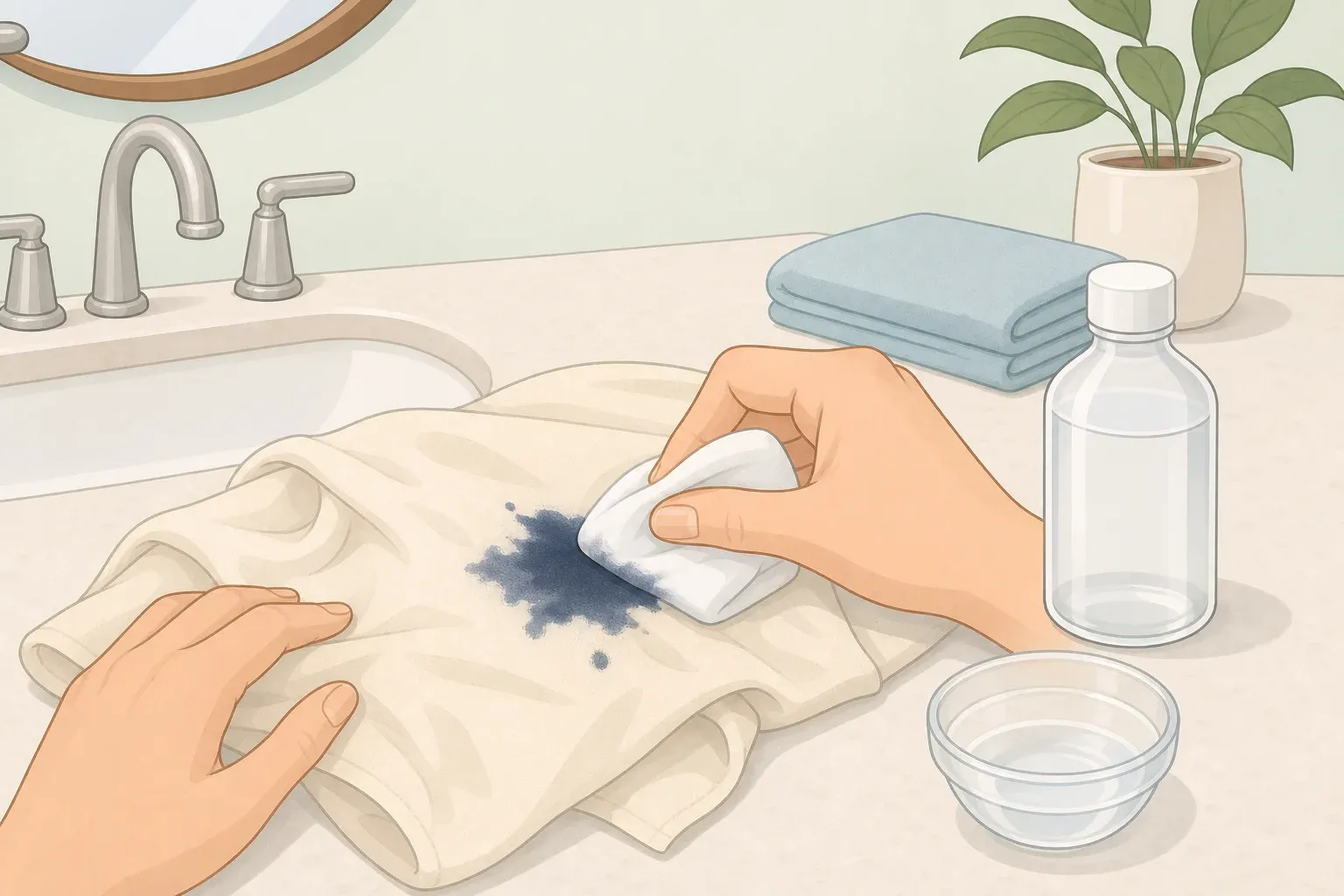
If the care label allows it, sponge white vinegar onto the underarm area as a first step before enzyme pretreatment. This can help loosen deodorant or antiperspirant residue on the fabric surface.
Rinse the area before moving to another product, and never combine vinegar with chlorine bleach. Treat vinegar as a helper for residue, not a standalone fix for set-in yellowing.
How to prevent yellow underarm stains
Most yellow underarm stains are easier to prevent than remove. Body oils and perspiration residue that are not yet visible can still turn fabric yellow or gray over time if they stay in the fibers.
Use these habits consistently:
Pretreat the underarm area with enzyme detergent before washing, even when no stain is visible.
Wash white and light-colored shirts after one to two wears, not only when they look dirty.
Let antiperspirant dry before putting on a shirt.
Measure detergent instead of estimating the amount.
Inspect the underarm area before using the dryer.
The difference between a shirt that improves and one that stays yellow usually comes down to the stain's age and the treatment sequence. Fresh marks need enzyme pretreatment and a safe wash cycle. Set-in marks usually need enzyme pretreatment plus an oxygen booster soak. Get the sequence right, and many washable garments improve; older stains that have already gone through repeated dryer cycles may not disappear completely.










Comments
Be the first, drop a comment!