



How to Clean a Leather Jacket Before Storing: A Complete Guide
Put a leather jacket away dirty and it works against you all summer. Grime and body oil sit in the hide for months, humidity encourages mold, and the natural oils that keep leather supple slowly migrate out. Knowing how to clean a leather jacket before storing it is the difference between pulling out something soft and wearable in October and discovering a stiff, faded shell.
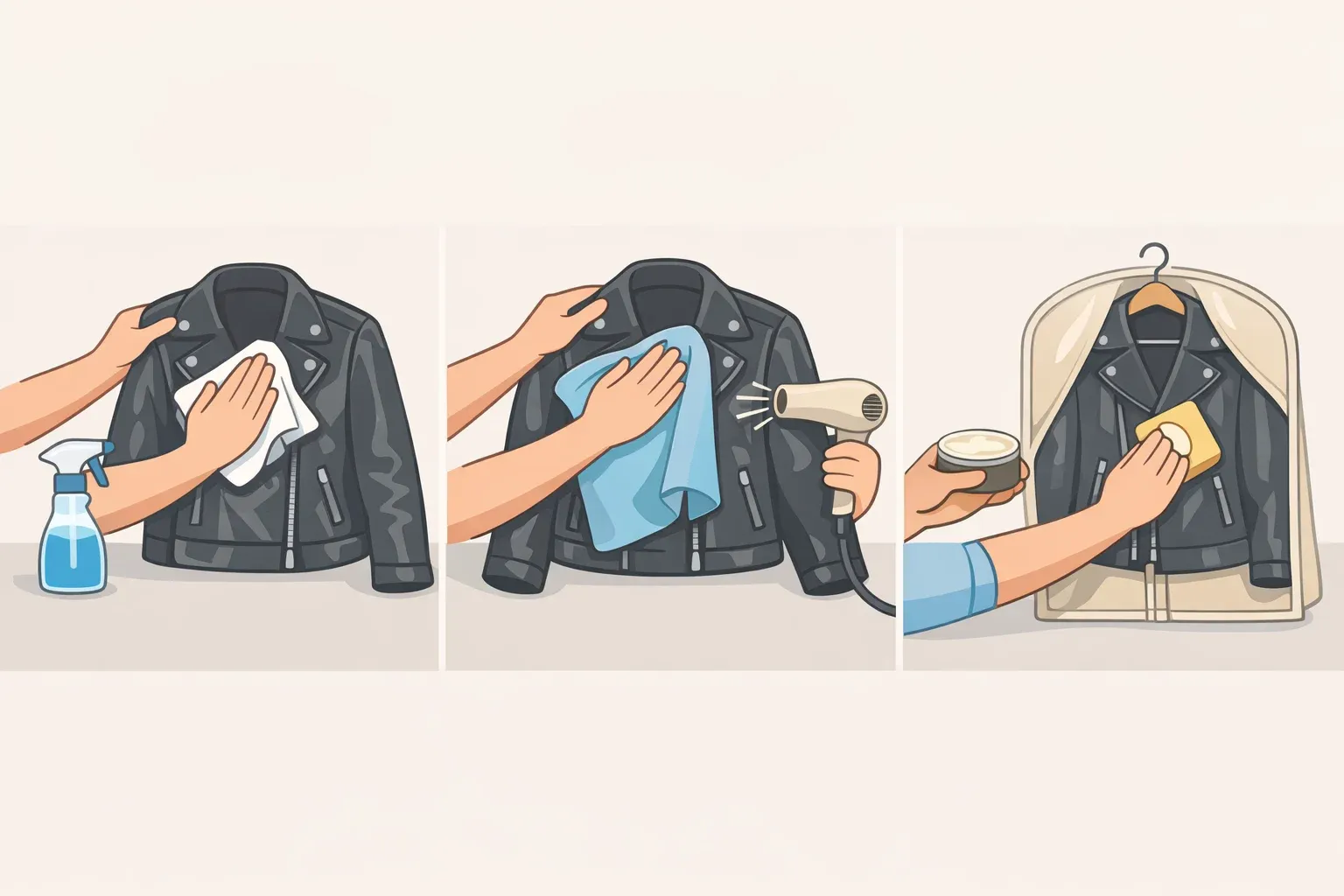
This guide covers the complete pre-storage sequence: surface cleaning at home, correct drying, conditioning, and setup for long-term storage.
First, triage the jacket:
- Safe to handle at home if the jacket needs general surface cleaning, has minor grime, and shows no color change on a test patch
- Take it to a professional leather cleaner if the lining needs attention, there's significant discoloration or deep-set staining, color bleeds during a test patch, or visible mold has developed
What you'll need: A soft cloth or clean sponge, a leather-specific cleaner (one drop of mild dish soap in warm water works as a fallback), a leather conditioner, a wide or padded hanger, and a breathable cotton garment bag. No washing machine explained below.
Why the cleaning method matters: moisture is the enemy
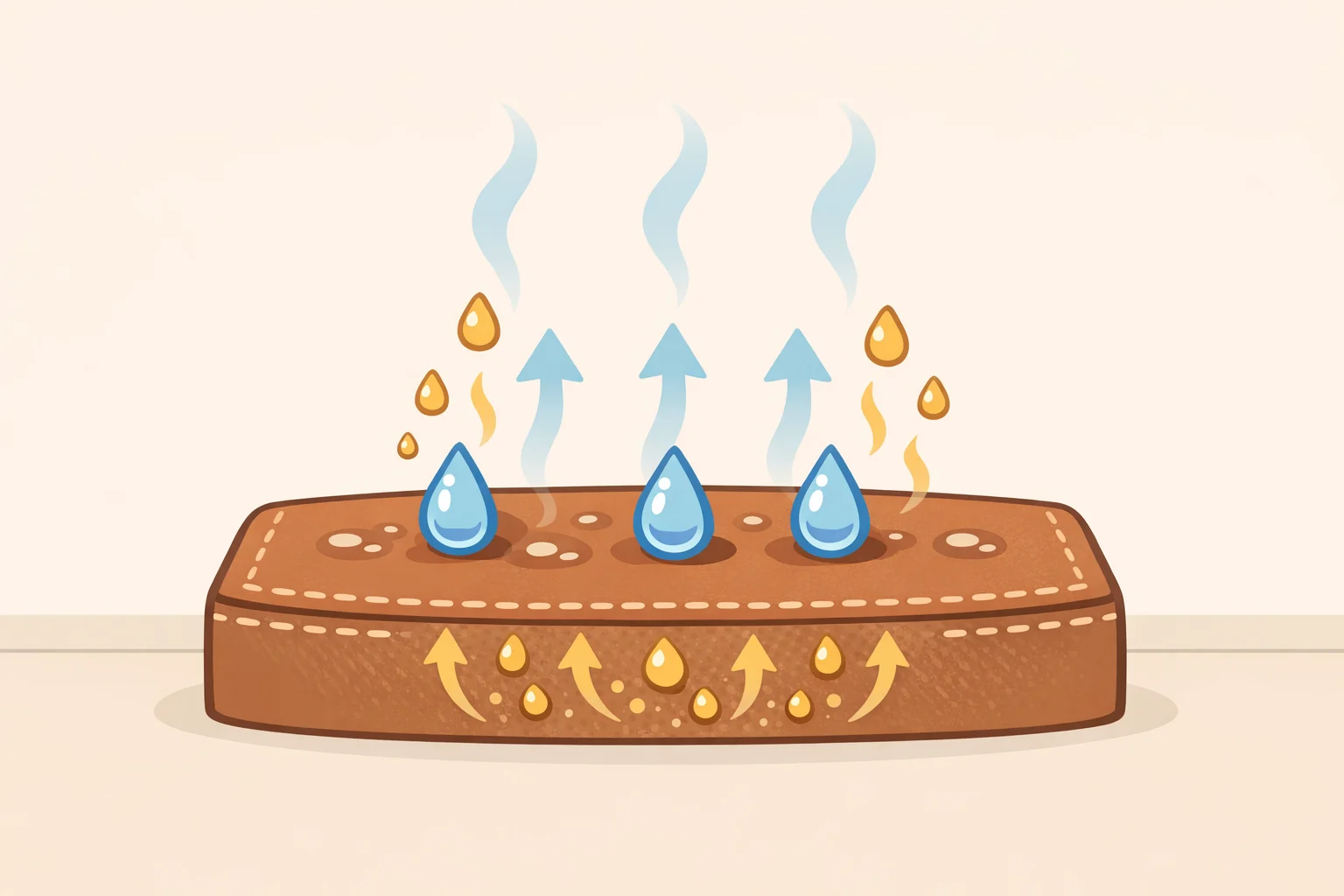
Leather and excess water are a bad combination, and the reason is worth understanding before you touch the jacket.
Water molecules bond to the natural oils in leather and draw them out as the material dries, which means the jacket can become discolored or cracked in the process, according to Good Housekeeping. The drying itself is the mechanism of damage. "One of the biggest mistakes people make when cleaning leather clothing is getting it too wet, then rubbing the material too hard," says Carolyn Forté, former executive director of the Good Housekeeping Home Care & Cleaning Lab.
Can you wash a leather jacket in a washing machine? No. Full submersion strips natural oils, laundry detergent compounds the damage, and the agitation can permanently distort the jacket's structure, per Good Housekeeping and Tannery Talk. It will cause the jacket to crack, shrink, and lose its shape, per Avanzar Leather.
Common household cleaners carry a different risk. Products like baking soda (around pH 9), saddle soap (around pH 10), and vinegar (around pH 3) all sit well outside leather's natural pH range of roughly 4.5 to 5, and using them can damage leather over time, according to Car Finest. Use something formulated for leather, not repurposed from the kitchen.
One more hard boundary: if the lining needs cleaning, that's a professional job. "Professional cleaners specializing in leather know how to clean both the leather shell and fabric linings without damaging either," per Good Housekeeping.
Step-by-step: clean, condition, and store a leather jacket for summer
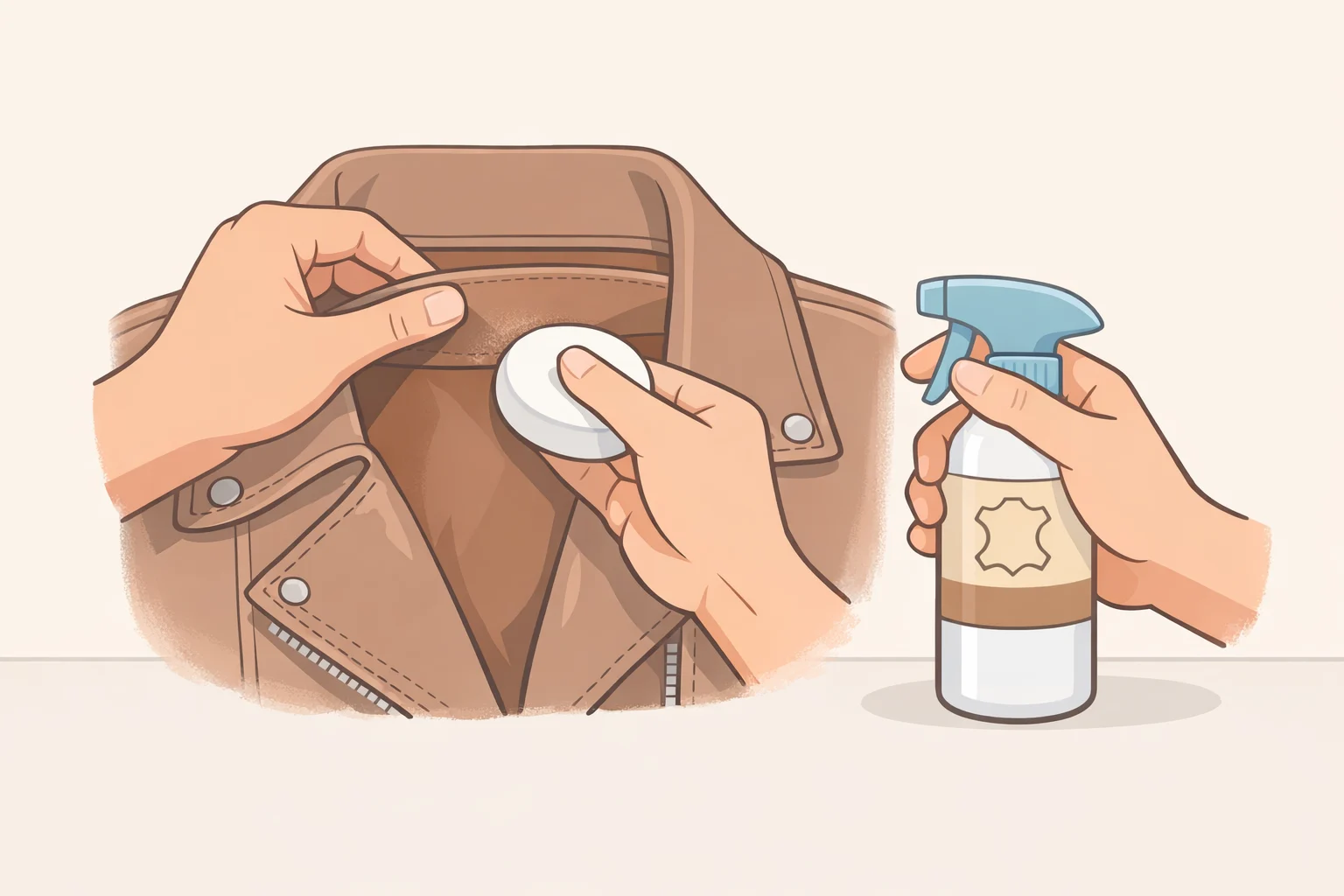
Before step 1: patch test. Apply a small amount of cleaner to a hidden spot the inside hem or the underside of the collar works well. Let it dry completely. If the color bleeds or fades, stop and take the jacket to a specialist. No change? Proceed (Tannery Talk, Good Housekeeping).
Step 1: Prep the jacket. Zip all zippers and fasten any snaps or buttons. This prevents hardware from scratching the leather during cleaning and helps the jacket hold its shape. Do a quick visual scan for obvious staining collar, cuffs, and underarms accumulate the most body oil and will need extra attention (Tannery Talk, Avanzar Leather).
Step 2: Load the cloth, not the jacket. Apply your leather cleaner to a soft cloth or sponge and work it until it produces a light foam. You're cleaning with foam, which lifts surface dirt without saturating the leather. No dedicated cleaner? Mix one drop of mild dish soap into a bowl of warm water and use only the barely damp corner of a cloth (Good Housekeeping).
Never apply cleaner directly to the jacket. Concentrated product sitting on leather before you spread it can cause localized discoloration.
Step 3: Clean in sections, no scrubbing. Work across the jacket in small areas using light, circular pressure. Wipe away residue with a separate clean cloth after each section. If a spot isn't responding to gentle wiping, leave it that's the limit of what routine home cleaning can address safely. Spend extra time on the collar, cuffs, and underarms (Avanzar Leather).
Step 4: Air dry on a padded hanger. Hang the jacket on a wide or padded hanger in a well-ventilated room, away from sunlight, radiators, or any heat source. The Leather Guy recommends hanging a jacket on a padded hanger to prevent creases and wrinkles while drying; Good Housekeeping advises the same. Allow a full day Tannery Talk recommends conditioning only after a full 24-hour air dry. Heat is the other major risk: it causes leather to crack and shrink faster than most people expect (Avanzar Leather).
The jacket should be completely dry before you condition. Conditioning over residual dampness traps moisture inside the leather.
Step 5: Condition the entire jacket. Apply a leather conditioner to a soft cloth and work it into the leather using circular motions, covering the full surface. Pay extra attention to the collar, cuffs, and underarms the areas that flex most and tend to stiffen first. Let the conditioner absorb for at least an hour. If any patches still feel stiff or dry the following morning, apply another light coat to those spots only (Good Housekeeping, Tannery Talk).
This step is what determines what the jacket feels like when you pull it out again. Cleaning removes surface grime but also strips some of the leather's oils. Conditioning replaces them before you seal the jacket away for months. Avanzar Leather describes conditioning as arguably the single most important step in leather care; Tannery Talk says it's not optional if you want to prevent the leather from drying out, cracking, or stiffening.
For product selection: look for conditioners free from silicone, petroleum, and heavy waxes, which can clog leather's pores over time. Widely available options include Leather Honey, Bickmore Bick 4, and Chamberlain's Leather Milk (Avanzar Leather).
Step 6: Apply a leather protector spray (optional). Once the conditioner has fully absorbed, a light application of a water repellent spray gives the jacket some protection against moisture and staining when it comes back out in fall. Test on a hidden spot first some formulations affect color on lighter leathers (Good Housekeeping).
How to store a leather jacket for summer
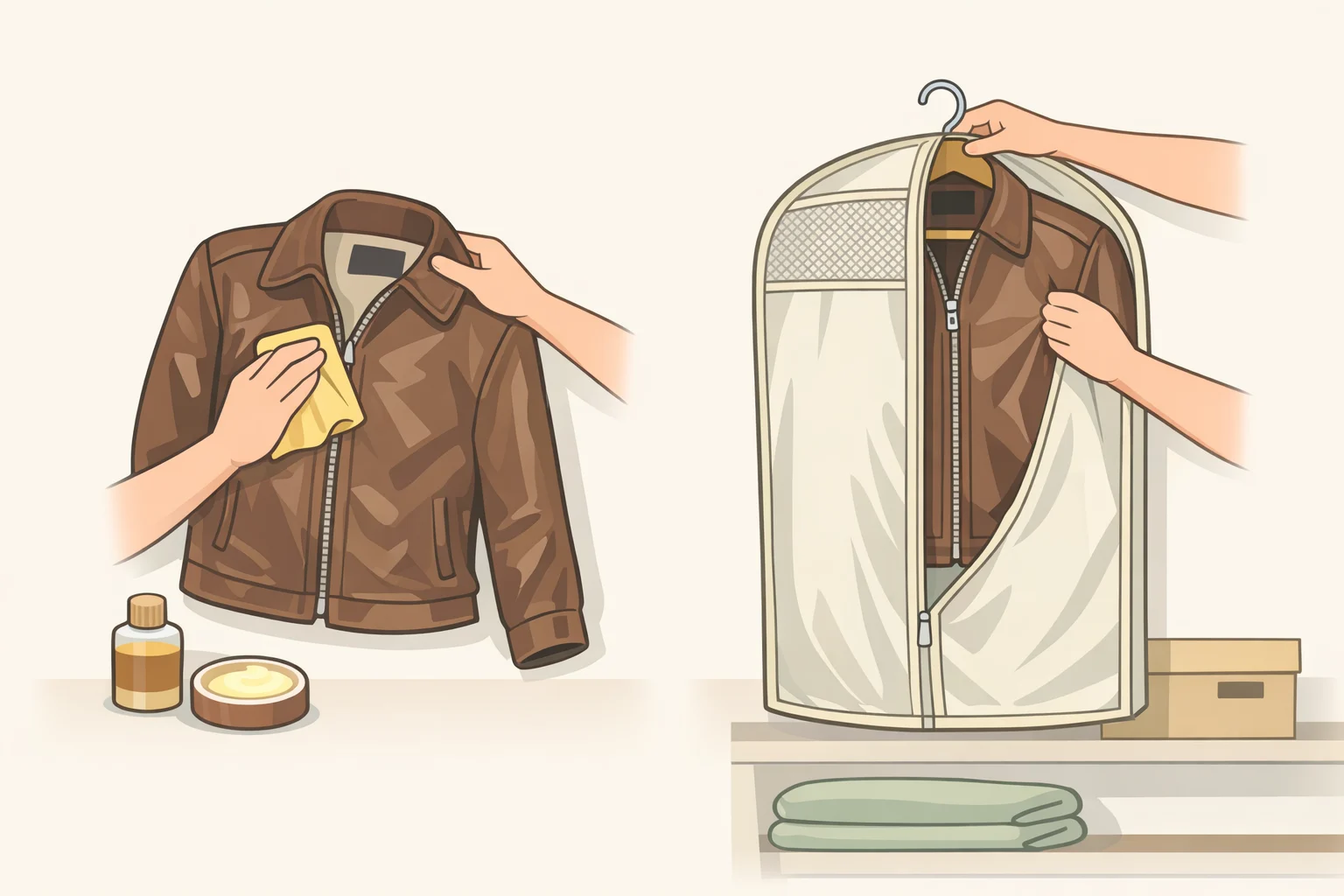
The jacket is clean, dry, and conditioned. How you store it over the next few months determines whether that work holds.
- Hanger: Use a wide or padded hanger. A wire hanger concentrates pressure on a single point at the shoulder for months enough to permanently distort the leather's shape (Avanzar Leather, Goodwill Middle TN).
- Garment bag: Use a breathable cotton or canvas bag, never plastic. Plastic traps moisture, and a jacket sealed in plastic over a warm, humid summer is an ideal environment for mold and mildew (Avanzar Leather, Goodwill Middle TN).
- Location: A bedroom closet is generally fine. Avoid basements and attics, where temperature and humidity fluctuate significantly across summer months (Avanzar Leather).
- Sleeve shape: Stuff the sleeves loosely with acid-free tissue paper to prevent the leather from creasing under its own weight over months (Avanzar Leather).
- Periodic checks: Look in on the jacket every few weeks. If it feels dry to the touch, apply a light coat of conditioner before putting it back. Leather can continue to lose moisture slowly in storage, particularly in drier climates (Avanzar Leather, Goodwill Middle TN).
Worth stating clearly: this process doesn't fix a jacket that was already struggling. Persistent odors, deep stains, and dirty linings will all be waiting in fall exactly as they were left. This is routine seasonal maintenance it keeps a well-maintained jacket in good condition. If yours needs more than that, a specialist in professional leather jacket cleaning is the right call before storage, not after.
What to expect in October
Unzip that garment bag a few months from now and the jacket should feel close to the one you put away: supple where it needs to flex, color intact, shoulders holding their shape.
When you bring it out, reapply the water repellent spray. The protection applied before storage will have partially diminished over months, and Good Housekeeping recommends reapplying after any cleaning. Fall weather is exactly when that layer earns its keep.
With consistent seasonal care, a quality leather jacket can last 20 to 30 years or more, according to Avanzar Leather. What you notice when you pull it out leather that still moves the way it's supposed to, that hasn't gone stiff or chalky at the seams is what good maintenance actually looks like. Not dramatic. Just a jacket that's still worth wearing.




Comments
Be the first, drop a comment!