



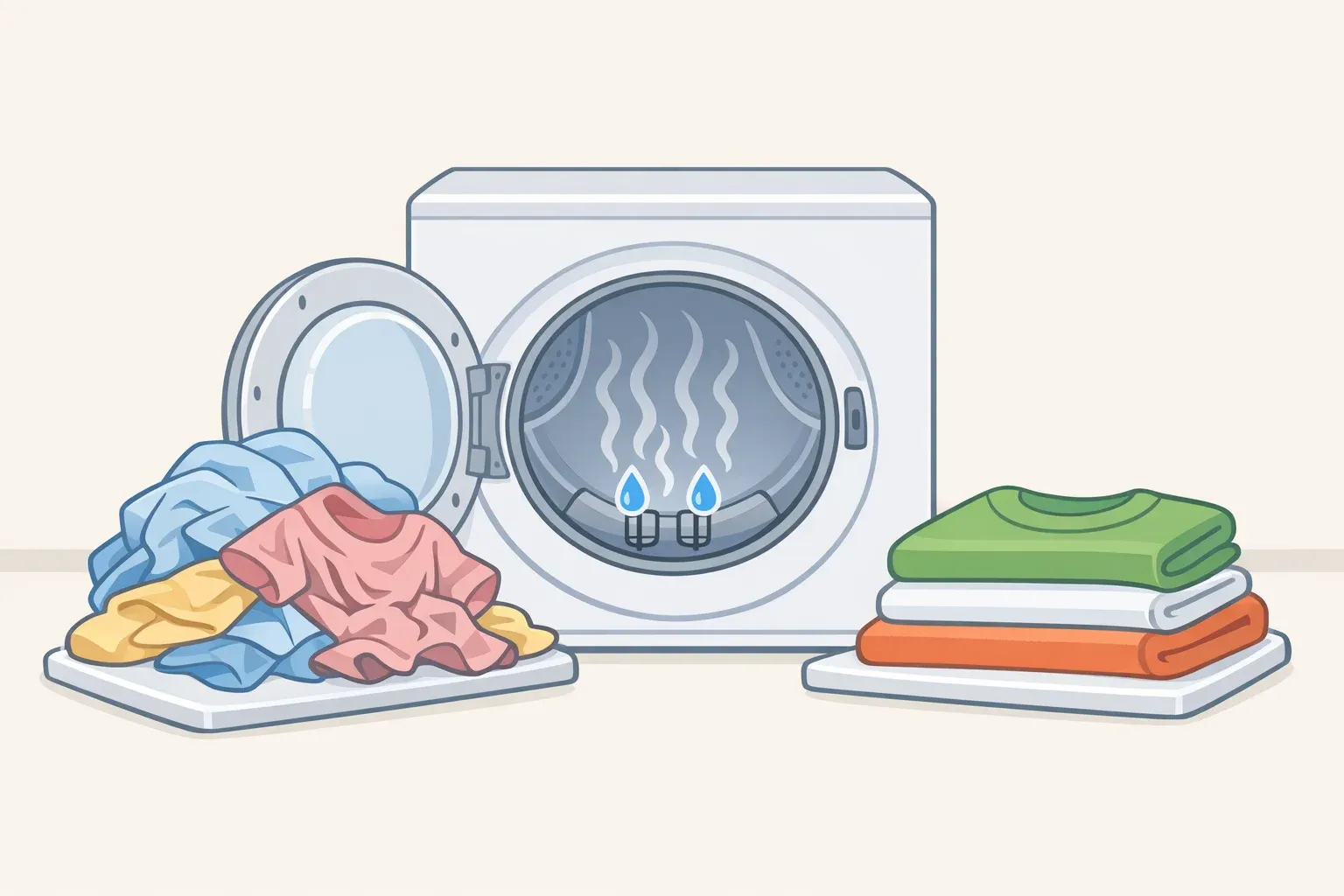
Best Dryer Setting for Wrinkle-Free Clothes Explained
Pull clothes from the dryer and find them creased, and the instinct is usually to blame the machine or resign yourself to ironing. The likelier culprit is simpler: timed dry, the default setting on most dryers, has no way of knowing when clothes are actually done. It runs to the clock, not to the fabric.
Carolyn Forté, executive director of the Good Housekeeping Home Care & Cleaning Lab, is direct about it: timed dry cannot sense moisture, so clothes can end up still damp, wrinkled from under-drying, or damaged from over-drying. All three outcomes happen because the machine keeps running regardless of what the fabric needs, as Good Housekeeping reported in March 2026.
The simplest fix is to switch to an automatic cycle. Auto cycles use moisture sensors to cut off heat at the right moment, preventing the over-drying that bakes creases into fabric. When uncertain which auto cycle to choose, Forté's default recommendation is the Delicate cycle: low heat, shorter run, available on most machines.
This guide covers the dryer setting to prevent wrinkles, starting with the auto dry vs timed dry decision, followed by a decision aid for matching cycles to common fabric types, guidance on how to keep clothes from wrinkling in the dryer when your machine uses different label names, and two post-cycle habits that determine whether the right setting actually works.
Step 1: Check the care label before selecting any cycle
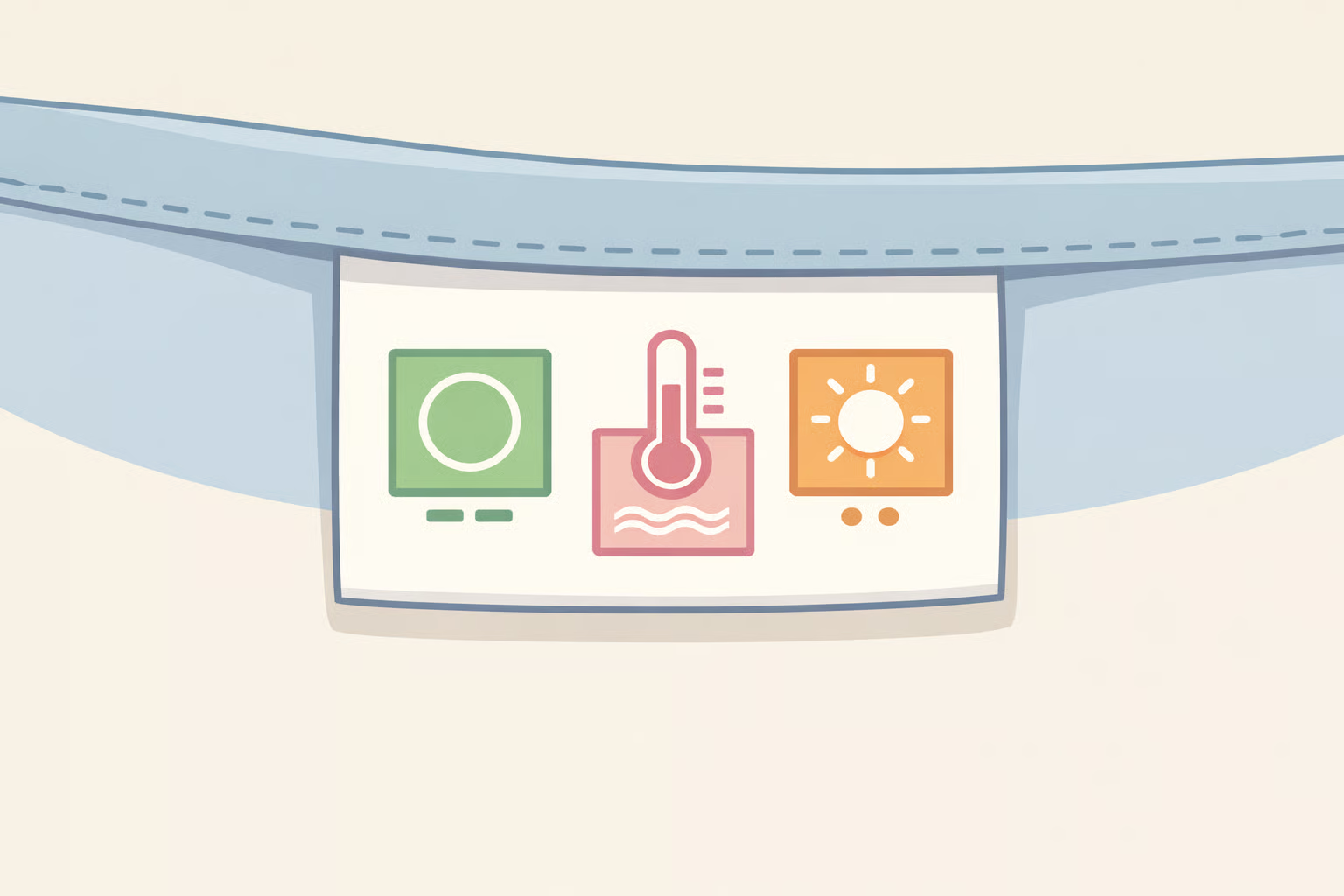
Before touching the dial, look at the garment's care label. Manufacturers test their products and encode the results there. Forté is specific: check the label first for the recommended cycle and temperature, because there is no single wrinkle-free setting that works equally for every fabric, Good Housekeeping reported in March 2026.
Fabric reacts differently to heat and tumbling. Research published in the Journal of Textile Engineering & Fashion Technology in July 2025 found that cotton fabrics showed lower smoothness scores than polyester after household drying, and that smoothness varied with dryer rotation speed. The same cycle does not produce the same result across different materials, the study found.
If the label is missing or unreadable, default to the lowest heat setting available. Too little heat is recoverable; over-drying is not.
Load sorting: Mixing heavy and lightweight items in one load causes uneven drying. The heavier pieces take longer, which means everything else runs hot for longer than necessary. Sort by fabric weight, and keep loads to roughly three-quarters of drum capacity so air can circulate properly, Knowing Fabric advises.
Step 2: Best dryer setting for wrinkle-free clothes auto dry vs timed dry
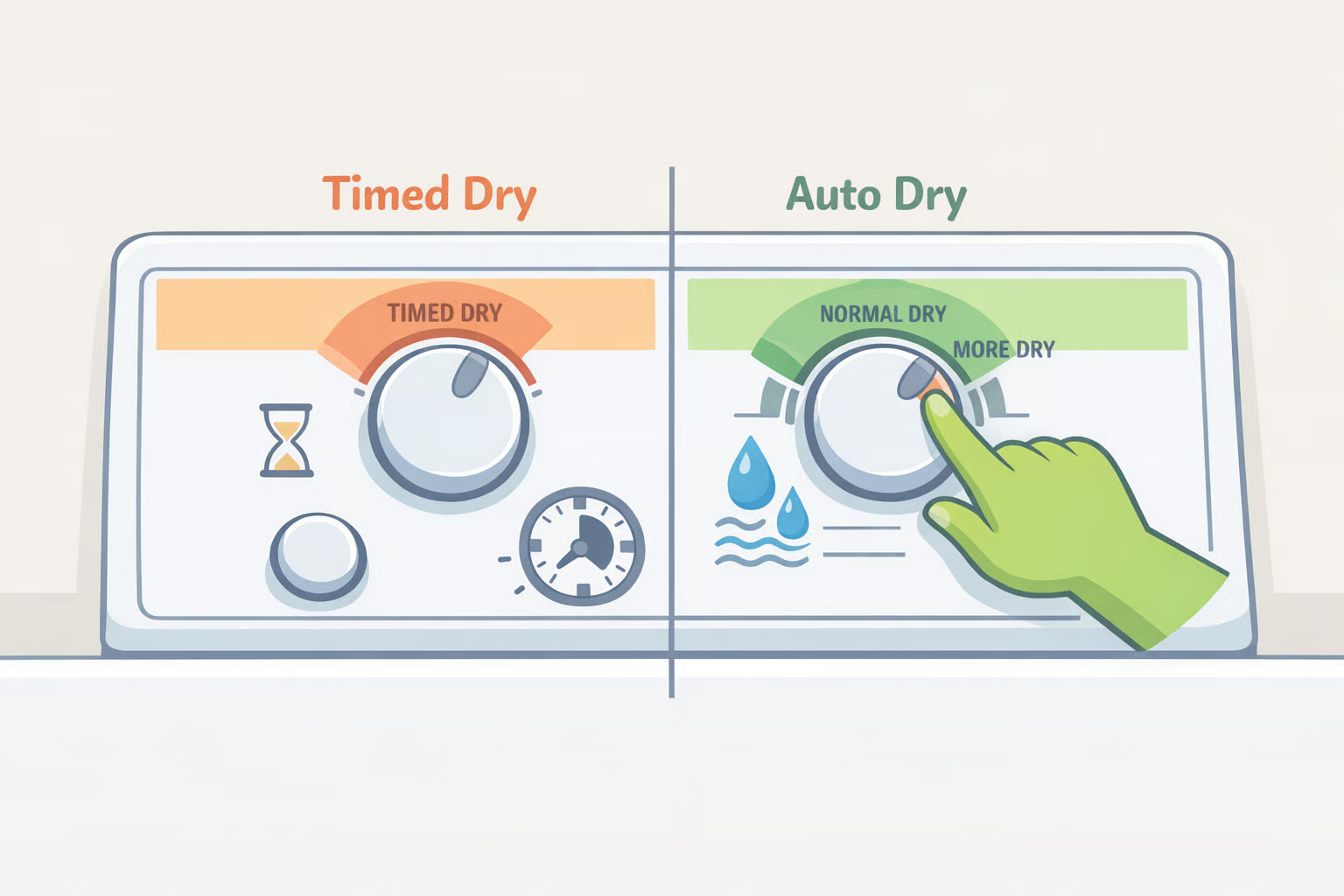
Choose an automatic cycle, not a timed one. Auto cycles use moisture sensors that stop the heat when clothes reach the right dryness level; timed cycles run for however long you set them, full stop. Over-drying is how heat locks creases into fabric permanently. Forté puts it plainly: automatic cycles prevent over-drying, protect fabric, and save energy all from the same underlying logic, per Good Housekeeping in March 2026.
Here is how to choose within automatic cycles:
If you are unsure, or the garment is lightweight or a mixed blend → Delicate
The shortest of the low-heat auto cycles. Maytag's appliance guidance confirms the Delicate setting uses low heat specifically to protect heat-sensitive fabrics from fraying, fading, shrinking, stretching, and warping. That kind of damage is also what causes wrinkles to set permanently. Use Delicate as the fallback for anything you are not certain about.
If you are drying sheets, jeans, bedding, or heavier casual basics → Tumble Dry Low
Same heat level as Delicate, longer cycle. Forté draws the distinction clearly: Tumble Dry Low is a longer cycle with low heat, while Delicate is shorter, also with low heat. The length is what makes Tumble Dry Low right for sturdier items sheets, bedding, and denim that need more time to dry fully, Good Housekeeping reported in March 2026. Using Delicate on a heavy load will leave items damp.
If you are drying synthetics, dress shirts, or wrinkle-prone blends → Permanent Press
This cycle uses medium heat and ends with an extended cool-down period, so clothes are not pressing against a hot drum as the cycle finishes. That gradual temperature reduction is what reduces wrinkle formation, according to Maytag. For polyester and synthetic blends specifically, low-to-medium heat also protects fiber structure and reduces static cling, Knowing Fabric notes.
Quick-reference decision aid
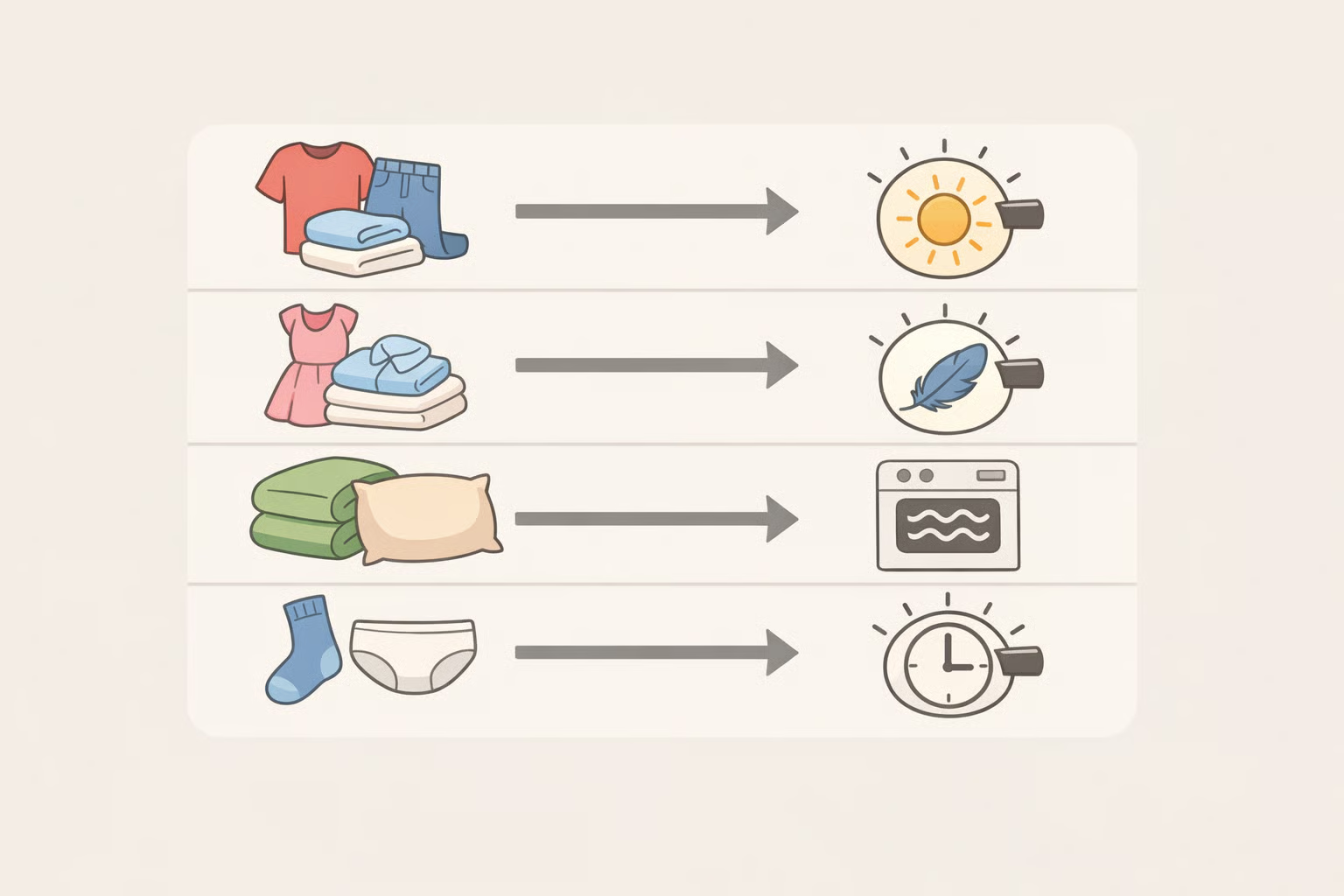
| What you're drying | Use this cycle | |---|---| | Unsure, or lightweight blends | Delicate | | Sheets, denim, bedding, casual cotton | Tumble Dry Low | | Synthetics, dress shirts, blended workwear | Permanent Press | | Already-dry clothes that need freshening | Refresh (not a drying cycle see below) |
A note on Refresh: If the dryer has this setting, it uses steam to relax wrinkles and remove odors from clean garments packed in a bag or sitting folded too long. It is not a substitute for a drying cycle. Use it only on clothes that are already dry, Good Housekeeping specifies.
If the dryer lacks sensor-based auto cycles: Older machines may offer only timed dry. Set a shorter time than seems necessary, check the clothes before the drum stops, and pull them out while slightly damp. A garment that finishes drying on a hanger wrinkles far less than one over-dried in a hot drum.
Step 3: When your dryer uses different cycle names
Dryer manufacturers do not use consistent labels. The cycles described above Delicate, Tumble Dry Low, Permanent Press are common names, but your machine may call them something else entirely. "Gentle," "Casual," "Wrinkle Release," and "Low Temp" all appear on different panels referring to functionally similar programs.
Rather than matching by name, match by three characteristics: heat level, sensor behavior, and whether the cycle includes a cool-down phase. A cycle that uses low heat and stops when sensors detect dryness is functionally equivalent to Delicate or Tumble Dry Low, depending on its run time. A cycle with medium heat, moisture sensing, and a gradual cool-down is functionally Permanent Press, whatever the label says. Your dryer's manual will list these parameters for each cycle a two-minute check that removes the guesswork.
If the manual is unavailable, the control panel often has a heat or temperature indicator that shows whether a cycle runs low, medium, or high. Start there. When in doubt, the lowest available heat with automatic shutoff is always the safer choice for wrinkle prevention.
Step 4: Two post-cycle habits that determine whether any of this works
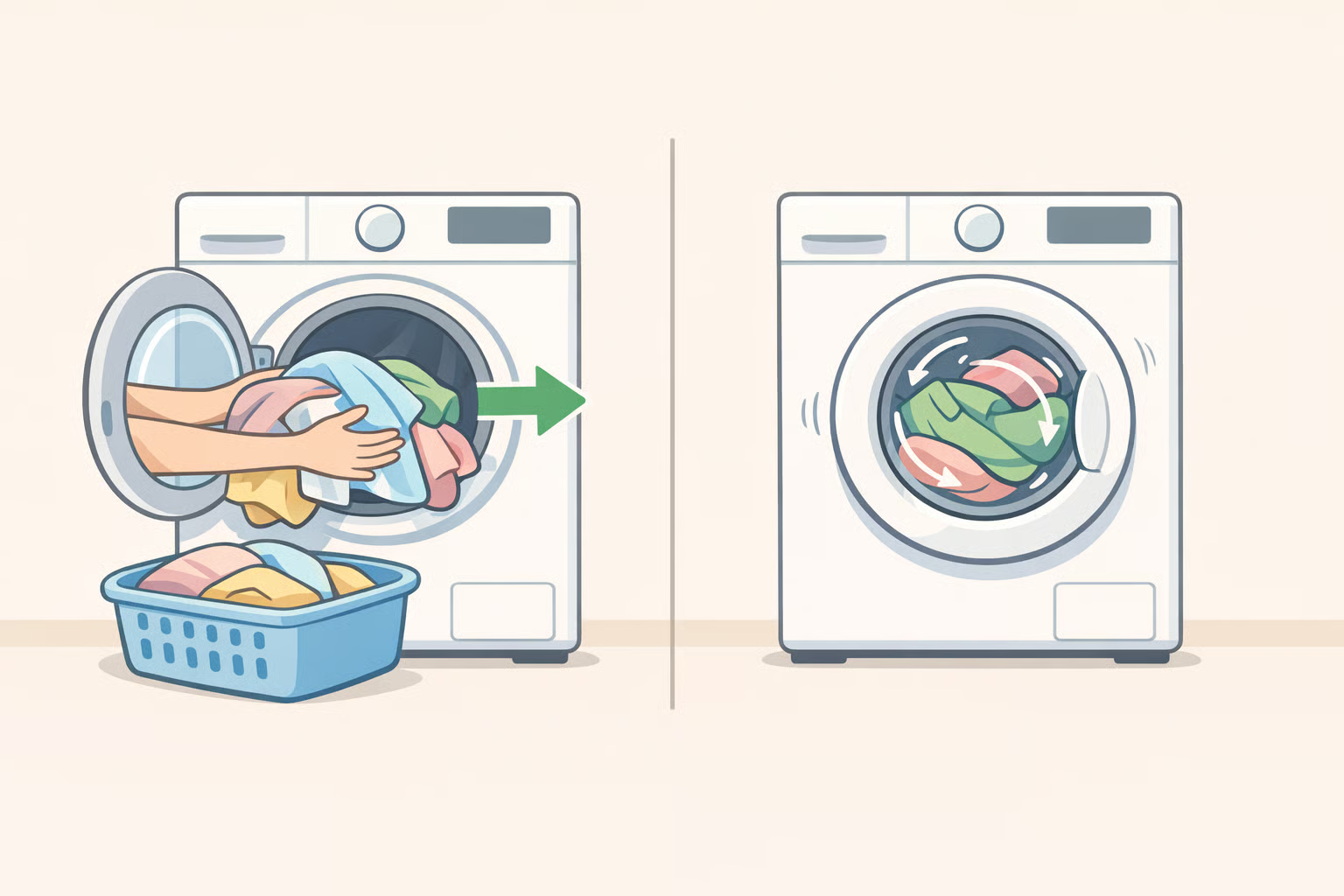
The right cycle can be undone by what happens after the drum stops. Fibers relax in heat and set in the position they cool in. Clothes left in a pile inside a stopped drum cool in exactly that pile.
Unload immediately. Remove clothes as soon as the cycle finishes. In shared laundry facilities, Forté puts a specific limit on it: do not leave laundry sitting for more than 15 minutes after the cycle ends, Good Housekeeping reported in March 2026. Hang or fold right away. Setting items on a counter to deal with later negates the cycle choice entirely.
Enable Extended Tumble if unloading promptly is not possible. This feature also labeled Wrinkle Shield, Wrinkle Guard, or Wrinkle Care depending on the brand runs the drum intermittently for up to three hours after the main cycle ends, keeping clothes moving so creases cannot set. It must typically be selected before starting the cycle, Good Housekeeping notes. One catch: it uses cool air, not heat. It prevents new wrinkles from forming but will not undo creases already set.
If clothes are already wrinkled: Put them back in the dryer on low heat or air fluff with a damp washcloth or a few ice cubes. The moisture produces light steam, which relaxes the fibers. Run for 10 to 15 minutes, then remove and hang or fold immediately, Knowing Fabric advises.
The practical summary
Stop using timed dry. Switch to any automatic cycle. Delicate is the safest default when unsure; Tumble Dry Low handles heavier basics; Permanent Press is correct for synthetics and wrinkle-prone blends. The care label tells you which applies, and when the label is missing, the lowest available heat with sensor shutoff covers most situations, per Good Housekeeping.
Cycle choice is only part of it. Sorting by fabric weight before drying and unloading promptly when the cycle ends are the two habits that most reliably prevent wrinkles no special setting required, Knowing Fabric confirms.
Low heat does double duty: it reduces wrinkles and slows fabric wear. Maytag notes that low heat prevents fraying, fading, shrinking, and warping the cumulative damage that makes clothes look worn out long before they should.
One practical check worth doing now: find out whether the dryer's Extended Tumble or Wrinkle Guard feature activates by default or requires manual selection each cycle. On most machines, it must be opted into. A one-time trip through the settings menu can eliminate a lot of re-ironing.








Comments
Be the first, drop a comment!