



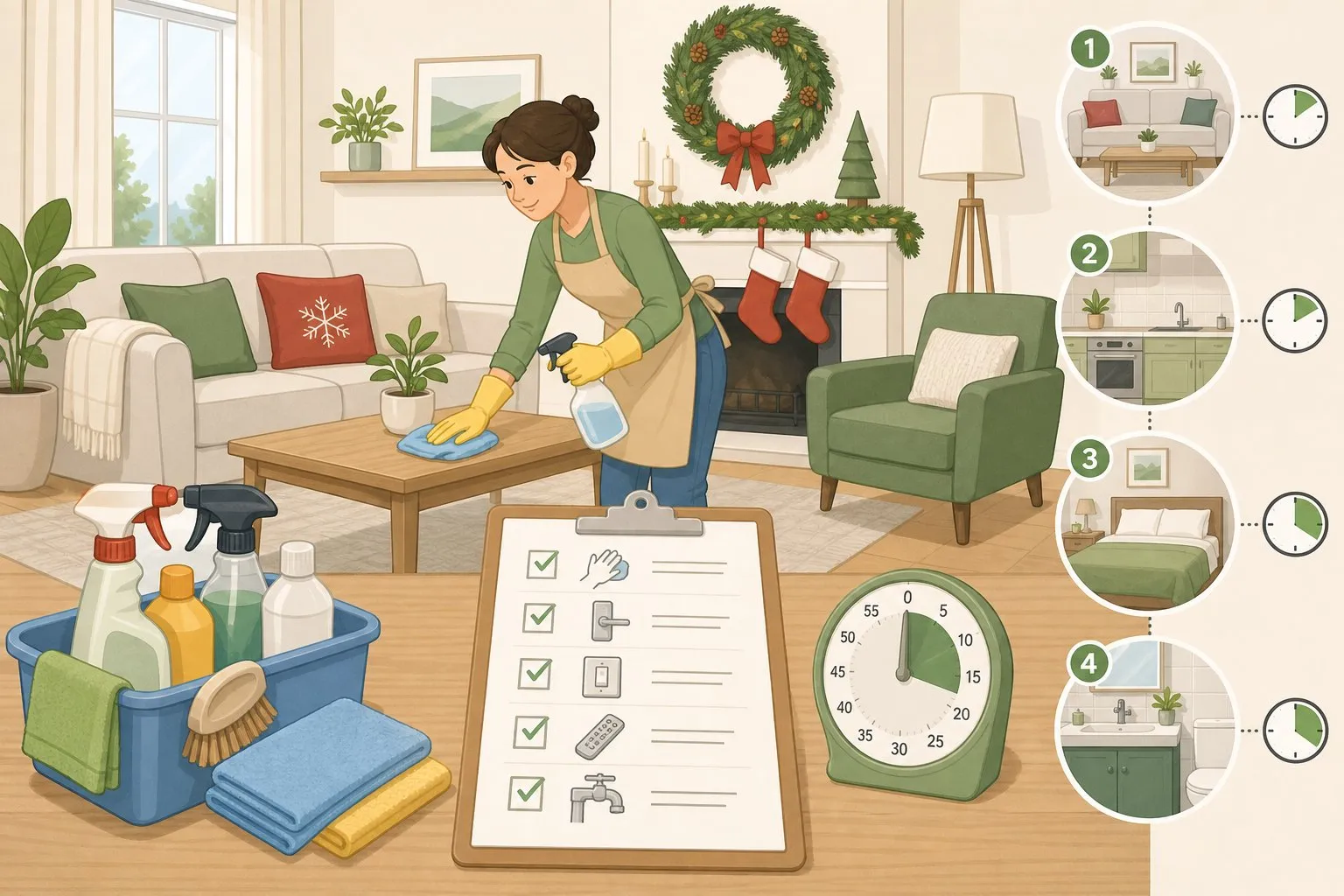
How to clean your house for holiday guests: a timed checklist
Nobody needs a surgical-suite clean before the relatives show up. The bar for how to clean your house for holiday guests is lower than most people think: a walkable entry, a stocked bathroom, counters ready for food prep, and clutter cleared from the rooms guests will actually use. Everything else is optional.
That bar holds up because plain soap and water already do most of the work. In most households, cleaning alone removes most germs, including harmful viruses and bacteria, from everyday surfaces, the CDC notes. Disinfecting on top of that is a separate step reserved for specific situations, not a requirement for routine hosting. High-touch spots like doorknobs, light switches, and countertops are worth wiping down regularly, and again once guests have passed through, according to CDC home hygiene guidance.
This guide works through a timed decision tool for however much time is left on the clock, a single room-by-room sequence to follow once a timeline is picked, a safety check to run before reaching for bleach or anything stronger than dish soap, and a conditional plan for when illness or a guest's weakened immune system changes the job from cleaning to disinfecting. Pick the timeline first; the room sequence covers how to execute it.
What you'll need
Gather these before starting a timer, so a mid-clean supply run doesn't eat into the time budget:
- Dish soap and an all-purpose cleaner
- Microfiber cloths or paper towels
- A vacuum or broom
- Trash bags
- Hand soap and a couple of clean hand towels for the bathroom
That list covers routine hosting completely. Nothing in the CDC's cleaning guidance calls for a disinfectant unless someone in the home has been sick, so there's no reason to buy a specialty product just because guests are coming.
Choose your cleaning timeline: 30 minutes, 1 hour, or half a day
Pick the tier that matches the time actually on the clock, not the tier that feels thorough. Each one builds on the last.
30-minute holiday hosting cleaning checklist
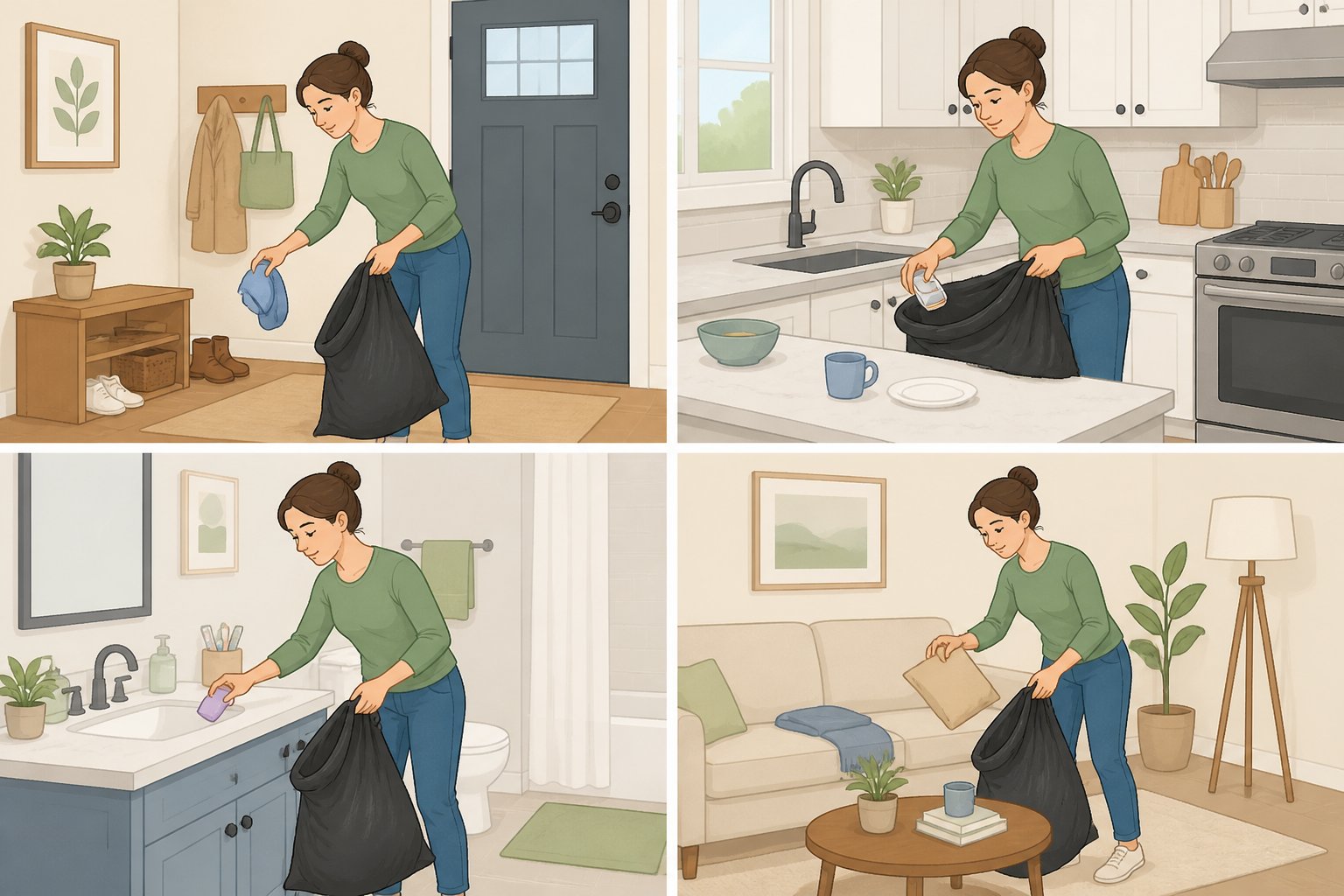
Set a timer and move room to room instead of task to task.
- Walk the entry, kitchen, bathroom, and main living area with a trash bag, clearing anything that doesn't belong.
- Take the trash out.
- Load the dishwasher or stack dishes out of sight.
- Wipe kitchen counters with hot, soapy water.
- Wipe down doorknobs and light switches on the way past them. These are the high-touch spots the CDC says deserve attention after visitors.
That's the floor. If the doorbell rings right now, the home is presentable.
One-hour checklist: add the bathroom and floors
With another 30 minutes, layer in the spaces guests will actually use.
- Wipe the guest bathroom's toilet, sink, and mirror.
- Set out hand soap and hang a fresh towel.
- Vacuum or sweep guest-facing floors.
- Reset the dining table or main seating area.
The bathroom is ready when there's soap at the sink, a clean towel within reach, toilet paper stocked, and the trash bin empty.
Half-day plan: polish the details guests will notice
With a half-day, spend the extra time on guest-facing details rather than hidden ones. Dust the living-room table, clean the mirror or glass near the entry, run a load of throw blankets through the wash, and refresh the guest bed if anyone is staying over. Baseboards, window sills, and inside cabinets can wait. The CDC lists those as surfaces to clean when visibly dirty or as needed, not items on a fixed pre-party schedule.
Skip closets, guest-room deep cleans, and the inside of cabinets no matter which tier gets chosen. None of it changes how the house feels to someone walking through the front door.
Before moving to the room-by-room sequence below, confirm the trash is out, dishes are cleared, and the entry is walkable. Those are the three things anyone notices first.
The room-by-room cleaning sequence
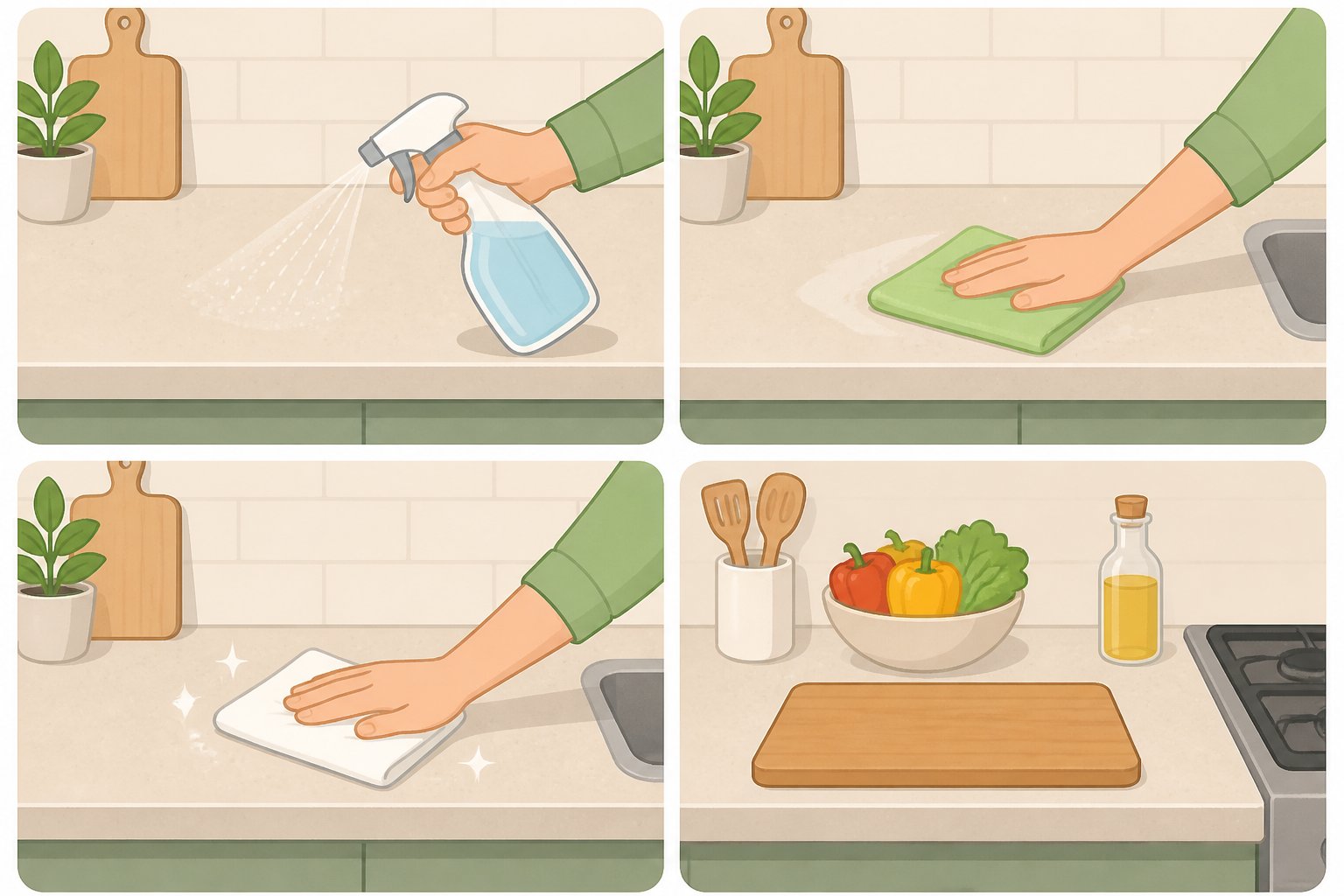
This is the order to follow once a timeline is picked, covering how to clean each stop rather than which ones to prioritize.
- Entry. Wipe doorknobs and light switches, then clear the shoe and coat pile so there's somewhere for guests to put theirs.
- Kitchen: clean before you start cooking. Wipe counters with hot, soapy water before any food prep begins. If raw meat, poultry, or their juices touched a counter or the sink, that surface needs sanitizing after cleaning. CDC guidance points to a homemade bleach solution or an EPA-registered sanitizing product for food-contact surfaces, following that product's own label rather than a general disinfecting recipe. Clean first in every case; dirt left behind can keep a sanitizer from reaching and killing germs.
- Guest bathroom. Wipe fixtures and counters, restock hand soap and toilet paper, and hang a clean towel.
- Common areas. Vacuum or sweep guest-facing floors, reset seating, and clear any counter clutter that's crept back.
Check the product label before switching cleaners between surfaces. A counter spray isn't automatically right for wood, stone, or electronics, and CDC surface guidance calls for a product suited to each one.
If guests are staying overnight, add fresh linens and towels in the guest room, clear the nightstand, empty the trash bin, and make sure an outlet is free for chargers.
Counters are ready for food prep once they feel residue-free to the touch. If a surface touched raw meat, confirm it was sanitized, not just wiped, before any food goes down near it. Skipping that sanitizing step is the most common miss in a rushed kitchen clean: regular cleaning handles most germs, but raw-meat contact calls for that extra step specifically.
Read this before you use bleach or a strong cleaner
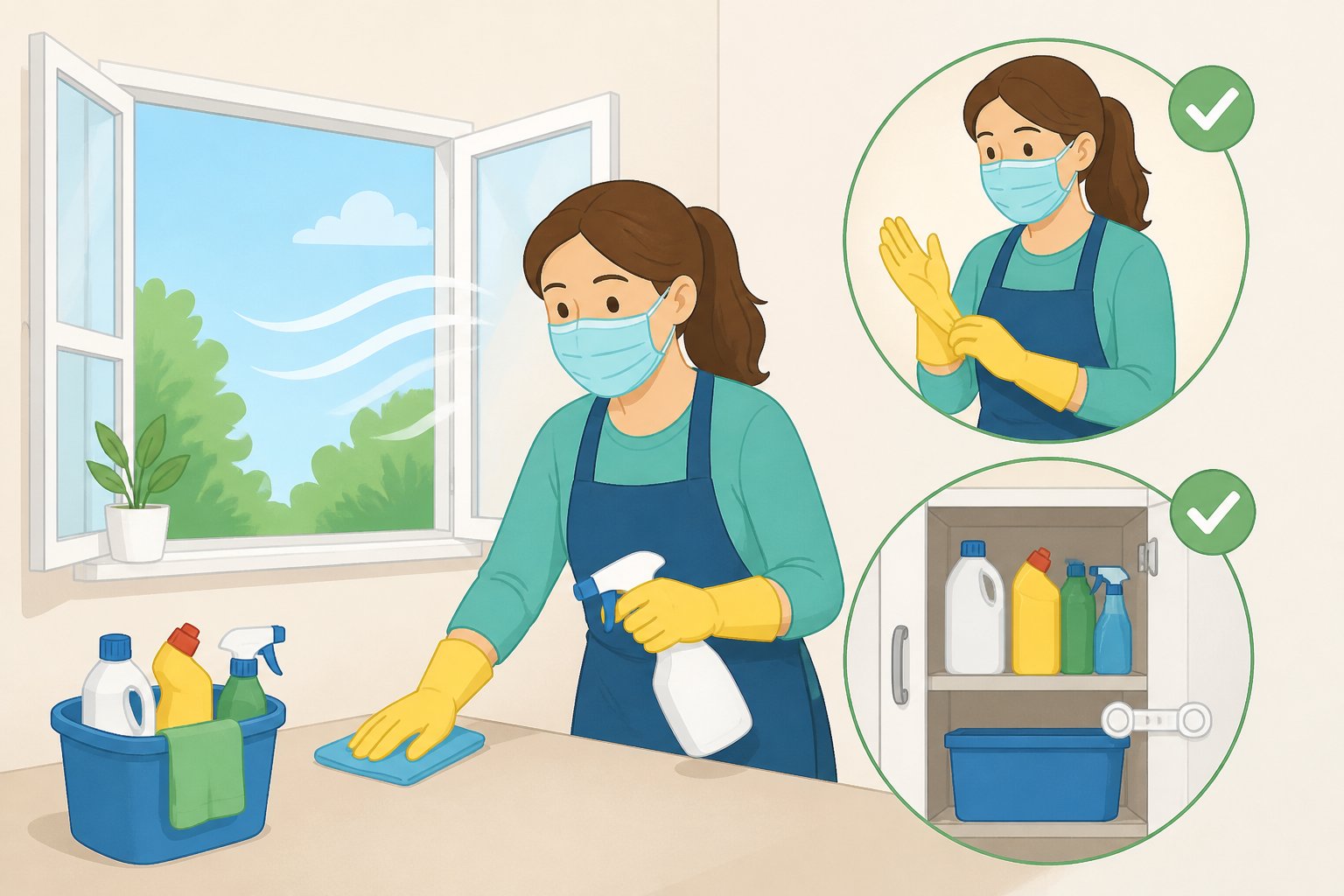
A pre-party cleaning sprint carries some of the same risks as any intensive cleaning push: products sit out longer than usual, and rooms get rearranged in ways that put chemicals within easier reach, especially with kids and pets moving through the house for a party. A Poison Control safety overview lays out the rules worth following anytime cleaning ramps up, holiday hosting included.
Before reaching for anything stronger than soap and water:
- Never mix cleaning products. Combining an acid toilet-bowl cleaner with bleach produces irritating chlorine fumes, and mixing ammonia with bleach creates chloramine gas; both can cause serious breathing problems, warns Poison Control.
- Ventilate the room. Open a window or door and run the exhaust fan while using bleach or another strong cleaner.
- Wear gloves or goggles when the label calls for them, especially with strong acids or alkalis like oven cleaners, drain cleaners, or rust removers.
- Keep children and pets out of the room while cleaners are in use, when that's possible.
- Store cleaning products in a cabinet with a child-resistant latch, not an unlocked low cabinet, before guests, including kids, arrive.
If a gentler option sounds better for everyday use, mild acids like vinegar or citric acid carry low toxicity, though they can still irritate skin and eyes, so label directions still apply. An EPA Safer Choice label can help point toward products made with safer-ingredient profiles; check the surface instructions on whatever gets chosen either way.
If a child or pet swallows or is exposed to a cleaning product, call Poison Control at 1-800-222-1222. Help is free, confidential, and available 24/7.
When illness or a higher-risk guest means it's time to disinfect
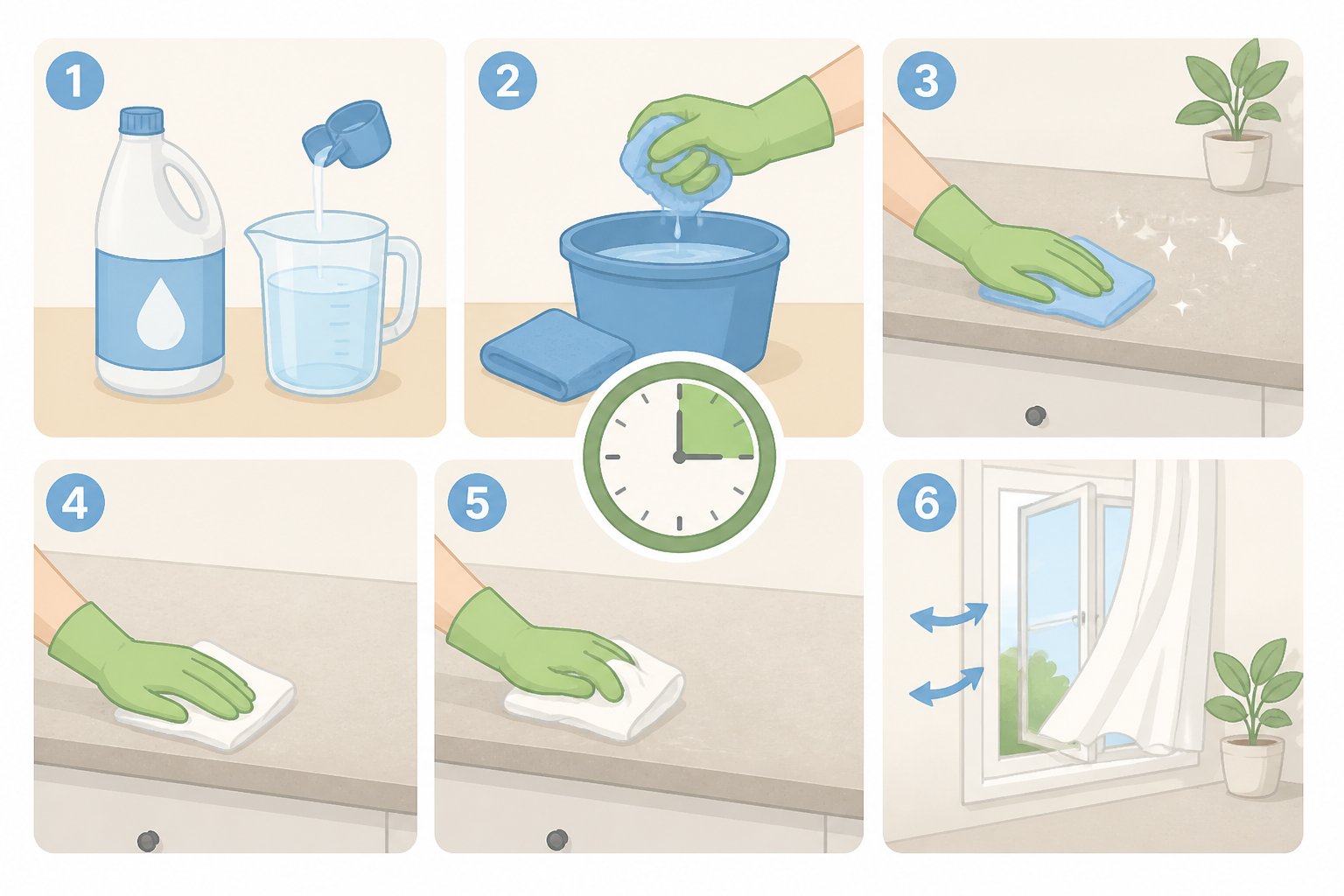
Routine cleaning covers typical hosting. Disinfecting is a separate, conditional step for a narrower set of circumstances: someone in the home is sick, a sick visitor has recently come through, or someone in the household has a weakened immune system from something like cancer treatment, an organ transplant, or HIV, according to CDC guidance on when to disinfect. Households with young children or someone immunocompromised should also clean high-touch surfaces more often, even on days when disinfecting isn't called for.
If one of those conditions applies, clean the surface with soap and water first; disinfectant applied over dirt won't perform as well. From there, CDC bleach guidance lays out the method:
- Use a regular, unscented bleach product with 5%–9% sodium hypochlorite, and skip any product where that percentage is missing or falls outside that range.
- Follow the label's dilution instructions. Without label directions, mix 5 tablespoons of bleach per gallon of room-temperature water.
- Keep the surface visibly wet for the full contact time, at least one minute if the label doesn't specify otherwise. That wet contact time is what actually kills the germs.
- Label the diluted solution and mix a fresh batch daily; bleach loses effectiveness after about 24 hours once diluted.
This general bleach solution is for household surfaces like doorknobs and bathroom fixtures. For surfaces that touched raw meat or poultry, use a sanitizing product made for food contact, or a sanitizing-strength bleach solution, and follow that product's own label rather than the general recipe above.
Skip this section entirely if no one in the home is sick, no sick visitor has recently been through, and no household member has a weakened immune system. Routine cleaning from the sections above covers that situation.
The last 30 minutes before guests arrive
Whatever tier got picked, finish the same way. Put cleaning supplies back in their latched cabinet, walk from the front door to the bathroom checking for anything left out, and confirm the trash is actually outside rather than staged by the door. Wash hands after any cleaning, sanitizing, or disinfecting session, and if a bleach solution was mixed, dump it rather than saving it for next time; a fresh batch is the only way to know it'll still work.
A clean entry, counters ready for food prep, a stocked bathroom, and clutter-free common areas meet the bar for most holiday gatherings. If illness or a guest's weakened immune system changes the picture, the disinfecting steps above are there, but they're the exception, not the default. Everything past that point, baseboards included, can wait until after the holidays.
Comments
Be the first, drop a comment!