



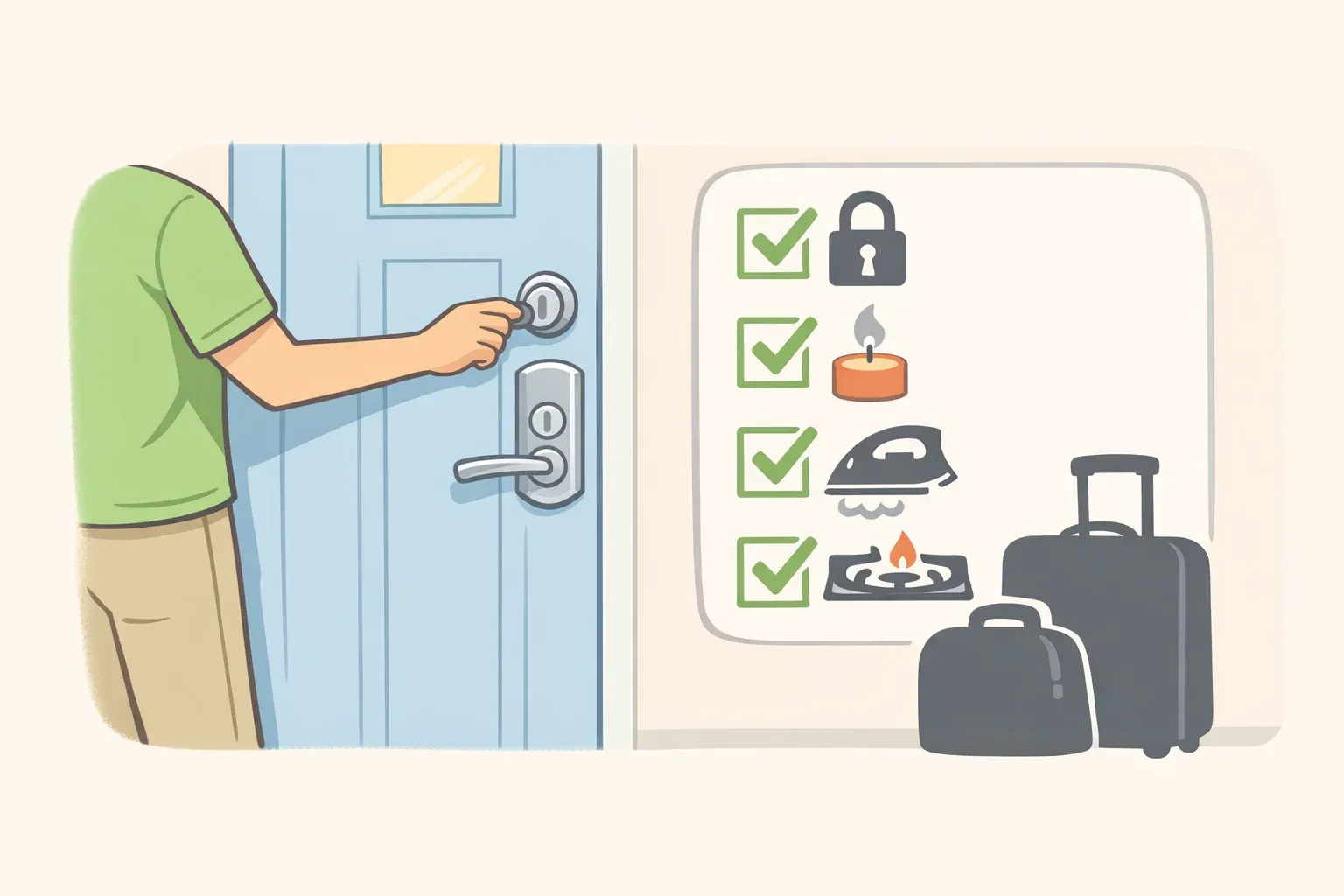
Complete Home Safety Checklist Before Vacation (15-Minute Guide)
Nearly 4 in 10 Americans leave their doors unlocked at least some of the time while away from home. More than 1 in 9 people relying on "good enough" security habits experienced a break-in over a two-year period, and 72% of them already suspected those habits were only occasionally reliable. Those figures come from a nationally representative survey of 3,000 U.S. adults commissioned by ADT with Prodege Research, conducted in May 2025. The gap between knowing a shortcut is unreliable and actually replacing it turns out to be where most vacation-related home losses happen.
This is a home-protection checklist built around what that research shows people overlook most: access control, visible absence signals, and unattended household hazards. It's organized into a short list of universal steps that take under 15 minutes, and a second tier for trips longer than a week or during winter months. It is not a travel safety guide or a product recommendation.
A note on sourcing: the behavioral data throughout comes from ADT, a commercial security company with an obvious interest in the findings. The survey methodology is solid 3,000 adults, stratified weighting for demographics and region but the commercial context is worth keeping in mind. Government guidance comes from Ready.gov (2023, still current for these evergreen topics).
The habits people rely on and why they keep failing
The problem isn't ignorance. Familiar routines feel adequate even when the data says otherwise.
According to the ADT/Prodege survey, 38.1% of Americans use fake security items dummy cameras, misleading yard signs in an attempt to deter criminal activity. Another 23.7% protect doors or garage keypads with easily guessable codes like birthdays or repeated digits. Hiding a spare key under a doormat or plant is also among the most commonly reported behaviors, despite being the first place anyone paying attention would look.
The failure rate is measurable. 72% of people using these habits acknowledge they're only occasionally effective, and 11.4% experienced some form of break-in in the two years before the survey. That's roughly 1 in 9 households.
The cost isn't just material. Among those who experienced a break-in, 35% described feeling helpless or violated, 24% said they felt less safe in their own home afterward, and 40% reported losing trust in their neighborhood. The sections below don't ask you to add more security layers. They ask you to replace the habits you already know are unreliable.
How to secure your home before vacation: access control first
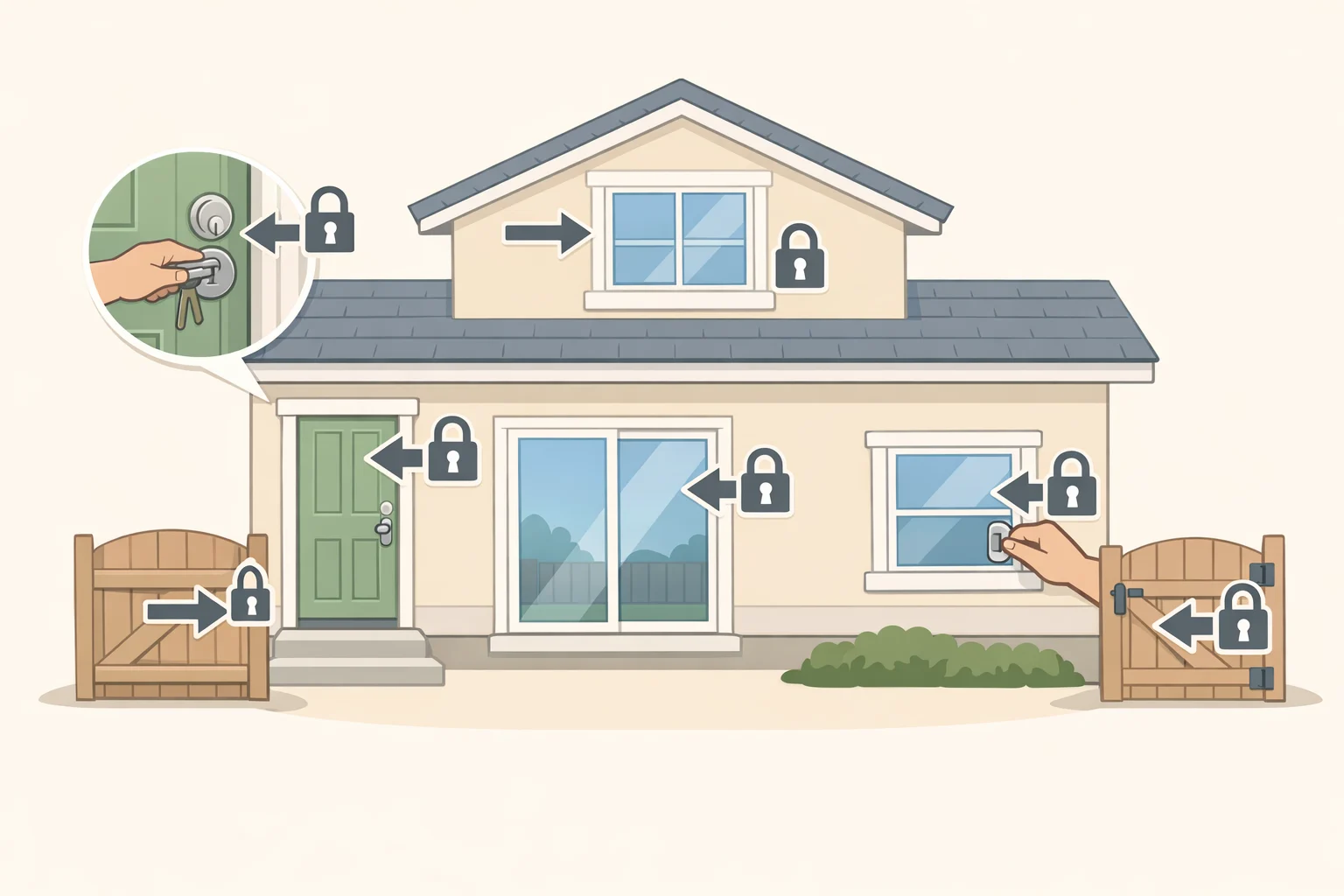
Access control is the first layer, not one layer among many. Every other precaution timers, neighbor check-ins, package holds assumes an intruder can't simply walk through an unlocked door. That assumption fails for 38% of Americans who leave doors unlocked at least occasionally while away from home. The front door usually gets checked. The side entrance, garage entry door, basement windows, and back gate typically don't.
Codes are the next gap. Almost 1 in 4 people use access codes that follow recognizable patterns birthdays, "1111," "1234." A code built around a predictable sequence isn't a real barrier; it's a formality.
Hidden spare keys are a known quantity to anyone who has thought about them for 30 seconds. The ADT survey specifically identifies hiding keys under doormats or plants as one of the most common "safe-ish" behaviors. The doormat, the flowerpot, the magnetic box under the bumper: these locations are familiar. If a trusted person needs access while you're away, hand them an actual key before you leave. App-controlled smart lock entry works too. A hidden key outside does not.
Every trip (under 15 minutes):
- Walk every exterior entry point front door, back door, garage entry door, side gate, ground-floor windows and lock each one. Check twice. Don't assume the back gate is latched because it usually is.
- Change any door or garage keypad code that follows a pattern, uses a date, or hasn't been updated in a long time. The ADT data shows the problem is predictability; pick something genuinely non-obvious, at least six digits.
- Retrieve any hidden spare key from outside the home before departing. Arrange access another way.
- Arm your alarm system if you have one, and confirm the monitoring contact number is current.
For renters: If you don't control the thermostat, alarm system, or exterior locks, focus on what you do control your unit's deadbolt, windows, and any secondary locks. Notify your building manager that you'll be away; many buildings have a protocol for extended absences.
On dummy cameras and yard signs: the ADT survey shows 38.1% of households already use them, which limits whatever novelty factor they once had. Treat them as a supplement to a locked door, not a substitute for one.
Before leaving for vacation checklist: reducing visible signs of an empty house
Burglary prevention and "house sits empty" risks are related but distinct problems. A locked door addresses the first. A house that broadcasts absence to anyone who drives past twice invites the second.
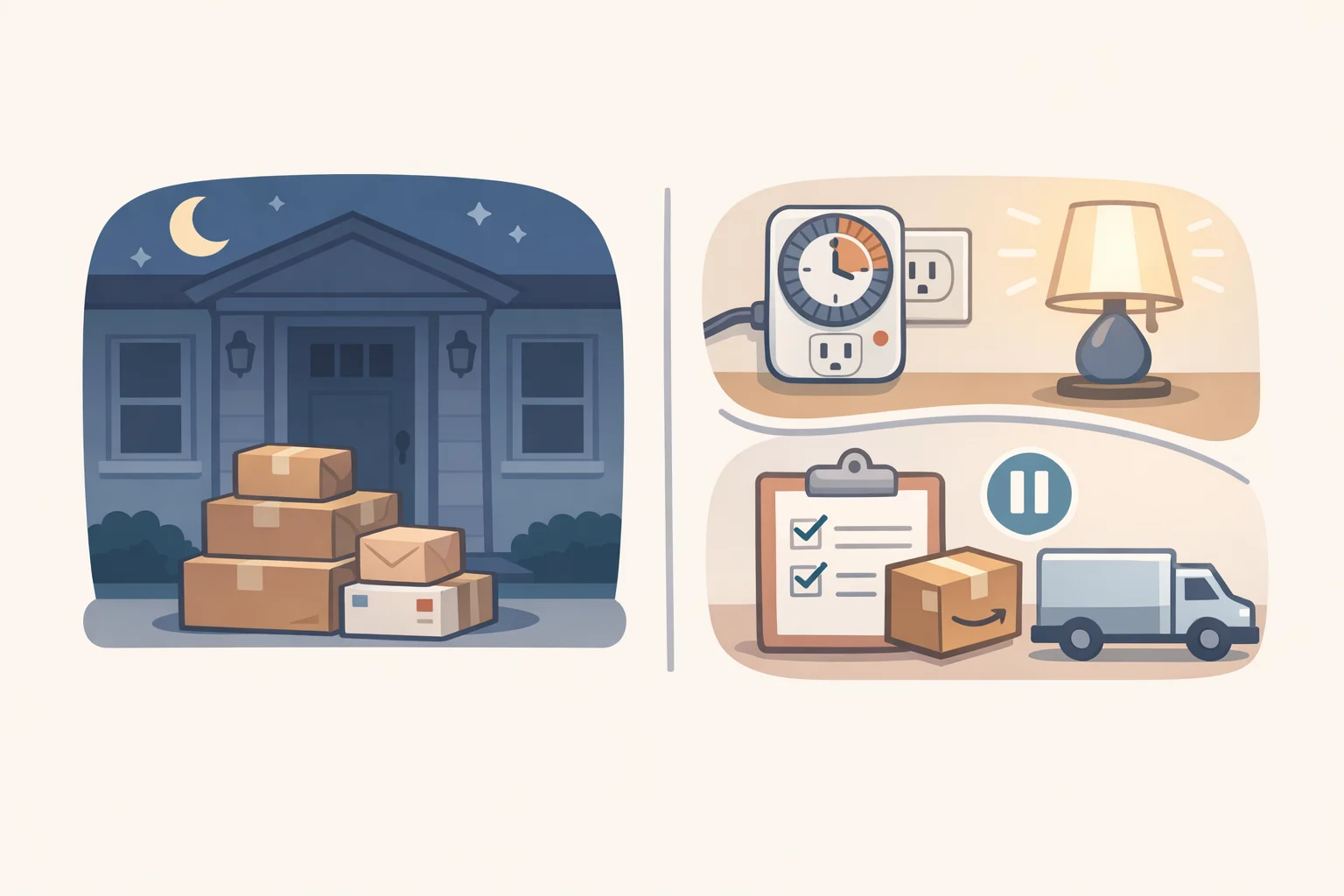
About 29% of people regularly leave packages on their porch for four or more hours. Over several days, accumulating boxes are one of the clearest signals that no one is home to retrieve them. The ADT research also flags "relying on a neighbor to keep watch" as one of the common weak measures people use while away not because neighbors are unhelpful, but because vague arrangements produce vague results.
Overflowing mail, an unmowed lawn in summer, and windows that go completely dark at the same time every evening are widely cited absence signals in home security guidance, though they aren't directly measured in the ADT survey. The practical reasoning holds regardless: anything that signals a consistent, uninterrupted absence is worth addressing before a longer trip.
Every trip:
- Pause mail delivery at USPS.com. Schedule it to begin on your departure date, not after you've already left.
- Arrange a package hold with your primary carriers (UPS, FedEx, Amazon) or reroute deliveries to a neighbor, workplace, or secure locker. Don't let boxes accumulate.
- Set at least one or two interior lights on timers or smart schedules so the house doesn't go dark every evening at the same hour.
For trips longer than a week:
- Ask a trusted contact to park in your driveway periodically, collect any missed deliveries, and handle lawn maintenance if needed. Give them a specific number to call if something looks wrong not a vague "keep an eye on it." A task list beats a verbal understanding.
- Hold vacation photos and location tags on social media until after you're home.
Vacation home security tips: fire, water, and outage risks in an unoccupied house
An unoccupied home carries a different risk profile than an occupied one not because hazards are more likely to start, but because no one is there to catch them early. Home heating is the second leading cause of home fires in the U.S. In 2021, an estimated 32,200 home heating fires caused 190 deaths, 625 injuries, and $442 million in property damage, according to Ready.gov. A fire that starts while you're away has hours to develop before anyone notices.
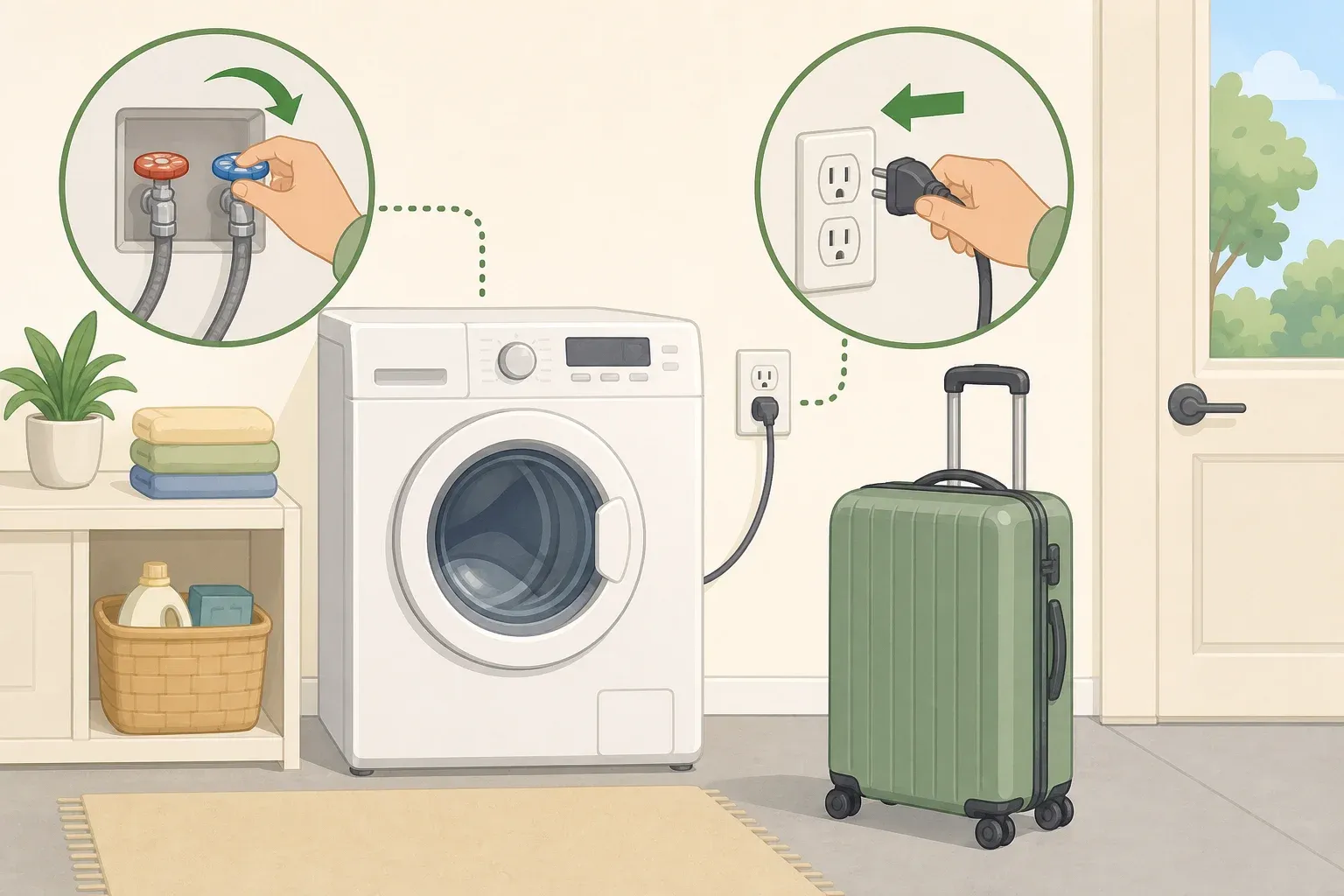
Ready.gov recommends disconnecting appliances and electronics to guard against damage from electrical surges. Applied proactively before leaving for multiple days, this step protects against whatever storm moves through while you're gone. Storms don't schedule around return dates.
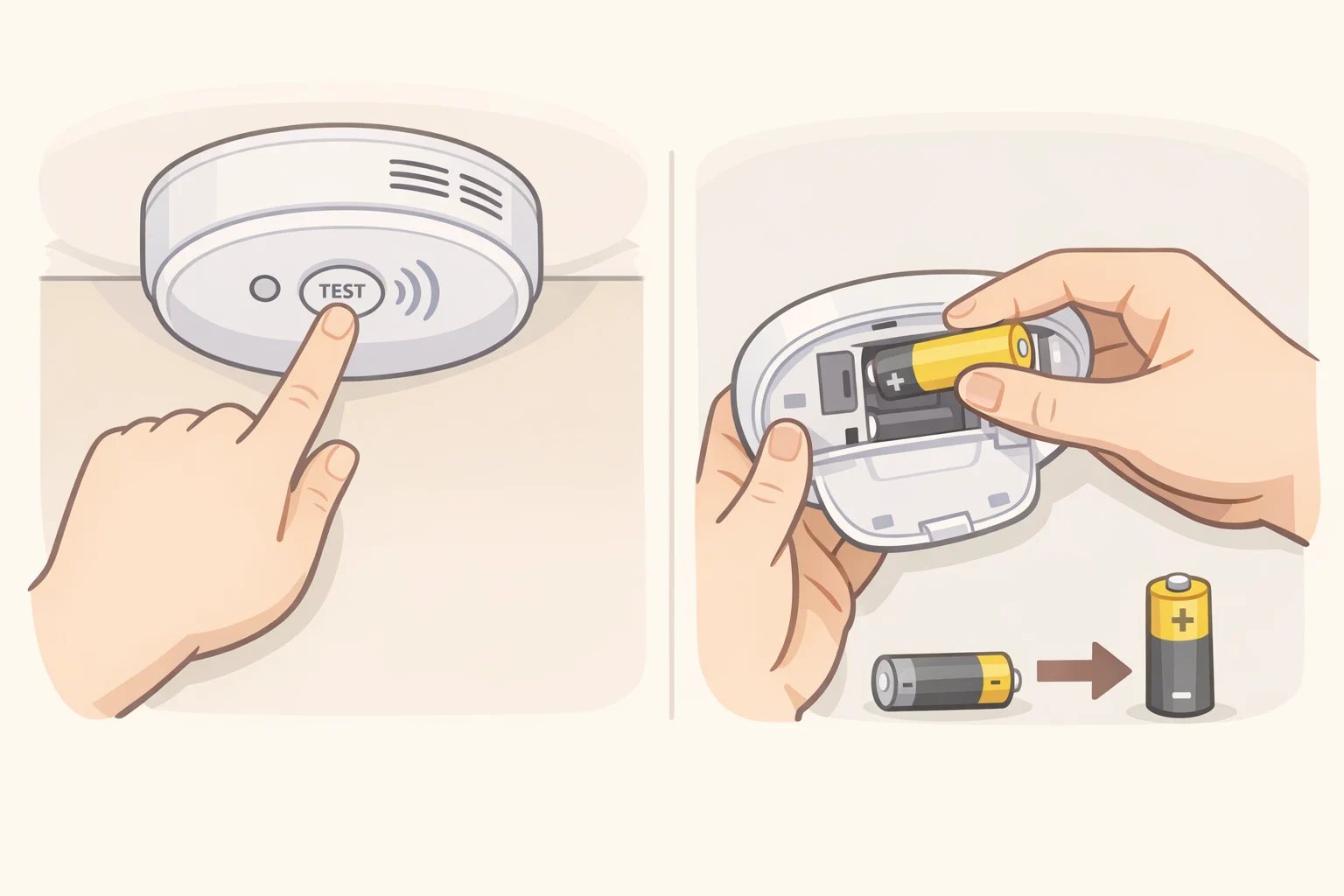
Carbon monoxide detectors require a working battery. Ready.gov identifies installing a CO detector and confirming it has a working battery as a standard safety step. Before a vacation is an obvious moment to do this, since no one will be home to respond if an alarm triggers.
Every trip detect hazards first:
- Test smoke detectors and CO detectors. If either is chirping, the battery is low. Replace it before leaving.
- Unplug non-essential electronics and appliances televisions, desktop computers, kitchen appliances not needed while you're gone. Ready.gov recommends this specifically to guard against surge damage.
Every trip remove ignition sources:
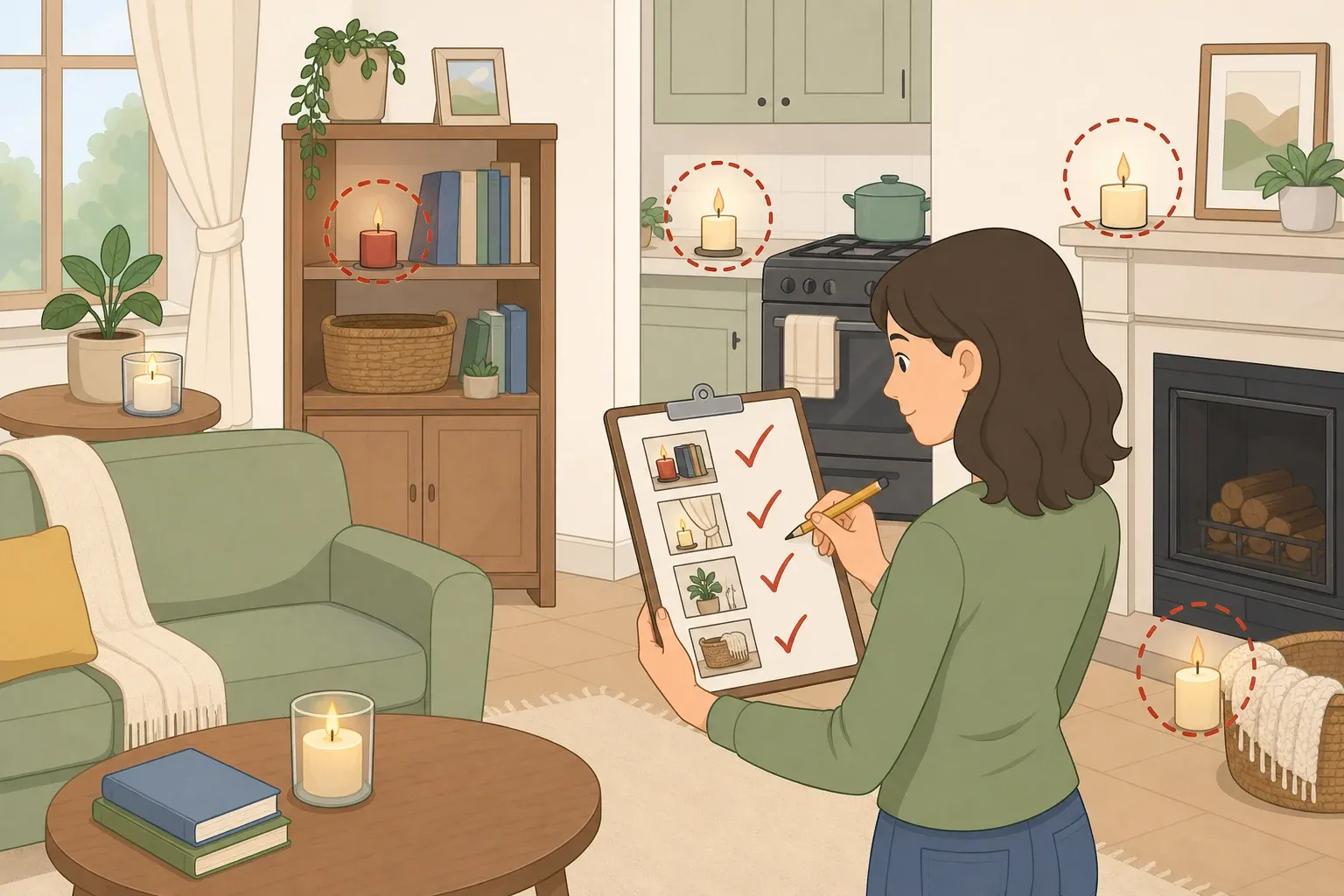
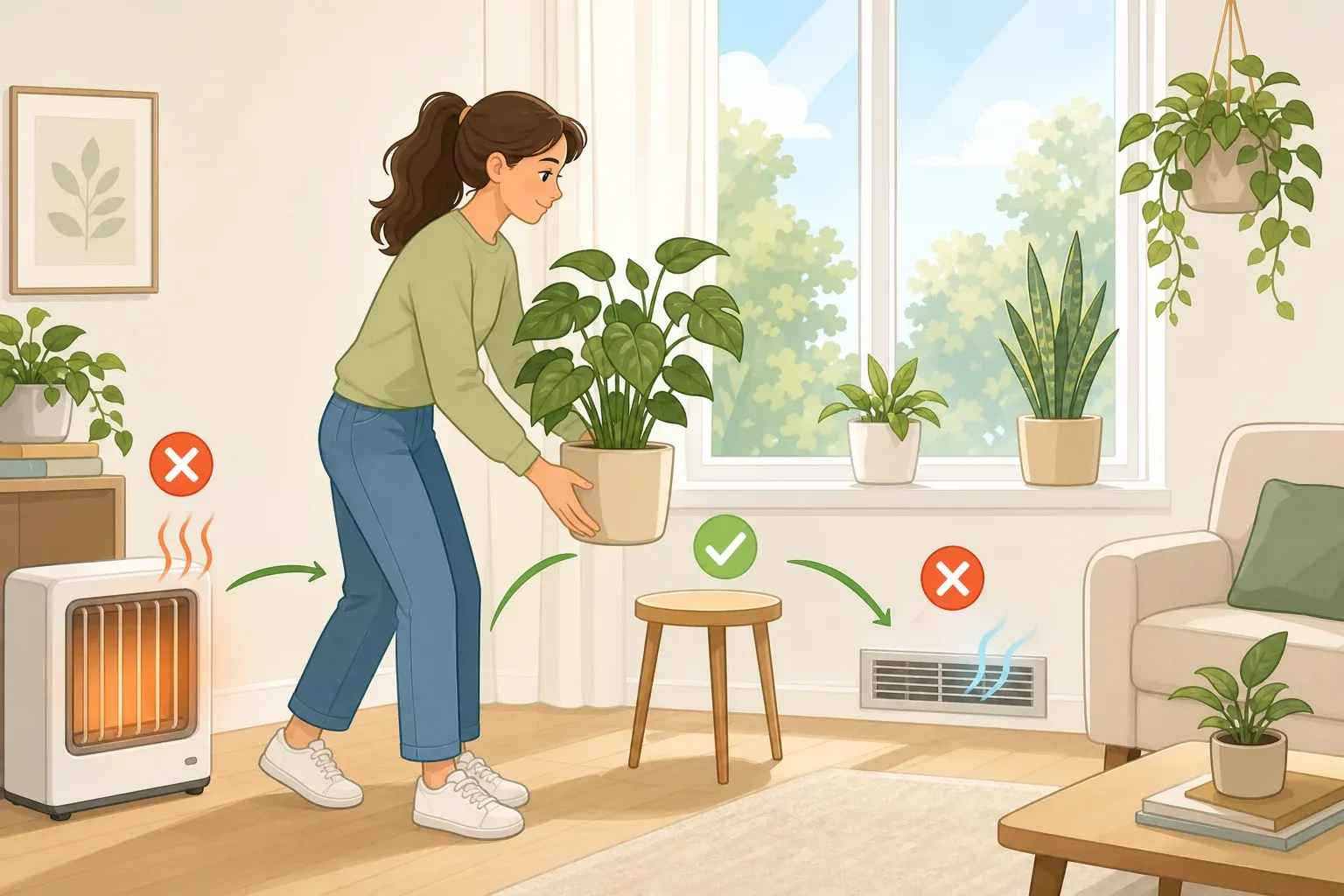
- If you use a portable space heater, confirm it's fully unplugged before leaving, not just switched off. Verify that nothing combustible sits within three feet of it. Ready.gov identifies three feet of clearance as the baseline fire prevention standard around all heat sources, including fireplaces, wood stoves, radiators, and candles.
For trips longer than a week, or in winter:
- Consider shutting off the main water supply. A slow leak or burst pipe left unattended for ten days can cause far more damage than the same problem caught within hours. Renters: check with your building manager first your unit's shutoff may not control shared building water.
- In cold months, set the thermostat to a safe minimum temperature before leaving. Turning heat off entirely is not advisable in winter; pipes in unheated spaces can freeze. Adjust for your specific climate and home.
On generators: Ready.gov is explicit generators must be used only outdoors and away from windows. If a neighbor or house-checker might use one during a storm while you're away, make sure they know this before you leave. Carbon monoxide from a generator running in an attached garage is a genuine hazard, not a theoretical one.
Steps 4 and 5 are most critical in winter and cold climates. The fire and surge steps apply year-round.
A two-tier departure checklist
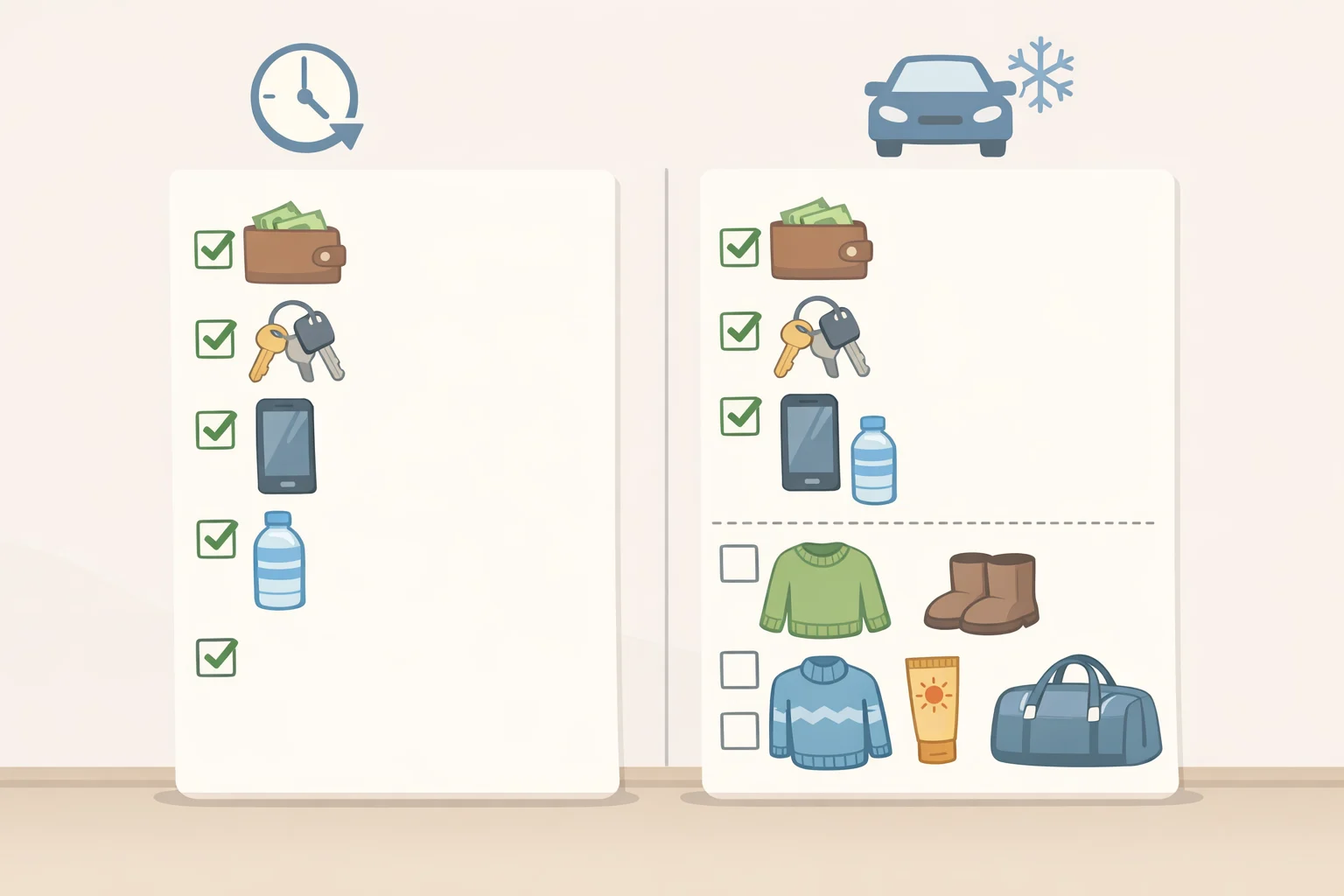
Under-15-minute essentials every trip, homeowners and renters alike:
- Lock all exterior entries and check twice
- Change any guessable access code to something genuinely non-obvious
- Remove hidden spare keys from outside
- Pause mail and reroute packages
- Test smoke and CO detectors; replace any low batteries
- Unplug non-essential electronics and appliances
- Confirm someone specific knows you're away and has a clear task list, not just a vague understanding
Add these for trips longer than a week, or during winter:
- Set interior lights on timers
- Shut off the main water supply (homeowners; check building rules if renting)
- Set the thermostat to a safe minimum temperature for your climate before leaving
- Confirm your house-checker has a written contact list
- Hold social media travel posts until after returning home
The ADT/Prodege data lands on one uncomfortable point: 72% of people relying on security shortcuts already know those shortcuts are unreliable, yet continue using them. None of the steps above require a security system or a smart home setup. What they require is about 15 minutes before departure and a willingness to swap familiar-but-ineffective habits for ones that actually hold up.



Comments
Be the first, drop a comment!