



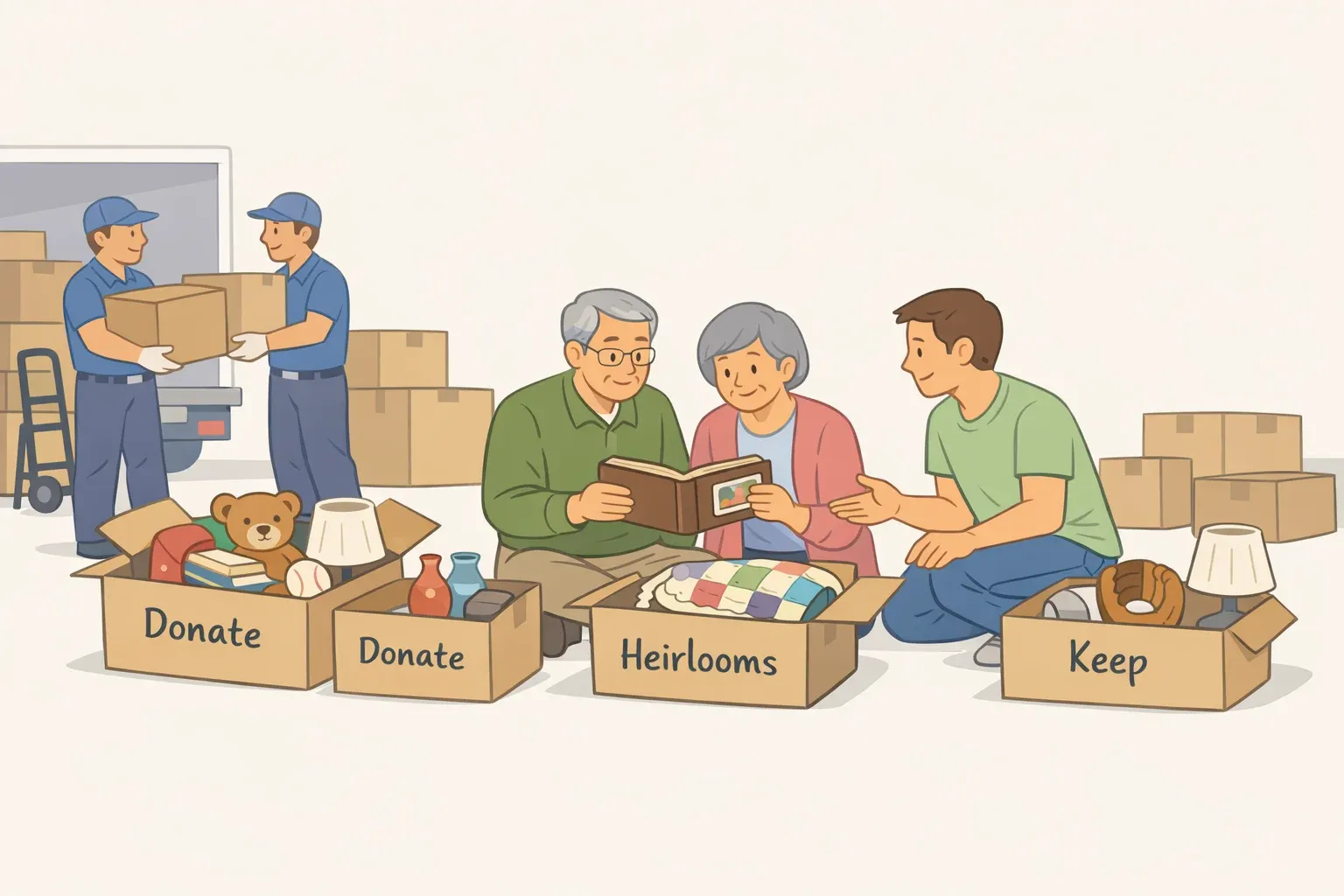
How to Help Parents Downsize Before a Crisis Forces the Decision
Here is what this guide delivers: a practical framework for helping an aging parent downsize, built from the lessons professional organizers carry into their own families, where expertise collides with grief, sibling dynamics, and the stubborn reality that no one actually wants the china cabinet.
The central tension the title points to is real. Even people who do this work for a living find that helping a parent sort through a life's worth of belongings is not the same job as helping a stranger. The emotional stakes change the calculus. History is in the room. Dignity is on the line. A professional organizer can tell a client, calmly and without any personal cost, that the market for brown wooden furniture has dried up. Telling your mother that is another matter entirely. That gap between expertise and experience is useful information for any adult child facing this process, because it means the difficulty you're encountering is not a failure of preparation. It's the nature of the job.
The stakes of getting the timing wrong are concrete. About 81% of adults between 70 and 74 still own their homes, but homeownership rates begin declining after 75 as health constraints and mobility concerns push people toward the accessibility of apartment living, AARP data shows. The window between "still able to lead this process" and "crisis forces the decision" is narrower than most families expect.
One adult daughter's account makes the cost of waiting concrete. After her mother's death, she moved 75 boxes of belongings into her own apartment and spent a year working through 80 labeled carousel boxes containing 5,000 photographic slides, a collection her mother had lived beside, untouched, for years, per a 2024 account in AP News. Not a horror story, exactly. A preview of what falls to adult children when the planning doesn't happen in time.
This article is organized around four lessons: timing and agency, the emotional weight of objects, the honest inventory, and the question of where your parent is actually going. Some readers will need all four; others will find the one section that's blocking them and work forward from there.
Lesson 1: Professional organizer downsizing tips start here with agency, not logistics
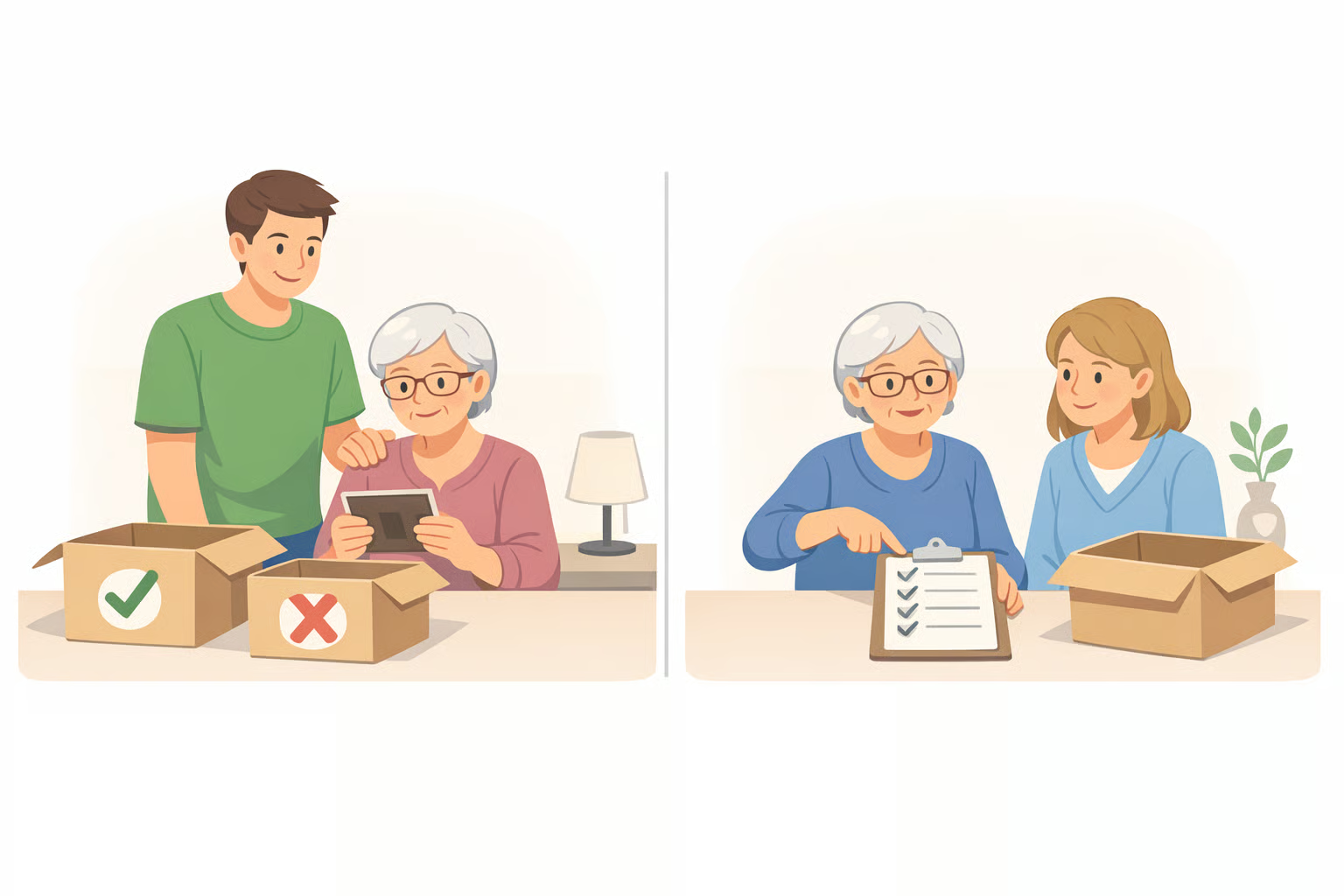
The strongest argument for starting early has nothing to do with organizational efficiency. A parent who begins downsizing in their mid-60s to early 70s is still the person making decisions about the life they built. A parent who starts after a health event often isn't.
Thompson, a housing design specialist who became passionate about downsizing in his 50s after watching his own parents struggle through the process, puts it plainly: "If you're moving in your late 70s, typically you're not solving your own problems, somebody else is and you might not like how they're solving it for you," he told AARP. "Or you're moving because there's a health condition, and so it's a stressful time to downsize, especially if you've been in a home for 30 or 40 years."
For parents who resist the emotional framing of "letting go," a conversation anchored in finances tends to land better. Among adults over 50 who anticipate a future move, affordability is the leading driver: current mortgage or rent burden, a desire to lower housing costs, home maintenance expenses, and property taxes top the list, AARP research shows consistently. That's not a manipulation; it's accurate. As Fenton, a professional organizer cited by AARP, puts it: "Almost across the board, if you're downsizing, you're lowering your monthly costs. Those lower costs can extend to not just the cost of a house but lower monthly utilities, lower maintenance costs over time, and spending less on furniture and decor."
There's also a framing worth using directly. "There's value in not burdening your kid," Fenton says in AARP's guidance. Many older adults find that recast more motivating than any argument about square footage. The decision becomes a gift rather than a concession.
A practical conversation starter: Raise this during a stable, unhurried moment. Avoid the week after a doctor's appointment. Frame it around agency: starting now means they decide what stays, who gets what, and where they land next.
Two different scenarios require two different roles from you:
- If your parent can lead the process: Let them. Your job is logistics and support, not decision-making.
- If a health event has already happened: Shift your goal. Preserve their known preferences wherever possible, document decisions as you make them, and bring in outside help early.
Don't try to run both scenarios simultaneously. They require fundamentally different things from you, and conflating them is one of the more reliable ways to create friction where there doesn't need to be any.
Lesson 2: The hard part is what the objects mean, not what they weigh
Every professional organizer working with older adults eventually hits the same wall: the physical volume of a home's contents is manageable. The meanings attached to them are not. Fenton identifies emotional attachment as the single biggest obstacle to downsizing, ahead of logistics, cost, or timing, per AARP: "It's really hard for a lot of people to let go of things. I think that is one of the biggest hurdles to downsizing, but it's a necessary piece."
Vocabulary matters more than most families expect. One adult daughter clearing her childhood home described her mother's flat refusal to hear her belongings called "stuff." Each object was evidence of a life: artwork from years living abroad in Italy and the Netherlands, a restored 1936 baby grand piano around which the family had gathered for decades, kitchen tools tracing back three generations, per the AP News account. One careless word, "junk," "clutter," "stuff," can end a productive session for weeks.
Family members also arrive with their own memories of the same objects, which creates a secondary layer of conflict that has nothing to do with the parent's attachment. A box of vintage kitchen tools is not neutral terrain when siblings grew up in that kitchen. Naming this dynamic early doesn't resolve it, but it reduces the chance that a disagreement about a flour sifter becomes a disagreement about who loved Mom more. That's the real thing people are fighting about, and everyone in the room usually knows it.
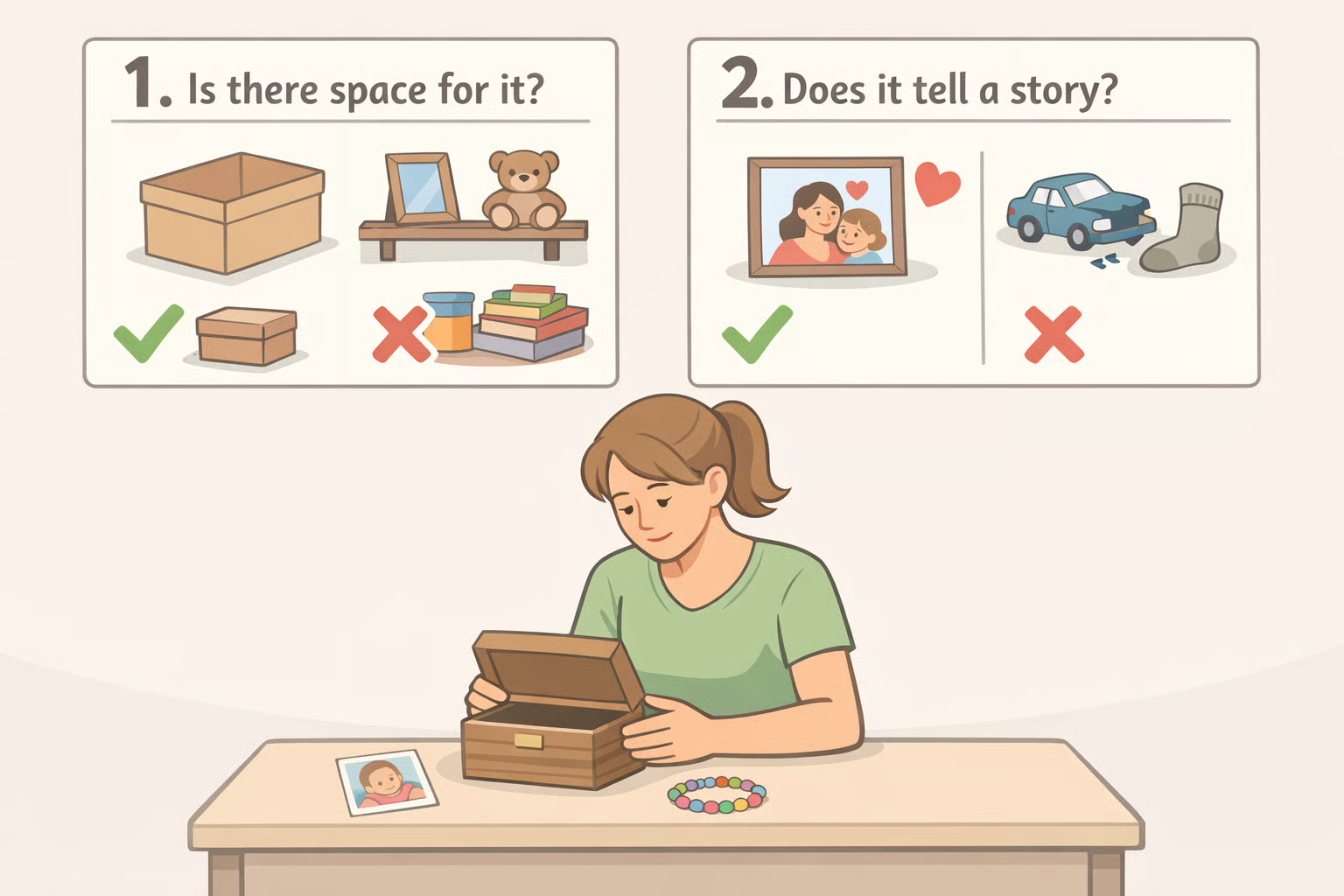
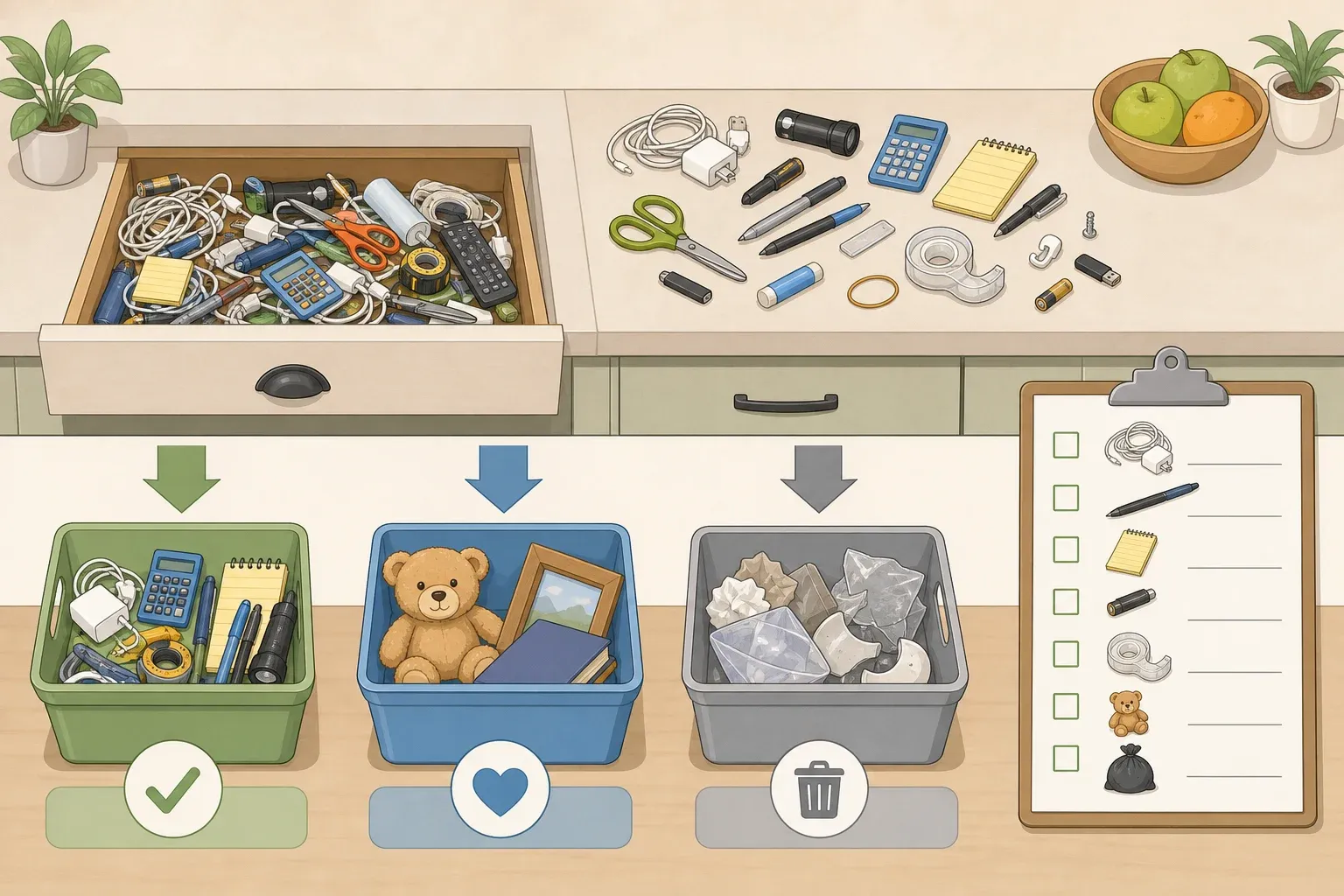
A decision framework for sentimental items, useful when helping aging parents declutter: Before any object gets sorted, apply a two-question test.
- Does this earn physical space in the next home, or does it earn a photograph and a story?
- If no family member takes it, does it need to exist in three dimensions, or would a digital record, a scan, a short video, a written note, preserve what actually matters?
This separates the meaning from the mass. Not every meaningful object needs to survive as an object.
Work through sentimental items in sessions capped at two to three hours. Longer than that and decision quality drops noticeably. Keep a shared log, even a simple notes document, recording what was kept and why, what went to whom, and what was released. That record becomes its own form of preservation.
On sibling conflict: if disagreements over specific items become a blocking problem, bring in a neutral third party before the conflict hardens. A professional organizer is useful here not just for logistics, but because they carry no family history. They can say "no one is likely to want this at auction" without anyone hearing it as an accusation.
Lesson 3: Downsizing before moving to a smaller home means doing the inventory first
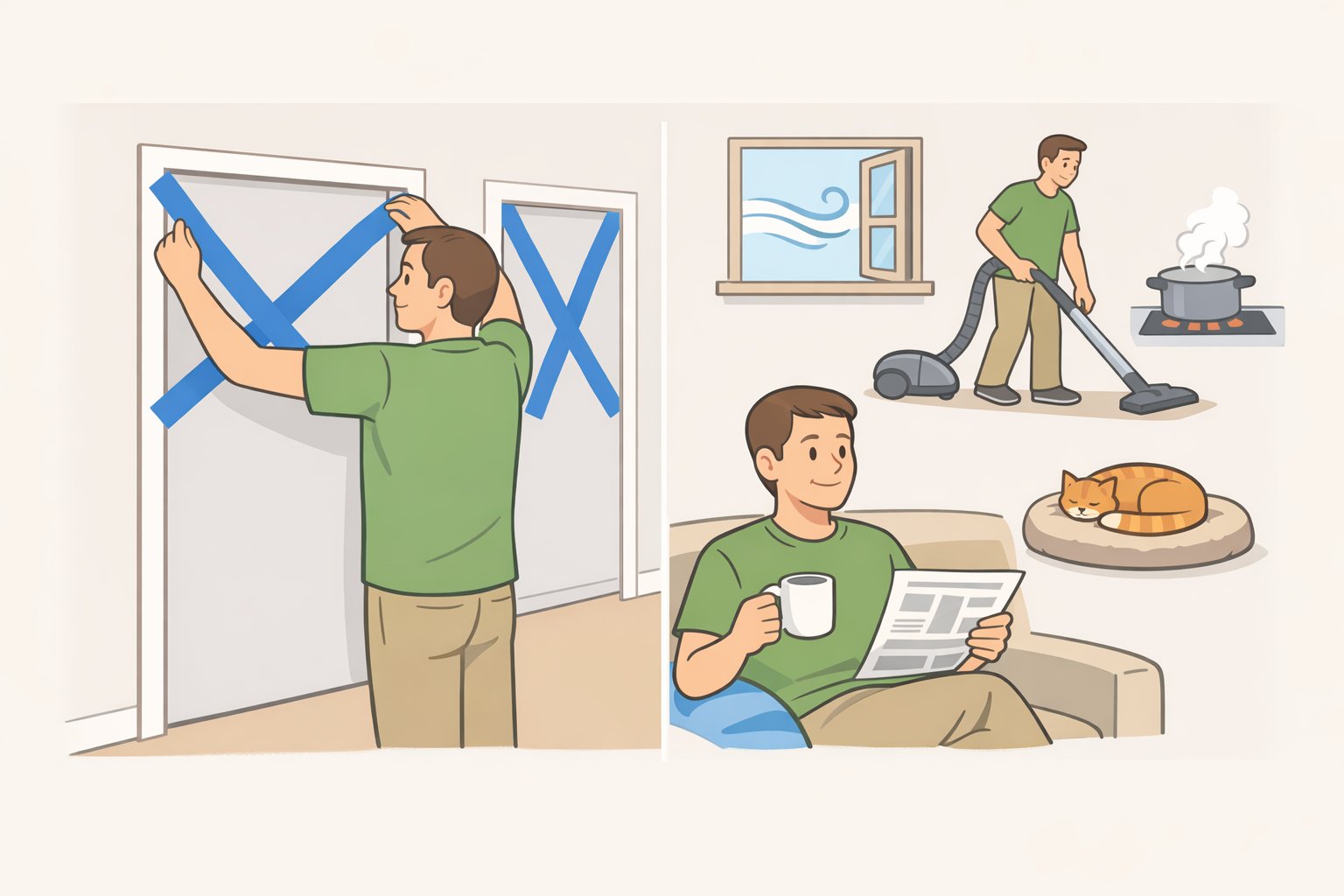
Before anyone commits to a smaller space, Fenton recommends a low-cost experiment: put painter's tape across the entrances to rooms the parent rarely uses, a formal dining room, a guest bedroom, a finished attic, and observe what daily life actually looks like without them for several weeks, as AARP reports. "I love the idea of closing off some of the areas you don't regularly use and try to just study and observe what your life is like without them," she says. The point isn't to trick anyone. It's to generate real evidence about how much space is actually necessary before a lease gets signed.
Most people discover they miss less than they expected. That's the dress rehearsal's real value: it converts an abstract fear into a finding.
After the experiment, inventory what's actually in the house. Here, families consistently encounter a surprise. The market for inherited belongings is far smaller than most people assume. Estate sale representatives regularly tell families that younger buyers have little interest in traditional wooden furniture; china cabinets find no takers, heavy antique pieces generate limited demand, per the AP News account. Charities that accept pianos often won't take instruments older than 20 years, which can eliminate a family's most significant heirloom from every available channel.
Fenton recommends bringing in a professional organizer at the inventory stage, someone who can assess resale and donation value without family history clouding the picture, per AARP. That third-party role also removes the adult child from having to be the one who tells a parent that no one wants what they've kept for 40 years.
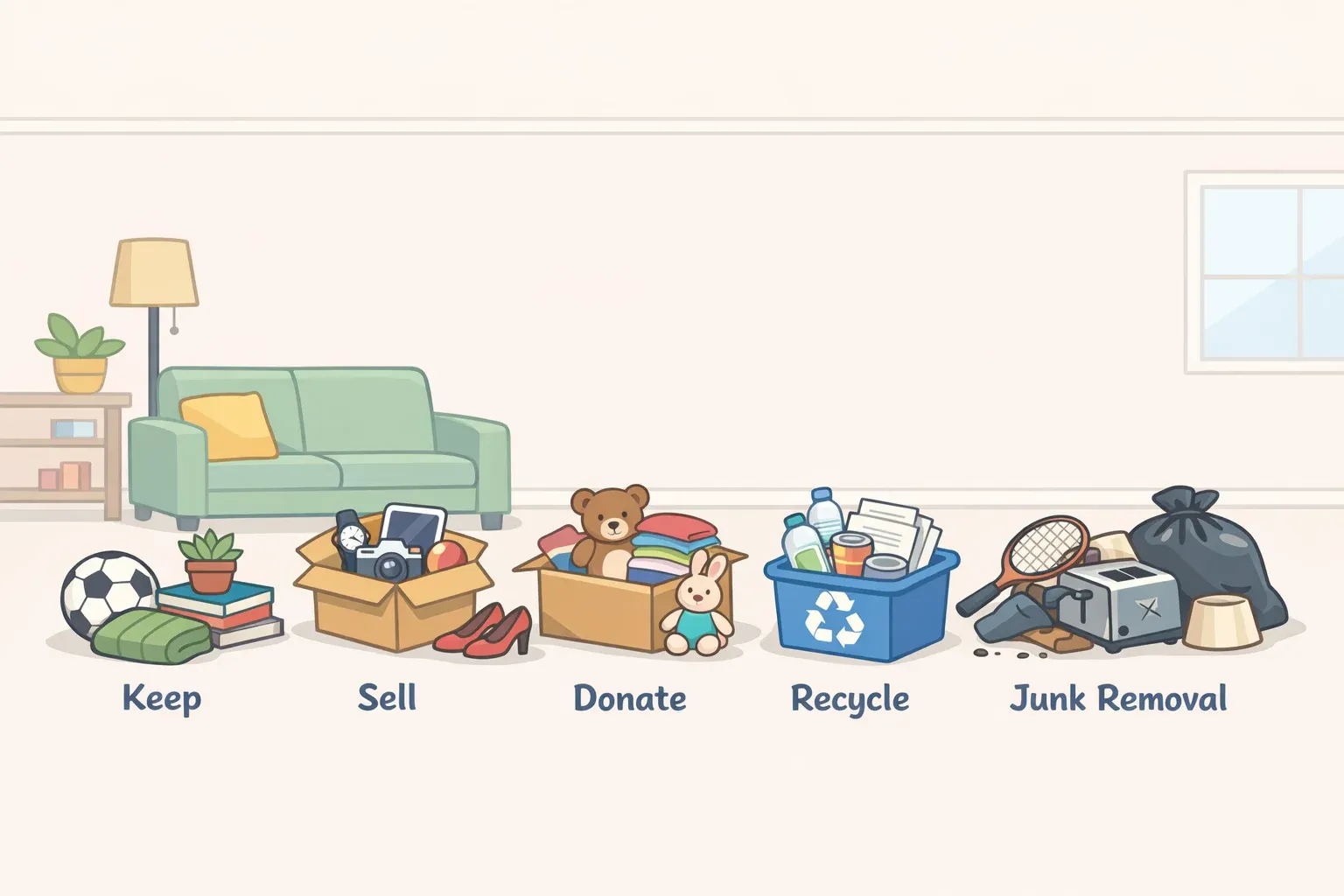
Four categories, not three: Most sorting guides offer keep, donate, trash. Add a fourth: repurpose. Old wooden sleds become holiday décor. A childhood high chair becomes a plant stand, as described in the AP News piece. Repurposing preserves meaning without requiring anyone to display a century-old antique in a two-bedroom apartment.
For large collections, hundreds of records, dozens of boxes of slides, extensive libraries, don't attempt a single processing session. Set a sustainable pace and accept that this part may take a year.
One critical warning: do not move first and sort later. As Fenton puts it in AARP's guidance: "You don't want to try to Tetris your old stuff into your new home." The editing has to happen before the truck arrives, not after.
Lesson 4: Know where your parent is going, because that shapes everything else
The question most downsizing guides underserve is the simplest one: what is your parent actually moving toward? The answer determines what gets kept, what gets released, and whether the move is experienced as loss or relief.
Only half of adults 18 and older feel confident their current community will continue to meet their needs as they age, according to AARP's 2024 Home and Community Preferences Survey. Many parents are already quietly aware that staying put may not remain viable. That awareness, when it surfaces, is an opening.
Starting at 75, homeownership rates drop as more older adults seek the accessibility and amenities that apartment buildings offer: elevators, maintenance-free living, on-site services, AARP data shows. That shift reflects a real change in what daily life requires, not just a preference for smaller spaces. AARP also notes that more older adults over 60 are now living alone, while a growing segment is moving into multigenerational households. Thompson, who has spent a decade downsizing from a 5,000-square-foot home to a 1,100-square-foot apartment in Grand Rapids, Michigan, points to cohousing and pocket communities as another viable option: smaller private spaces organized around shared amenities and social connection, per AARP.
Helping a parent think concretely about destination, a smaller owned home, a rental apartment, a multigenerational arrangement, a co-living community, reframes the inventory process entirely. You are not subtracting; you are fitting a life into a specific, known space.
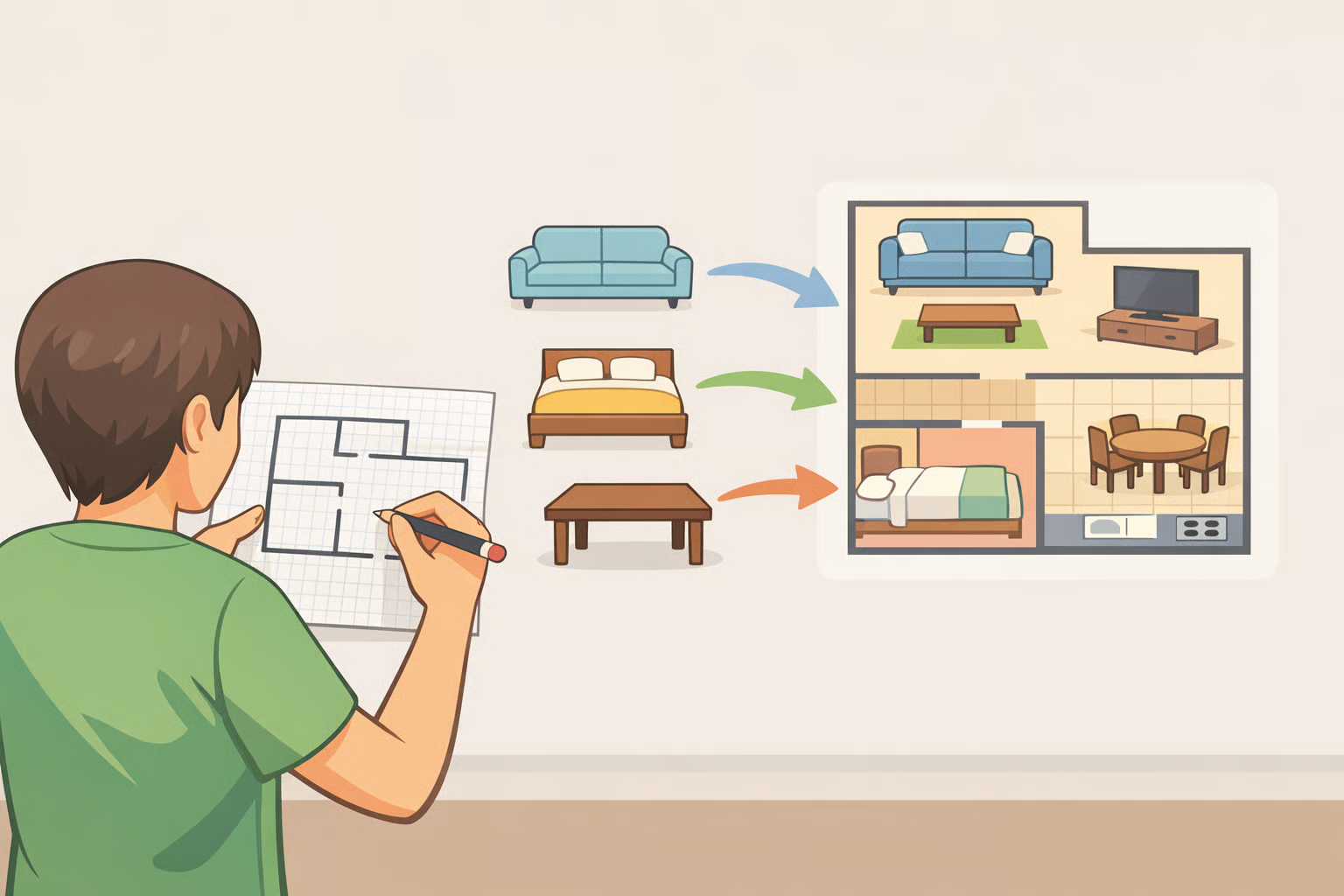
Sketch a rough floor plan of the target home and map what will physically fit. This shifts the conversation from abstract sacrifice to a solvable spatial problem: not "I'll lose everything," but "we need to figure out where the piano goes, or who gets it." The dress rehearsal findings become directly useful here. If the unused rooms held contents that don't fit the new floor plan, that's data.
Before finalizing a destination, ask three questions:
- Does this space allow for aging in place if health changes?
- Does the surrounding community offer what daily life actually requires, walkability, services, proximity to people?
- Does it accommodate the items that genuinely matter, rather than requiring your parent to compress an entire life into whatever happens to fit?
A move that answers those questions well is far more likely to feel like a beginning than an ending.
Four lessons, one principle
The families who navigate this best are the ones who started early enough that the parent was still the person making choices. The ones who struggled started after a health event, when grief, logistics, and time pressure fell entirely on adult children who were simultaneously managing their own loss. Agency is the thing worth protecting most, and it has an expiration date.
The four lessons hold together as a sequence: timing (before a crisis, not during one), emotion (objects carry meaning, respect that, then work with it), inventory (go in without illusions about what the market wants), and destination (know the next chapter before editing the current one). Each can be approached as a separate conversation, in separate sessions, spread across months. None of them need to happen all at once.
The "not burdening your kids" framing is worth returning to, because it's the most honest summary of what early, thoughtful downsizing actually accomplishes. It converts a potential crisis project into a considered handoff. Thompson, who watched his own parents struggle before making the work his profession, frames the goal simply: get people downsizing earlier, "when it's their choice," he told AARP. That's not a small thing to give someone.
For readers ready to take the first step, AARP's Downsizing the Family Home workbook offers room-by-room checklists and practical triage guidance. A useful companion to the harder conversations this process always requires.










Comments
Be the first, drop a comment!