




How to Organize Bookshelves Without Color Coding
Color-coded bookshelves look great in one specific context: a photograph taken by someone who will never need to find anything on them. As a practical method for how to organize bookshelves you actually use, sorting by spine color is about as useful as filing paperwork by folder color. This guide walks through replacing that approach with a retrieval-based system, organized around how you actually look for books. By the end, you'll have a sorting method matched to your specific collection, a physical placement strategy that makes the most of your shelf space, and a maintenance habit that keeps it working.
What you need before starting:
- Enough floor space to pile everything off the shelves temporarily
- 30–60 minutes, depending on collection size
- A rough sense of how you usually search for a book: by author, by subject, by mood, by series
Which bookshelf organization method fits your collection
Before touching a single book, answer one question: how do you look for a title? The answer determines everything that follows.
- You remember books by who wrote them → organize by author's last name, alphabetically
- You browse by type of book → sort by genre or subject first, then author within each category
- You reread series and follow specific authors → publication order within each series, grouped by genre
- Multiple people share the shelves → separate zones by person, each sorted by their own logic
That's the whole decision. Everything in the steps below is just implementation.
Why color-coded bookshelves fail
Lisa Zaslow, founder of Gotham Organizers, puts the color-coding trend's peak roughly a generation back, when sorting spines into rainbow order was a genuinely fresh idea. The look has since aged considerably. Zaslow now compares color-blocked shelves to avocado Formica countertops: a style choice that made sense once and now mostly signals that nothing has been updated since (Good Housekeeping, this week).
Style aside, the more serious problem is retrieval. Kendra Littlejohn of Organized by Kendra notes that what looks striking in a photo tends to feel overwhelming in person, and that finding a specific title in a color-sorted collection can feel like searching for a needle in a haystack (Good Housekeeping, this week).
The central organizing principle is simple: arrange books by how you remember and retrieve them, not by how they look lined up. As Zaslow puts it, "The point of organizing is to make things easy to find" and nobody reaches for a book by trying to recall what color its spine is (Good Housekeeping, last September).
The limited exception: color doesn't have to disappear entirely. The problem is using it as the primary logic across an entire collection. Littlejohn notes you can still work color in within categories, or use it as a deliberate accent on one shelf, without letting it drive the whole system (Good Housekeeping, this week). Rainbow order for a dedicated low shelf of kids' board books works fine (Christina All Day, last May). Color as the organizing logic for every shelf you own is what makes things hard to find and the overall effect feel dated.
One practical caveat: if the real alternative to a color-sorted shelf is boxing the books and storing them in a closet, display them however keeps them accessible. Meck's position is that the worst bookshelf system is the one that results in books being forgotten entirely (Good Housekeeping, last September).
Step 1: Pull everything off the shelf and decide what stays
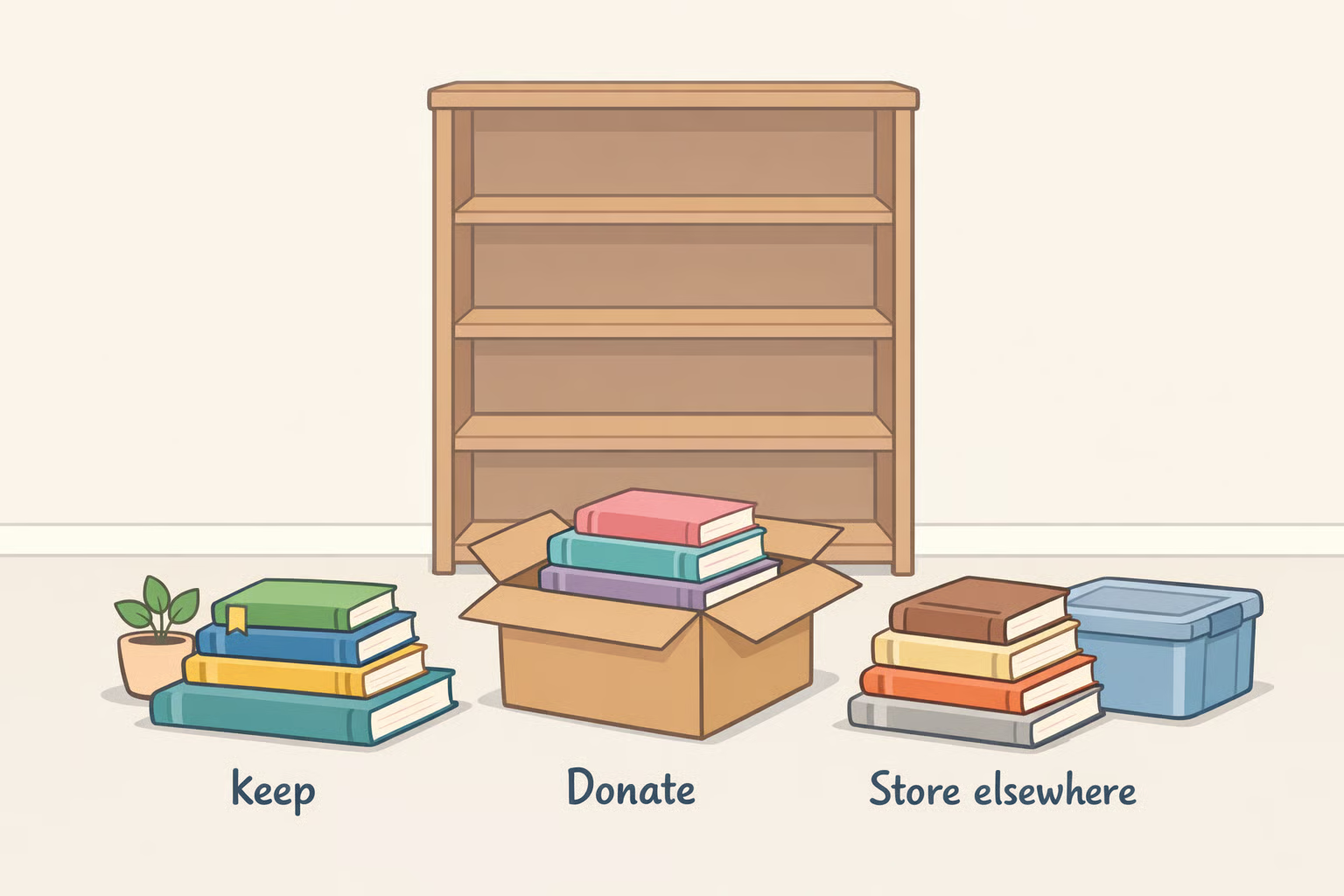
Empty the bookcase completely. Everything on the floor.
Sort each item into three categories: keep on the shelf, donate, or store elsewhere. Books you've finished and won't reread belong in the donate pile. Seasonal titles, like holiday cookbooks and annual reference guides, don't need year-round prime shelf space (Belleze, earlier this month). Be honest here. The goal is a shelf you actively use, not a storage unit with a decorative front.
Most bookshelves fail not because the organizing system was wrong, but because the shelves were overloaded to begin with: books stacked sideways, non-book items consuming a third of the space, no room to add anything new without immediately needing to reorganize (Belleze, earlier this month). Fixing the conditions before the system goes in is what makes the system stick.
Step 2: How to organize bookshelves without color coding

With your sorting logic already chosen from the quick guide above, apply it here.
Mostly fiction? Sort by subgenre first (mystery, literary fiction, romance, sci-fi), then alphabetically by author's last name within each group. Series go in publication order, not alphabetically (Christina All Day, last May). Good Housekeeping's experts specifically recommend subgenre sorting for collections that skew heavily toward fiction (Good Housekeeping, this week).
Large or mixed collection? Sort by author's last name, alphabetically across the whole collection. Straightforward to maintain, and it scales as the collection grows (Good Housekeeping, this week).
Nonfiction or reference-heavy library? Sort by subject or category, but use your categories, not a general taxonomy. When Zaslow helped a reverend organize her church office, what looked like one "religion" section from the outside was meaningfully divided by the owner into liturgy, theology, scripture, and biblical history. Those distinctions reflected how she actually used the books (Good Housekeeping, last September). Nonfiction sections should reflect your knowledge and use case, not a bookstore's floor plan.
Mixed fiction and nonfiction? Use genre-then-author for fiction, author for nonfiction and reference, and keep them in separate zones. A legitimate and maintainable combination (Christina All Day, last May).
Add a frequency-of-use layer. Whatever primary system you choose, overlay it with access. Eye level and waist level are the most effortless positions on any shelf; those spots should hold the books you reach for most often. Books you've finished and keep for occasional reference can live higher up or closer to the floor (Belleze, earlier this month). Apply this within each category, not as a rule that cuts across the whole bookcase.
Common edge cases:
- Series: Shelve in publication order, not alphabetically by title. A series shelved alphabetically is harder to navigate than one that simply runs left to right in reading sequence.
- Active TBR pile: Keep unread books you plan to get to soon at eye level within their category. Don't exile them to a separate stack that becomes invisible.
- Shared household shelves: Each person's most-used books should sit at a comfortable reach height for them. If the shelves are adjustable, consider separate zones for different household members' collections.
- Kids' books: A dedicated low shelf organized however keeps small hands happy, including rainbow order, is a sound exception to the retrieval-first rule.
Step 3: Place books on the shelf with weight and accessibility in mind

With the sorting logic set, physical placement comes down to two practical rules.
Heavy books go low. Large hardcovers, encyclopedias, and oversized reference volumes belong on the bottom shelves, for stability and to make adjusting upper shelf heights easier (Belleze, earlier this month). Lisa Malone of InHome Boutique Spaces recommends grouping taller books together so shelf heights can be set to fit them, and keeping paperbacks separate from hardcovers, not for aesthetic reasons, but because mixed formats waste space and make shelves harder to navigate (Good Housekeeping, this week).
Leave room to breathe. As a good rule of thumb, keeping roughly one-third of each shelf open rather than packed end-to-end gives the display a lighter feel and means new books can be added without immediately breaking the system (Belleze, earlier this month).
If the bookcase has adjustable shelves, resize each tier to match the actual height of what's sitting on it. A shelf calibrated for tall art books but holding standard paperbacks wastes several inches of vertical space per row, which adds up quickly across a full bookcase.
Keeping it that way: a three-stage maintenance habit
A reorganized bookshelf drifts back toward disorder without a light maintenance routine. The process runs in three stages (Belleze, earlier this month):
- Once, to reset: The full sort described above. Take a photo when it's done; this becomes the reference point for what the system is supposed to look like.
- Monthly (ten minutes): Realign spines, return books to their zones, and remove anything that migrated onto the shelf, a remote, a charger, a receipt.
- Seasonally: Rotate unread books from the back row to eye level, move finished titles you won't reread to a donation pile or storage, and pull any seasonal books that don't need year-round prime space (Belleze, earlier this month).
Skip the monthly check a few times and the shelf quietly reverts: one stacked paperback here, one misplaced remote there, until the original system is invisible. Ten minutes a month is the entire cost of avoiding that.
For the donate pile: local libraries, community centers, and preschools typically accept book donations (Belleze, earlier this month), a practical exit route for books that didn't make the keep cut.
What you now have
A bookshelf organized by retrieval, by genre, author, subject, and frequency of use, is faster to navigate, easier to maintain, and more honest about what you actually read. A shelf organized around retrieval stays useful longer because it matches how you actually read, borrow, and put books back. The reset-once, check-monthly, edit-seasonally rhythm is what keeps that from quietly unwinding.
Color can still live on the shelf. Just not in charge of it.














Comments
Be the first, drop a comment!