



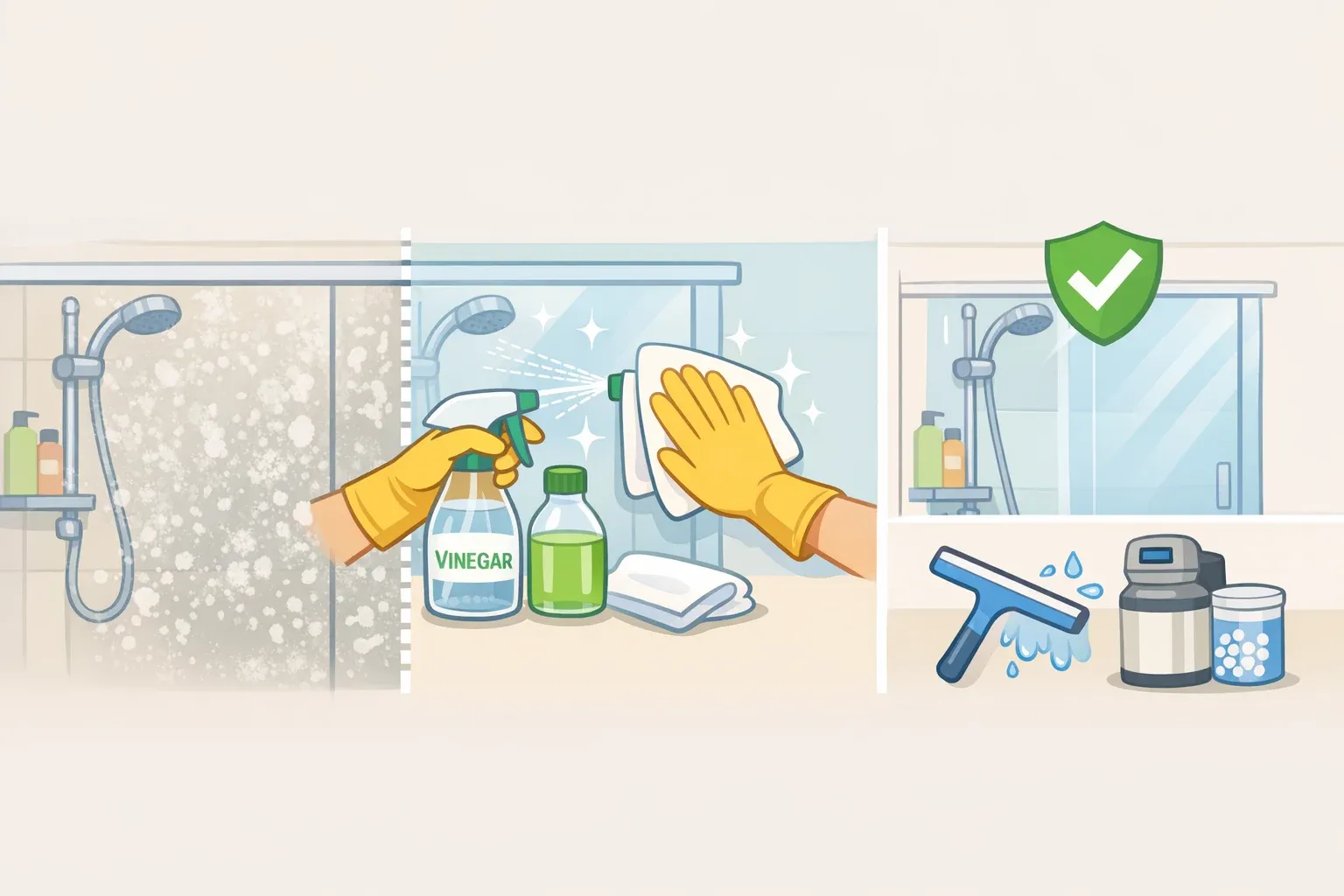
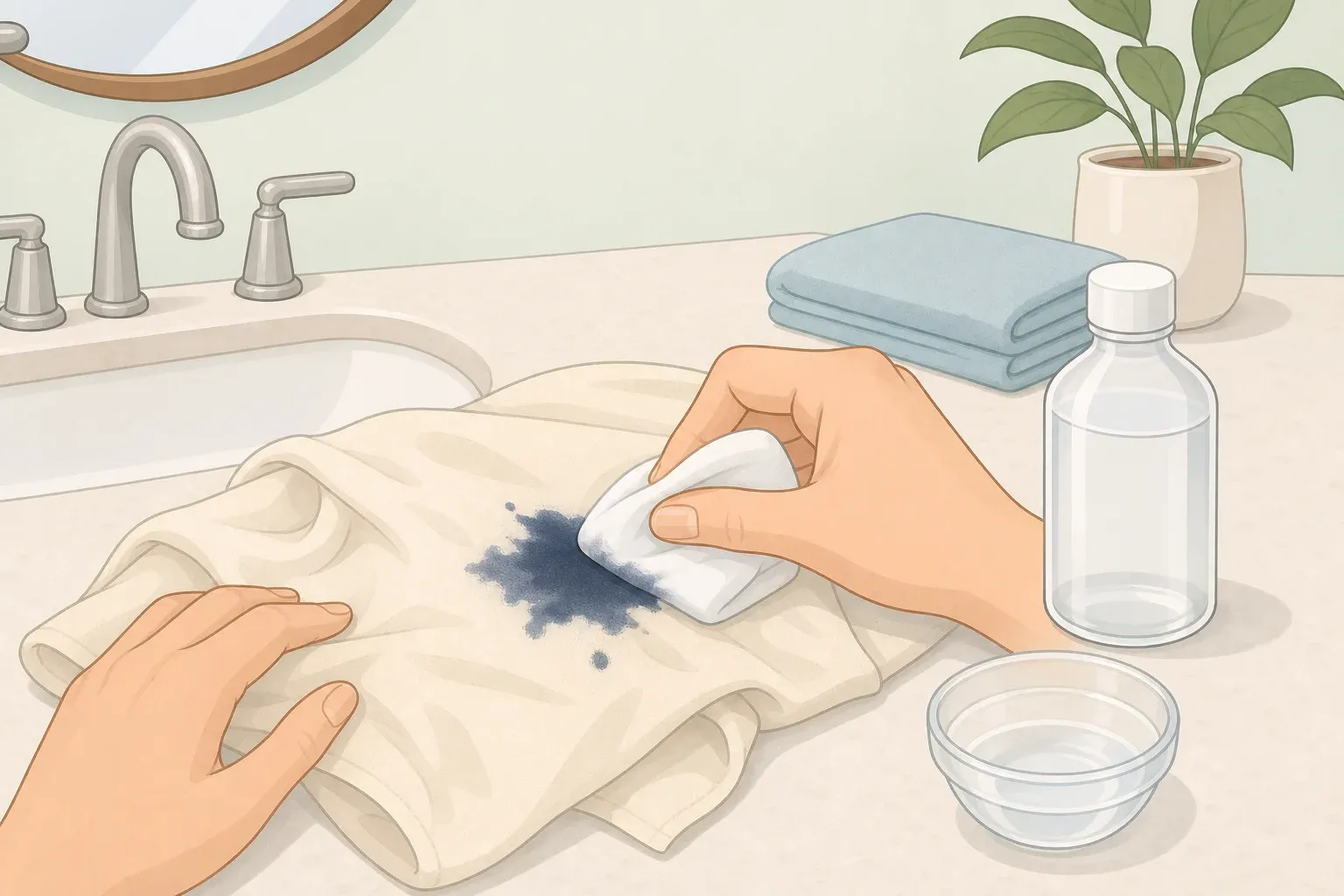
Start with a quick test: dab white vinegar onto the stained area. If it dissolves the deposit, the methods below apply. If nothing happens, the problem is likely mold or a different type of staining, hard water stains, and mold require entirely different treatments.
Hard water picks up calcium and magnesium as it travels through limestone and chalk underground. When droplets dry on a surface, those dissolved minerals crystallize and bond as a chalky, alkaline deposit. Scrubbing alone can't dissolve what's chemically bonded to a surface; acid-based cleaners work because they break down the deposit itself. The stains are typically white but can appear brown or rust-colored depending on local mineral composition, and, left long enough, they can become permanent.
Cleaning dissolves what's already there. Prevention or, in stubborn cases, water treatment stops more from forming. Both halves matter.
What hard water stains actually are and why they keep coming back
Rainwater starts naturally soft and slightly acidic. As it filters through rock layers, it picks up calcium and magnesium; water hardness is simply the concentration of those dissolved minerals. When a droplet dries on a shower door or faucet, the water evaporates, but the minerals stay behind, bonding to the surface as a hard, chalky layer.
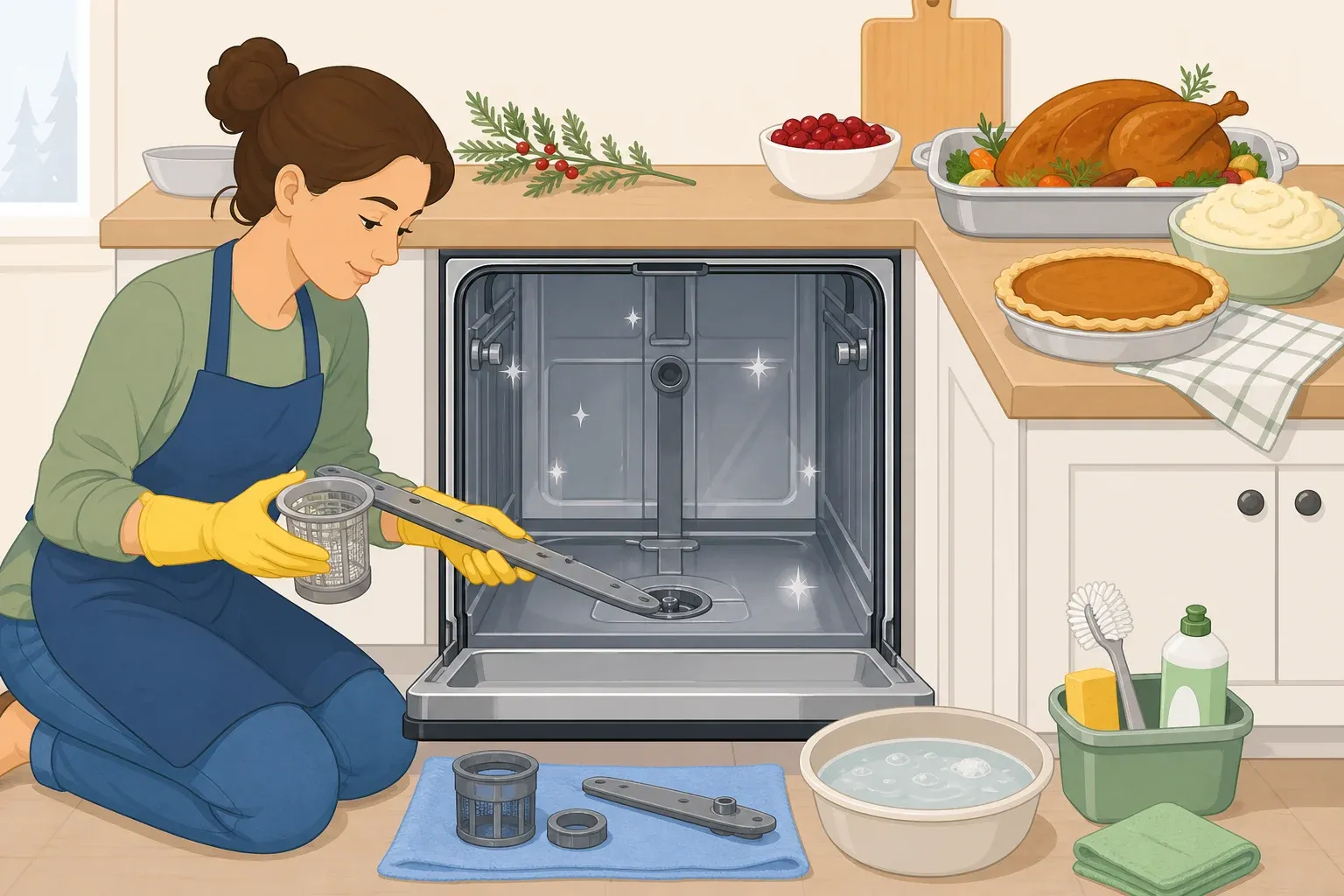
Heat adds a different dimension. In a dishwasher or water heater, calcium bicarbonate converts chemically to solid calcium carbonate and plates the interior of pipes and heating elements. That scale acts as an insulator, reducing heat transfer efficiency and forcing the unit to work harder. The problem isn't just cosmetic.
Stains return after cleaning for a simple reason: the moment a surface is rinsed with tap water, the same minerals just removed are reintroduced. Cleaning treats the deposit. Only addressing the mineral source prevents recurrence.
Know your surface before you start: what tolerates acid and what does not
Getting the method wrong costs more than the stain. Read this before reaching for anything.
Safe for mild acid (vinegar-based solutions): Glazed ceramic tile, glazed porcelain, chrome and stainless steel fixtures, standard glass, and toilet porcelain all generally tolerate vinegar-based cleaners. Always test a hidden area first on any surface with an unknown coating or finish.
Not safe for acid ever: Natural stone surfaces — marble, travertine, and limestone — react to acid the same way mineral deposits do. Vinegar will etch and permanently dull the finish. Use a pH-neutral stone cleaner or a gentle baking soda paste instead, and consult the manufacturer before trying anything stronger.
Showerhead finishes: Soaking a showerhead in vinegar is widely recommended, but can strip certain finish coatings, warns Good Housekeeping. Use the targeted toothbrush method described below instead.
Abrasives: Stiff brushes and steel wool strip protective finishes and create micro-scratches in glass that trap future mineral deposits. Pumice-style toilet cleaning stones are an exception — made of crushed and compressed glass, they remove deposits without scratching glazed porcelain, but must never be used on unglazed or soft surfaces
Ventilation: Prolonged exposure to acid-based cleaners, including vinegar, can irritate the respiratory tract. Open a window or run the exhaust fan before starting.
How to remove hard water stains: surface-by-surface instructions
Every surface below follows the same escalation logic. Start light. Repeat once before stepping up.
Light buildup: Vinegar solution, 15-minute dwell, microfiber wipe
Moderate buildup: Repeat the vinegar application; add a gentle eraser-type sponge for glass or a soft-bristle brush for tile
Severe or non-responsive: Move to a commercial descaler formulated for mineral deposits. Wear gloves, ensure ventilation, follow label instructions, and avoid prolonged contact with grout or metal fixtures. Repeated use can degrade rubber seals.
How to remove hard water stains from shower glass
Shower doors are where most complaints start, and where incorrect technique causes the most avoidable damage.
Combine equal parts distilled white vinegar and water in a spray bottle; add 1 teaspoon of dish soap to help the solution cling to vertical glass
Spray the door completely and let it sit for 15 minutes
Wipe in small sections with a microfiber cloth
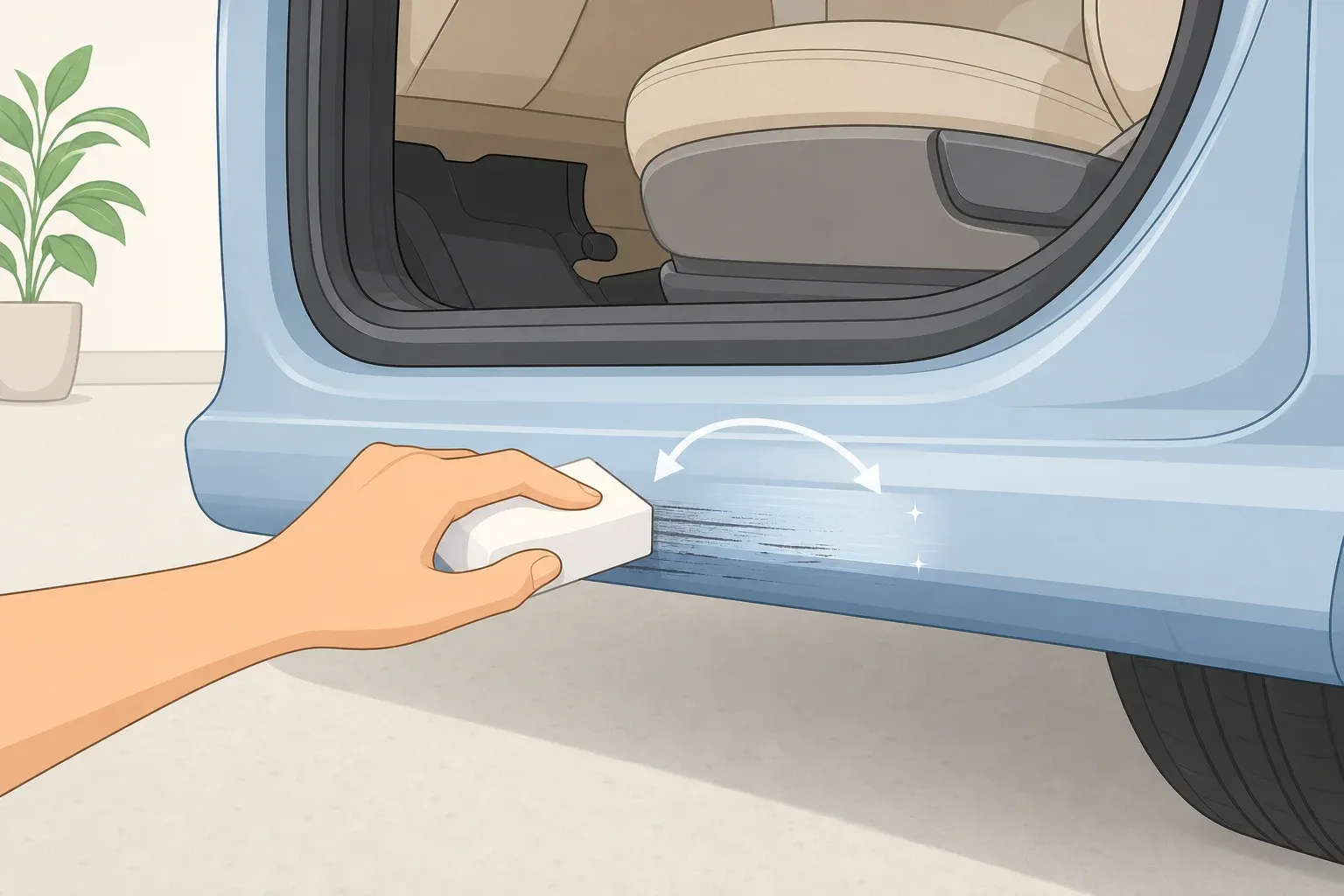
For heavier buildup, follow with a gentle eraser-type sponge, never steel wool or stiff brushes, which create micro-scratches that trap future deposits
Rinse thoroughly and buff dry immediately; water droplets left on the glass will leave new mineral spots
For stubborn buildup that doesn't shift after a second attempt, a commercial descaler specifically formulated for mineral deposits is the appropriate next step. Follow the label instructions and keep the space ventilated.
One caveat worth knowing: if the glass appears permanently hazy after cleaning — not just cloudy — the surface may already be etched. Etched glass doesn't respond to further cleaning and may require professional resurfacing or replacement.
Shower walls and tile (glazed ceramic or porcelain)
Mix equal parts distilled white vinegar and water in a spray bottle.
Spray affected surfaces thoroughly and let the solution sit for at least 15 minutes. The acid needs time to dissolve the deposit, not just wet it.
Wipe with a microfiber cloth, rinse thoroughly, and buff dry.
Light to moderate buildup lifts cleanly. If residue remains, repeat once before escalating. Most experts recommend the 1:1 ratio with a minimum 15-minute dwell. Glazed ceramic and porcelain are the easiest tile surfaces to restore.
Grout lines: Make a paste of baking soda and water, apply to grout, let sit 10–15 minutes, scrub with a soft brush, and rinse. Baking soda is mildly abrasive without the acid risk. This is important because vinegar can degrade grout with repeated use.
Chrome faucets and fixtures
Mix a 50/50 solution of white vinegar and water
Soak a cloth in the solution, wrap it around the stained fixture, and leave it for up to 10 minutes
Remove the cloth, scrub with a soft-bristle brush, then rinse and buff completely dry
Sink aerators: Unscrew the aerator screen, soak it directly in vinegar for 10 minutes, and scrub with a toothbrush to clear mineral buildup from the mesh, as Good Housekeeping recommends. A noticeably weakened stream at the tap is often the first sign the screen needs attention worth addressing before the restriction worsens.
Showerhead
Dip a toothbrush in undiluted white vinegar and scrub directly around each water jet
Wipe clean, then run the shower briefly to flush loosened deposits through the jets
Do not submerge the showerhead in a vinegar soak. Despite being widely circulated, this approach can damage certain finish coatings. The toothbrush method achieves the same result without that risk. A reduced water stream is often the first sign of jet blockage, per Good Housekeeping.
Toilet bowl
For light to moderate buildup vinegar and baking soda:
Pour 1 cup of white vinegar around the inside of the bowl, swish with a brush, and let sit for 1 minute
Sprinkle 1 cup of baking soda around the bowl it will fizz; let sit for 10 minutes
Add a second cup of vinegar; let the solution work for 30 minutes
Scrub and flush
For heavy mineral lines commercial product: Apply a hard-water-specific toilet bowl cleaner under the rim, let sit 15 minutes, scrub, and flush. Severe buildup may need a second application.
For hardened ring lines pumice cleaning stone: Wet both the stone and the bowl surface before use, then scrub the deposit line gently. These stones remove deposits without scratching glazed porcelain, but never use pumice on unglazed surfaces.
Drinking glasses
Warm white vinegar in the microwave until hot but not boiling; pour into a basin large enough to submerge the glasses
Submerge for 10 minutes, rotating to cover all sides
Remove, sprinkle baking soda directly on the glass surface, rub gently with fingers, rinse, and buff dry
Experts recommend warming the vinegar first heat improves the acid's effectiveness on bonded mineral deposits.
How to stop hard water stains from coming back
Most buildup is preventable. A short daily habit beats periodic heavy cleaning on every measure: time, effort, and surface wear.
Daily (30 seconds): Wipe wet surfaces dry after use, shower glass with a squeegee, faucets and fixtures with a microfiber cloth. Keeping fixtures dry by wiping them down goes a long way toward preventing buildup. When water can't sit and evaporate, minerals can't deposit.
Weekly: Light treatment with diluted vinegar spray on glass and glazed tile keeps deposits from accumulating between deeper cleanings.
Annually: For porous tile and grout, inspect and reapply penetrating sealer. Sealed surfaces resist mineral penetration and are significantly easier to clean.
When to consider a water softener: If stains return consistently across multiple fixtures despite regular maintenance, the surface isn't the problem; the water is. Ion-exchange water softeners use salt to filter out calcium and magnesium before they reach any fixture, reducing the minerals that cause limescale. The scale buildup inside appliances is worth factoring in as well: scale acts as an insulator, reducing heat transfer efficiency and forcing water heaters to work harder over time. Whole-home installation requires a licensed plumber.
Point-of-use filters (reverse osmosis): These reduce mineral content at specific fixtures without whole-home installation, a practical option for a single problem sink or shower, though they address individual fixtures only.
When to call a professional: If stains have etched natural stone, grout discoloration hasn't responded to deep cleaning and resealing, or scale is extensive across multiple surfaces, stop escalating the DIY effort. Professional tile restoration is more cost-effective at that point. Professionals use specialized equipment and surface-appropriate treatments that home methods can't replicate.
Keep a basic kit within reach of problem areas: spray bottle, white vinegar, baking soda, microfiber cloths, soft-bristle brush. Surface type determines the method: glazed ceramic, porcelain, chrome, glass, and toilet porcelain tolerate mild acid cleaners; natural stone never does. Act early because the longer deposits sit, the harder they are to remove. A 30-second wipe-down after the last shower of the day handles most of it before it starts.


Comments
Be the first, drop a comment!