



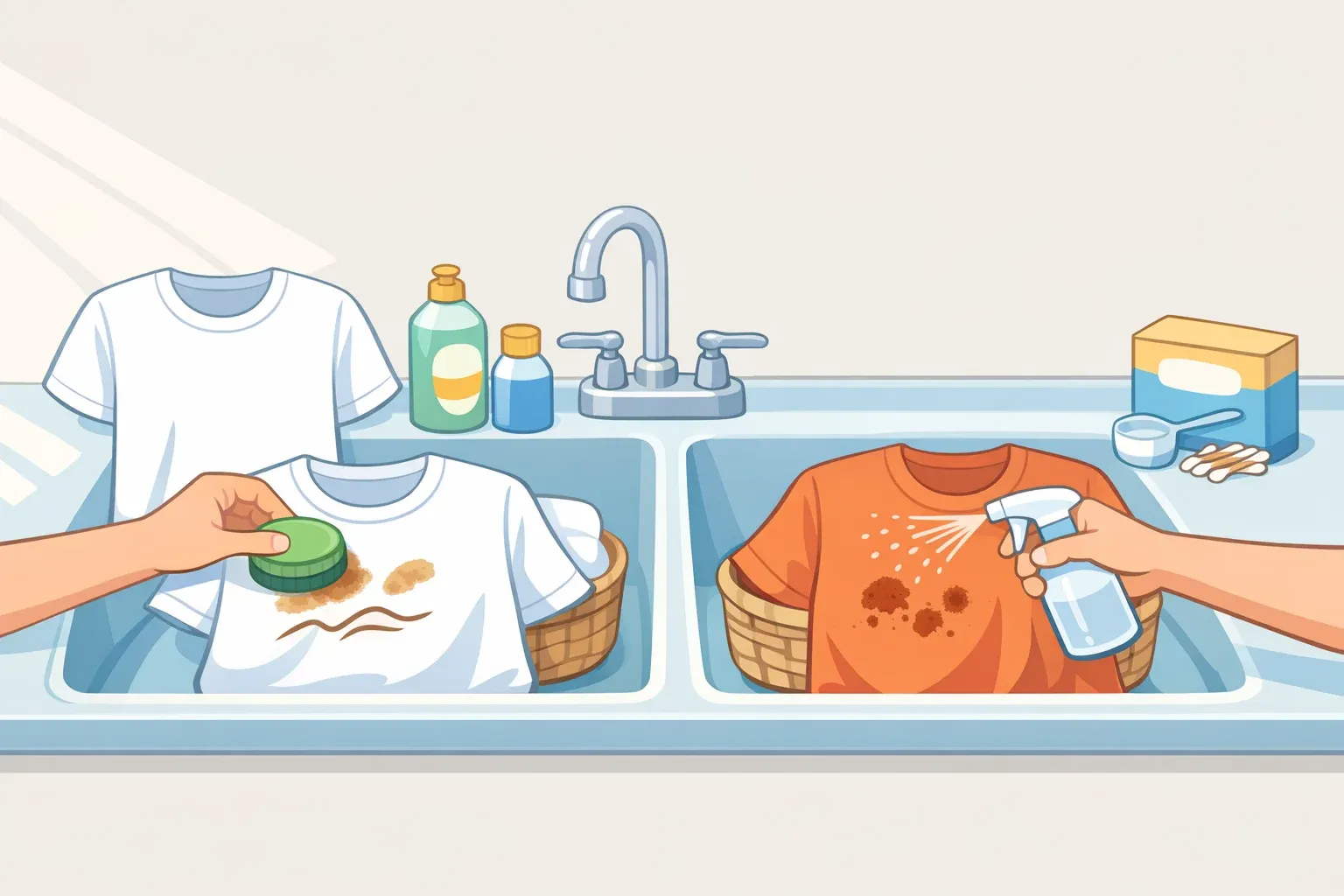
How to remove sunscreen stains from clothes: white vs. orange
Most sunscreen stain removal fails because of a misdiagnosis, not a bad technique. The white chalky smear on a dark shirt is a grease problem. The orange or rust-colored mark that appeared after laundry is something else entirely, closer to a rust stain, and the tools that remove grease will do nothing for it. Chlorine bleach will make it permanent.
Knowing how to remove sunscreen stains from clothes starts with identifying which stain you're dealing with. Sunscreen's oils, waxes, and UV filters are engineered to cling to surfaces, including fabric fibers, according to a Good Housekeeping cleaning lab analyst. But the orange discoloration that surfaces after a wash cycle isn't residual grease. It's the product of avobenzone, a UV filter in chemical sunscreens, reacting with iron ions in hard water to form a rust-like compound that bonds to fabric, as both Cleaning Science and Laundry with Olivia explain. Two separate problems, two separate treatments.
One rule covers both: do not put the garment in the dryer until the stain is gone. Heat bonds both types of compound to fabric and can make removal significantly harder or impossible, per Good Housekeeping and Kook-Off. Everything else depends on color.
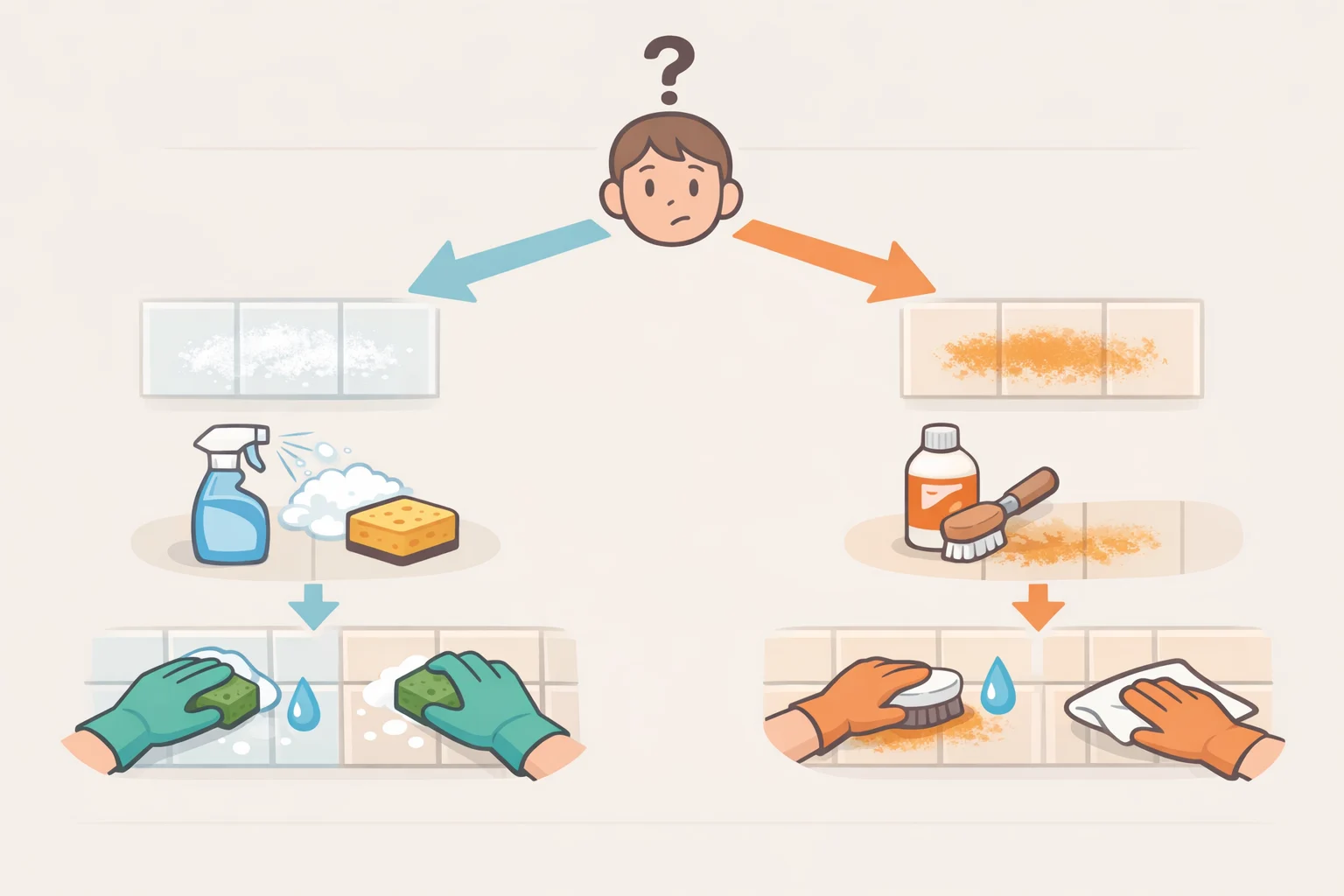
Quick triage:
- White, chalky, or greasy mark: Path A (grease treatment)
- Orange, rust-colored, or yellow mark that appeared or worsened after washing: Path B (rust/chemical treatment)
- Either type: no chlorine bleach on orange or rust-colored stains
Why orange sunscreen stains are actually rust
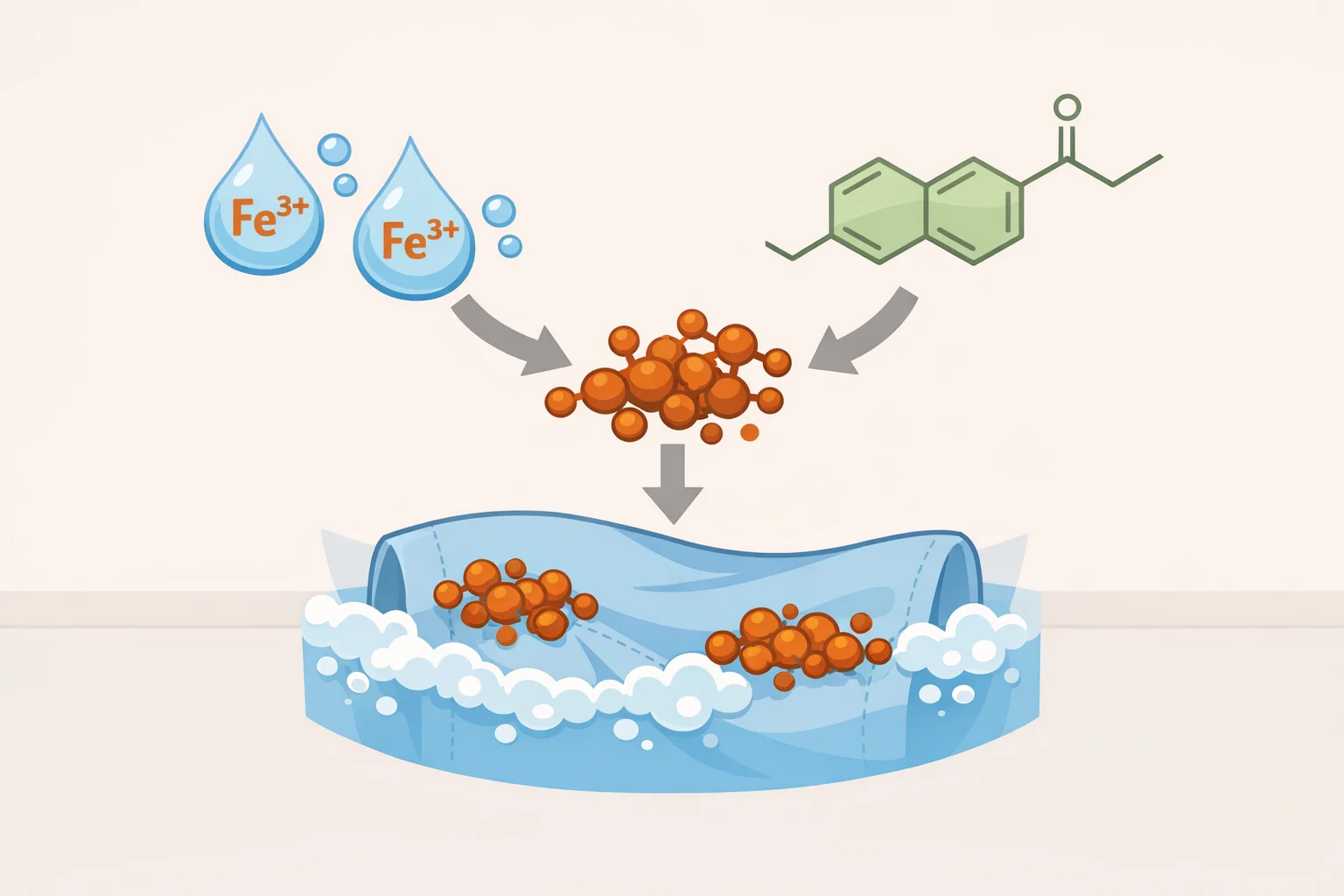
The orange mark is not dye from the sunscreen. It's the result of a chemical process called chelation: avobenzone wraps around iron ions present in hard water during the wash cycle, forming a reddish-orange compound that bonds to fabric fibers, according to Cleaning Science. Because the reaction happens in the machine rather than at the point of skin contact, the stain can appear or worsen after washing rather than before it, Laundry with Olivia notes. Running the item through a second regular wash cycle won't help. Standard detergent is formulated for food and organic dirt, not metal-based compounds.
Chlorine bleach makes things considerably worse. As an oxidizer, it adds oxygen to the rust reaction, which intensifies the iron-based compound and can permanently fix it to the fibers. Cleaning Science describes this as effectively "tanning" the rust into the fabric. Once chlorine bleach has been applied to an orange avobenzone stain, reversal is very difficult.
The bleach problem extends beyond avobenzone. A 2025 study published in Chemical Communications tested eleven sunscreens and found that seven produced red staining when exposed to bleach. All seven contained DHHB (diethylaminohydroxybenzoyl hexyl benzoate), a UV filter distinct from avobenzone. The reaction involved an unusual chlorination of the DHHB molecule that caused it to absorb most visible wavelengths except red, as Phys.org reported last November. The practical takeaway: keep chlorine bleach away from anything that's been near sunscreen, regardless of which UV filter is listed on the label.
Mineral sunscreen stains are a different problem. The white chalky residue left by zinc oxide and titanium dioxide involves particles and oils, with no iron-reaction risk, and it's simpler to treat. One caveat: if heat is applied before removal, zinc oxide can oxidize and yellow permanently, per Kook-Off. The dryer rule applies here too.
How to remove sunscreen stains from clothes, step by step
Before starting either path:
- Check the garment's care label
- Do not machine dry until the stain is fully gone
- Do not use chlorine bleach on any orange or rust-colored mark
Path A: white, chalky, or greasy residue
-
Scrape off excess. Use a spoon or dull knife to lift any visible sunscreen off the fabric surface. Don't rub rubbing pushes it deeper into the fibers (Laundry with Olivia).
-
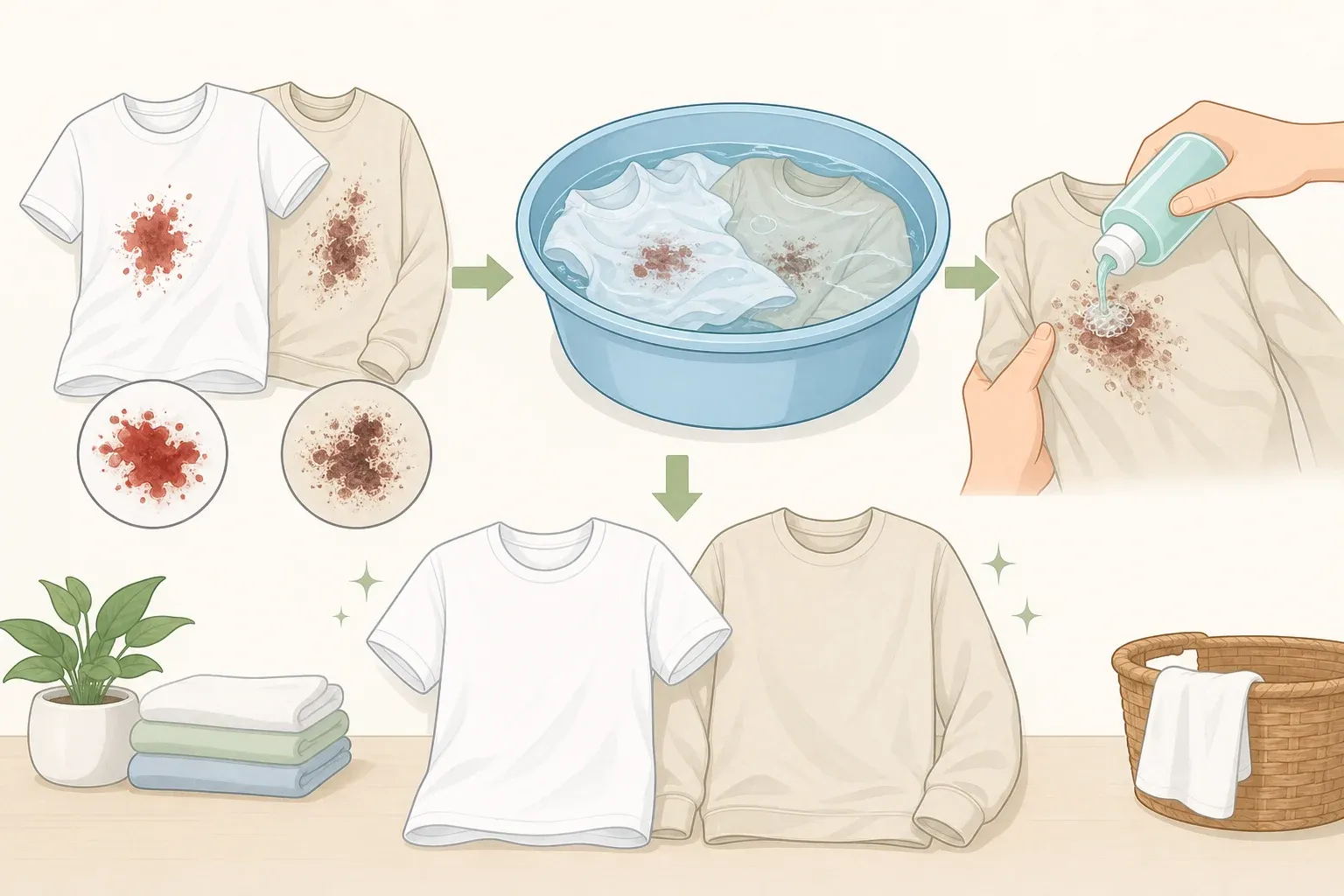
Apply a grease-cutter. Work liquid dish soap or liquid laundry detergent directly into the stain with your fingers or a soft toothbrush. Dish soap is effective because it's designed to break down waterproof oils the same property that makes sunscreen resist water now works against it (Good Housekeeping; Cleaning Science). Let it sit 10–15 minutes.
-
Rinse from the reverse side. Push water through the back of the fabric to flush the stain outward rather than deeper in (Laundry with Olivia).
-
Wash at the warmest temperature safe for the fabric. Warmer water helps dissolve the oily binder (Good Housekeeping). ⚠ Swimwear exception: cool water only see the swimwear section below.
-
Inspect before drying. Pull the garment out and check under good light. If any residue remains, repeat steps 2–4. Do not dry until it's gone.
Path B: orange, rust-colored, or yellow mark
-
Don't rewash with regular detergent. Standard detergent won't dissolve the iron-based compound. Rewashing without targeted treatment can set it further (Cleaning Science).
-
Degrease the oily base first. Apply dish soap, let sit 10–15 minutes, rinse. Clearing the oily layer first makes the rust treatment that follows more effective, per Cleaning Science.
-
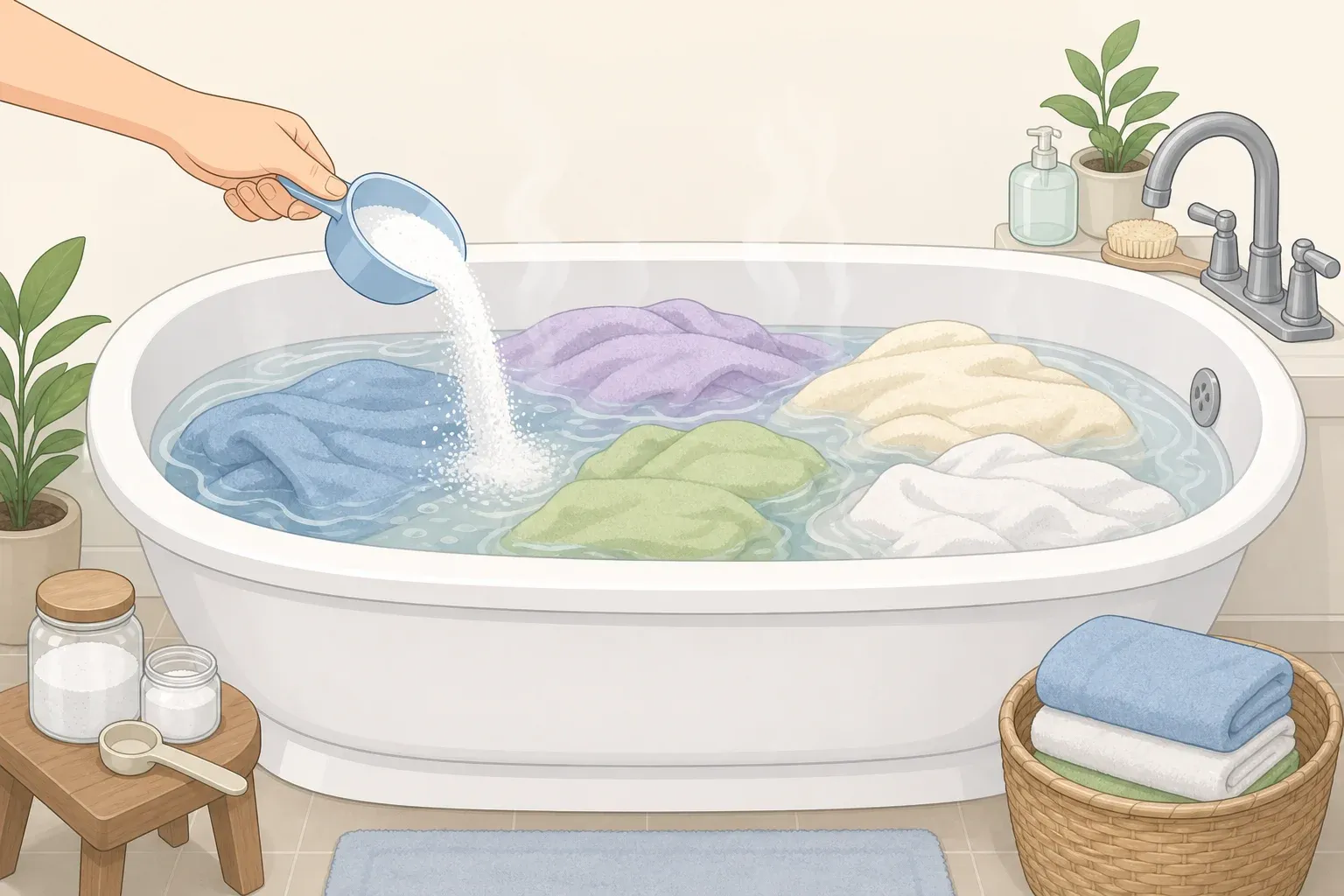
Soak in oxygen bleach. Dissolve an oxygen-based cleaner such as OxiClean in warm water per package directions and soak 1–6 hours, longer for set stains. Oxygen bleach (sodium percarbonate) is safe for most fabrics and colors and does not carry the intensification risk of chlorine bleach (Laundry with Olivia). ⚠ Swimwear: use cool water for the soak.
-
If discoloration remains, apply an enzyme stain remover. Work it gently into the area and let sit 15–30 minutes. Enzyme cleaners break down organic sunscreen residue that the oxygen bleach soak may not have fully cleared (Laundry with Olivia; Cleaning Science).
-
For stubborn stains that don't respond to the above: try a commercial rust remover containing oxalic acid. Apply briefly, just until the color disappears typically under a minute then rinse thoroughly. Rust removers dissolve the iron-based compound directly, which is why the stain can vanish on contact (Cleaning Science). Use this as a targeted last resort, not a first step; follow with an enzyme detergent soak to clear remaining organic residue, and check fabric compatibility before applying.
-
Wash in warm water (cool for swimwear) with regular detergent.
-
Inspect before drying. If any discoloration remains, repeat the oxygen bleach soak. Don't dry until it's clear.
⚠ If chlorine bleach has already been used on an orange stain: Reversal is very difficult but not always impossible. Avoid any further bleach. Try a long OxiClean soak (6–8 hours) and repeat up to three times before concluding the stain is set (Laundry with Olivia).
A note on conflicting advice: Good Housekeeping's lab analyst suggests chlorine bleach can help with lingering discoloration on white washable items (Good Housekeeping). That guidance may apply to yellow-white residue discoloration on white fabric that isn't rust-based. For any orange or rust-colored mark, which involves the avobenzone-iron reaction, the chemistry argues strongly against it. When in doubt about which type you have, treat it as rust.
What to do if the stain has already been through the wash or dryer
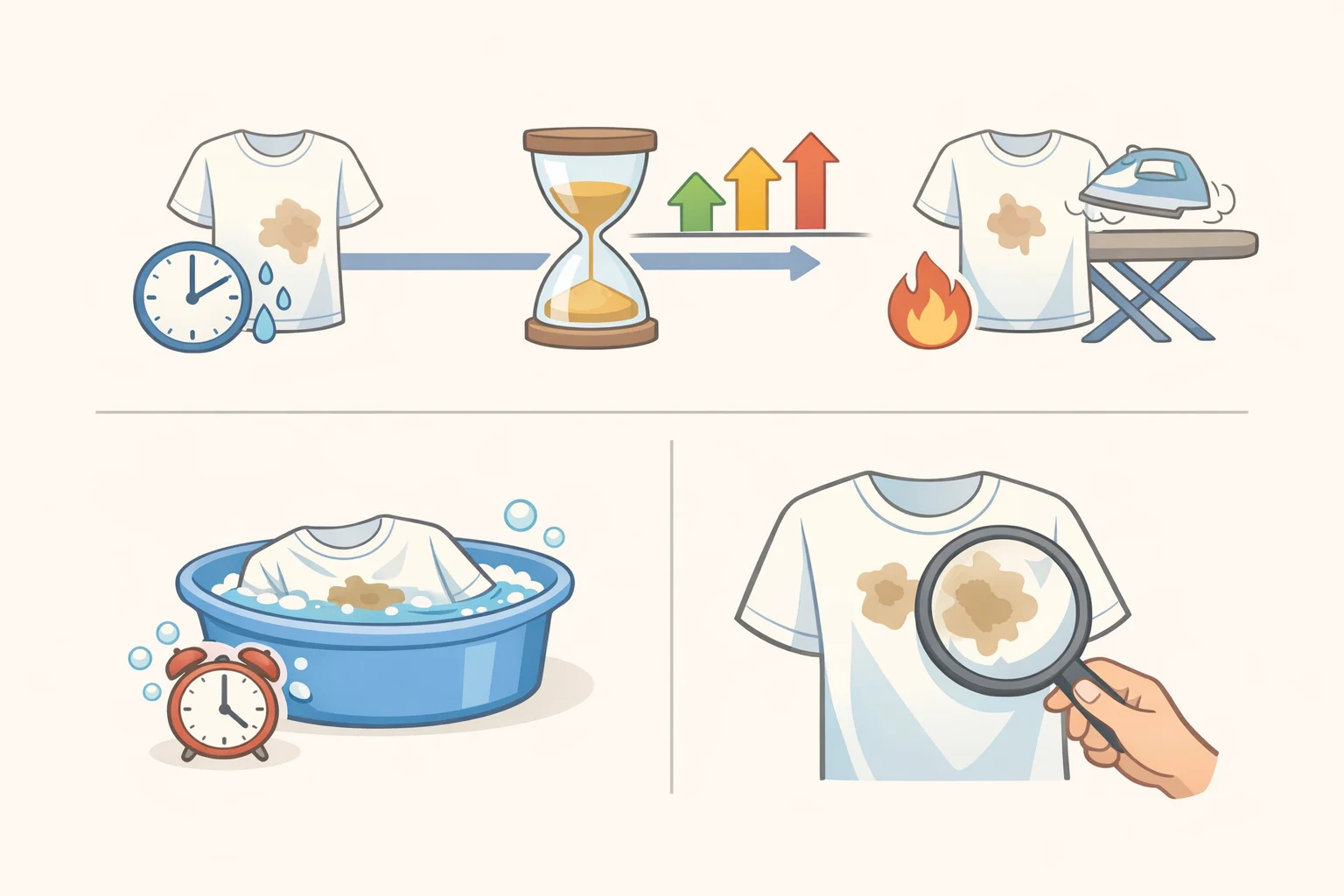
If it's been washed but not dried, the stain may be partially set, but avobenzone-type stains that haven't been treated with chlorine bleach can still respond to oxygen bleach soaking. Start with the dish soap degreasing step, then a long OxiClean soak (6–8 hours), then wash and inspect (Laundry with Olivia).
A dryer cycle makes things harder. Heat bonds the compound more tightly to fabric fibers, but recovery isn't always impossible if bleach hasn't been used. Try the extended soak method and repeat (Good Housekeeping; Kook-Off). For white fabric that's been through the dryer, a rust remover applied carefully to the stained area is worth trying before giving up.
If bleach has been applied to an orange stain, the prognosis is poor. The iron-avobenzone complex may be permanently fixed. A professional cleaner who handles rust or mineral stains is the remaining option.
Swimwear: a different set of rules
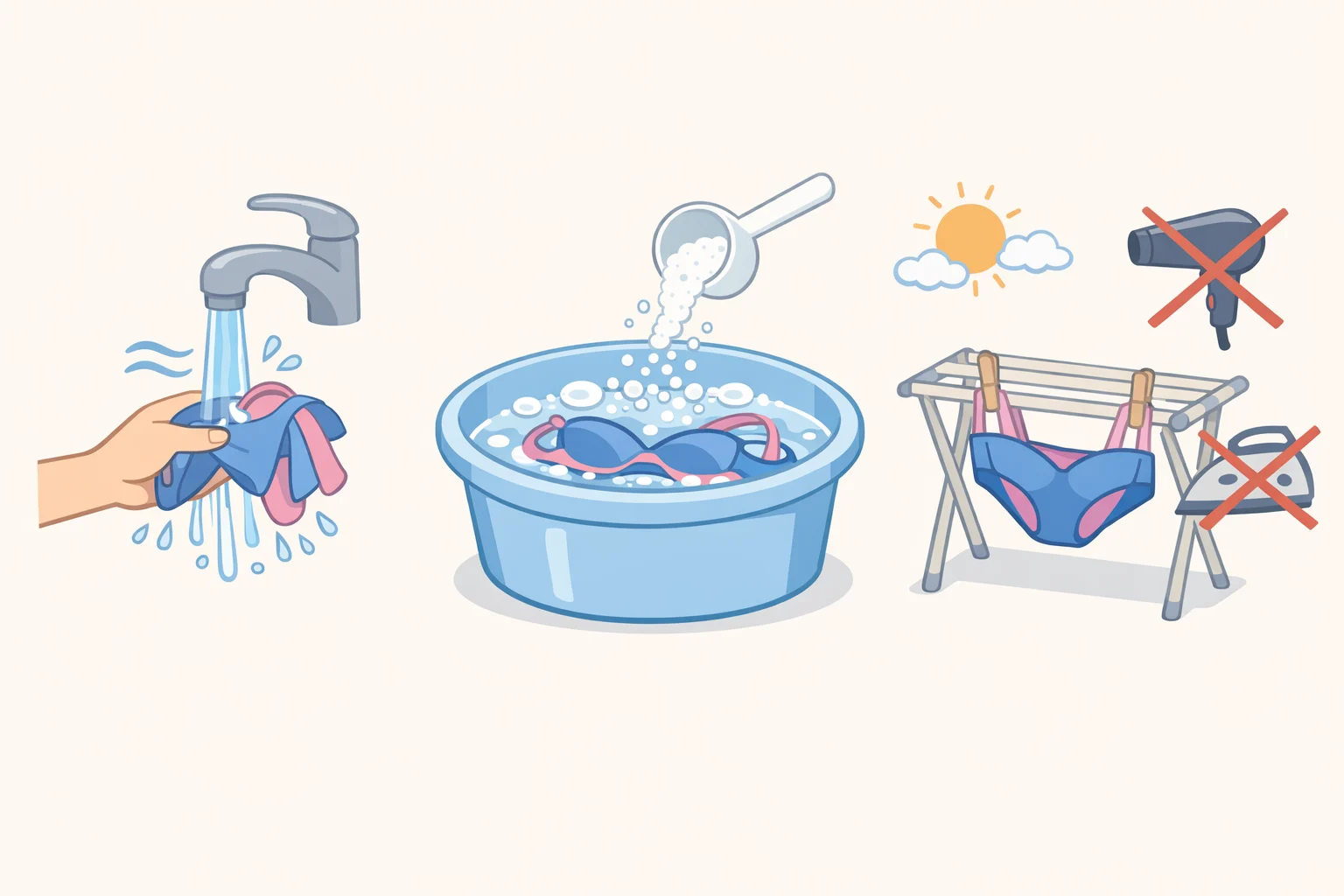
Lycra, spandex, and elastane are more vulnerable than most fabrics and need their own protocol at every stage.
- Rinse in cold water immediately after wearing, before the fabric dries, to remove as much sunscreen as possible before any reaction occurs (Laundry with Olivia).
- For stains: soak in a cool-water OxiClean solution, not warm. Hot water can distort elastic fibers and accelerate degradation (Cleaning Science).
- Wash on delicate in cold water only.
- Air dry never machine dry. Dryer heat damages elastic fibers and permanently bonds any remaining stain compounds (Laundry with Olivia).
- Scrub gently. Wet spandex is vulnerable to distortion; aggressive scrubbing can break elastic fibers (Cleaning Science).
- Never use chlorine bleach on swimwear. It worsens sunscreen stains and degrades elastic at the same time (Laundry with Olivia).
How to prevent sunscreen stains before they start
Wait before dressing. Applying sunscreen 10–15 minutes before putting on clothes gives the oils and emollients time to absorb into skin rather than transferring wet to fabric. Most staining happens in those first few minutes after application, when the product is still wet and easily transferred (Good Housekeeping; Laundry with Olivia).
Read the label if staining is a recurring problem. Avobenzone is the specific ingredient that triggers the rust-forming reaction with hard water. DHHB is the ingredient linked to red staining when combined with bleach, identified in a 2025 Chemical Communications study covered by Phys.org. If either appears on the label and staining is a consistent issue, consider switching to a mineral formula containing zinc oxide or titanium dioxide. Neither triggers the avobenzone-iron reaction, though both can still leave white residue if the product hasn't fully absorbed before dressing (Laundry with Olivia; Cleaning Science).
Check the collar zone. The neckline is where most sunscreen-to-shirt transfer concentrates, worth a quick pre-treatment check after any outdoor day, even when no stain is visible yet (Laundry with Olivia).
Rinse outdoor clothing and swimwear promptly. Cold water as soon as possible may reduce the chance of the avobenzone-iron reaction completing during a delayed wash (Laundry with Olivia).
Three rules that cover most scenarios
Identify before treating. White or greasy means dish soap and a warm wash. Orange or rust-colored means an oxygen bleach soak, with enzyme remover or rust remover for stubborn cases, and no chlorine bleach, which the chemistry of avobenzone-iron reactions makes actively destructive (Cleaning Science).
Inspect before the dryer, every time. Heat is what turns a recoverable problem into a permanent one (Good Housekeeping).
Act before the first machine wash. The avobenzone-iron reaction completes during washing. Treating the oily base before that first cycle may prevent the rust compound from forming at all (Laundry with Olivia). A fresh stain on a shirt that hasn't been washed yet is a grease problem. The same shirt after a hot cycle is a rust problem. Stain color tells you the chemistry, and chemistry tells you the fix.





Comments
Be the first, drop a comment!