



How to save money on energy bills at home: a ranked guide
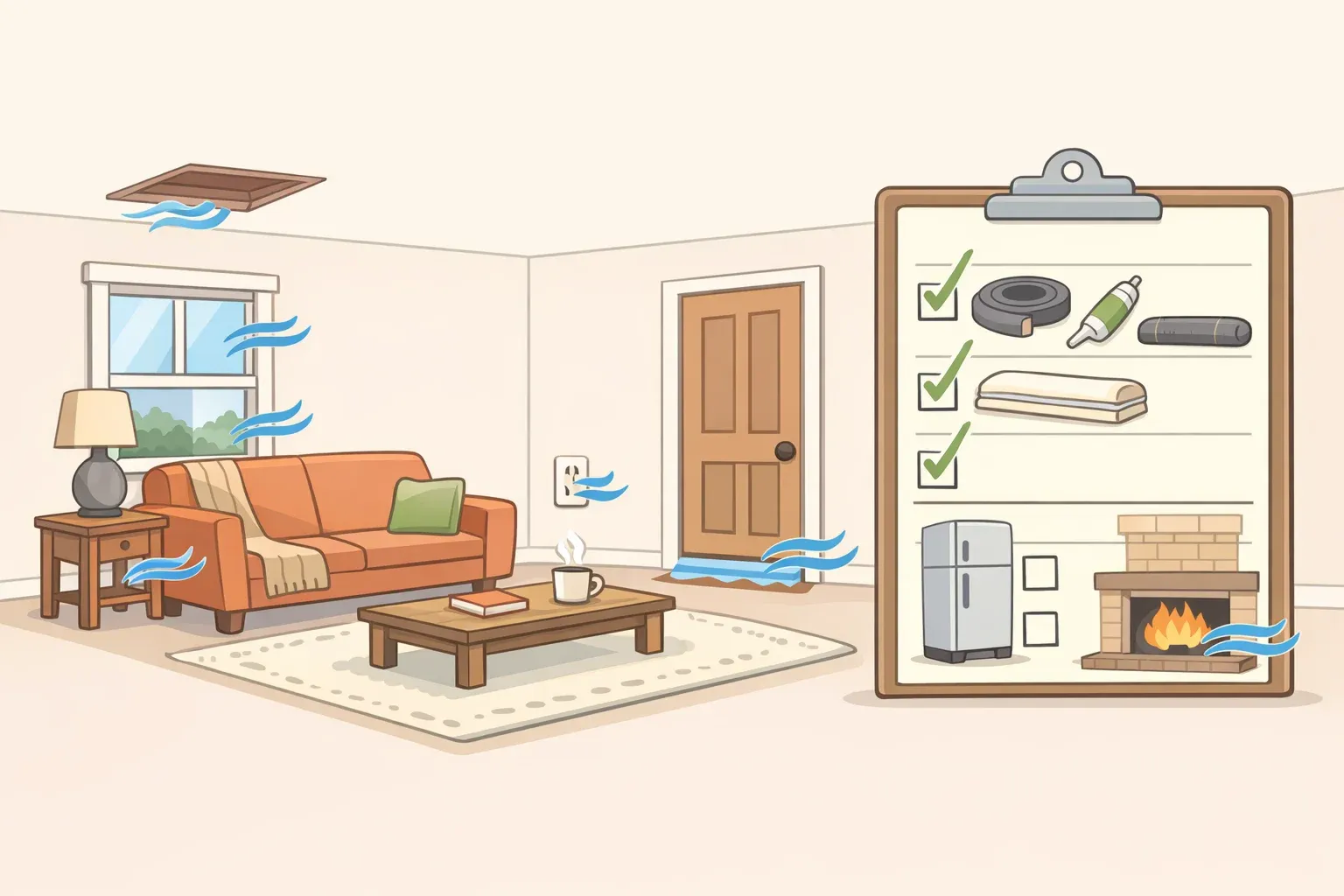
Most household energy guides lead with the flashiest upgrades: solar panels, full HVAC replacements, smart home systems. This one starts with a roll of weatherstripping. Knowing how to save money on energy bills at home is mostly a sequencing problem do the cheap, fast-payback fixes first, do the expensive ones when the timing is right, and skip the ones that sound good but don't pencil out.
This guide walks through home energy savings in order of payback speed. Seal air leaks before replacing appliances. Replace the right appliances before tackling whole-home retrofits. Each step is labeled by who can act on it owners, renters, or both so no one wastes time on advice that doesn't fit their situation. Steps 3 and 4 involve equipment replacement or professional work and are clearly marked.
Two numbers frame the problem. Space heating and cooling consume more than half of a typical home's total energy; improving how well a home retains conditioned air can reduce overall energy use by roughly 10%, according to NYSERDA. A Penn State-led study published last year in Energy Policy, drawing on EIA survey data representing approximately 123.5 million U.S. homes, found that electric space heating had the largest impact on decreasing on-site household energy consumption among all factors in the model, Penn State researchers reported. The order in which you address these things determines how quickly the savings show up on the bill.
Step 1: Seal the gaps the cheapest, fastest-payback fix available to almost everyone
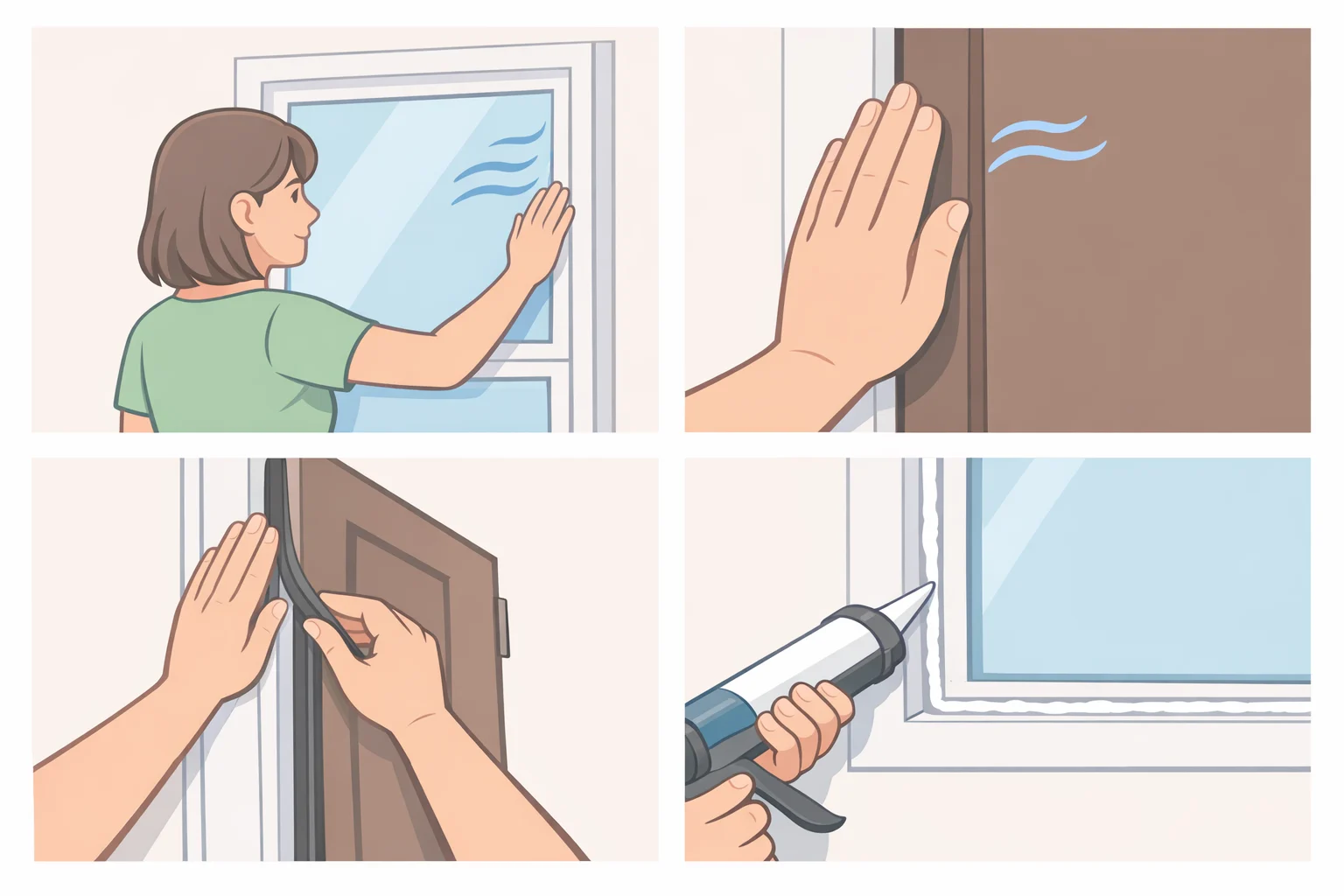
Who can do this: Owners and most renters. Weatherstripping and removable draft stoppers require no permission. Caulk and spray foam typically need landlord approval.
Caulking and weatherstripping around doors, windows, and utility penetrations pay for themselves in a year or less the Department of Energy identifies them as among the fastest-returning home improvements available. Walls and rim joists together make up more than 40% of a home's total envelope area, meaning gaps in those zones account for a disproportionate share of heat loss, per the same DOE guidance.
Lead researcher Sepideh Korsavi put the sequencing plainly: "People often jump to expensive solutions like replacing windows or adding solar power to address home energy demands. That is not the place to start. Many interventions, like air sealing, changing out incandescent lightbulbs with LEDs or replacing an outdated water heater with an electric water heater are lower-hanging fruit," she told Penn State.
-
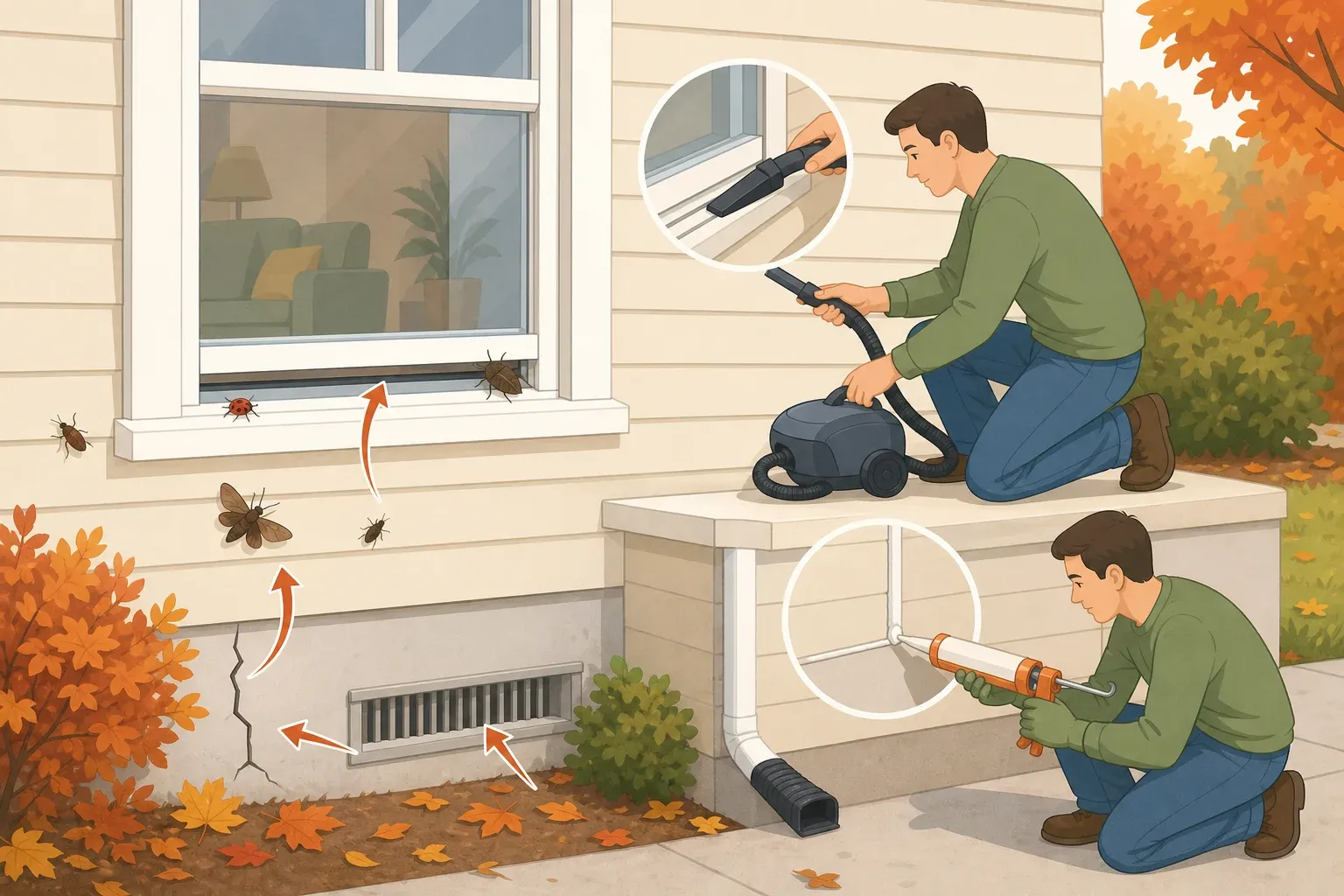
Check doors and windows for air movement on a cold or windy day. Run your hand along frames and feel for drafts. Replace worn weatherstripping and apply fresh caulk where the frame meets the wall. Materials run $20 to $50. Renters: weatherstripping is removable and generally doesn't need permission.
-
Seal around pipes, wires, and ducts where they pass through walls, floors, and ceilings. Use low-expansion spray foam or caulk. Each penetration is small; across a house, they add up. Owners only, unless a landlord approves.
-
Caulk or spray-foam the rim joist if your basement is unfinished. Work along each joist bay from the inside. The DOE identifies this as a high-impact location in accessible basements. Owners only.
-
Seal HVAC register boots where vents meet the floor, wall, or ceiling. A bead of caulk around the boot stops air from bypassing the duct system. Easy to overlook; easy to fix. Check with your landlord before doing this in a rental.
Keep exterior insulation in perspective. Adding at least an inch of continuous exterior insulation improves comfort and noise reduction right away, but the energy-savings payback runs 5 to 10 years not under a year like weatherstripping, per the DOE. That project belongs in Step 4.
Tax credit note for owners: Insulation and air-sealing work meeting 2021 IECC standards may qualify for a federal tax credit. Confirm eligibility before purchasing materials via the DOE.
Step 2: Low-cost behavior changes that move the needle before you buy anything
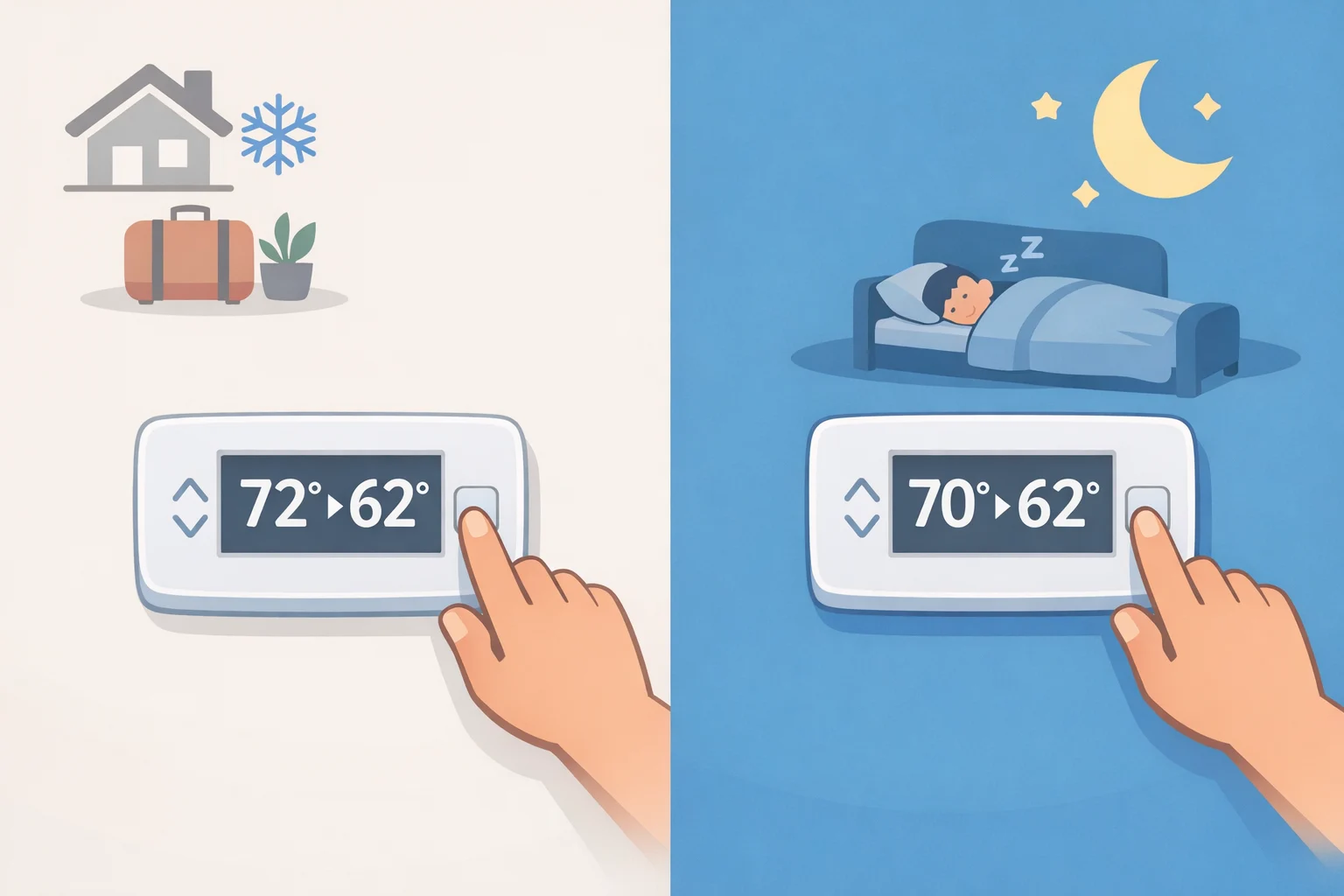
Who can do this: Everyone, owners and renters equally.
Two actions deliver measurable reductions in energy consumption at near-zero cost. The Penn State study identified both as statistically significant drivers of lower household energy use not marginal ones.
Thermostat setback is the first. "We found that by reducing the set point temperature in winter, we can reduce energy consumption significantly," Korsavi told Penn State. The second is lighting: the same research named switching from incandescent bulbs to LEDs as a higher-priority action than replacing windows or installing solar, specifically because the payback is immediate and the cost is negligible, per Penn State.
-
Replace every remaining incandescent bulb with an LED. Do this before spending money on any other electrical upgrade. No installation required, and the savings start the same day.
-
Lower your thermostat when no one is home and overnight in winter. Even a few degrees makes a measurable difference. A programmable or smart thermostat automates this at a one-time cost of $25 to $130 installed yourself. Renters: smart thermostats are typically removable. Check your lease before installing one.
A note for apartment and row-house residents: the Penn State team found that homes with shared walls already use significantly less heating and cooling energy than detached houses, because shared surfaces reduce heat transfer in both directions, per Penn State. Steps 1 and 2 still apply, but the baseline savings gap is smaller than it is for a detached single-family home. LEDs and thermostat setback are your highest-use moves.
How to reduce household energy costs: replace the right appliances at the right moment
Step 3: Target equipment replacement toward what actually moves the needle
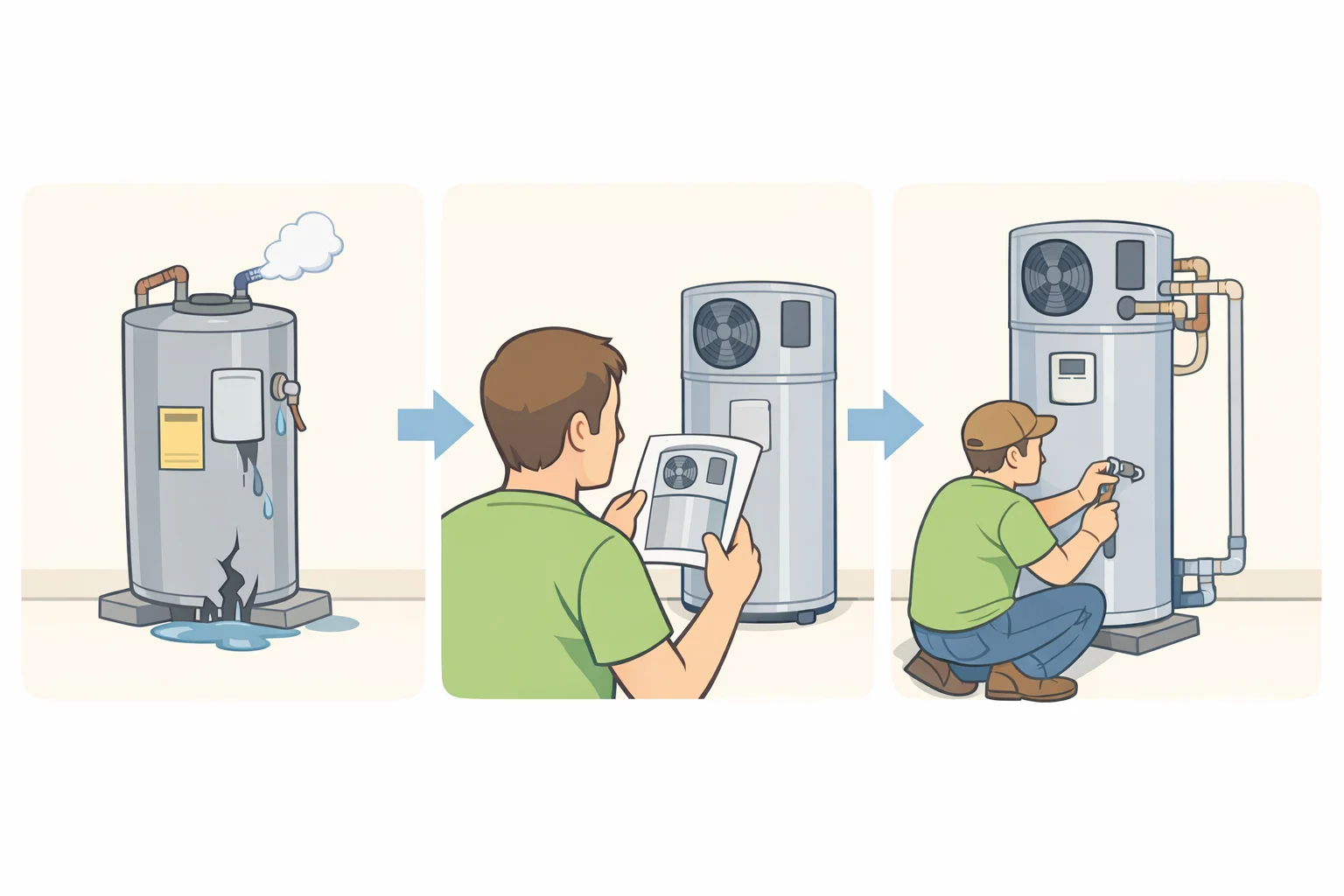
Who can do this: Primarily owners. In some states, renters may qualify for utility-funded appliance upgrades through income-qualified programs check your state energy authority for local eligibility.
Don't replace functioning appliances early. This step is about knowing which replacements to prioritize when equipment is aging or failing, so you're not spending money on lower-impact swaps when a bigger win is available.
Within the Penn State model, electric space heating had the largest impact on decreasing on-site household energy consumption among all 41 significant factors the team identified, Penn State researchers reported. The efficiency explanation is straightforward: "Modern heat pumps often deliver two to three times more heat per unit of energy than typical gas furnaces," Korsavi said. Water heating is typically the second-largest energy expense after space conditioning, averaging close to 20% of total home energy consumption, per NYSERDA. Heat pump water heaters can trim those annual costs by $200 to $550 depending on the prior system, with New York state rebates covering $700 to $1,000 of the purchase price on average, NYSERDA notes check whether comparable programs exist in your state.
-
When your water heater needs replacing, choose a heat pump model. It's a smaller investment than full HVAC replacement, with meaningful annual savings. Research federal and state programs before purchasing; they materially change the math.
-
When your space heating or cooling system reaches end of life, replace it with an electric heat pump. The right moment is when existing equipment fails or is due for replacement, not before. At that point, choose the most efficient electric alternative available and factor in current incentives.
One thing worth stating plainly: switching to electric systems reliably reduces on-site energy consumption, according to Penn State research. Whether that lowers your monthly bill depends on local electricity versus gas rates, which vary significantly by region. Run your own numbers using current local utility prices before committing to a full system swap.
Step 4: Bigger envelope and retrofit projects making the economics work
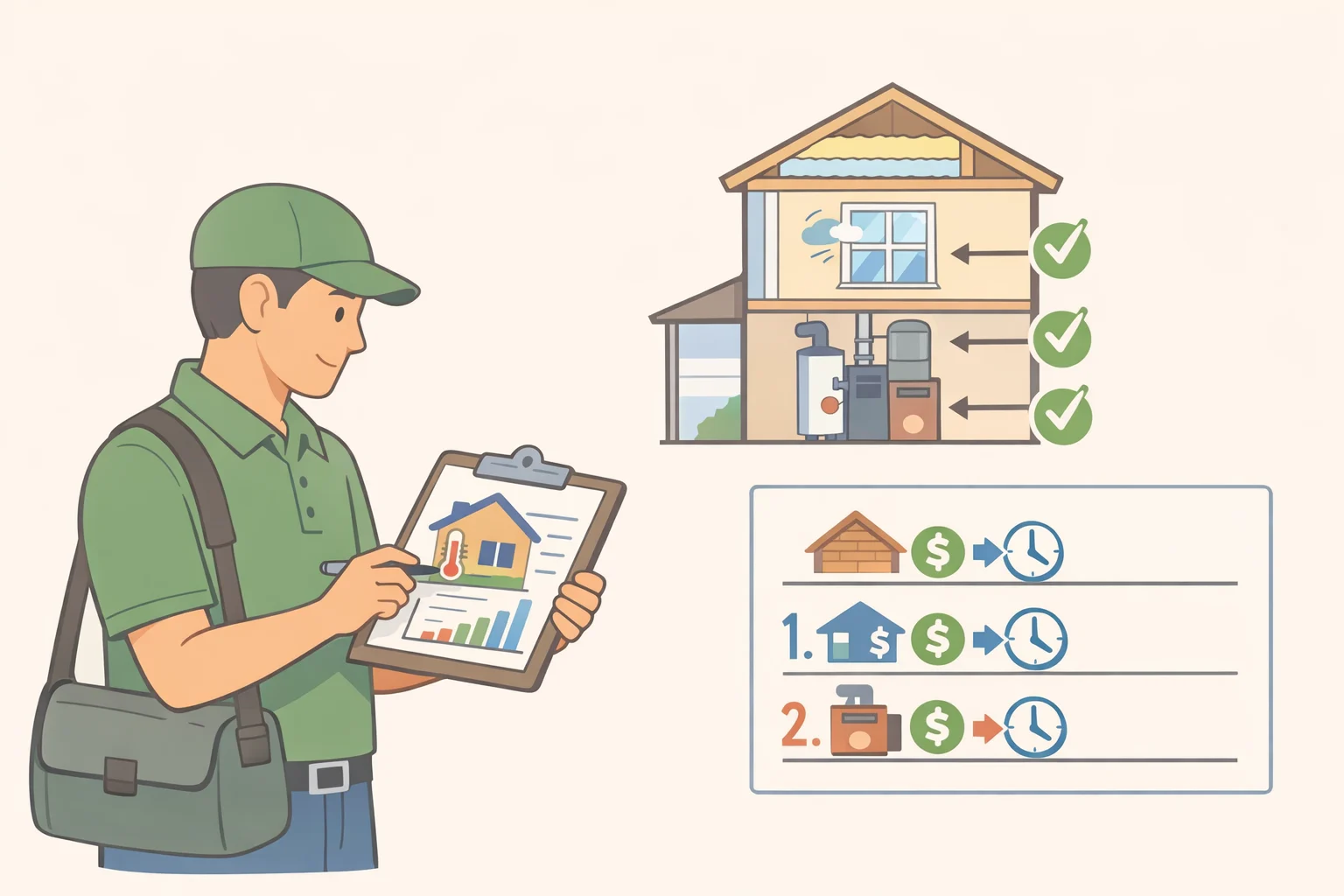
Who can do this: Owners. In New York, both renters and homeowners may qualify for low- or no-cost efficiency upgrades through NYSERDA's income-qualified programs, per NYSERDA. Check whether comparable programs exist in your state.
The evidence points consistently to doing the faster-payback work first and stacking incentives carefully before committing to anything large.
High upfront cost is the single largest barrier to adoption of efficient home technologies, according to a peer-reviewed survey of 167 home energy professionals published in the Journal of Building Engineering via OSTI. That same study found that for a deep retrofit combining heat pump installation with envelope improvements, smart project sequencing and installation efficiencies could cut total installed costs by close to 50%, per OSTI research. Projects that look out of reach on a first estimate often aren't, once you run those numbers properly.
Incentives compound this further. Qualifying insulation and air-sealing packages may be eligible for federal tax credits and state-level programs. In New York, the Comfort Home program offers at least $2,500 in direct incentives for approved upgrade packages, per NYSERDA.
-
Get a professional home energy assessment before committing to any major project. Many utilities and state energy agencies offer these at low or no cost. An assessor will rank your home's specific improvements by payback period more useful than any general guide, including this one.
-
Stack available incentives before signing a contract. Federal tax credits, state rebates, and utility programs can often be combined. Eligibility rules change; check your state's energy authority website before pricing any project.
-
Do not replace windows unless they are genuinely failed. If frames are intact and seals are functioning, air-sealing around them delivers far more per dollar than replacement a point the Penn State research makes clearly.
-
Time major retrofits to coincide with equipment reaching end of life. When systems fail, replace with the most efficient electric alternative available and factor in all current incentives at that moment.
The $728-per-person problem: food waste as a parallel savings target
Energy upgrades get most of the attention in household savings guides. Food waste deserves more of it. The EPA estimates that food purchased and never consumed costs the average American about $728 per year roughly $14 a week and approximately $2,913 annually for a household of four, representing about 11% of total food expenditure, per EPA data. Food prices have risen more than 50% since 2010, per EPA citing Bureau of Labor Statistics, meaning the same wasteful habits cost significantly more now than they did a decade ago.
Unlike the energy steps above, these tactics aren't ranked by measured payback they're practical starting points based on how food waste typically accumulates.
-
Audit the fridge before every grocery run. Pull items to the front, check dates, and plan at least two meals around what's already there. Most waste starts by buying more before finishing what's on hand.
-
Build a grocery list tied to specific meals for the week. Unplanned shopping is the primary mechanism by which food ends up unused. A meal-anchored list eliminates most impulse purchases that expire before they're touched.
-
Track what you throw away for two weeks. Most people significantly underestimate their own waste. A running tally rough is fine makes the habit shift concrete and usually motivates the behavioral change that general advice doesn't.
Where to go from here
The sequencing is what makes this work. Seal first, swap bulbs, adjust the thermostat none of it costs much and all of it pays back fast. Caulking and weatherstripping typically recoup their cost in a year or less, per DOE. When equipment dies, replace it with the best electric alternative available and check what incentives apply at that moment for water heaters alone, the annual savings can reach $200 to $550, with rebates in some states covering much of the upfront cost, per NYSERDA. For the bigger projects, get an assessment, stack the programs, and don't rush; industry research suggests smart project planning can cut total retrofit costs by close to 50%, per OSTI.
Food waste runs in parallel to all of it. At $728 per person per year, per EPA, it's a real, measurable drain that responds to habit changes, not spending.
Search your state energy authority for current rebate programs and free energy assessments. Use the DOE's BASC Retrofit Decision Tool for climate-zone-specific upgrade recommendations. Renters: ask your landlord or building manager whether the property participates in any utility-funded efficiency programs some cover air sealing and insulation at no cost to residents.







Comments
Be the first, drop a comment!