



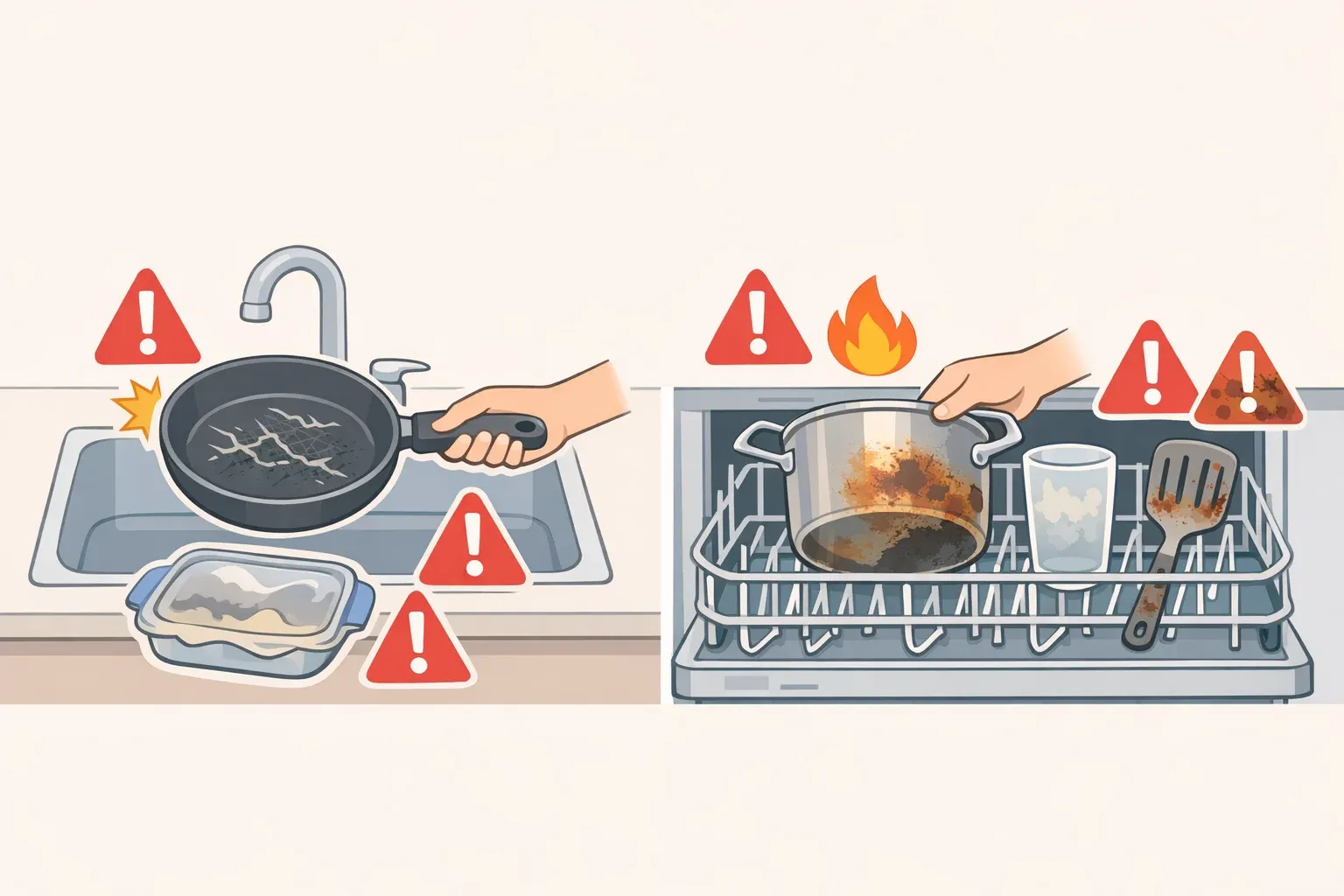
The label on the bottom of a pan is a survivability claim, not a care recommendation. That gap between "won't be immediately destroyed" and "best cleaned this way" is where most kitchen damage happens. Knowing what should never go in the dishwasher, what can go in under the right conditions, and what handles the machine freely will save you from replacing items that failed quietly over dozens of cycles.
A nonstick skillet marked dishwasher-safe will exit the first cycle intact. Run it through enough cycles, and the coating can wear down and be degraded by heat, water chemistry, and detergent abrasion. The label told you it would survive. It said nothing about how long.
The damage patterns fall into three types, each with different logic: the dishwasher attacks the material itself and causes irreversible destruction (cast iron rusts, wood warps, tin rusts); it degrades a functional coating, edge, or seal over repeated cycles in ways the label doesn't warn against (nonstick pans, sharp knives, insulated mugs); or it damages finish or appearance cumulatively until the item looks or performs worse than it should. Understanding which type applies is more reliable than trusting whatever symbol is stamped on the base.
A quick reference before the details:
Never: Cast iron, tin, wood, brass, bronze, copper, pewter, nonstick pans, sharp knives, insulated mugs unless labeled dishwasher-safe, acrylic, milk glass, and gold-trimmed or hand-painted pieces.
Only with correct placement and cycle: Plastics on the top rack, avoiding high-heat settings; aluminum, which may discolor; and stainless steel or silver, using a rinse-hold cycle if you are not washing immediately.
Usually safe: Standard ceramic dinnerware, everyday glassware, and stainless steel cookware.
Three data points worth keeping in mind: in a nationally representative Consumer Reports survey of more than 2,100 U.S. adults, 59% of nonstick pan owners said easy cleaning was their primary reason for choosing nonstick, yet the dishwasher can wear away the coating cumulatively, even on pans explicitly labeled machine-safe.
Brass, bronze, copper, and pewter discolor permanently from the combination of high-temperature water and alkaline detergent. Stainless steel cookware, standard dinnerware, and most everyday glassware handle the dishwasher without issue. The machine is specifically destructive to certain materials and finishes, not universally so.
Items you should never put in the dishwasher
The items below are split into two groups that look similar but fail for different reasons. The first suffers structural or chemical destruction. The second survives the machine but takes permanent finish damage that can't be reversed.
Material destruction: cast iron, wood, and tin
Cast iron loses its seasoning, the cured oil layer that creates a nonstick surface and prevents rust, because prolonged wet heat strips it away. The exposed iron corrodes fast. Re-seasoning is possible after one incident, but repeated exposure accelerates rust and is hard to fully reverse. Tin behaves differently: it rusts in the dishwasher and should be hand-washed and dried immediately after use.
Wood absorbs water in the hot, humid dishwasher environment, causing salad bowls, cutting boards, and handled utensils to warp and crack. This is a structural failure, not cosmetic wear, and it doesn't reverse.
Finish damage: reactive metals and decorated pieces
Brass, bronze, copper, and pewter don't corrode the way iron does, but high-temperature water and detergent cause permanent discoloration. The same heat-and-detergent mechanism damages decorative finishes: gold leaf fades, and hand-painted pieces should be washed by hand to avoid finish damage. Milk glass may yellow after repeated cycles. China, crystal, and stoneware are mostly safe in the machine — the exceptions are anything hand-painted, gold-trimmed, or fragile enough that breakage risk matters.
When the label says safe, but the item still loses something
These items won't be destroyed in a single cycle. The problem is cumulative: repeated machine-washing degrades something functional — a coating, an edge, a thermal seal — in ways that aren't visible until the item stops working as it should.
Nonstick pans
CR's loading guidance says don't wash nonstick pans in the dishwasher unless the manufacturer explicitly labels them safe. CR's cookware-specific guidance goes further: skip the dishwasher even when the label says safe, because the wash cycle can wear away the coating regardless. Those two positions seem contradictory until you understand the distinction: the loading article is about avoiding obvious damage; the cookware article is about maximizing pan life. Both lead to the same practical conclusion.
When the coating eventually chips or scratches, a process the dishwasher accelerates. Experts recommend discarding the pan, because flaking particles can contaminate food during cooking. The dishwasher-safe label tells you the pan survives one cycle. It says nothing about what happens to the coating over a year of them.
Sharp knives
A quality knife may come out of the dishwasher physically unchanged, but the cutlery basket rattles blades against other utensils and metal rack tines throughout the cycle. The edge dulls from repeated abrasive contact, dishwasher-safe label or not. This is one case where the label is straightforwardly misleading about the practical outcome.
Insulated mugs
Water that works its way into the sealed gap between a mug's inner and outer walls might affect its ability to retain heat or keep drinks cold over time, according to CR. The failure is slow enough to be mistaken for normal wear until the mechanism is understood. Unless the mug is explicitly labeled dishwasher-safe, hand-wash it.
Acrylic
Acrylic develops a fine network of surface cracks called crazing after repeated machine cycles. Not a functional failure, but permanent. Group acrylic with items that have decorative finishes: if the appearance of the piece matters, keep it out of the machine.
The practical default for borderline items: hand-wash anything with a coating, a functional seal, a sharp edge, or a decorative finish unless the manufacturer has explicitly confirmed machine safety. For plastics and aluminum, where the risk is more conditional, placement and cycle selection determine outcomes.
Items that are conditionally safe placement and cycle rules apply
These aren't absolute exclusions. Treating them as unconditionally safe is how they get ruined.
Plastics: top rack, avoid high-heat settings
Heat tolerance varies too much across plastic types for a blanket rule. Even items marked dishwasher-safe belong on the top rack, away from the heating element, as bottom-rack placement risks warping and deformation. Beyond placement, avoid cycles that use higher wash or dry temperatures. The loading guidance is consistent: cups, glasses, small bowls, and dishwasher-safe plastics go on the top rack; plates, serving bowls, platters, and oversized items go on the bottom rack with larger pieces positioned toward the sides and back so the spray arm can rotate freely.
Aluminum: usually fine, cosmetically vulnerable
Aluminum usually survives the dishwasher, but minerals in the water may cause surface spotting or darkening over time. For basic baking trays, that's an acceptable cosmetic tradeoff. For anodized or decorative aluminum, hand-washing avoids the issue entirely.
Stainless steel and silver: safe, with one timing caveat
Both handle the dishwasher well under normal circumstances. The risk comes from delay: prolonged contact with food residue before the wash cycle runs can damage their finish. If you're loading dishes and running the cycle later, use the machine's rinse-hold function, or keep silver out of the load until you're ready to wash.
Machine errors that undermine even the right items
Sort your items correctly, load the machine wrong, and the dishes still come out dirty. These are the three most consequential errors.
Pre-rinsing defeats the sensors and the detergent
Modern dishwashers use soil sensors to calibrate wash intensity based on how dirty the load is. Pre-rinsing defeats those sensors and can trigger a lighter cycle than the dishes need. Detergent enzymes also require food residue to bond to in order to work effectively, rinse the plates clean, and the enzymes have nothing to act on. The correct preparation is scraping large debris, bones, and shells into the trash before loading. Rinsing is counterproductive.
Wrong detergent
Standard dish soap produces suds a dishwasher cannot contain. The foam overflows the machine and can cause water damage to the surrounding cabinetry. Dish soap and dishwasher detergent are different products built for different environments.
Filter and spray arm neglect
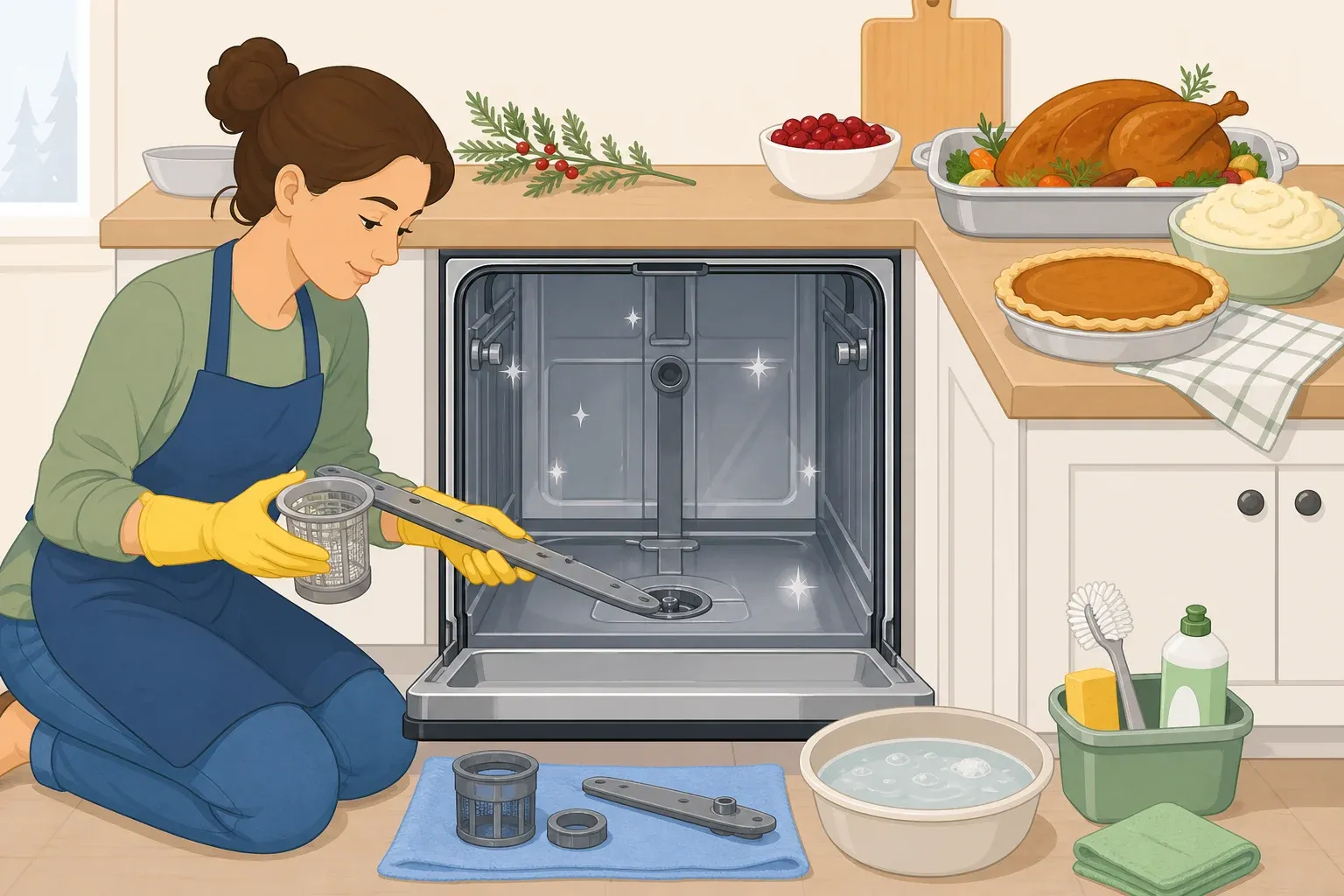
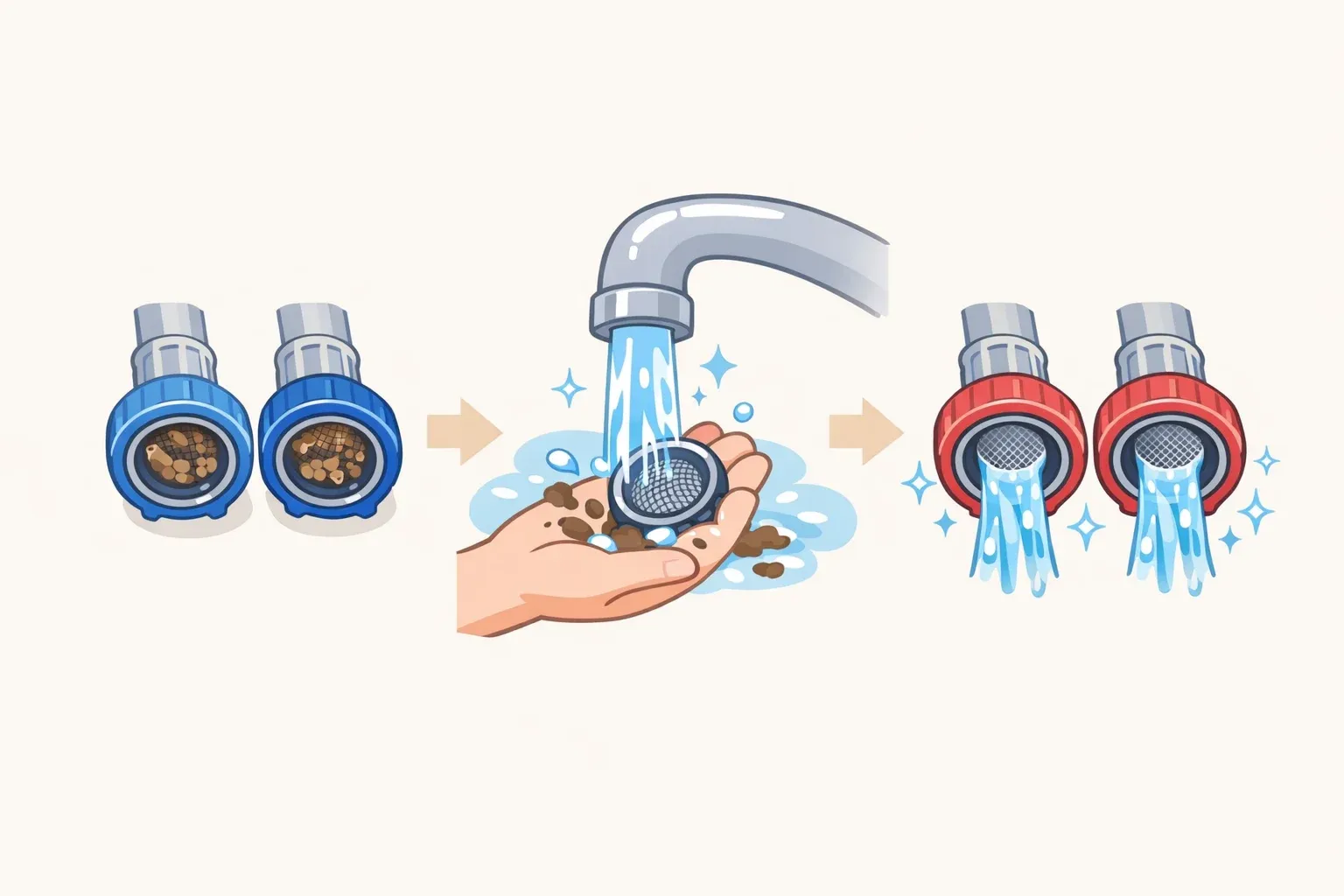
Most newer dishwashers use a manual-clean filter rather than a self-grinding one, which makes them quieter but means food scraps must be cleared out manually. Because the machine recycles its wash water throughout a cycle, a clogged filter means food particles get pumped back through the spray arms and deposited on dishes. Neglect it long enough, and the result is standing water at the machine's base or a shutdown from restricted water flow.
To clean it: pull the bottom rack, twist out the filter assembly, scrub with a sponge and dish soap, and use a toothbrush for fine particles like coffee grounds. While the filter is out, check the spray arm holes for blockages and clear them with a toothpick if needed. How often depends on use.
Some guides recommend every couple of months as a baseline, while an earlier article suggests weekly or twice monthly for heavier users. Wipe the door gasket periodically as well; food particles collect in the seal and can promote mold growth. Run a citric-acid-based dishwasher cleaner through an empty cycle monthly to address mineral buildup; avoid bleach-based products or abrasive pads on stainless steel surfaces.
A decision framework for items not on this list
The useful mental model isn't a checklist. It's a hierarchy based on the type of harm.
Irreversible material damage. Cast iron, wood, tin, and reactive metals like brass, bronze, and copper don't belong in the dishwasher under any conditions. No label changes what heat, sustained moisture, and alkaline detergent do to those materials.
Cumulative functional damage. Nonstick coatings, sharp edges, and thermal seals degrade gradually with each machine cycle. The dishwasher-safe label confirms one-cycle survivability, not long-term performance. CR's cookware testing recommends hand-washing nonstick pans even when labeled machine-safe, because the coating deteriorates cumulatively regardless, and a chipped or scratched pan should be replaced to avoid ingesting coating particles.
Conditional risk. Plastics, aluminum, and stainless steel are generally safe when placed correctly and washed on appropriate cycles. Getting those conditions wrong converts a safe item into a damaged one.
For any unfamiliar item, run through four quick checks: Is the material reactive to heat or moisture? Does it have a coating, edge, or seal that degrades cumulatively? Is there a decorative finish worth protecting? Has the manufacturer actually confirmed machine safety? If you can answer yes to any of the first three, hand-washing is the right call, not because the dishwasher is a dangerous appliance, but because "dishwasher-safe" and "best cleaned this way" are not the same claim.








Comments
Be the first, drop a comment!