



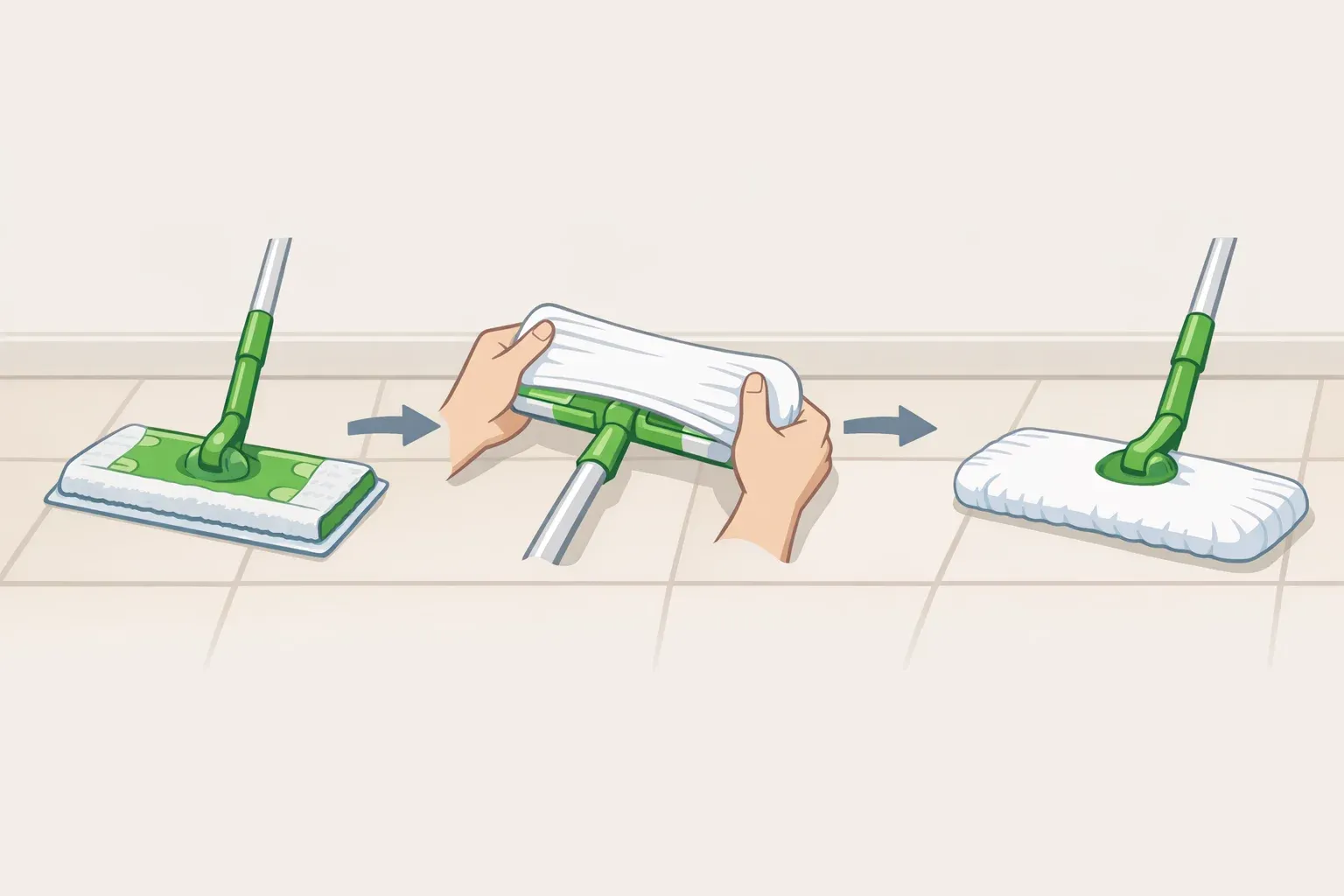
How the Swiffer sock hack works and when to use microfiber instead
You're halfway through the kitchen floor when the last Swiffer pad gives out. The Swiffer sock hack is the fix for that exact moment: pros say it works, according to Good Housekeeping, which covered the technique last month after it spread across social media. The verdict from the Good Housekeeping Home Care & Cleaning Lab is measured useful in a pinch, not a permanent Swiffer pad substitute.
That distinction matters. The sock gets you through the session you'd otherwise have to abandon. If the goal is to stop buying disposable refills altogether, that's a different question with a different answer: microfiber cloth, which is washable, lint-free, and effective for both dry dusting and damp mopping, per The Spruce.
This guide answers the immediate problem first, then the longer-term one.
How to use the Swiffer sock hack
What you need: One mismatched or surplus sock. A standard Swiffer sweeper.
Step 1: Pull a sock from your drawer or laundry pile.
Go for a mismatched or orphaned sock the ones with no partner and nowhere to go. Good Housekeeping points specifically to those forgotten singles as the right candidates. For a quick dry dust pass, almost any sock will do. If you're doing light damp cleaning, a thicker sock holds up longer before saturating.
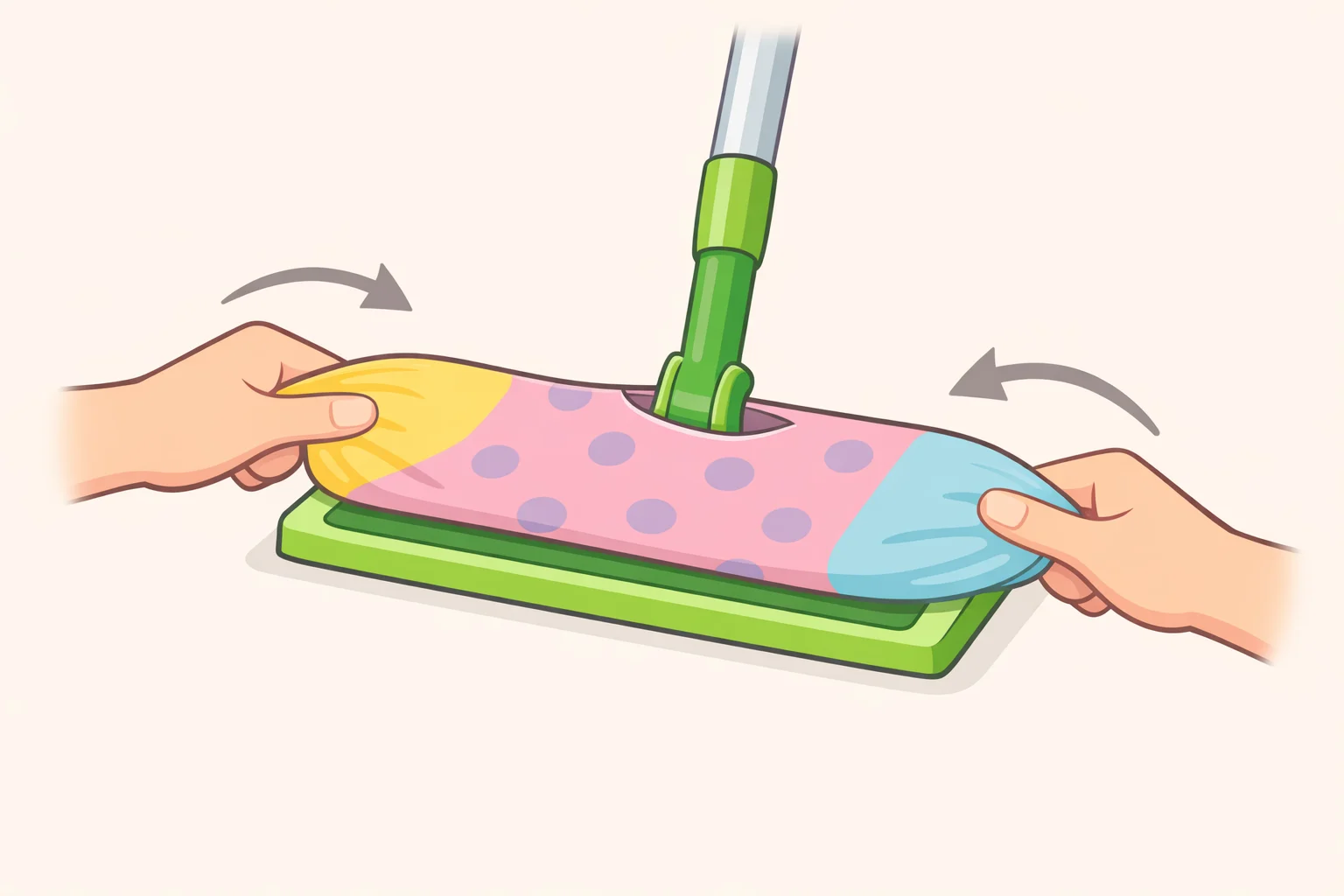
Step 2: Stretch the sock over the Swiffer head until it covers the flat base snugly.
If you're working with smaller socks, The Spruce recommends stretching one sock over each side of the Swiffer head two socks total, one on each end for better coverage across the full surface.
Step 3: Clean, but watch for the drop-off point.
This is where the hack's main limitation becomes practical. Carolyn Forté, former executive director of the Home Care & Cleaning Lab at the Good Housekeeping Institute, put it plainly: Swiffer cloths are engineered to pick up and trap dirt, and a sock may do that initially, but performance will likely fall off as it gets wet, saturated, or coated in dust, per Good Housekeeping. Socks may not cover as large an area as a purpose-built pad, which means more frequent swaps mid-clean.
The sign to watch for: the sock stops picking up debris and starts pushing it around. At that point, swap in a fresh one. Running a saturated sock across a large room just redistributes the mess rather than removing it.
Step 4: Throw the sock in the wash when you're done.
It comes out clean and ready to reuse. Both Good Housekeeping and The Spruce confirm washability as one of the clearest practical advantages over a disposable pad you're not throwing anything away.
What to use if you run out of Swiffer pads
The answer depends on what you're trying to solve.
Finish the job right now: use a sock
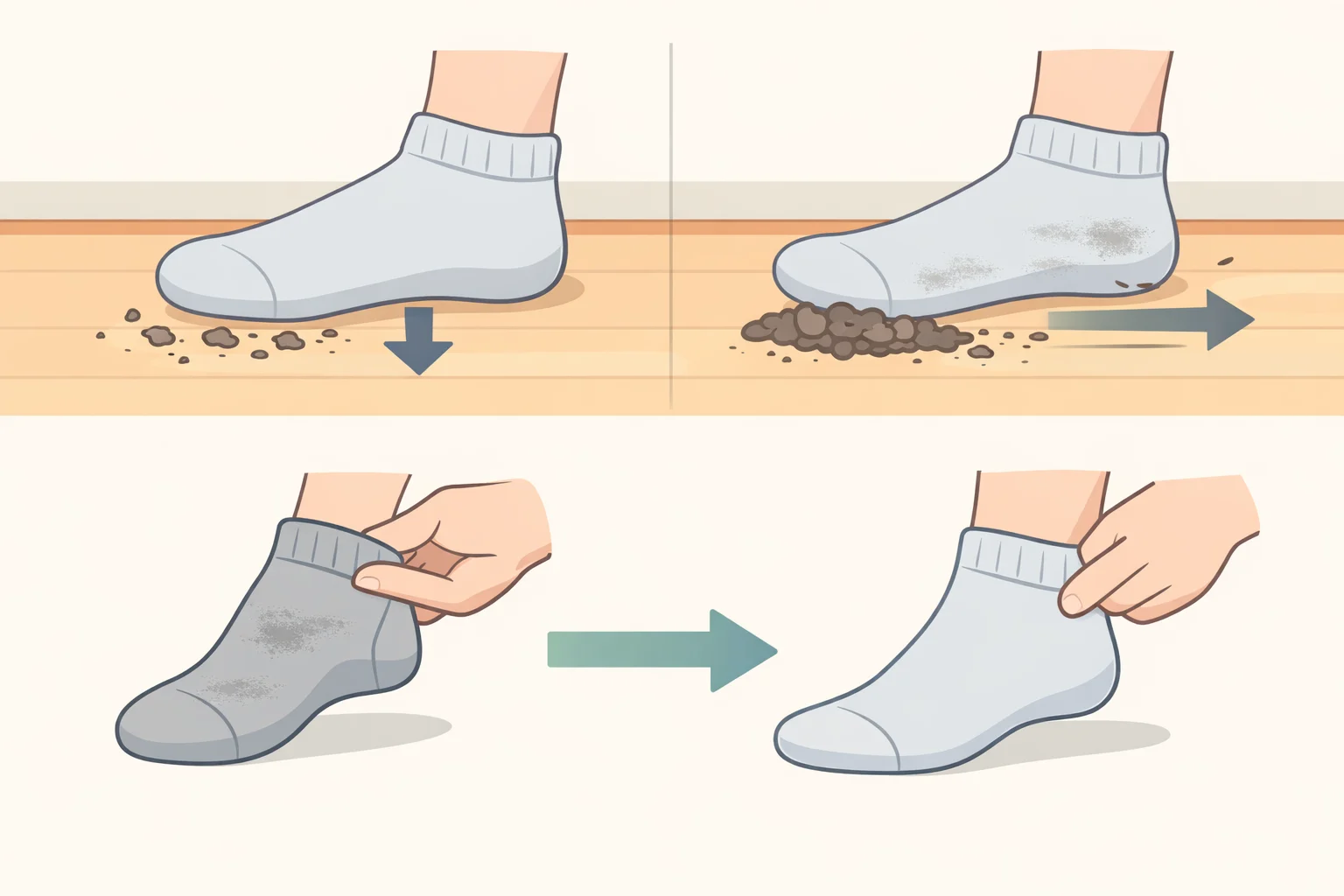
The sock hack earns its keep when you need to complete a session immediately and have no other option. It works for dust mopping, per Good Housekeeping, and washes clean when you're done. The tradeoff is reduced coverage you'll likely swap socks more frequently than you would with a standard pad. For a small room or a single quick pass, that's a minor inconvenience. Across a larger space with heavier debris, it adds up. Know that going in.
The sock hack is also best suited to dry or light damp cleaning. A sock used as a wet mop pad will saturate faster than a purpose-built cloth and lose effectiveness sooner. Keep the scope realistic: finish the kitchen, not the whole house.
Stop buying disposable refills: use microfiber
Microfiber is an ultra-synthetic fabric whose tightly woven fibers latch onto particles including small debris in tight corners and leave no lint behind, according to The Spruce. It dries quickly, holds up through damp mopping without streaking, and works equally well for dry dusting and wet cleaning. That's the profile of a genuine Swiffer pad substitute, not a stopgap.
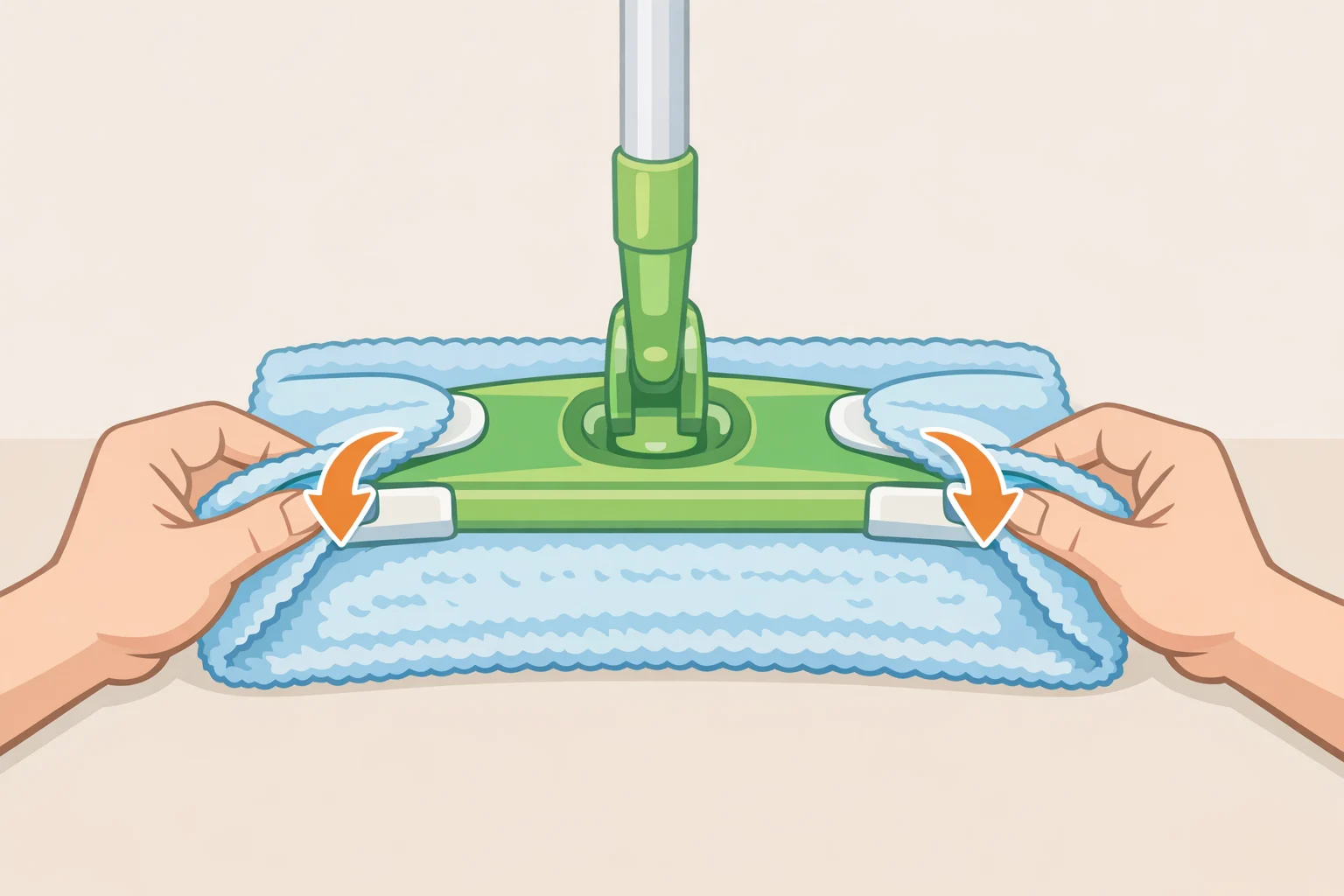
For dry dusting: Drape the cloth over the Swiffer head and tuck the edges into the rubber grippers to secure it. The Spruce notes this is particularly effective in tight spaces, where the fabric's texture grabs even small crumbs that a sweeping motion alone might miss. A Swiffer with a microfiber cloth attached also handles high and hard-to-reach surfaces walls and windows included.
For damp mopping: Spray your preferred cleaning solution onto the cloth before attaching it to the Swiffer head. For extra lift on a particularly dirty section of floor, lightly mist that section as well. The Spruce confirms this approach produces a streak-free result.
Beyond the floor: Microfiber's range extends past floor cleaning. A water-and-vinegar spray on a microfiber cloth keeps stainless steel appliances streak- and fingerprint-free, per The Spruce. Add a small amount of natural oil olive or lemon and the same cloth buffs wooden furniture. One cloth, several uses.
The DIY microfiber pad: Old microfiber clothing is a serviceable source of reusable pads. Cut squares roughly 12 x 12 inches from worn microfiber shirts or jackets; that size wraps around the Swiffer head and holds in place during cleaning, according to The Spruce. If the fabric is thin, layer two or three pieces and stitch the edges the added thickness improves absorbency for damp mopping. Cut a few, keep them with the Swiffer, wash them when they're dirty. The ongoing cost is zero.
Want the best performance without trade-offs: use standard Swiffer refills
Standard pads are purpose-built for this job. Forté's assessment via Good Housekeeping is direct: Swiffer cloths are designed to trap dirt in a way that improvised substitutes may approximate but are unlikely to fully replicate. For large, heavily soiled floors, or any situation where consistent performance matters more than cutting costs, standard refills remain the right tool.
The sock and microfiber options involve real trade-offs. A sock degrades faster; microfiber requires a moment of setup. Standard pads require no adjustment. If the floor is large and dirty, that engineering advantage is worth paying for.
Sock vs. microfiber vs. standard pad: a direct comparison
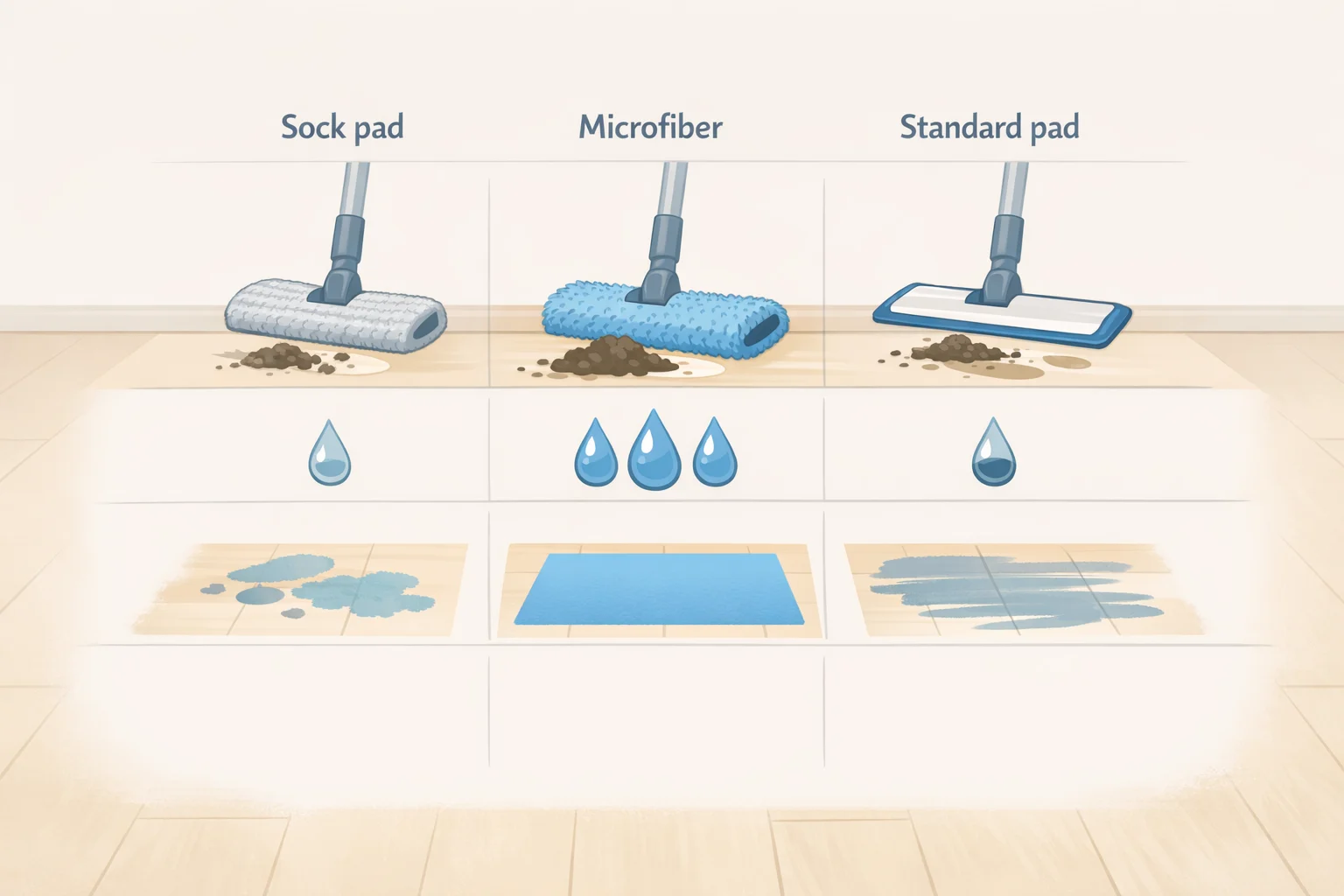
The three options differ on the criteria that actually matter for a cleaning decision.
Pickup ability: Standard pads are engineered to trap dirt. A sock approximates that at first but loses effectiveness as it fills, per Forté's assessment at Good Housekeeping. Microfiber's woven fibers latch onto particles and maintain that grip through a full session, including in tight spaces, per The Spruce.
Durability when damp: A sock degrades faster once wet, covering less area per pass and requiring more frequent replacement. Microfiber is designed to dry quickly and hold up through damp mopping without streaking, per The Spruce. Standard pads are built for both wet and dry use.
Coverage area: Standard pads cover the most ground per use. Socks cover less and need more frequent replacement mid-clean, per Good Housekeeping. A 12 x 12-inch microfiber cloth is roughly comparable to a standard pad in size and wraps securely around the Swiffer head, per The Spruce.
Washability: Socks and microfiber cloths both go in the wash and come back ready to reuse. Standard pads are single-use. The Spruce frames microfiber specifically as the cost-effective path away from repeated refill purchases.
One gap the sources leave open
Neither Good Housekeeping nor The Spruce specifies which floor types work best with improvised pad substitutes, or which cleaning solutions are safe on sensitive surfaces like hardwood, stone, or laminate. That's a meaningful gap if your floors fall into those categories.
The sock hack used dry carries the least risk no liquid means no potential for damage. Damp mopping of any kind, whether with a microfiber cloth or a sock, warrants a check of your flooring manufacturer's guidelines before you start. Going off-label on delicate flooring isn't the kind of experiment you want to discover mid-clean.
The sock is for today; microfiber is for every floor after
The sock hack is a legitimate emergency fix. Stretch a surplus sock over the Swiffer head, clean until performance drops off, then toss it in the wash. It may not replace a proper Swiffer pad over the long run Forté's point, via Good Housekeeping, is that the engineering behind a purpose-built cloth is difficult to replicate with household fabric but it saves the session.
For anyone looking to retire the disposable refill habit, microfiber is the more durable answer. Washable, lint-free, effective for dry and damp cleaning, it's what The Spruce identifies as a genuine substitute rather than a workaround. Cut a few squares from old microfiber clothing, keep them near the Swiffer, and the refill question mostly goes away.
The sock gets you through the floor you're already cleaning. Microfiber handles everything after that.



Comments
Be the first, drop a comment!