



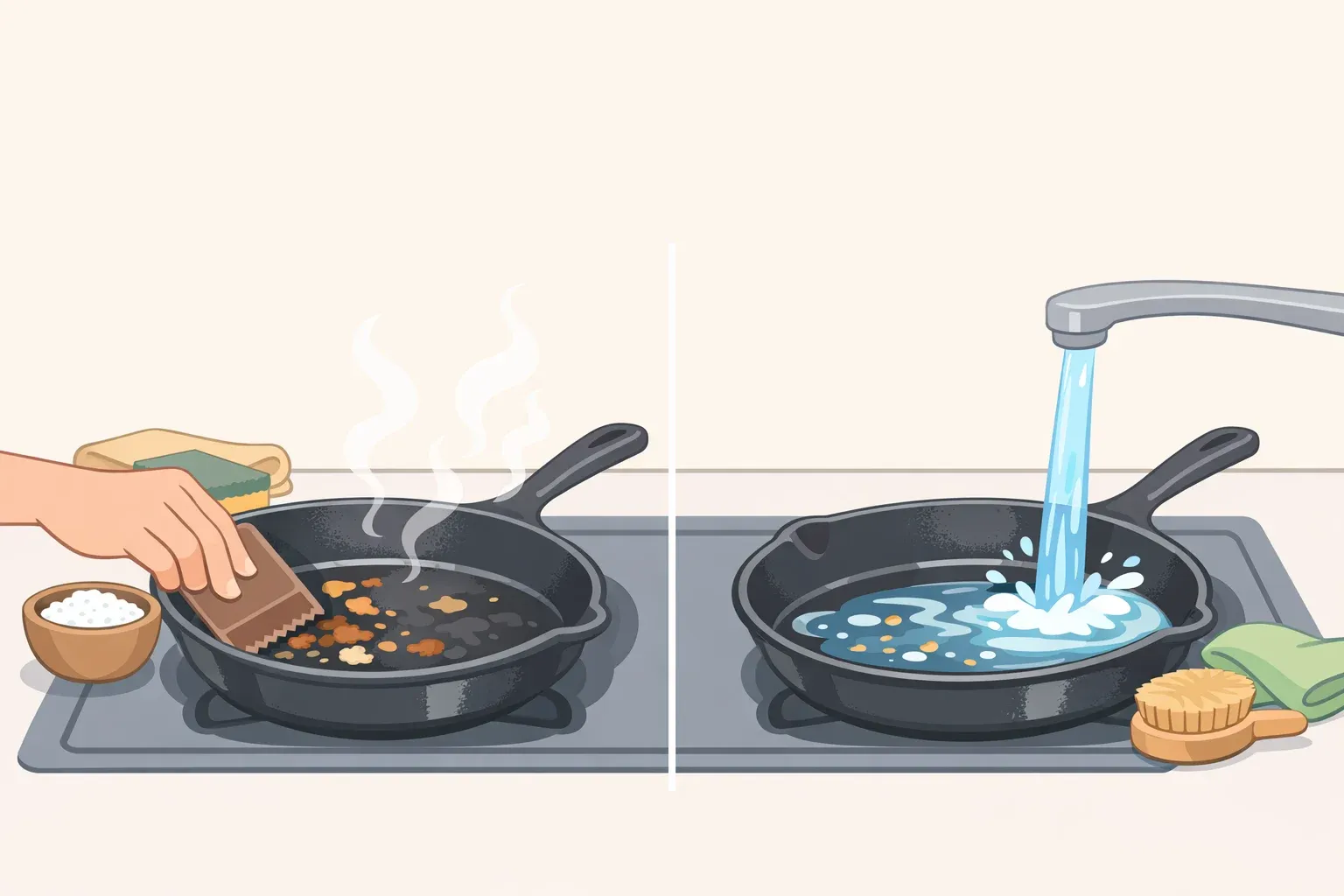
How to Clean Cast Iron Without Ruining Seasoning: Step-by-Step
By the end of this guide, you'll know exactly how to clean cast iron without ruining seasoning after everyday cooking, which inexpensive tool makes stuck-on food manageable, when to reach for chain mail on seriously baked-on residue, and how to finish the job so the pan stays protected until the next cook.
Prerequisites: A cast iron skillet with at least some established seasoning. This routine applies to bare, uncoated cast iron. If you have an enameled pan, skip the chain mail and use a soft sponge only enamel scratches.
What you'll need: A plastic pan scraper (around $2 each in a set of three), hot water, a towel, and a neutral cooking oil. Chain mail ($10–$25) is optional but useful when food has baked on hard.
How to clean cast iron without ruining seasoning: the basic rule
Soap won't ruin the pan. Moisture will. That's the one thing worth understanding before anything else because it shapes every decision in the routine that follows.
The old prohibition on soap made sense once. Early soaps were made with lye, which is caustic enough to strip seasoning straight down to bare iron. That's no longer what's in the bottle. Modern dish soap is a mild detergent formulated to lift food and grease, not to dissolve polymerized oil a chemically transformed substance that soap simply doesn't target. As Serious Eats explains, actually removing seasoning would require steel wool, a lye solution, or extended high heat with no fat in the pan (updated October 2023). Multiple manufacturers, including Lodge, now say a small amount of mild soap is fine, a position Cast Iron Skillet Guy summarized across several manufacturer guidelines in September 2025.
Moisture is the real problem. A chef consulted by Tom's Guide put it directly: leaving water sitting on the pan does more damage than even the strongest dish soap (October 2025). Better Homes & Gardens is equally plain rust, not soap, is the primary long-term threat to cast iron (June 2024).
The goal isn't to avoid cleaning the pan. It's to clean it efficiently, dry it completely, and protect it before putting it away.
Match the tool to the mess
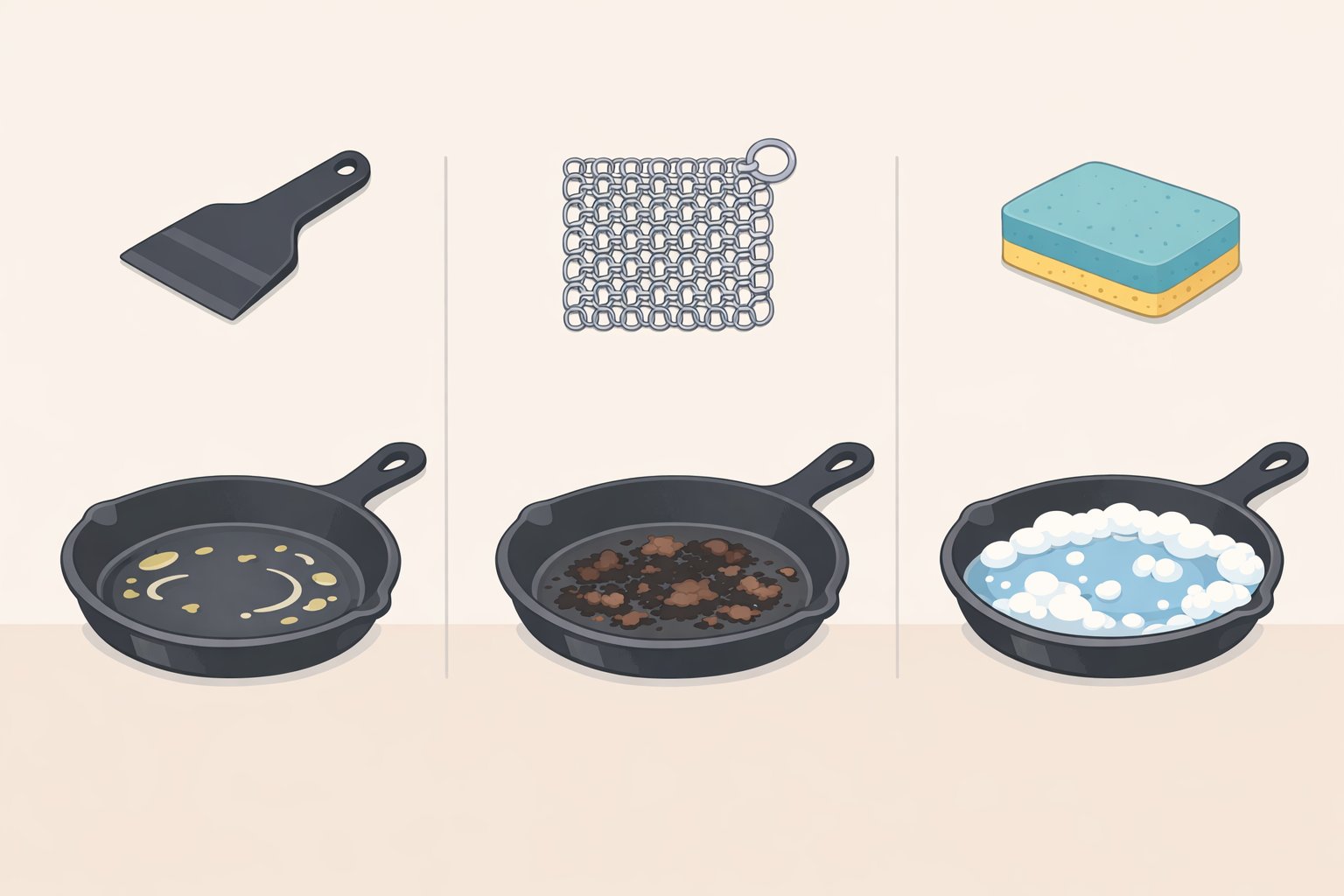
Not every cleanup is the same. Using the right tool from the start saves time and goes easier on the seasoning.
Light residue (most everyday cooking): Warm water and a sponge with a small drop of soap. Lodge's recommended routine is exactly this hand-wash with a small amount of soap and warm water, then dry and oil (Allrecipes/Lodge, April 2025).
Stuck-on bits: A rigid plastic pan scraper. The scraper physically lifts food that a sponge smears around, using focused mechanical pressure without abrasion. The Kitchn reviewed Pampered Chef's version a set of three for $6 and found it reliably lifts caked-on food without pulling up seasoning (February 2026). In earlier comparative scrubber testing, The Kitchn also found that a brush with a plastic scraper attachment matched chain mail in cleaning efficiency (The Kitchn, July 2021) not just one review's verdict.
Baked-on residue (carbonized cheese, caramelized sauces, scorched eggs): Chain mail. When food has truly welded to the surface, a scraper can't generate enough contact. Chain mail's interlocking stainless steel rings apply even pressure across the pan, breaking the bond between food and iron without carrying a sharp edge that would score the seasoning layer. Chowhound recommends it specifically for stubborn residue, noting it clears debris without disrupting the seasoning provided you use hot water and avoid pressing hard (February 2025). Used with too much force or too often, though, chain mail can gradually wear seasoning down (Serious Eats, October 2023). Reserve it for messes that actually need it. Also skip chain mail on brand-new pans that haven't built up any seasoning yet the coating needs several cooks to establish itself first (Mr. Cast Iron, January 2026).
Greasy residue after chain mail: Chain mail dislodges stuck food effectively but doesn't remove greasy film well. A quick follow-up wipe with a sponge and a single drop of soap handles it (The Kitchn, January 2022).
Never use on uncoated cast iron:
- Steel wool (leaves fragments, strips seasoning)
- The dishwasher (heat and extended water exposure cause rust and strip the pan)
- Extended soaking in water
- Abrasive powder cleaners with microabrasives, including Bar Keepers Friend not intended for uncoated cast iron (Better Homes & Gardens, June 2024)
The cleaning routine: step by step
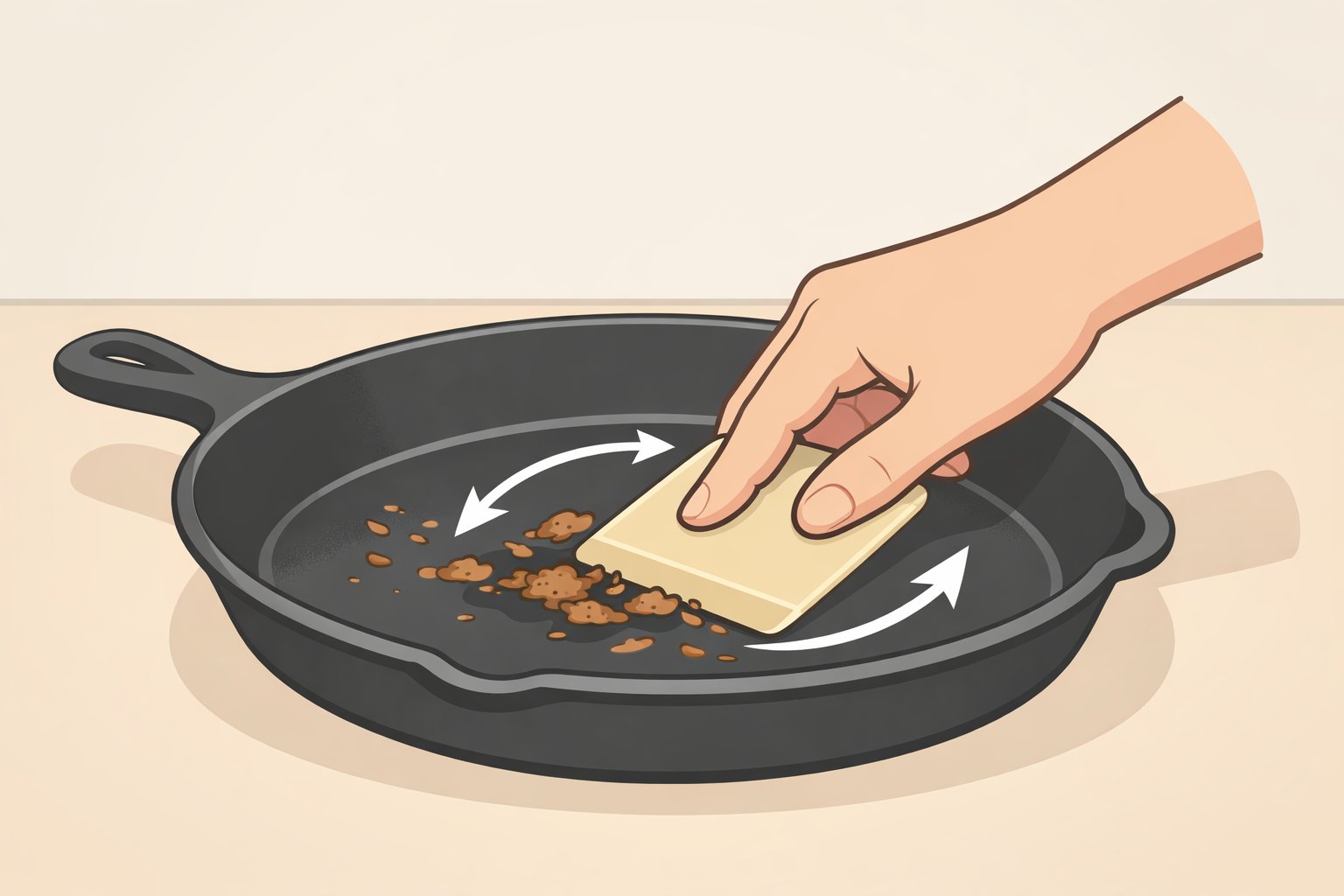
This applies to everyday cooking residue. Swap in chain mail at Step 2 if the scraper can't shift the food.
Step 1: Work while the pan is warm not screaming hot, not room temperature.
Let the pan cool until you can hold the handle comfortably. Food releases more readily from a warm surface, and The Kitchn found this makes the scraper noticeably more effective (February 2026).
Step 2: Scrape or scrub out stuck food.
Hold the pan scraper at a low angle and push it across the surface in short strokes, working problem areas. You should feel food lift cleanly. If something resists, add a splash of hot water and try again water lubricates the surface and helps break the bond between food and iron (Mr. Cast Iron, January 2026).
↳ If the scraper can't shift it: Try simmering a small amount of water in the pan for 3–5 minutes, then let it cool slightly and scrape again. Lodge recommends this method for stubborn residue before reaching for more aggressive tools (Allrecipes/Lodge, April 2025). If that still doesn't work, switch to chain mail with hot water and light circular passes.
⚠️ Do not soak the pan as an alternative to scraping. Soaking is one of the fastest ways to develop rust and is explicitly warned against by Lodge, BHG, and Serious Eats. Simmering a small amount of water briefly in the pan is different you're adding controlled heat to loosen food, not submerging the iron in standing water.
Step 3: Wash with warm water and a small amount of soap.
One or two drops is plenty. More soap means more rinsing, which means more water exposure the opposite of what you want. Use a sponge or nylon brush, and skip anything abrasive (Allrecipes/Lodge, April 2025).
Step 4: Dry immediately towel first, then stovetop.
Don't let the pan air-dry. Towel it off right after rinsing, then set it over low heat for one to two minutes. The heat drives off any residual moisture the towel can't reach. That minute on the burner is what separates a well-maintained pan from a rusty one bare iron exposed to standing moisture will develop rust spots (Serious Eats, October 2023). In humid climates, be especially thorough here.
Step 5: Apply a very thin oil layer, heat to set it, then store.
With the pan still warm from Step 4, rub a small amount of neutral oil canola, vegetable, or corn across the interior with a paper towel. Then wipe it back off until the surface looks nearly dry. If it looks shiny, there's too much; a thick coat turns sticky and polymerizes unevenly (Mr. Cast Iron, January 2026). Heat the pan for another minute or two until it just begins to smoke lightly, then remove from heat and let it cool before storing.
⚠️ Don't oil and store without heating. Applying oil and putting the pan away without the heating step allows the oil to turn sticky and rancid. If that happens, wash it out with soap and water, dry thoroughly, and start again (Serious Eats, October 2023).
The five mistakes that ruin cast iron (and how to avoid them)
These are the failure points the research flags most consistently:
- Applying too much force with chain mail. Light pressure the weight of your hand is enough. Aggressive scrubbing is where chain mail starts wearing seasoning rather than preserving it (Mr. Cast Iron, January 2026).
- Using chain mail dry. Always use hot water as lubricant. Running chain mail across a dry pan increases friction and abrasion unnecessarily.
- Applying too much oil. The pan should look almost dry after wiping, not glistening. Thick oil layers cause stickiness and uneven seasoning (Mr. Cast Iron, January 2026).
- Soaking to loosen food. Use the scraper, chain mail, or the brief simmering method instead. Prolonged water contact is one of the most reliable ways to start a rust problem (Allrecipes/Lodge, April 2025).
- Skipping the heat-dry step. Towel-drying alone doesn't eliminate all moisture. The minute on the stove is the step that actually protects the iron (Serious Eats, October 2023).
A note on new or weakly seasoned pans: The full routine above applies to pans with established seasoning. For a brand-new skillet or one that's been stripped and re-seasoned, skip chain mail entirely until several cooks have built up a solid base layer. Plastic scraper and gentle soap-and-water only, until the seasoning is set.
Three minutes, every time
The core routine scrape, wash, dry, oil takes about three minutes. The scraper handles most everyday messes for almost nothing; chain mail handles the exceptions when something has truly carbonized onto the surface. The finishing step, heat-dry plus thin oil, is what actually protects the pan between uses.
Cast iron rewards consistency. Each time you cook with fat and run through this routine, the pan builds another layer of seasoning. Mr. Cast Iron notes that regular use is the best maintenance strategy the more often the pan goes through the cook-clean-oil cycle, the more durable and nonstick it becomes (January 2026). Lodge's official guidance puts the lifespan of a well-maintained pan in decades (Allrecipes/Lodge, April 2025).
If rust spots have already developed, that's a separate restoration process. But it won't become an issue if the dry-and-oil step becomes habit.





Comments
Be the first, drop a comment!