



How to Reuse Candle Jars Safely: Clean, Refill, or Recycle
Most empty candle jars are worth keeping. The glass is usually solid, the proportions are useful, and the only thing standing between a burned-out candle and a functional container is about an hour of work. This guide covers how to reuse candle jars from start to finish: how to get the wax out without cracking the glass or blocking the drain, which of the 11 reuse ideas fit which jar shape, and what to do if you'd rather refill or recycle.
What you'll need: An empty or nearly empty candle jar, access to a freezer or kettle, dish soap, a butter knife, and a sink strainer. Most reuse ideas need nothing beyond a clean jar. Exceptions are noted where they come up.
Before you reuse anything: how to clean candle jars for reuse without cracking glass or clogging drains
Start by getting the wax out without stressing the glass. There are three methods, and which one to use depends on the jar.
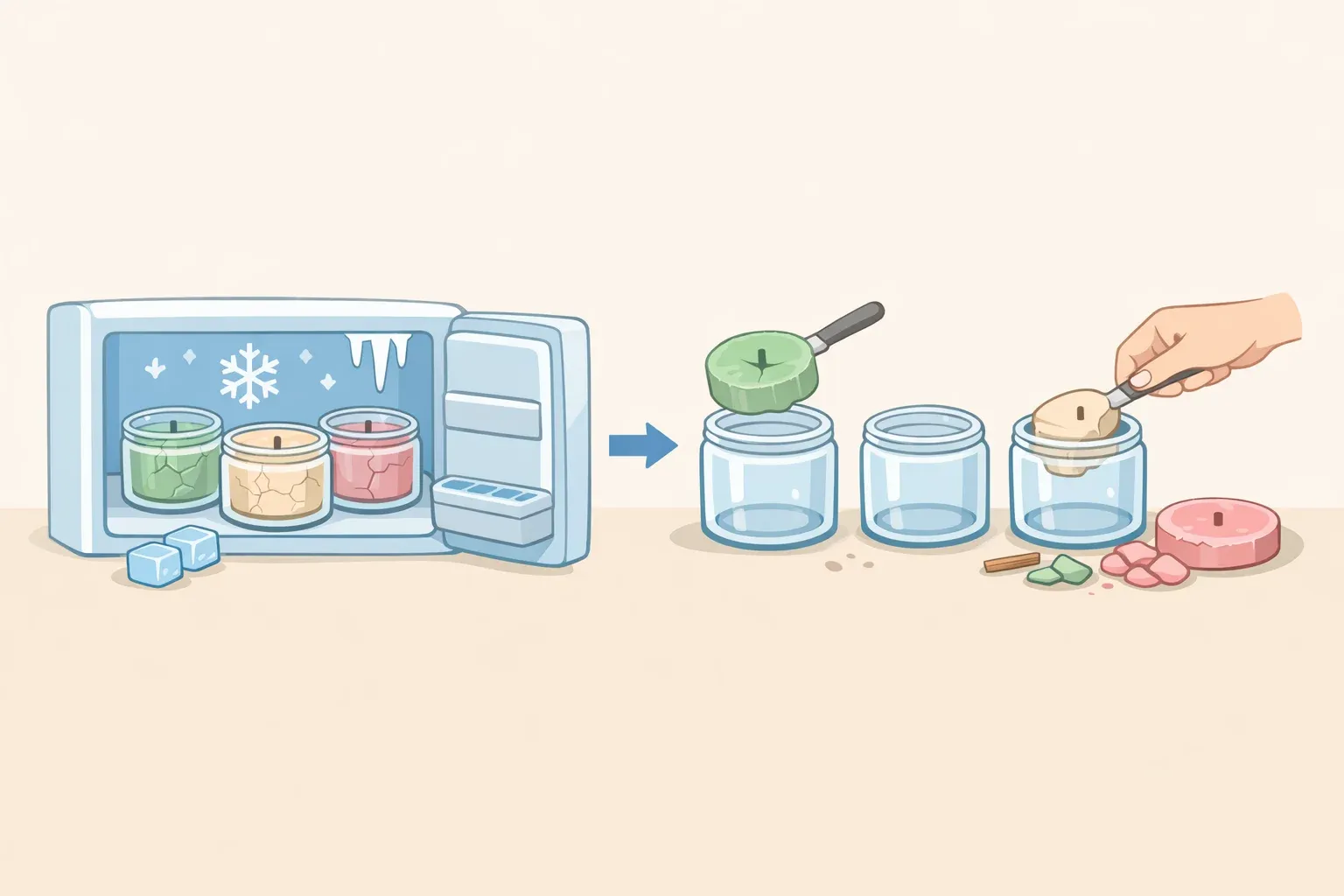
Freezer method: Place the jar in the freezer overnight. Cold makes wax brittle, so by morning it can usually be popped out in a chunk or scraped free with a butter knife. Louis & Co Maison notes it works especially well with paraffin and beeswax, and recommends this as the simplest starting point. Stick to thick-walled jars from standard candle brands. Glass under temperature stress can crack just as easily from cold as from heat, so skip this for anything fragile.
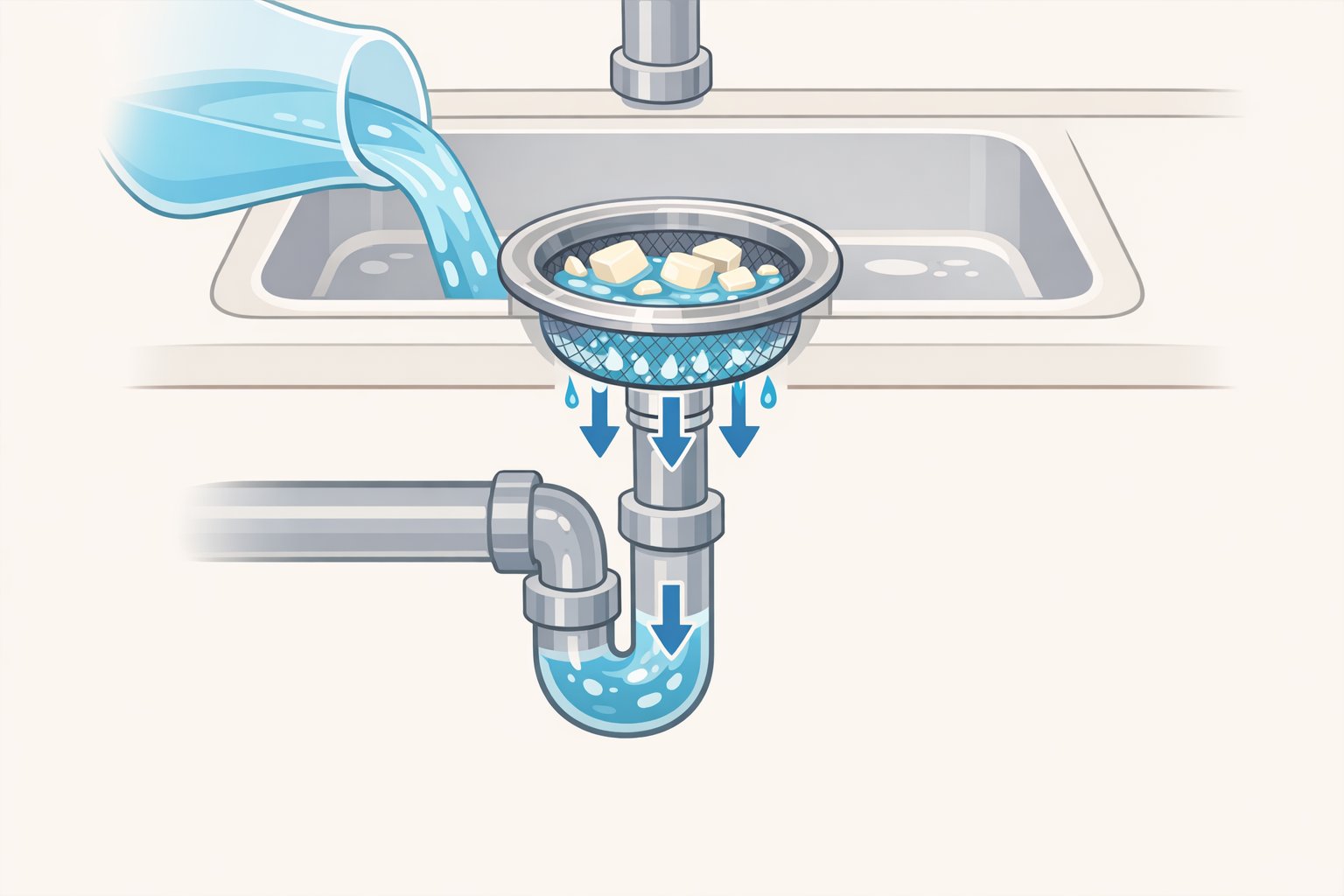
Boiling-water method: Pour boiling water into the jar, leaving about an inch of space at the top. The heat melts residual wax, which floats to the surface. Let the water cool completely, roughly an hour, then lift out the solidified wax disc before draining. Stevie Storck confirms this works and notes that repeating the process is normal if significant wax remains after the first pass.
Bain-marie method: Set the candle jar in a bowl or pot of hot water and let the surrounding heat melt the wax slowly over several minutes. Louis & Co Maison calls this their go-to technique. Because the heat reaches the jar indirectly, it is the better choice when you're not sure how the glass will respond. Pour the melted wax onto foil or paper towel, not down the drain.
Safety rules for all three methods:
- Never pour wax or wax-laden water directly down the drain. It re-solidifies in pipes. Use a sink strainer when draining water, and pour surplus liquid wax onto paper or foil. Stevie Storck and Louis & Co Maison both flag this as the most common and most avoidable mistake.
- Never use a microwave. Wick holders are metal. Louis & Co Maison is blunt: this can damage the appliance or start a fire.
- Handle fragile glass carefully with any method. Louis & Co Maison warns that both heat and cold extremes can crack or shatter thinner containers. When in doubt, use the bain-marie.
Finishing up:
- Once the bulk of the wax is out, find the wick holder, a small metal tab stuck to the bottom with adhesive. Heat will loosen it if it doesn't pull free by hand. Remove it before using the jar for anything (Louis & Co Maison).
- Scrub the jar with hot soapy water and a sponge to clear soot and any remaining residue. Dry it thoroughly (Stevie Storck).
Ways to reuse candle jars by size and shape: 11 ideas matched to the jar you actually have
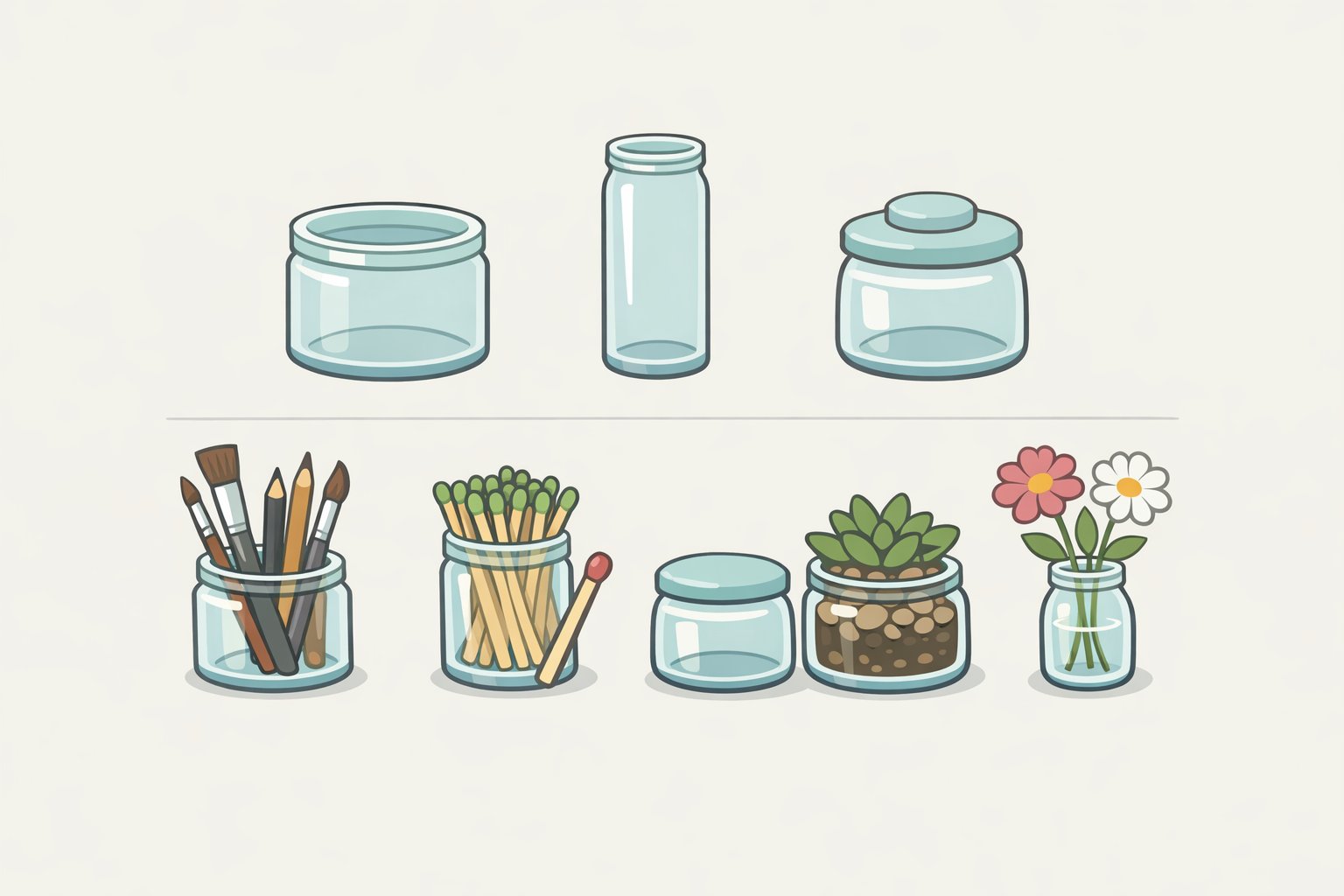
The easiest way to choose a reuse is by jar shape. Wide-mouth, narrow, and lidded jars each suit a different category of use, so the guide is organized that way rather than as a flat list.
Wide-mouth jars: organizers and desktop storage
A medium or large jar with a generous opening needs no modification to do useful work.
- Pen and pencil pot. Straightforward replacement for anything sold for that purpose. Louis & Co Maison.
- Makeup brush holder. Brushes stand upright, bristles up. Wide openings work; narrower ones don't. Louis & Co Maison.
- Match pot. Fill with long matches and keep near a mantle or stove. Louis & Co Maison.
- Small plant or succulent. Candle jars have no drainage holes, so choose something drought-tolerant: a succulent, an air plant, or a cutting held in water. Louis & Co Maison suggests this use.
Narrow or mid-size jars: small-item corrals
Jars too cramped for brushes or plants are exactly the right scale for small, easy-to-lose things.
- Bobby pins and hair accessories. Keeps them visible and in one place. Louis & Co Maison.
- Cotton buds or cotton wool. Tidier on a bathroom shelf than the original packaging, particularly for lidded jars. Louis & Co Maison.
- Loose change. A small jar near the door handles this reliably. Louis & Co Maison.
Lidded jars: decorative and display uses
If the candle came with a metal or wooden lid, the lid is as useful as the jar.
- Bud vase. One or two stems, clean water. Narrow-necked jars hold stems upright without extra support. Louis & Co Maison.
- Decorated lid coasters. Paint, collage, or drawn designs work depending on the lid material. A set of lids from the same candle line makes a cohesive group. Technically a lid reuse rather than a jar reuse, but the lid comes with the jar and Louis & Co Maison includes it as part of what to do with the whole package.
Practical hacks that work with any jar size
- Fruit fly trap. Mix apple cider vinegar with a drop of dish soap in the jar. The vinegar attracts flies; the soap breaks the surface tension so they can't escape. Place it where flies tend to gather. Stevie Storck.
- Eyeliner and lipstick holder. Upright storage for cosmetics that roll off counters. Louis & Co Maison.
On food safety: None of the sources for this article address food safety, so the ideas above stick to non-food uses. Until a brand confirms their glass type and any coatings, treat the jar as suitable for dry storage of non-edibles only.
If you want to refill it: the basics
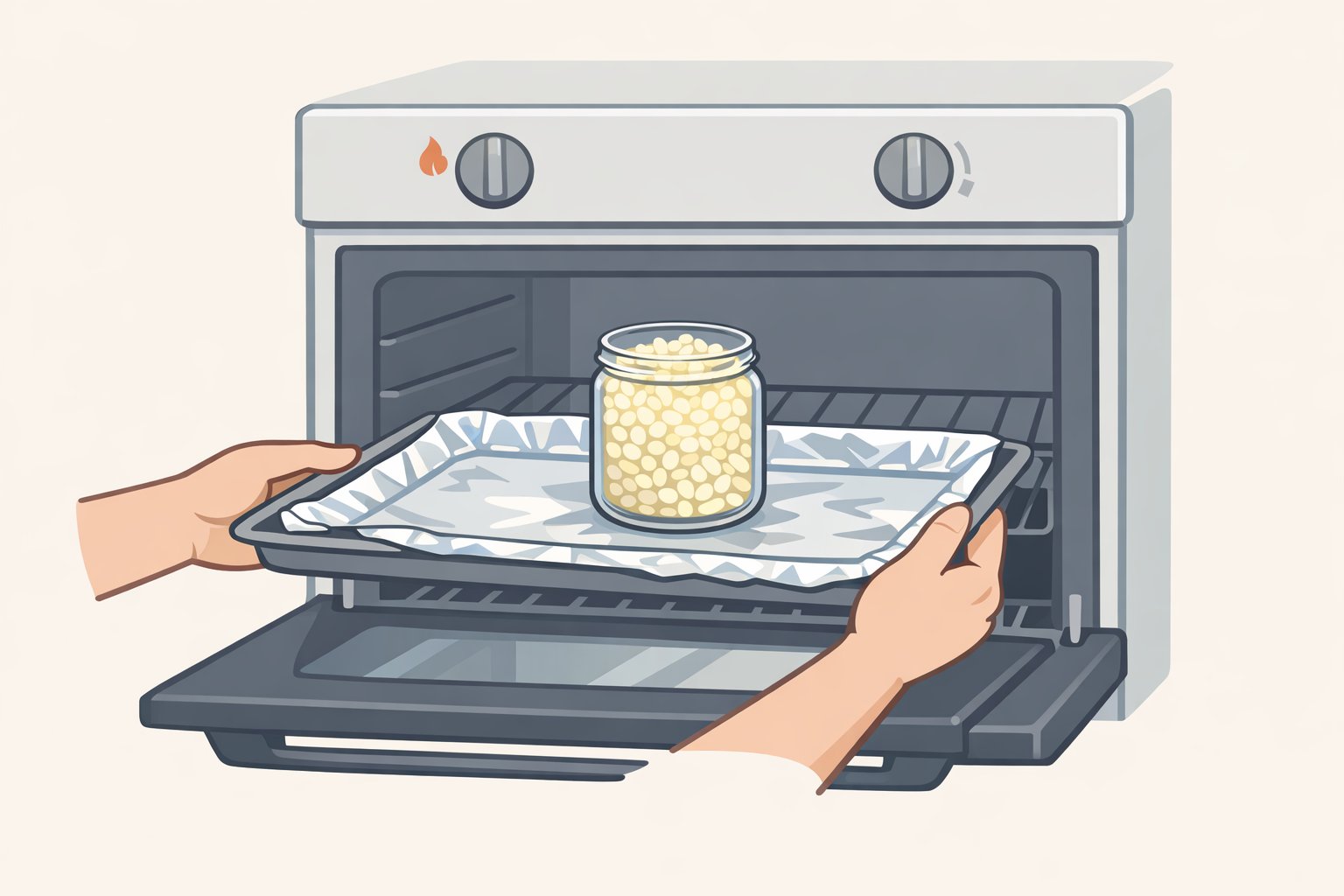
Refilling is possible, but less forgiving than simple reuse. Stevie Storck describes a no-pour, oven-based method that avoids handling hot liquid wax entirely.
- Clean and dry the jar fully (see above).
- Secure a new wick to the bottom. Hold it vertical with a wick bar or two pencils laid across the rim.
- Fill the jar with beeswax pellets or soy flakes to the desired candle level.
- Place on a foil-lined baking sheet in an oven preheated to 200°F for 45-60 minutes until the wax melts through. Top off with more pellets if the level drops as the wax settles (Stevie Storck).
- Add fragrance oil if desired. For an 8-ounce jar, roughly 30-40 drops (Stevie Storck).
- Cool and cure at room temperature for about 24 hours before lighting. Trim the wick to a quarter inch before the first burn (Stevie Storck).
One caveat worth taking seriously: no source independently verifies which candle jar types are oven-safe. Thin or specialty glass carries real risk. If the brand doesn't publish glass specifications, contact customer service before putting the jar in the oven.
Before committing to a full refill, there is a lower-effort option. If a scented jar still holds fragrant wax, break the hardened wax into pieces and use it in a wax melt burner. Louis & Co Maison suggests this as a way to extend the wax's value before the jar moves on to anything else.
If you won't keep the jar: how to recycle it responsibly
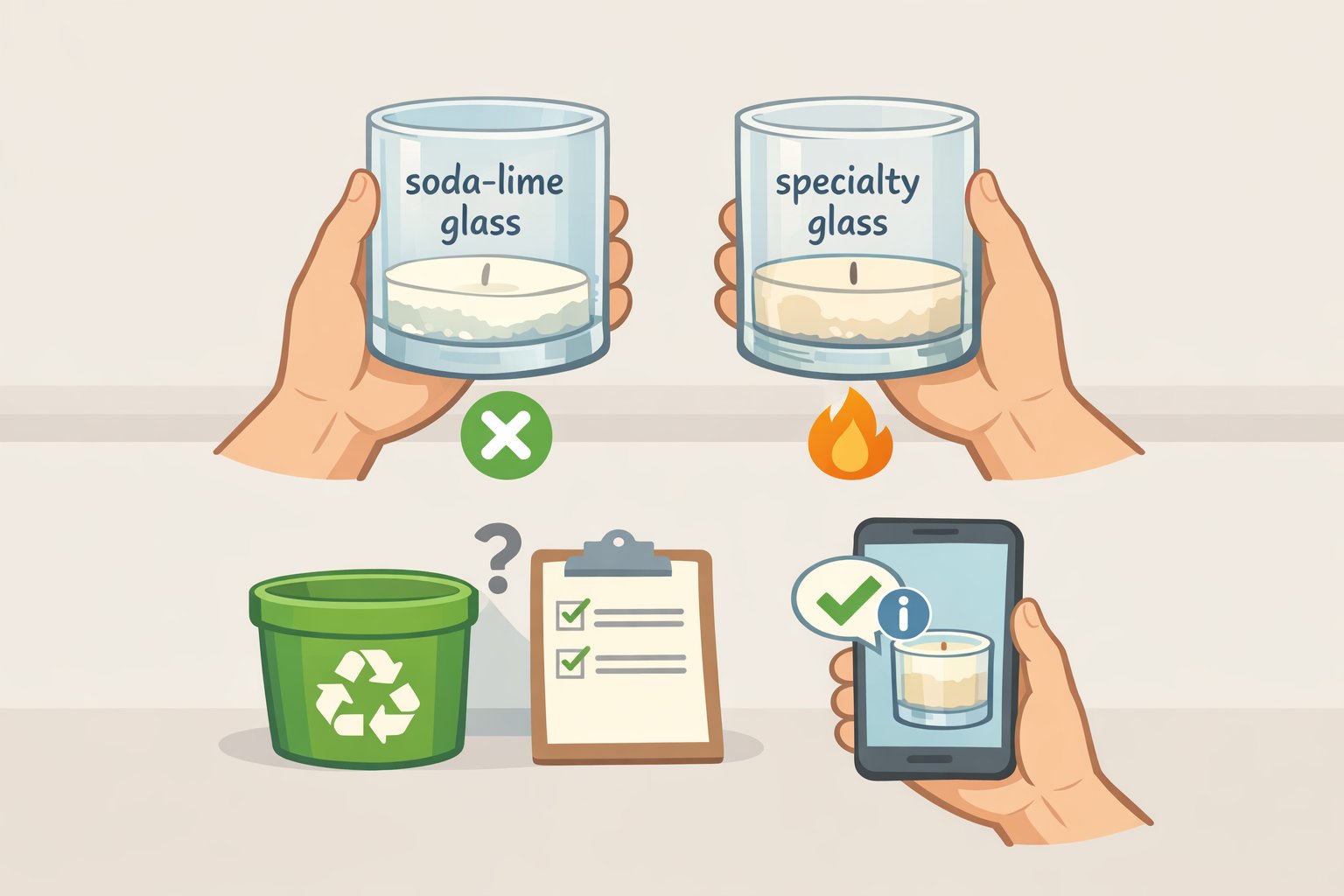
Recycling is a reasonable endpoint, but not automatic. Glass type matters.
Standard container glass, also called soda-lime glass, is accepted by most curbside programs. Specialty types like borosilicate typically are not. Louis & Co Maison, citing RecycleBank, recommends checking what glass type a candle brand uses before putting a jar in the bin. Their customer service line can usually answer this directly.
Some brands run takeback programs. As of Stevie Storck's reporting, Yankee Candle and its sister brands WoodWick and Chesapeake Bay Candle had partnered with TerraCycle, offering free printable shipping labels for returning empty jars. That detail is a few years old and TerraCycle partnerships shift, so verify whether the program is still active before using that route.
Clean the jar before recycling regardless of which route you take. Wax residue can cause problems at sorting facilities, and the cleaning steps above apply here too.
What to do next
Once the jar is clean, the decision tree is short. Thick walls and a wide mouth point toward desktop storage or a small planter. Narrow jar? Put it to work on a bathroom shelf. Came with a lid? Keep them together. Refilling is on the table if you confirm glass specifications first. Recycling works, provided you check glass type and current brand programs before dropping it in the bin.
One step worth taking before any of the above, if the jar's glass type or heat tolerance is unclear: contact the brand. Louis & Co Maison notes this is an underused first step. Two minutes on a brand's contact page can confirm glass type, recycling options, and sometimes a takeback route that skips all the guesswork.


Comments
Be the first, drop a comment!