



Cleaning Myths You Should Stop Believing: 10 Debunked
The most persistent household cleaning mistakes aren't made by people who don't care enough. They're made by people who care too much, reaching for a stronger product, a bigger dose, or a more dramatic hack when a simpler approach would work better and cause no harm.
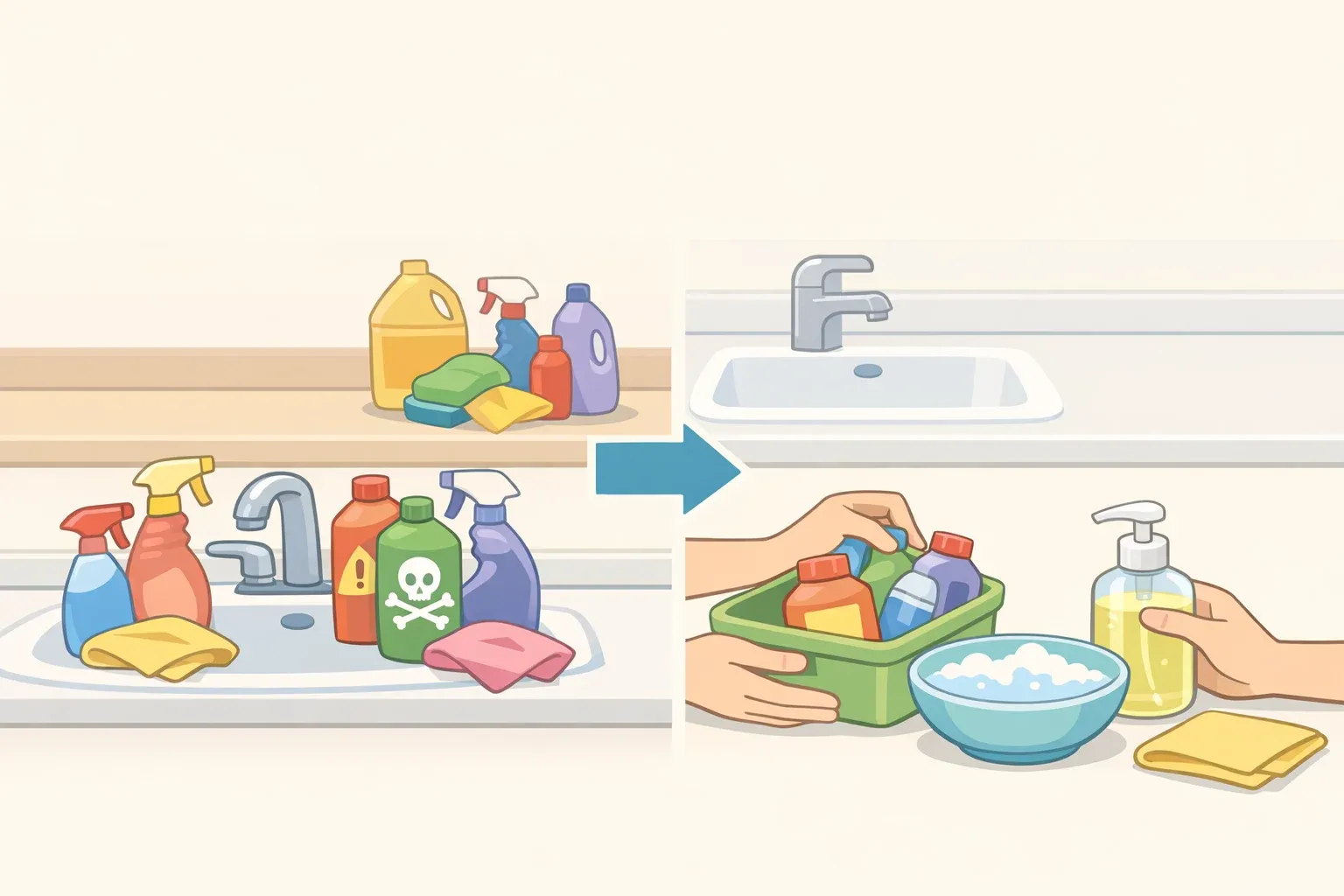
Nearly every myth in this piece traces back to the same error: using the wrong chemistry, the wrong intensity, or more product than the job requires. The CDC's guidance states plainly that soap and water removes most harmful bacteria and viruses from household surfaces in the vast majority of everyday situations. No disinfectant needed. Through lab testing and expert interviews, Consumer Reports found earlier this year a consistent pattern: consumers reach for vinegar, extra detergent, and disinfecting wipes when simpler methods would accomplish the same result without the collateral damage. These are cleaning hacks that don't work, and in several cases actively cause harm.
What follows covers ten common cleaning myths you should stop believing, organized into three groups: vinegar misuse, disinfection overuse, and detergent overdosing. Each myth gets a clear verdict, an explanation of the mechanism, and a specific replacement.
Common cleaning myths debunked: why vinegar isn't an all-purpose cleaner
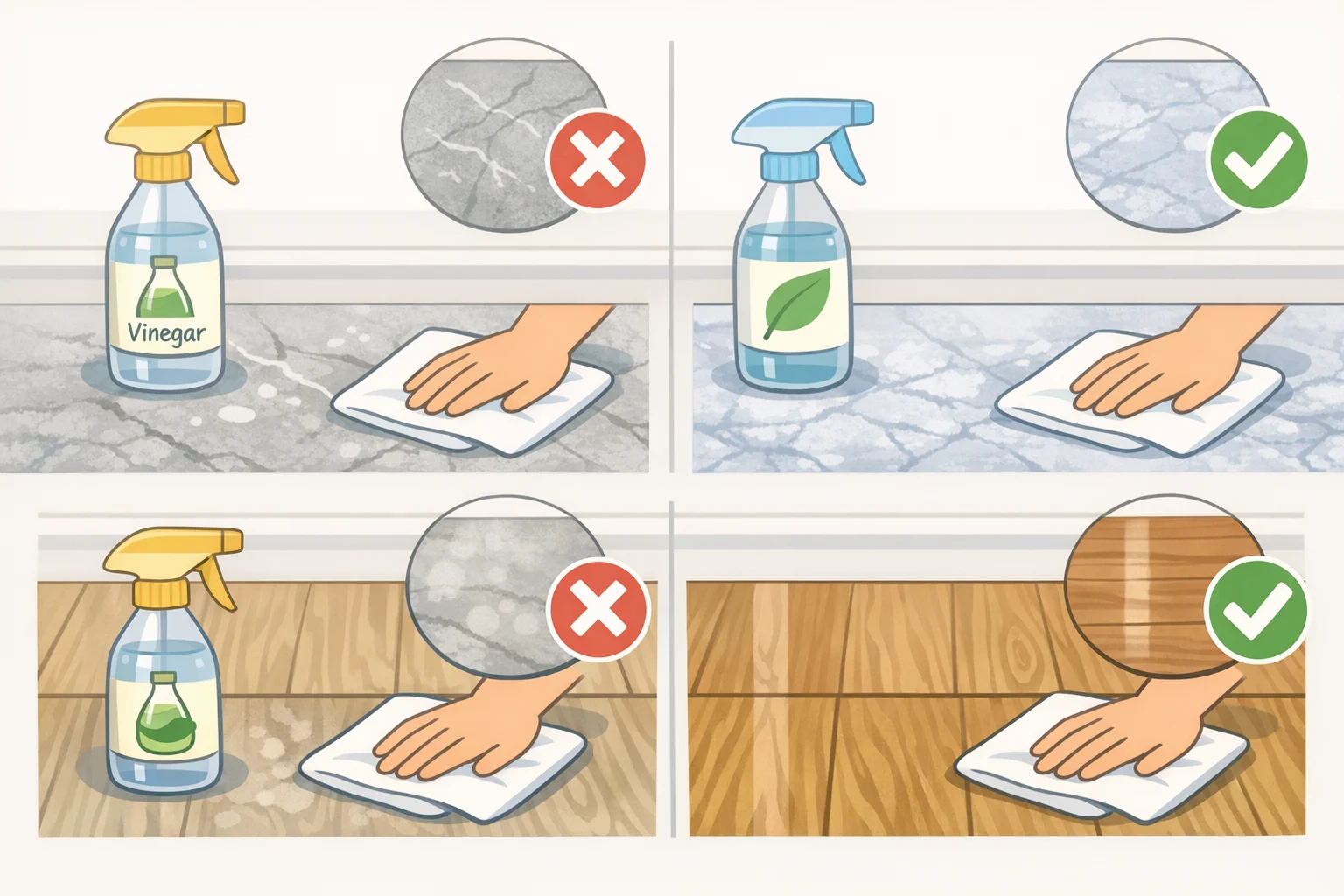
Distilled white vinegar is roughly 5 percent acidic, which makes it genuinely useful for dissolving hard-water mineral deposits and killing some household bacteria at low cost, per Consumer Reports (updated earlier this year). That's a real strength with a narrow scope. Among the things you should never clean with vinegar: organic finishes, rubber seals, soft stone, and any surface with a protective coating. Acid is useful against mineral scale; it's the wrong chemistry, or actively destructive, everywhere else.
Think of vinegar as a specialist, not a generalist. The myths below all stem from treating it as the latter.
Myth 1: Vinegar is safe for stone countertops
Marble and limestone are composed largely of calcium carbonate. Acid attacks it on contact, so vinegar permanently etches and dulls these surfaces, per Consumer Reports. Granite is more resistant but not immune: vinegar can break down the protective sealers that keep it stain-resistant.
Use instead: A pH-neutral stone cleaner, or a small amount of dish soap diluted in warm water. For granite, check the sealer manufacturer's recommended cleaning product.
Myth 2: Vinegar restores hardwood floors
Multiple flooring manufacturers, including LL Flooring, explicitly warn against vinegar on hardwood, and some void warranties if evidence of vinegar use is found, according to Consumer Reports. Even a diluted solution dissolves the protective finish over time, leaving floors cloudy or visibly dull.
Use instead: The flooring manufacturer's recommended cleaner, or a pH-neutral hardwood floor product.
Myth 3: Vinegar descales a steam iron
Pouring vinegar into an iron's reservoir is a widely circulated tip that can cause permanent internal damage. Most steam irons have a protective coating inside the chamber; acid eats away at that lining first, then attacks the metal components beneath it, per Consumer Reports.
Use instead: Distilled water in routine use to prevent mineral buildup; follow the iron manufacturer's descaling instructions for periodic maintenance.
Myth 4: Vinegar is safe for regular laundry use
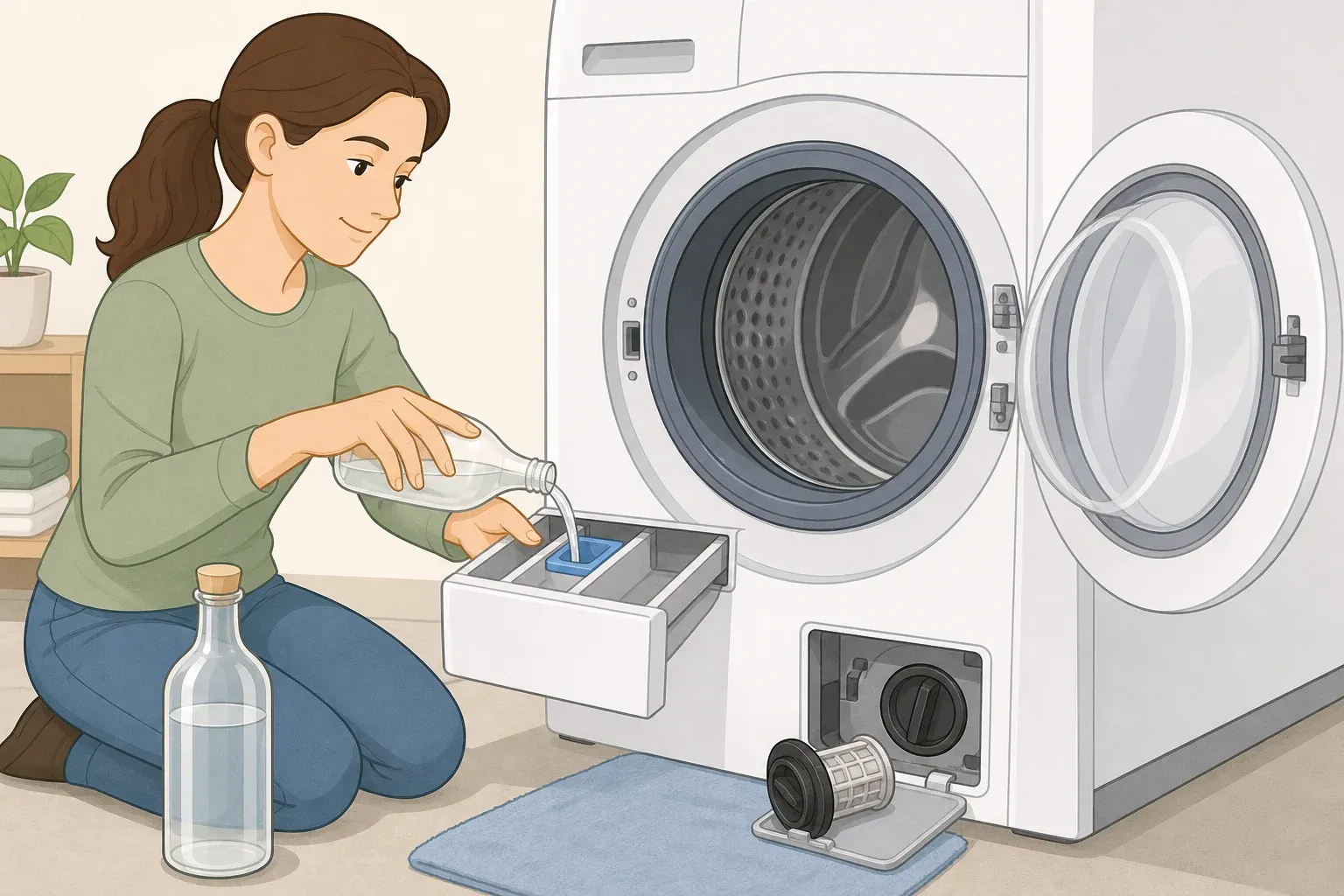
Using vinegar routinely for odor control or as a fabric softener substitute can damage rubber seals and hoses, potentially causing leaks. Front-load washers are especially vulnerable, according to appliance repair specialist Steven Grayson, cited by Consumer Reports. On top of the machine risk, vinegar doesn't work on set-in stains like food or blood, per American Cleaning Institute spokesperson Brian Sansoni in the same piece.
Use instead: Enzyme-based stain removers for set-in stains; purpose-made laundry products for odor control.
Myth 5: Undiluted vinegar is safe on phone and computer screens
Straight vinegar can damage anti-glare coatings and reduce touchscreen responsiveness on phones, tablets, televisions, and monitors, according to Consumer Reports' computer testing lead Antonette Asedillo (Consumer Reports). The nuance worth noting: Acer and Samsung have both suggested a 50/50 vinegar-water dilution for cleaning stains off some of their screens. The working rule is to check manufacturer guidance first and never use undiluted vinegar on any screen.
Use instead: A soft, slightly damp microfiber cloth for routine cleaning. Where no manufacturer guidance exists, a purpose-made electronics screen cleaner is the conservative choice.
The pattern across myths 1–5: Vinegar works on mineral scale. It fails on grease, and it can degrade finishes, rubber seals, protective coatings, and surface treatments that took years or significant money to apply. That narrow range of usefulness is worth knowing, because the myths above all assume the opposite.
Myth group 2: vinegar cleans the dishwasher and cuts kitchen grease (myths 6–7)
The myths in the first group involve vinegar damaging surfaces. These two are different: vinegar doesn't damage these surfaces, but it also doesn't clean them. The failure is a chemistry mismatch, not a material incompatibility, and the distinction matters.
Myth 6: Vinegar cleans the dishwasher interior
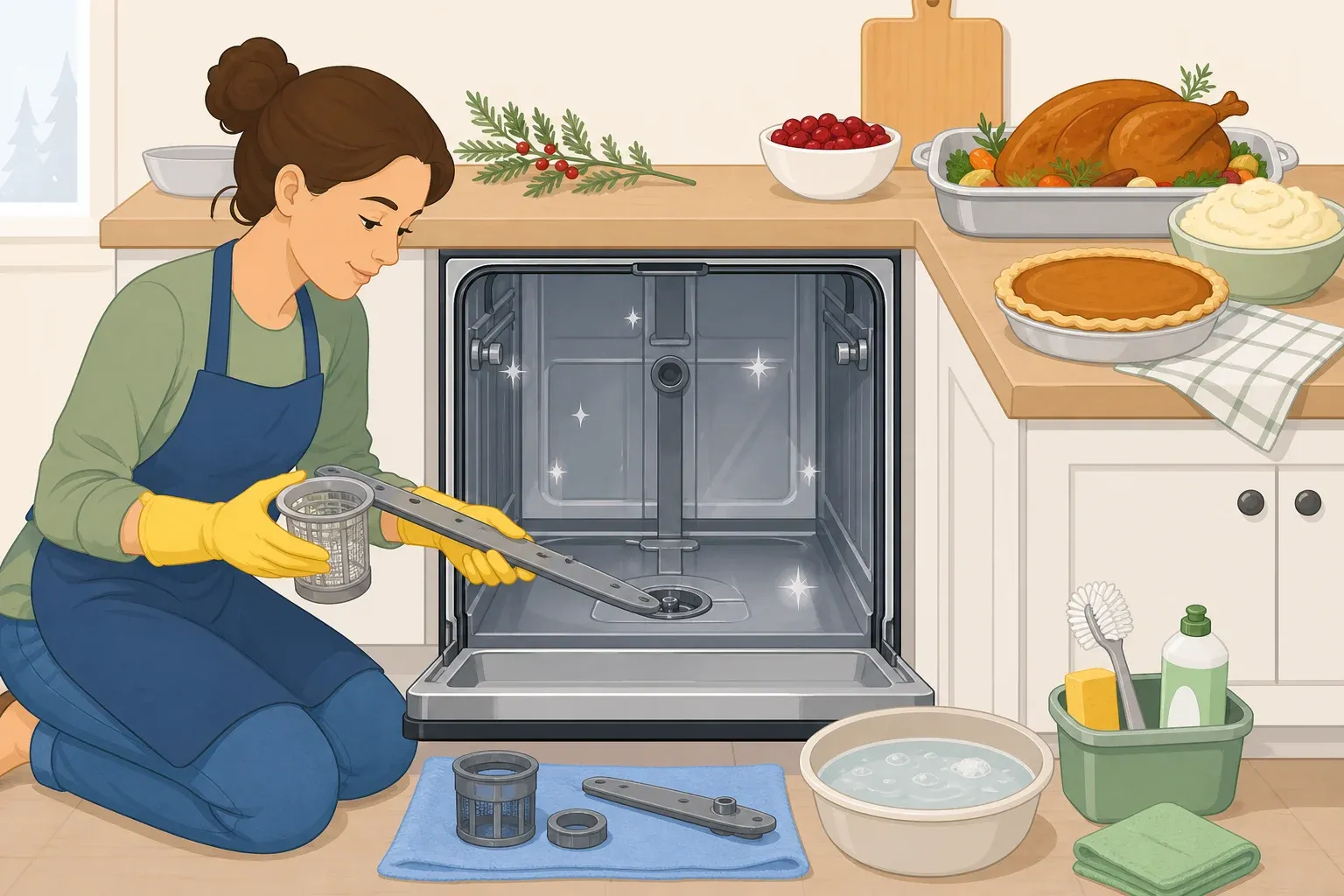
Consumer Reports ran a controlled test in their dishwasher lab. The verdict from testing lead Larry Ciufo: "It didn't do a thing." Beyond being ineffective on film and deposits, vinegar's acidity can erode rubber gaskets inside the machine with repeated use, per Consumer Reports (updated earlier this year).
Use instead: A citric-acid-based dishwasher cleaner formulated to work without damaging internal seals. Affresh and Lemi Shine are Consumer Reports' specifically named recommendations.
Myth 7: Vinegar cuts through kitchen grease
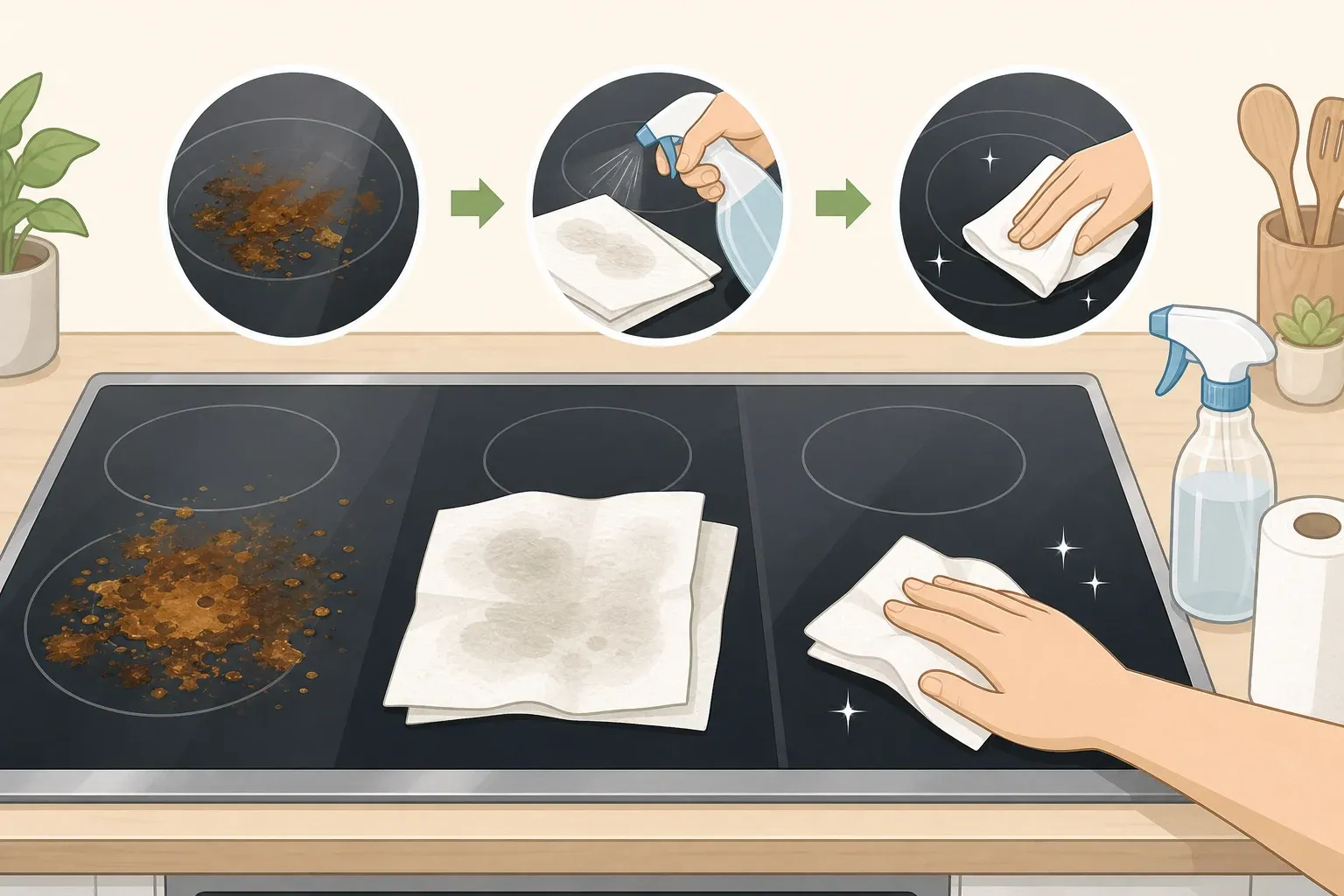
Because grease already contains plenty of acids, vinegar does almost nothing to break it down, according to cleaning expert Chris Beckman, quoted by Consumer Reports. Beckman recommends baking soda, a mild base, as an alternative for greasy stovetop messes. Worth noting: vinegar won't damage enamel range surfaces or glass cooktops. It simply won't clean a greasy mess on them.
Use instead: Baking soda paste or a dish-soap-based degreaser. For baked-on grease, a commercial degreaser rated for your surface type.
The operating rule: acid (vinegar) for mineral scale; base (baking soda, dish soap) for grease. These are not interchangeable.
Myth group 3: you need to disinfect every surface, every day (myths 8–9)
Three distinct definitions matter here. Cleaning with soap and water physically removes dirt and germs from a surface. Sanitizing reduces germ levels to what public health standards consider safe. Disinfecting uses registered chemical agents to kill remaining organisms, but only on a surface that has already been cleaned, because organic material like dust and skin cells can block disinfectants from making contact with germs in the first place, per the CDC.
The sequence that works: clean first, disinfect only when circumstances justify it. Most people also don't leave product wet for the label-specified dwell time, a detail that's on every disinfectant label and almost universally ignored, per Consumer Reports (published in late 2024). Wipe a surface dry before the product has time to work and disinfection is effectively theater.
Myth 8: Disinfecting every surface daily keeps a household healthier
Current CDC guidance is direct: routine disinfection in a home where no one is sick is unnecessary, and soap and water handles most harmful organisms on household surfaces. The EPA noted (updated last year) that surface transmission risk for respiratory illnesses is considered low. Consumer Reports stated plainly that disinfecting wipes "are not really needed to keep your kitchen counters clean."
The pandemic-era habit of daily surface disinfection has outlasted the rationale that created it in healthy households.
Use instead: Clean high-touch surfaces regularly with soap and water; clean other surfaces when visibly dirty. Disinfection is a targeted response to illness, not a maintenance routine.
Myth 9: Disinfecting wipes are harmless everyday household staples
Products labeled as disinfectants contain antimicrobial pesticides, regulated as such by the EPA because their active ingredients, including bleach, hydrogen peroxide, and quaternary ammonium compounds (quats), kill living microorganisms, per Consumer Reports (published in late 2024). A 2019 analysis in the American Journal of Infection Control, cited by Consumer Reports, found that janitors and healthcare workers with regular occupational disinfectant exposure develop asthma at higher rates than other workers.
Children may face greater risk, according to experts Consumer Reports spoke with. Because children breathe more air per pound of body weight than adults, their inhalation exposure from the same fumes is proportionally greater, according to pediatrician Jerome Paulson, MD, of George Washington University, quoted by Consumer Reports. Quat-containing wipes, the same products marketed to schools as classroom supplies, carry a legal label requirement: "Keep out of reach of children." Massachusetts officials sent a warning letter to a school where teachers had given disinfecting wipes to students for cleaning desks and computers, per Consumer Reports.
A 2022 study in the Journal of Exposure Science & Environmental Epidemiology, cited by Consumer Reports, detected quats in human breast milk at higher concentrations among frequent disinfectant users. Human evidence for reproductive harm remains early-stage, but the research direction has drawn growing expert concern.
When disinfection is genuinely warranted, say a household member is sick or surfaces have been contaminated during illness, clean the surface first, then disinfect. The CDC's cited example is norovirus: any surface soiled by vomit or diarrhea should be cleaned and then disinfected. A 2019 study cited by Consumer Reports found that hydrogen-peroxide-based disinfectants were linked to fewer adverse health effects than bleach- or quat-based alternatives.
Practical safety steps: keep children out of the room during any disinfectant application and for at least 20 minutes after, since one study in Environmental Health found detectable fumes can persist in air that long. Children should never handle disinfecting products; any cleaning task assigned to kids should use soap and water only. Store disinfectants securely and out of reach.
Myth group 4: more detergent means a better clean (myths 10a and 10b)
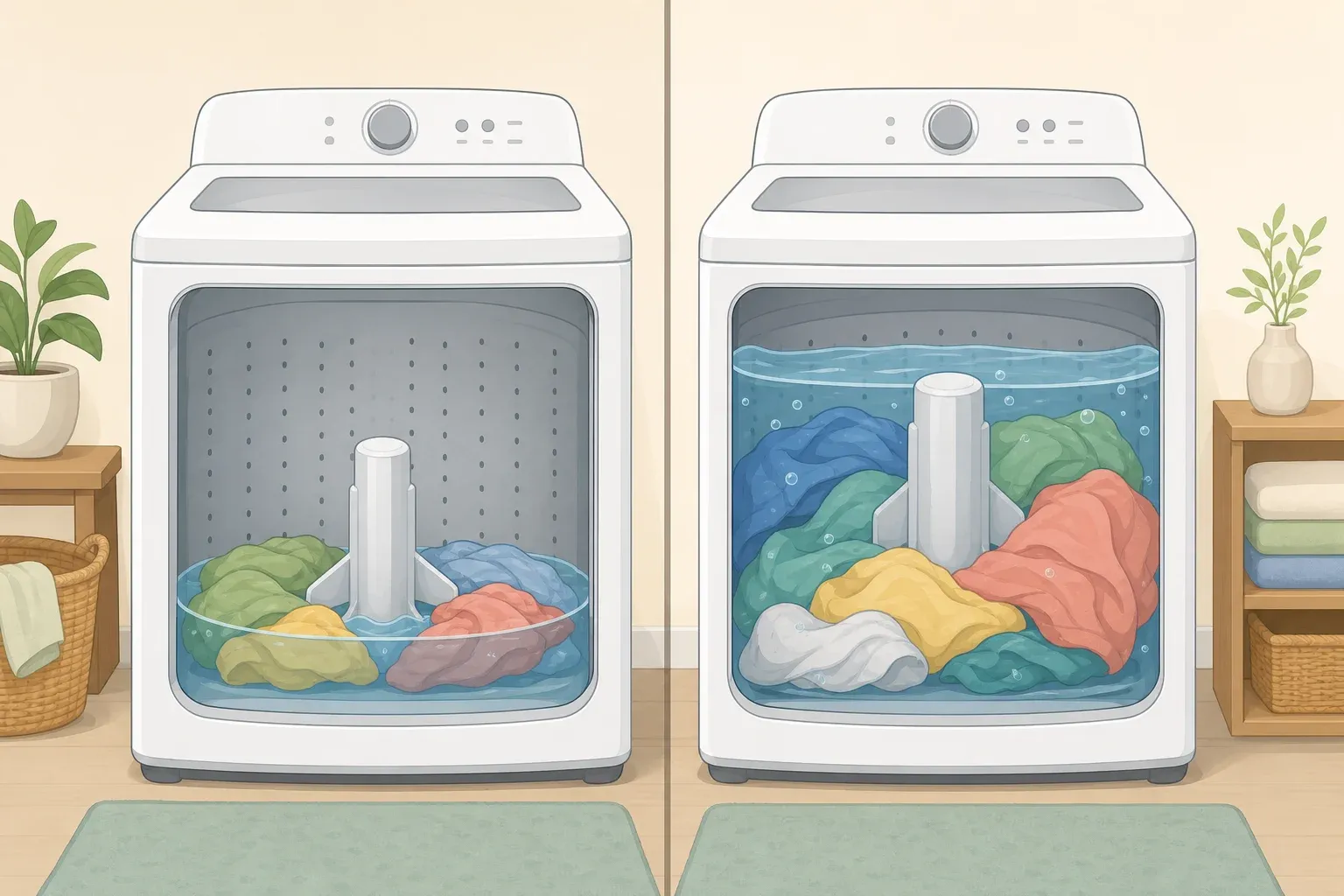
Modern laundry and dishwasher detergents are concentrated formulas. The fill-line markings on most dispensers show the machine's maximum capacity, not a recommended dose. Most people treat the maximum as the target and consistently overshoot. The result isn't cleaner results; it's residue buildup, appliance wear, and wasted product.
Myth 10a: Fill the laundry dispenser for a better wash
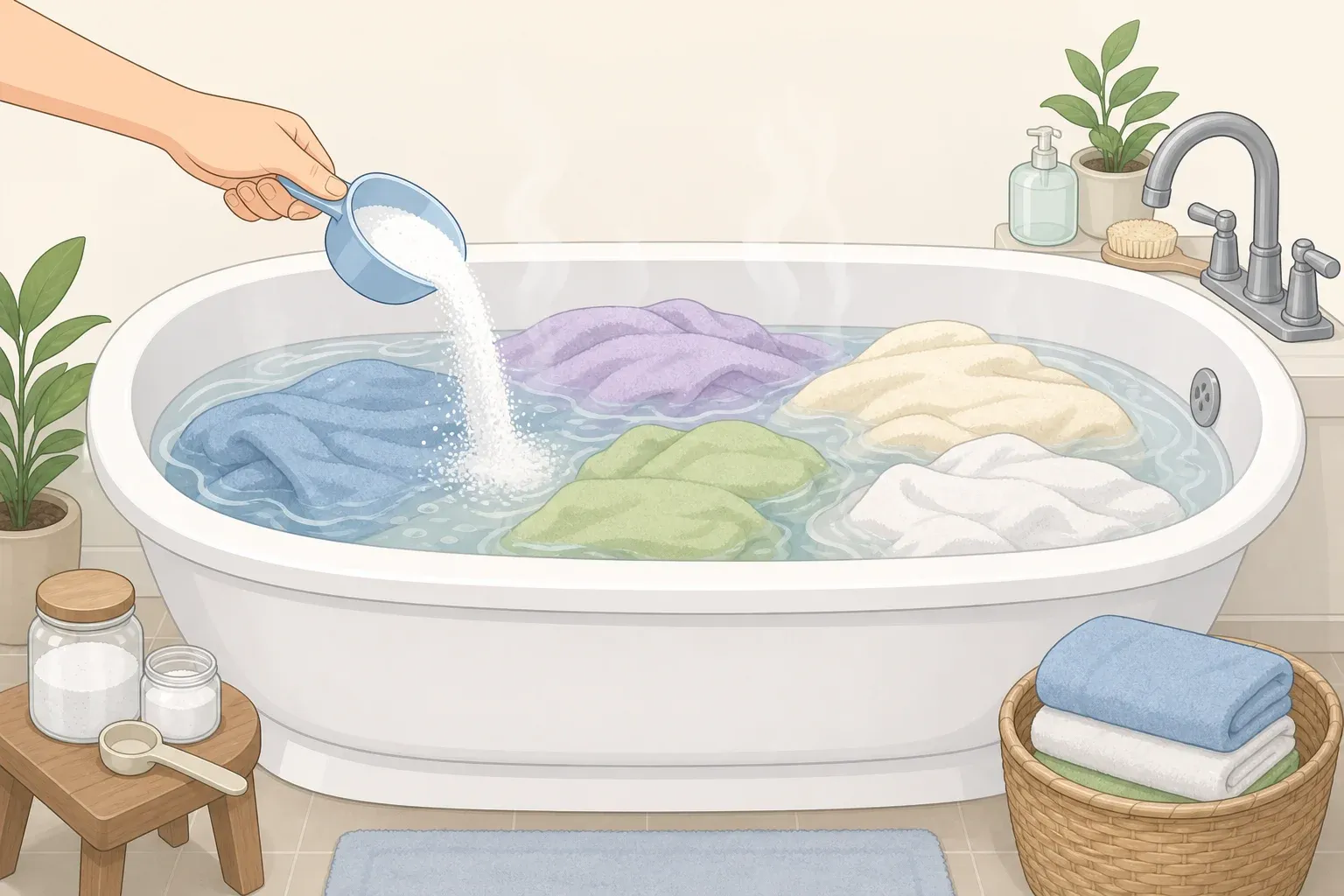
A standard laundry load requires about 1.5 ounces of detergent, roughly the volume of a shot glass, per Consumer Reports (updated about two years ago). Using more doesn't improve cleaning performance; because most formulas are concentrated, the excess simply leaves residue on clothes and inside the machine. Consumer Reports' detergent testing lead Rich Handel notes that the surplus also disperses into wastewater systems, contributing unnecessary chemical load.
Use instead: Measure 1.5 ounces for a normal load; double for large or heavily soiled loads. Single-dose pods simplify the decision: one pod per wash, regardless of load size.
Myth 10b: More dishwasher detergent gets dishes cleaner
Excess dishwasher detergent leaves residue on dishware and can clog internal machine components over time, per Consumer Reports' dishwasher testing lead Larry Ciufo (Consumer Reports). More product produces cloudier dishes, not cleaner ones. The dishwasher manufacturer's dosing guidance is a more reliable reference point than the detergent brand's.
Use instead: Follow the dishwasher manufacturer's recommended amount. For gel or powder, treat the reservoir fill line as a maximum. For tabs and pods, one per cycle.
A compact playbook to replace all ten myths
Three decisions cover everything above.
The chemistry decision (myths 1–7): Mineral deposits respond to acid, white vinegar in the right context, or citric-acid cleaners for dishwashers. Grease responds to base: baking soda, dish soap, or a rated degreaser. Routine everyday grime comes off with soap and water. The Consumer Reports examples across stone, hardwood, irons, washing machines, dishwashers, and stovetops all fail the same way: wrong chemistry for the soil or surface.
The disinfection decision (myths 8–9): Clean regularly with soap and water. Disinfect when someone is sick. If disinfection is warranted, look for a hydrogen-peroxide-based product, follow the dwell time on the label, and keep children out of the room for at least 20 minutes after application, per Consumer Reports and CDC guidance. Children should never handle disinfecting products directly.
The dosing decision (myth 10): Measure 1.5 ounces of laundry detergent per normal load. Follow the dishwasher manufacturer's dosing guidance, not the detergent brand's. Single-dose pods for both take the guesswork out entirely, per Consumer Reports.
Most of these house cleaning myths were born from the same marketing premise: that stronger, harsher, and more always means cleaner. The consistent evidence from lab tests, public health agencies, and appliance specialists points the other direction. Soap, water, and the right chemistry for the job solve most household cleaning problems without the collateral damage. The next time a cleaning hack promises dramatic results, the useful question isn't whether it seems powerful. It's what it's actually doing to the surface.


Comments
Be the first, drop a comment!