



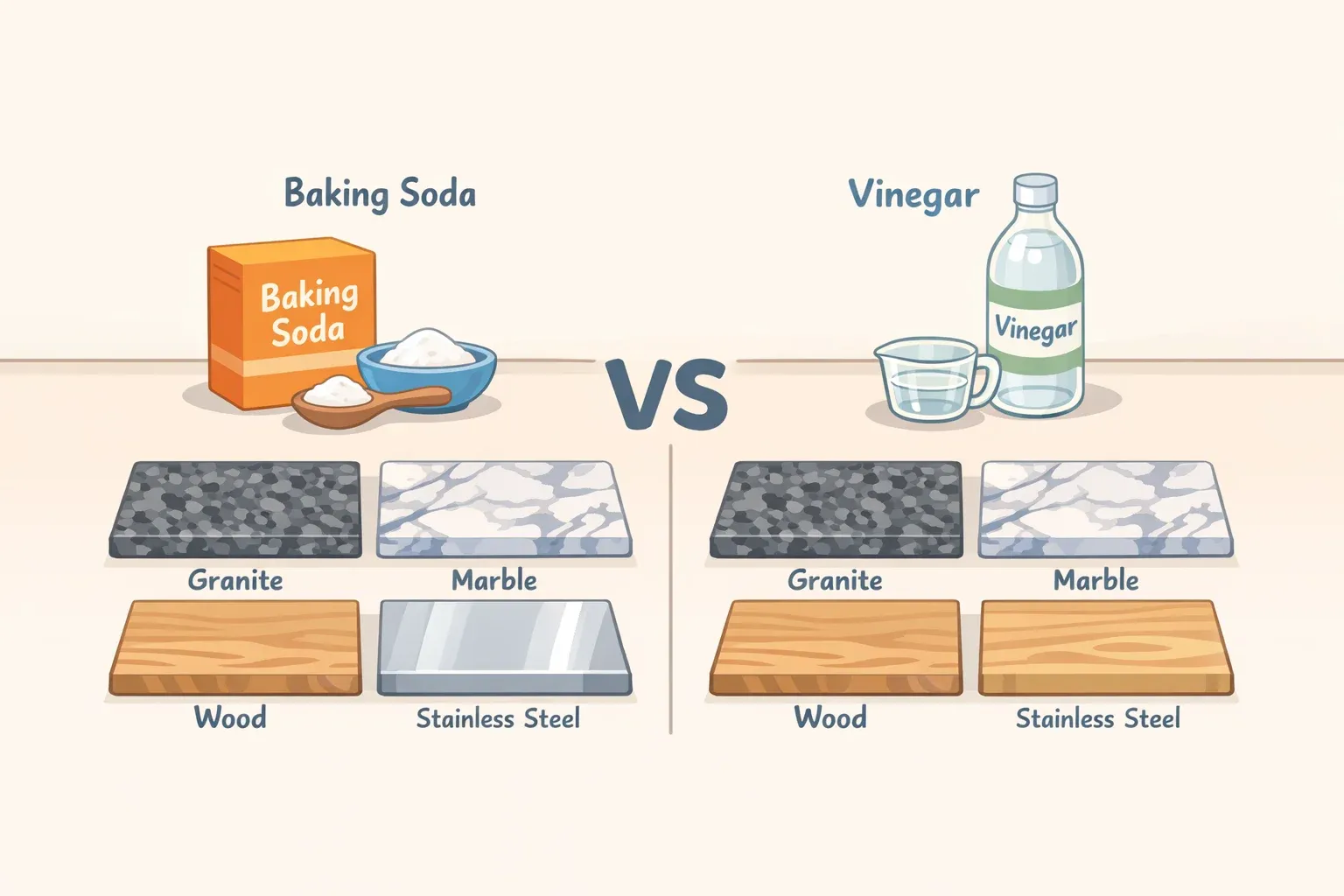
Baking soda vs vinegar for cleaning: a surface-by-surface guide
Vinegar has a pH of around 3, making it roughly 10,000 times more acidic than water. That acidity is precisely what makes it useful against hard water mineral deposits, and precisely what makes it destructive on marble, wood, stainless steel, rubber gaskets, and phone screens. Baking soda carries fewer of those acid-related risks, though its mild abrasiveness creates its own incompatibilities with delicate finishes and screens. Neither product is a universal cleaner. The honest answer to the baking soda vs vinegar for cleaning question is: it depends on what you are cleaning, and that conditional answer is what this guide maps out.
Interior designer Danny Leung told EatingWell earlier this year that vinegar has become a "cure all" in natural cleaning culture, even though its acidity makes it genuinely useful for some tasks and actively harmful for others. Stone restoration expert Emily Dodds, who holds IICRC restoration credentials and has logged more than 50,000 field hours, told Stone World last year that chemical misuse, vinegar being the most common example, ranks among the leading causes of countertop damage she encounters and can immediately void a manufacturer's warranty. Baking soda draws far fewer cautionary notes from experts, but Consumer Reports notes it is often redundant rather than essential, useful in specific circumstances rather than as a broad-spectrum solution.
Five cleaning scenarios frame everything that follows: mineral buildup, grease, odor removal, germ risk on food-contact surfaces, and delicate surfaces. The article also addresses the viral mixing myth directly.
The chemistry in 90 seconds: what each product can and cannot do
Vinegar is an acid. Baking soda is a mild alkali and a gentle abrasive. These are different tools for different jobs, not interchangeable pantry substitutes.
Good Housekeeping describes vinegar's acidity as both its primary cleaning mechanism and its primary risk: it dissolves mineral scale on inert surfaces, and it reacts destructively with surfaces containing calcium carbonate or protective finishes. Baking soda works differently. It physically scours mild grime and neutralizes some acidic odor compounds rather than dissolving them chemically. Think of vinegar as a razor blade and baking soda as a sanding block. One cuts through mineral film; the other buffs away mild buildup. Knowing which you are holding tells you immediately what it should not touch.
Neither one is a disinfectant. Purdue Extension draws the relevant distinctions clearly: a detergent removes visible contamination; a sanitizer reduces microbial counts to a 99.9% pathogen-reduction standard; a sterilizer eliminates all microorganisms. Neither vinegar nor baking soda carries EPA registration as a sanitizer. Any product making sanitizing claims without an EPA registration number is a red flag, per Purdue Extension, because legitimate sanitizers must demonstrate that 99.9% reduction threshold under regulatory oversight before the claim can appear on a label.
When to use baking soda vs vinegar: the short version
Before the full scenario breakdown:
- Mineral scale on glass or plastic: use vinegar
- Grease or mild grime on most surfaces: use baking soda paste or dish soap
- Germs, natural stone, wood, rubber seals, or screens: skip both
Head-to-head: which cleaner wins each scenario
Mineral buildup and hard water scale
Vinegar wins here, narrowly. Its acidity genuinely dissolves mineral deposits on glass and plastic. EatingWell confirms it works on glass surfaces and small appliances like coffee pots, provided the manufacturer permits it. Baking soda offers no meaningful advantage against hard water mineral deposits; abrasion alone cannot dissolve calcium scale.
The caveat matters. The same mechanism that dissolves mineral scale will etch natural stone and corrode metal finishes. For laundry specifically, Consumer Reports notes baking soda may act as a water softener under hard-water conditions, though their laundry expert considers it unnecessary when a quality detergent is already in use.
Grease
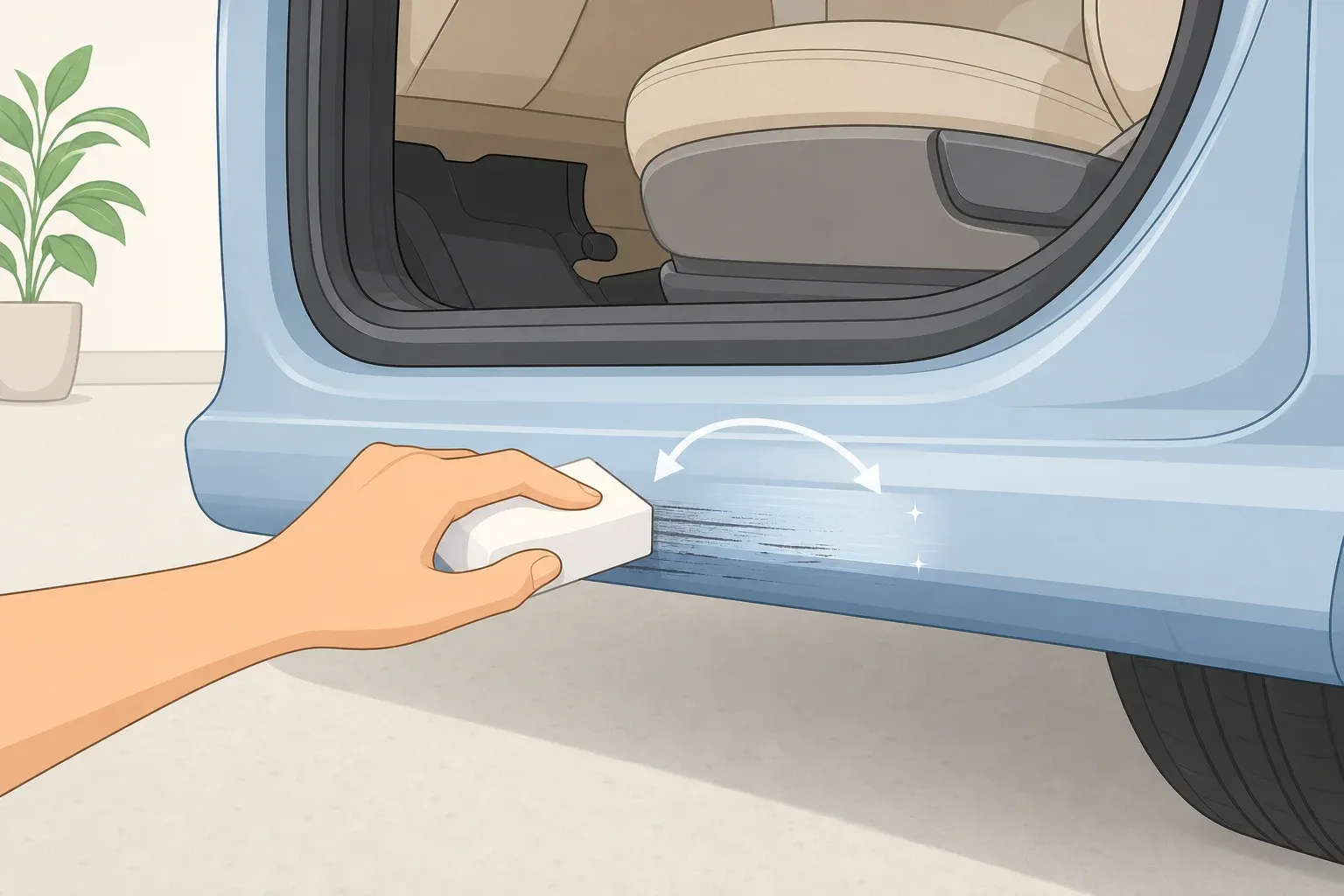
Baking soda wins here. EatingWell recommends a paste of baking soda and water for stubborn grease; the mild abrasion lifts it without damaging most surfaces. Vinegar creates a different problem with protein-based messes: Good Housekeeping notes that vinegar applied to a spilled egg causes the proteins to coagulate, the same process as poaching, making the mess harder rather than easier to clean.
Odor removal
Neither product performs reliably here. Cleaning professional Marilee Lush told EatingWell that vinegar cannot eliminate odors caused by bacteria or fungal sources because it cannot kill those organisms. Baking soda can absorb some odors by neutralizing acidic compounds, but it cannot address the microbial source generating them. For odors rooted in bacterial activity, an EPA-registered disinfectant is the appropriate tool.
Germ risk on food-contact surfaces
Neither qualifies. EatingWell is explicit that vinegar cannot deliver 99.9% pathogen reduction and is a poor choice for surfaces used to prepare raw meat or eggs. Purdue Extension explains that proper sanitizing is a three-step process: clean the surface first, apply an EPA-registered sanitizer according to label instructions, then follow contact time precisely. Skipping the cleaning step reduces a sanitizer's effectiveness; substituting an unregistered product removes any reliable efficacy claim entirely.
Delicate surfaces
Baking soda's generally lower surface-compatibility risk matters most here, but "lower risk" is not the same as "safe for everything." Its abrasiveness can still damage delicate finishes, and screens are off-limits for both. The full vinegar incompatibility breakdown follows in the next section; the short version is that most finishes, coatings, and reactive materials are incompatible with vinegar's acidity.
Decision table: baking soda or vinegar cleaning at a glance
| Task | Better choice | Why | When to skip both |
|---|---|---|---|
| Hard water / mineral deposits on glass or plastic | Vinegar | Acid dissolves mineral scale | Any stone, metal, or reactive surface nearby |
| Stubborn grease on oven or stovetop | Baking soda paste | Mild abrasion lifts fat without surface damage | Cast iron or delicate finishes |
| Odor absorption in fridge or on dry surfaces | Baking soda | Neutralizes acidic odor compounds | Bacterial or mold-based odors |
| Sanitizing food-prep surfaces | Neither | Neither is EPA-registered as a sanitizer | Use a registered disinfectant |
| Daily maintenance on natural stone | Neither | Vinegar etches stone; baking soda abrasion can dull polished surfaces | Use dish soap and distilled water |
| Screen and electronics cleaning | Neither | Vinegar strips coatings; baking soda too abrasive | Use a dry or damp microfiber cloth |
Surfaces you should not clean with vinegar
Natural stone: immediate and expensive
When acid contacts calcium carbonate, the mineral compound found in marble and travertine, surface etching begins at the molecular level on contact. Dodds told Stone World last year: "When acid touches calcium carbonate, it releases carbon dioxide, and at the molecular level, it etches the top surface, literally eats away at the top surface of the countertop." To convey the speed, she pointed to the visible fizz when baking soda and vinegar are combined. "That's how fast it happens at the microscopic level."
Repairs can run into thousands of dollars and may be excluded from warranty coverage. Her daily maintenance recommendation is disarmingly plain: a teaspoon of dish soap mixed with distilled water. "There's no vinegar, there's no ammonia, there's no specialty product," she said. "It's just dish soap."
Wood, grout, and metal finishes
Good Housekeeping documents the wood damage mechanism clearly: vinegar breaks down wax finishes over time and can swell unsealed wood, leaving surfaces dull and structurally compromised even when diluted. For grout, even diluted vinegar erodes the material progressively, particularly when the grout is unsealed or already in poor condition. On stainless steel, Good Housekeeping notes that equal-parts diluted vinegar is technically usable but not recommended, given that the acid can damage delicate appliance finishes. EatingWell goes further, noting that vinegar causes surface pitting over time and will break down any sealant on the appliance surface.
Practical alternatives: a cleaner formulated for hardwood floors, diluted bleach applied with a stiff brush for grout, and a dedicated stainless steel cleaner for appliances.
Rubber gaskets, appliance internals, and drains
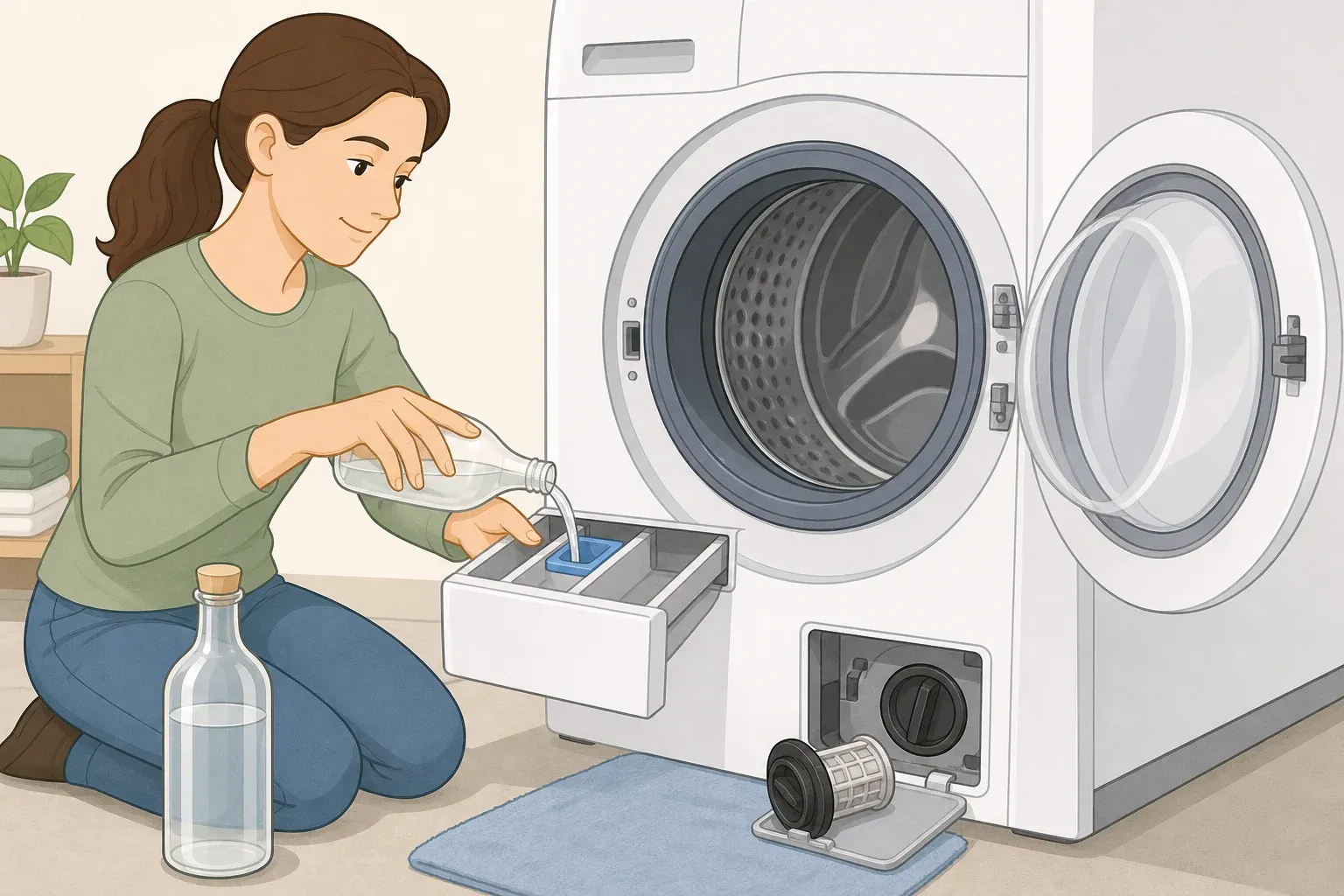
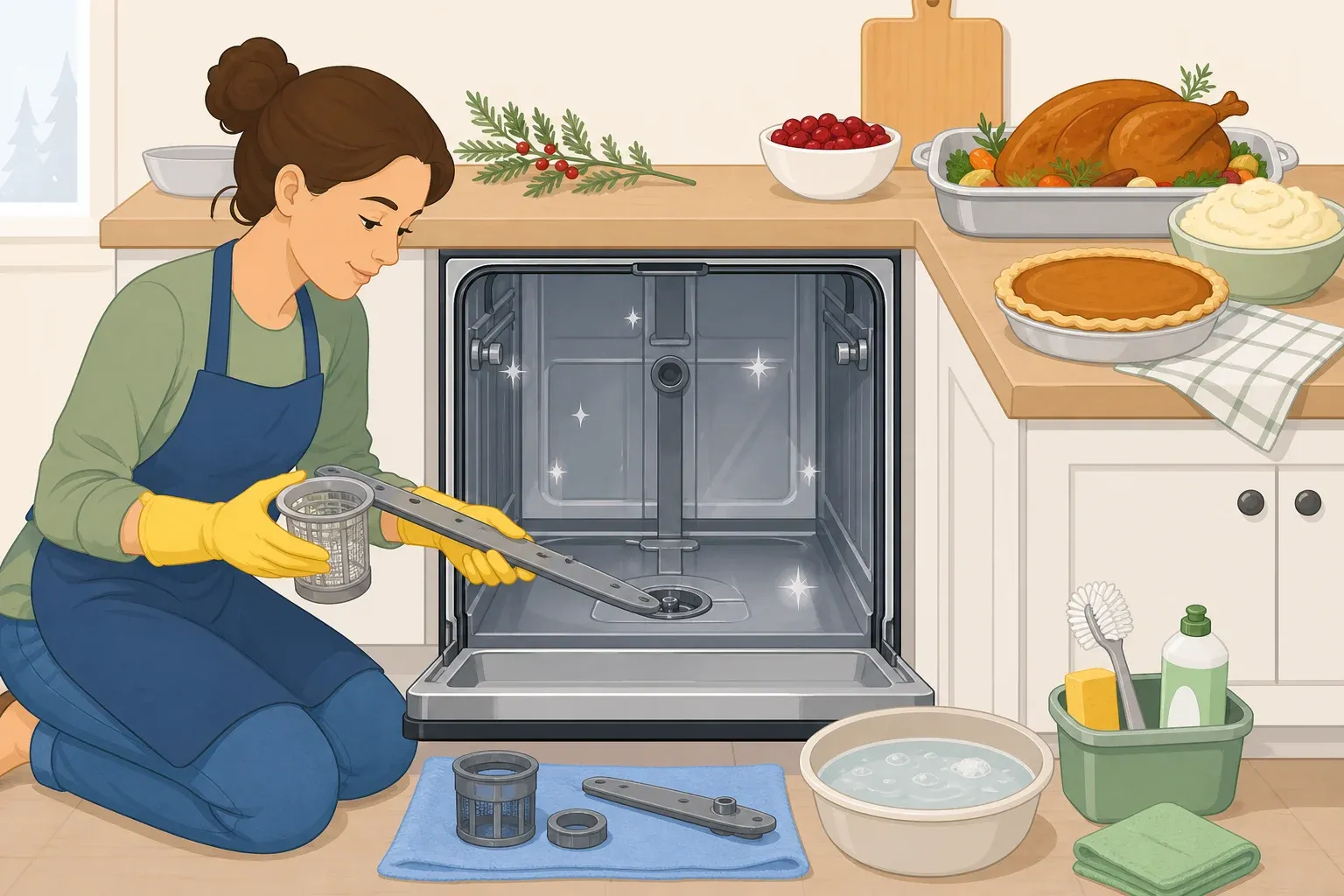
Consumer Reports lists the washing machine among places to avoid vinegar specifically because of rubber component corrosion. EatingWell extends this to dishwasher door seals, drain gaskets, and fridge door seals. The distinction matters: the plastic interior of a refrigerator is fine for vinegar; the rubber seal around the door is not. Pouring vinegar down a drain carries the same gasket risk.
For appliances, manufacturer-approved descaling products are the right call. Good Housekeeping's Carolyn Forté recommends putting nothing but water inside irons and steamers, then running them at the highest heat setting to flush mineral deposits.
Electronic screens
Good Housekeeping is direct: vinegar strips anti-glare coatings and degrades touchscreen responsiveness. This applies to phones, televisions, and computer monitors. A dry or slightly damp microfiber cloth is the correct tool, as is any product specifically labeled for electronic screens.
A safety note that should not be buried
Never combine vinegar with bleach. Both Good Housekeeping and EatingWell flag this explicitly: the combination releases toxic chlorine gas. If bleach has been used on a surface, keep vinegar well away from the same area.
The mixing myth: why the fizz does not clean anything
The most viral cleaning "hack" in circulation tells people to combine baking soda and vinegar for a powerful all-purpose cleaner. The chemistry does not support it.
Baking soda is a base; vinegar is an acid. Combined, they react immediately to form sodium acetate, water, and carbon dioxide gas. ACSH is unambiguous: sodium acetate has no cleaning properties whatsoever. What looks like powerful foaming action is the sound of both cleaners becoming chemically inert. The carbon dioxide dissipates, no active cleaner remains, and the result is a mildly salty water solution.
The fizz is the reaction completing, not cleaning happening. The dramatic visual is exactly why the combination stays popular. But the spectacle and the utility are moving in opposite directions.
There is also a safety dimension. ACSH notes that generating significant carbon dioxide inside an enclosed container can build enough pressure to deform or burst it. Never mix the two in a closed spray bottle or sealed container.
One narrow exception exists. ACSH notes that adding baking soda to a drain, following with vinegar, and covering the drain opening may help dislodge a soft clog, not through any cleaning chemistry but through the mechanical pressure of bubbling action. If it fails on the first attempt, the clog likely requires a proper drain cleaner or a plumber. The exception is real but narrow, and it does not rehabilitate the combination as a general cleaner.
Use them separately. The failure is only in mixing them.
Match the cleaner to the mess, not the folklore
The five-scenario framework resolves most cleaning decisions without much deliberation. Vinegar holds a narrow advantage on mineral scale on inert surfaces like glass and plastic. Baking soda is the more surface-compatible choice for grease and mild abrasion, though it is not appropriate for every surface. Neither handles odor at its microbial source, neither sanitizes, and vinegar specifically should stay away from natural stone, wood finishes, rubber seals, and screens, where the damage can be costly and is sometimes warranty-voiding, per Stone World.
For any surface where actual germ reduction is the goal, neither pantry staple qualifies. Purdue Extension and EatingWell both point to EPA-registered disinfectants as the only reliable option for food-prep surfaces. The EPA registration number on the label is the signal that a product has cleared the regulatory bar before making its pathogen-reduction claim.
"Natural" does not mean risk-free. "Cheap" does not mean appropriate. The hierarchy that emerges from expert consensus: use the product made for the material; if choosing between pantry staples, baking soda generally carries fewer surface-damage risks than vinegar; and for sanitizing, the EPA registration number on the label is non-negotiable, per Purdue Extension.
The decision table above is the practical takeaway. Check the surface, check the mess type, check whether germ-killing is actually required. Most questions resolve quickly once those three are clear. When they do not, the manufacturer's care instructions and a purpose-built product will get there faster than any pantry shortcut.




Comments
Be the first, drop a comment!