



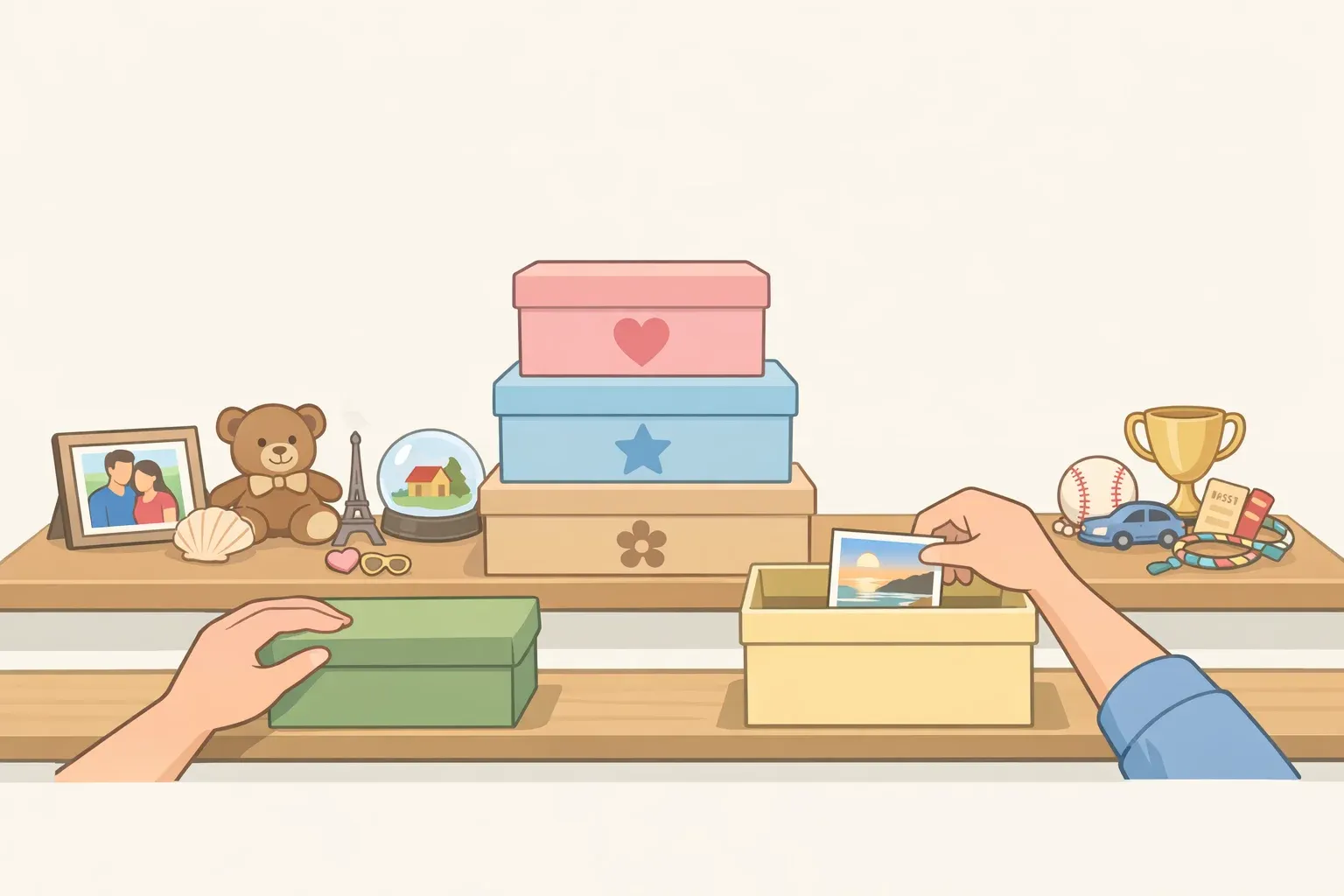
How to Declutter Sentimental Items Without Losing the Memory
Most people can clear a kitchen drawer in an hour. The box of birthday cards from the last decade, the shelf of inherited figurines, the growing stack of a child's drawings those are still there, surviving every other round of decluttering. Not because the people holding onto them are disorganized. Because getting rid of them feels like erasing something real.
If you're wondering how to declutter sentimental items without feeling like you're throwing away your past, the key is to set limits before you sort. This guide walks through that process: emotional clarity about why things are hard to release, combined with firm physical limits and a repeatable sorting method, makes it possible to keep what genuinely matters without keeping everything.
Before starting: You don't need a free weekend. You need 15-20 minutes, one defined category to start with, and a rough sense of how much total space one shelf, two boxes, part of a closet you're willing to give keepsakes in your home. Decide that number before opening a single bin.
Certified professional organizer Nicole Ramer describes sentimental clutter as "the weight we carry in the form of items that represent people we love, experiences that shaped us, or identities we've held in different seasons of life" which is why standard decluttering advice doesn't touch it (NAPO reports). Nostalgia researcher David Newman at Baylor University notes that sorting through old belongings can surface genuine grief, regret, or heartbreak, and that trying to suppress those emotions slows the process rather than speeding it (NPR Life Kit notes). Sentimental items survive every other round of home editing because they're tied to people, seasons of life, and identity not to function or aesthetics (Shannon Torrens writes).
Step 1: Build momentum before you touch the hard boxes
Do not start with the most loaded box in the house. A common recommendation from professional organizers who work with sentimental clutter: making hard emotional decisions is a skill that depletes. You make better ones after practice, not before it.
Before touching sentimental categories:
- Clear easier categories first clothing you don't wear, duplicate kitchen items, obvious trash, anything functional that's simply unused. These decisions cost very little emotionally and create real physical space.
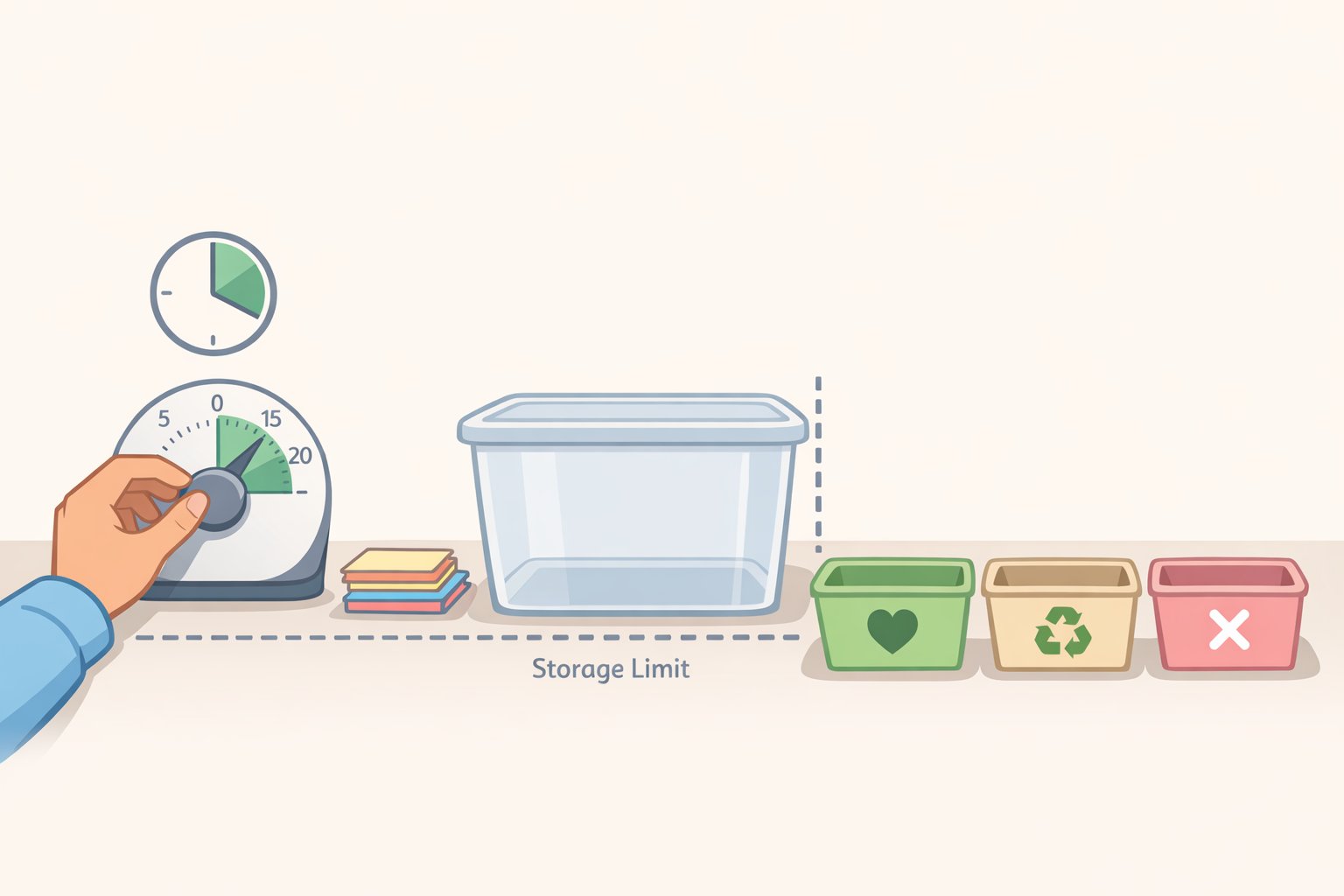
- Define your total storage limit now. Not per category total. One shelf? Two shoeboxes? Professional organizer Amelia Pleasant Kennedy advises deciding how much space you're willing to give keepsakes before sorting begins, not after (NPR Life Kit). That limit is the constraint that makes curation necessary.
- Set a 15-20 minute timer per session. Sentimental decluttering is emotionally draining and is best done in short bursts, Shannon Torrens writes. Stop when the timer ends, even if the box isn't finished.
On having someone with you: Gretchen Rubin notes that sorting keepsakes with a trusted friend or family member makes the process meaningfully easier talking through the memory attached to an object often clarifies whether you need the object itself or whether the story is already yours (Gretchen Rubin writes). Especially useful for inherited items or anything connected to loss.
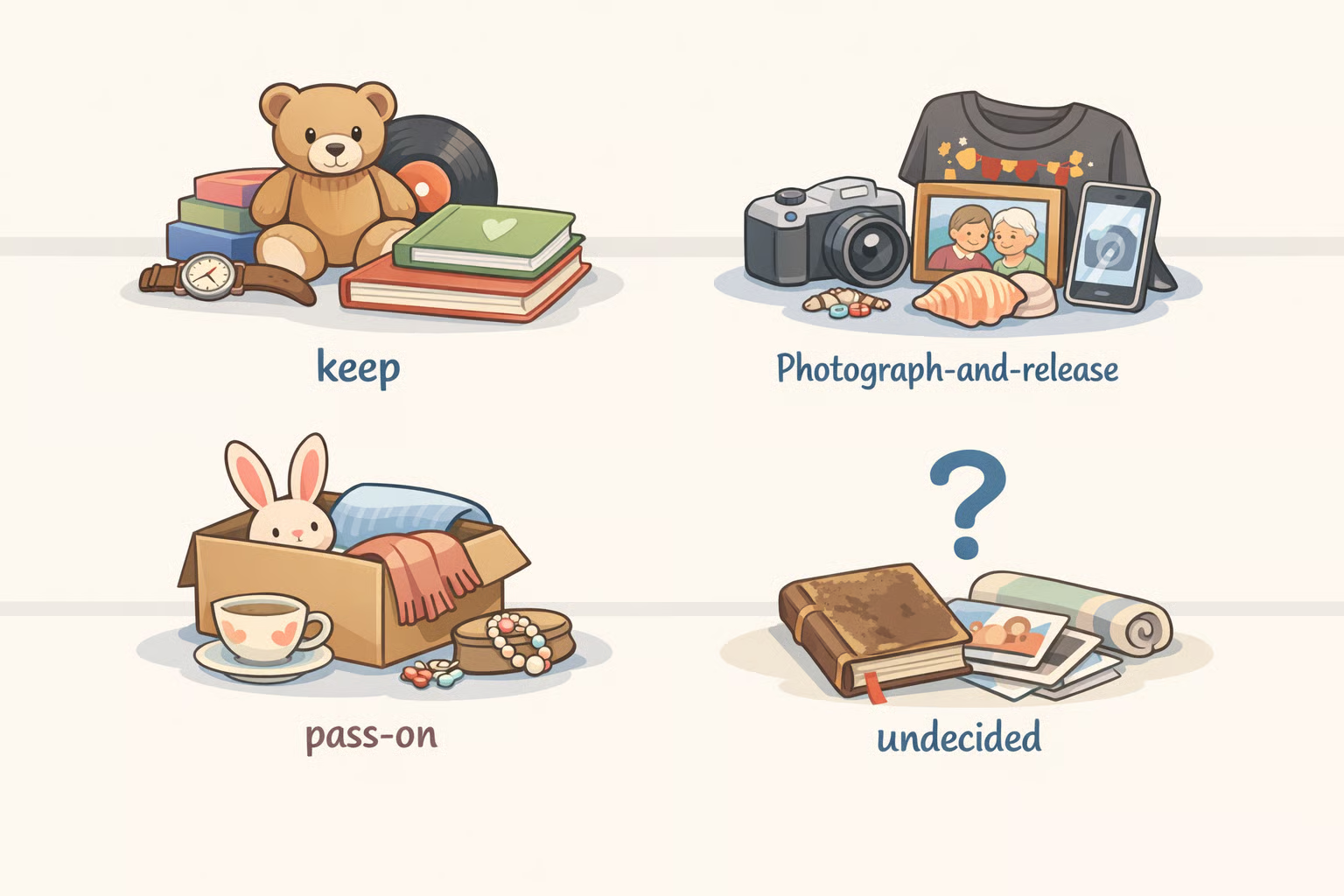
Also establish an exit plan before you start. One of the biggest reasons memory preservation projects stall is the lack of a clear endpoint, NAPO notes. Know in advance: what will be kept physically, what will be photographed and released, what will be offered to family, what goes to donation.
Skipping straight to the sentimental boxes especially ones tied to grief or loss is the most common reason these sessions end with everything returned to the bin. Set yourself up before you add that weight.
Step 2: Name what's actually keeping you stuck
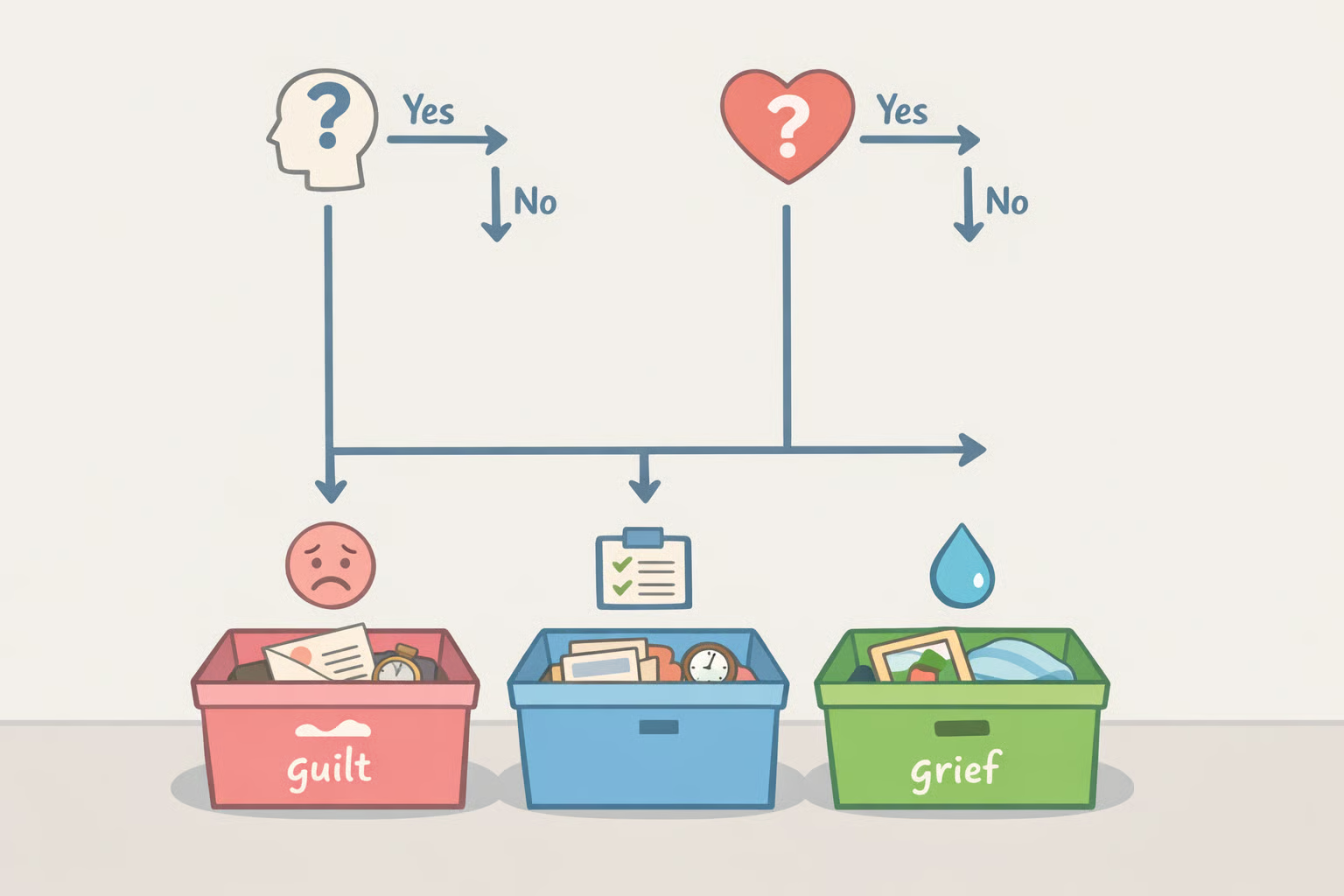
Most sentimental items that won't move aren't stuck because of love. They're stuck because of guilt, obligation, or unnamed grief. Recognizing which one you're dealing with changes the decision.
Guilt and obligation show up most often with inherited items, unwanted gifts, and children's artwork. Gretchen Rubin identifies inherited objects and gifts as the two most common sources of sentimental clutter that people feel unable to release not because the items are beloved, but because releasing them feels disloyal (Gretchen Rubin). NAPO organizer Kim puts it plainly about children's art: guilt combines with procrastination, the stacks grow, and eventually they're too overwhelming to face (NAPO). Shannon Torrens makes the distinction that helps most: releasing an object is not the same as releasing the person or the love the two are separable (Shannon Torrens).
Grief is more complex because it can apply to people who are still living. NAPO organizer Miriam Ortiz y Pino notes that grief around people still alive after breakups, divorces, or estrangements can feel heavy, full of "shoulds," and often makes decision-making around related belongings complicated (NAPO). Naming it as grief, rather than trying to make a rational keep/release decision, is the more honest first move.
Two diagnostic questions to apply before sorting each category:
- Am I holding onto this because it genuinely matters to me, or because releasing it would feel like a betrayal?
- Would the person connected to this item want it to be a source of burden?
The "legacy lens": NAPO organizer Kim offers a useful perspective-flip imagine someone you love sorting through your belongings after you were gone. What would you want them to keep? What would you want them to feel free to release? (NAPO). Most people don't want to burden the people they love. That question tends to cut through obligation quickly.
One thing worth keeping straight: emotion during sorting is normal and useful it's data about what actually matters to you, not a signal that you should keep the object. "This brings up feelings" and "I should keep this" are different statements.
How to declutter sentimental items without getting stuck: the sorting method
Group before deciding anything. Pull everything of one type together before evaluating a single item. Cards in one pile, photographs in another, inherited objects separate from childhood keepsakes. NAPO organizer Kelly Brask describes this as "reassigning categories" once objects are grouped as memories rather than miscellaneous items, it becomes easier to choose which few carry real weight (NAPO). Seeing the full volume of one category at once also makes selection feel necessary rather than arbitrary.
Choose one representative item or a small handful. You don't need every artifact from a meaningful chapter to remember it. Pick the item or two that best represent the memory and release the rest. Gretchen Rubin's example: a grandfather's pocket watch instead of his enormous desk. Same emotional function, a fraction of the space (Gretchen Rubin). One iconic item does the work of twenty undifferentiated ones.
Apply these questions quickly the first answer is usually the honest one (Shannon Torrens; NAPO):
- Would I still remember this moment without the object?
- Am I keeping this because I want to, or because I'd feel obligated releasing it?
- If it were lost tomorrow, would I try to replace it?
- Is this one of the most meaningful items from this person or time, or just one of many?
- Does this reflect who I am today?
Use category boxes as limits within your total space budget. Once you've defined your total storage limit (Step 1), divide it into category containers one box for childhood items, one for travel keepsakes, one for cards and letters. Shannon Torrens is explicit: when the box is full, something must come out before anything new goes in (Shannon Torrens). NPR suggests roughly one bin per life chapter as a workable structure elementary school, high school, college which maps the physical limit onto something emotionally legible (NPR Life Kit). These are examples within your pre-set total, not additions to it.
The three high-friction categories:
Inherited items and gifts: The question isn't whether the item is valuable it's whether it holds any genuine memory for you. Gretchen Rubin is direct: don't keep mementos that hold no memories for you just because they were inherited or given (Gretchen Rubin). If the object is in storage and never looked at, it isn't being honored. Offer it to a specific family member who will actually use or display it. Set a deadline: two weeks to respond. If no one wants it, donate it.
Children's artwork: Photograph everything, then keep only the pieces that genuinely stop you the ones with a face, a clear memory attached, or standout craft. The guilt around children's art is real, NAPO notes, and shame combined with procrastination creates stacks that become impossible to face. A digital folder of photos and a curated selection of physical pieces per year is enough. Keeping a piece of art doesn't prove love; neither does releasing one.
Objects from ended relationships: These carry grief, not just sentiment. NAPO organizer Miriam Ortiz y Pino notes that grief around living people after breakups or estrangements can make decisions feel heavier than they are (NAPO). If an item from a past relationship is genuinely neutral, keep or release it on its own terms. If it brings up active pain, releasing it specifically because it does is a legitimate reason. You don't owe preservation to things that are hurting you.
Photograph before releasing, display before storing. For items that hold meaning but don't need physical space, photograph them first trophies, bulky school projects, gifts you appreciated but don't want to store. A photograph can function just as well as a memory prompt as the object itself, Gretchen Rubin notes. For items you are keeping: display them rather than store them. A curated shelf of objects you actually see beats two boxes in a closet you never open, and rotating seasonal photo displays means you notice them instead of filtering them out (Gretchen Rubin).
Finish the job before closing a session. Decisions without follow-through become a second pile:
- Donate pile: bag it and put it in the car today, not next week
- Family offers: text or call specific people with a two-week response deadline; after that, donate
- Photograph-and-release items: shoot the photos, create the folder, let the item go the same day
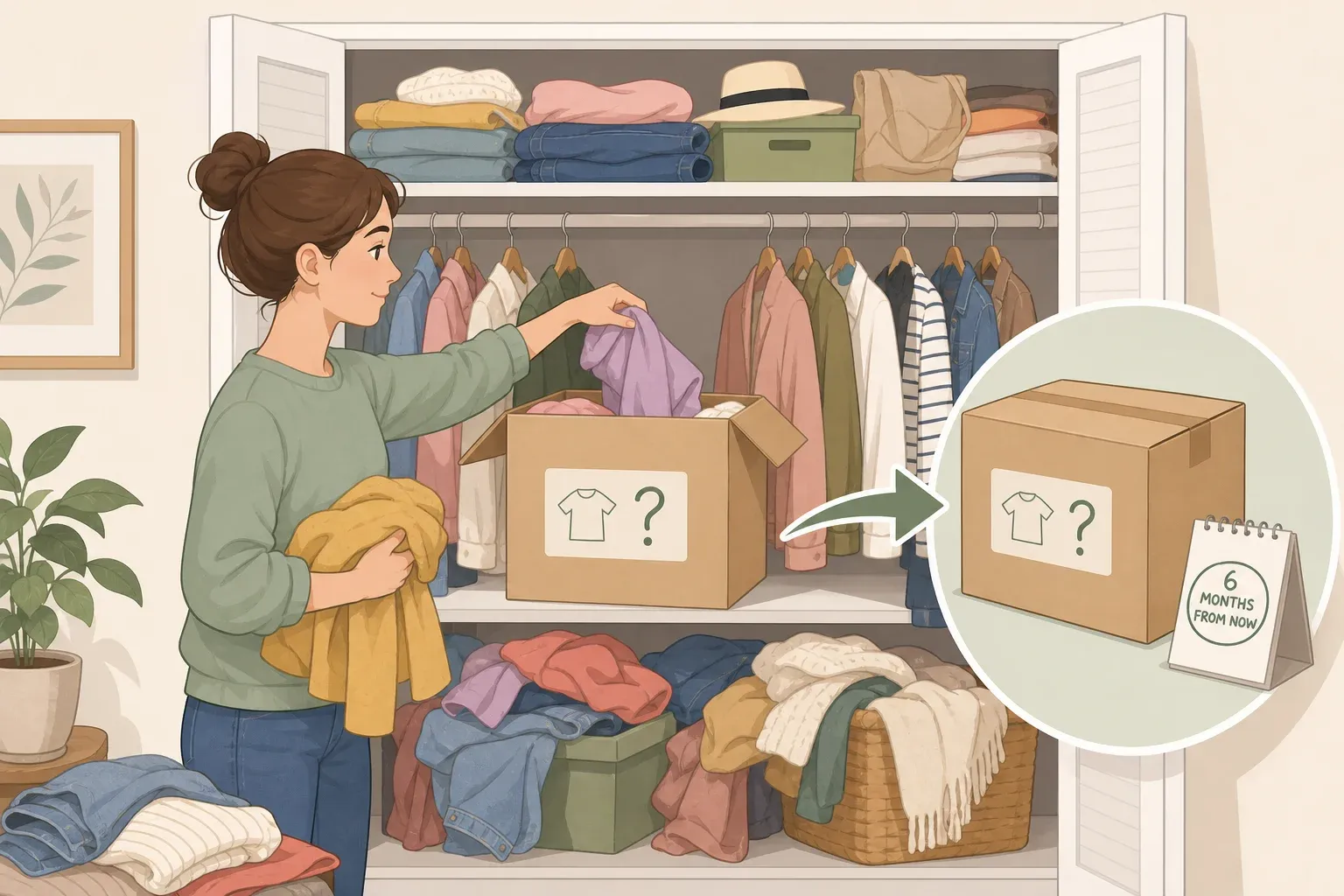
- Undecided: one designated box, labeled with a date six months out; revisit then and decide
Give undecided items a deadline, not a permanent pass. A "not yet" is allowed Shannon Torrens explicitly makes room for it. But it needs a date attached. Time and distance do the work that forced decisions can't. This is a structured pause, not indefinite storage.
Your first session: Choose the category with the lowest emotional charge not a parent's belongings, not a box from a loss. Set a 20-minute timer. Sort into four piles: keep physically, photograph and release, pass to someone specific, undecided. Stop when the timer ends. Follow the disposal steps before the next session. One category, one session, one completed loop.
Step 4: Repurpose, preserve, and pass on what you're releasing
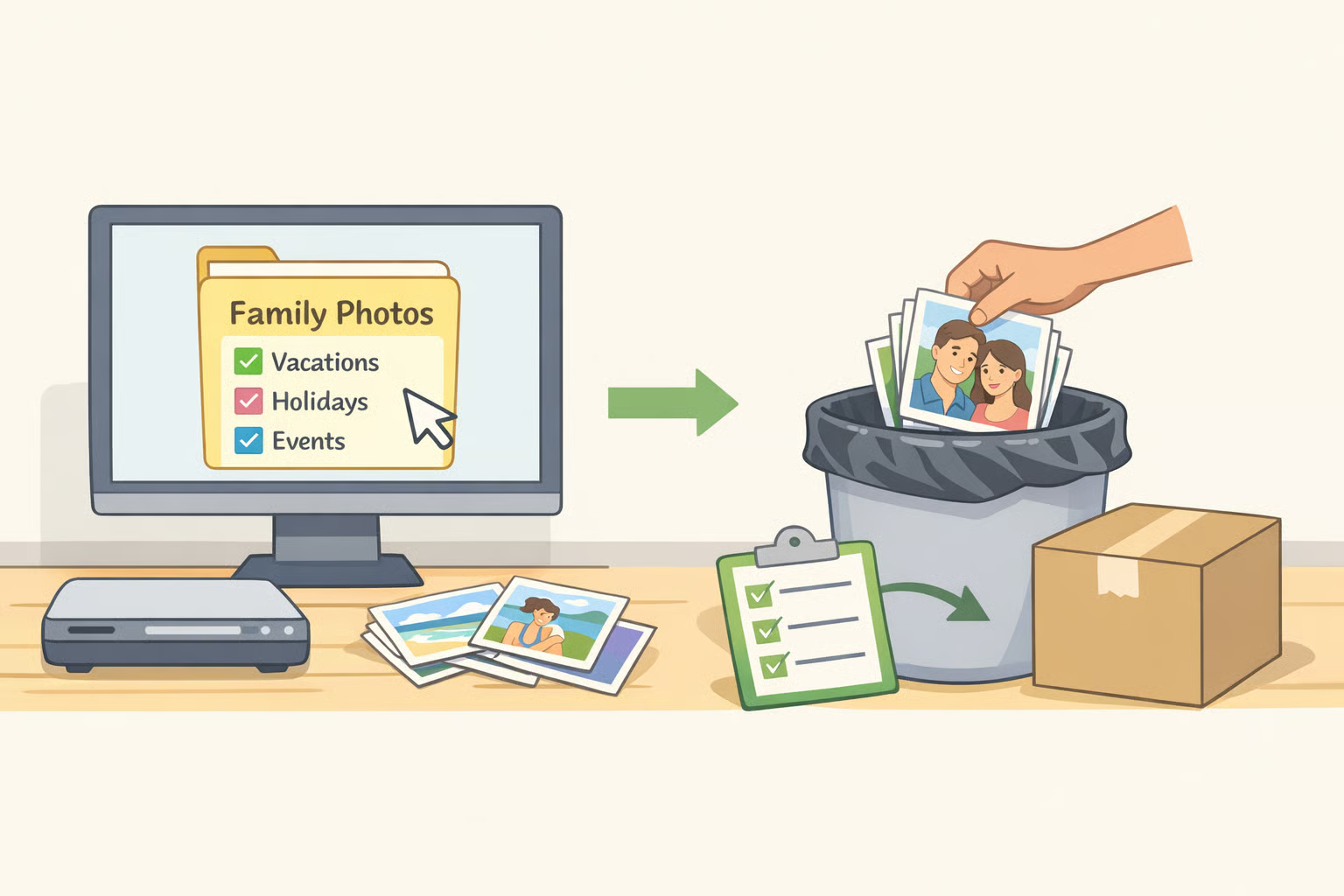
Not everything that gets released is simply discarded.
Repurpose textiles and objects. Professional organizer Ellen Delap has helped clients turn old T-shirts into quilts and wedding dresses into decorative pillows (NAPO). NPR Life Kit suggests sewing a T-shirt quilt, building a scrapbook from saved holiday cards, or creating a shadow box around a few representative items (NPR Life Kit). The result is something you live with daily rather than something boxed away.
Pass items on while you can see them used. One of Ellen Delap's clients chose to give meaningful furniture and objects to her daughters while she was still alive to watch them enjoy those pieces turning the act of letting go into an act of connection (NAPO). Releasing is considerably easier when you can picture where something is going. Donate items in good condition to organizations where they'll be used, not warehoused.
Digitize with an exit plan already in place. Before scanning a single photograph, decide what gets discarded once digitized, what gets shared with family, and what gets stored in archival boxes flat. One of the biggest reasons photo projects stall is the lack of a defined endpoint, NAPO notes. Do the editorial cull first delete duplicates, blurry shots, images that mean nothing before digitizing what remains. If the process involves a high-volume archive or a recently deceased parent's photographs, delegating to a professional digitizing service is a legitimate option, not a failure.
Curate, don't just store
Sentimental decluttering across years of accumulated objects is not a one-session project, and it's not supposed to be.
The memory is not the object. A photograph, a single representative item, a repurposed textile, or a story told without a prop can hold the same meaning as a box of accumulated things you never look at. As Nicole Ramer puts it: "You can keep the memory without keeping every item" (NAPO). The memory lives in you, not in the thing (Shannon Torrens).
Without a defined container one box per life chapter, a single curated shelf, a fixed total the collection expands to fill whatever space you give it, and nothing feels special anymore. The constraint is what makes curation possible (NPR Life Kit; Gretchen Rubin).
A client described by NAPO organizer Lauren Hass said that being given permission to say goodbye to her parents' belongings "felt like a gift, and lifted the guilt she'd been carrying" (NAPO). That relief doesn't require finishing everything at once. Once a year or whenever a box fills up revisit what's there. The process that felt impossible the first time gets lighter.

Comments
Be the first, drop a comment!