



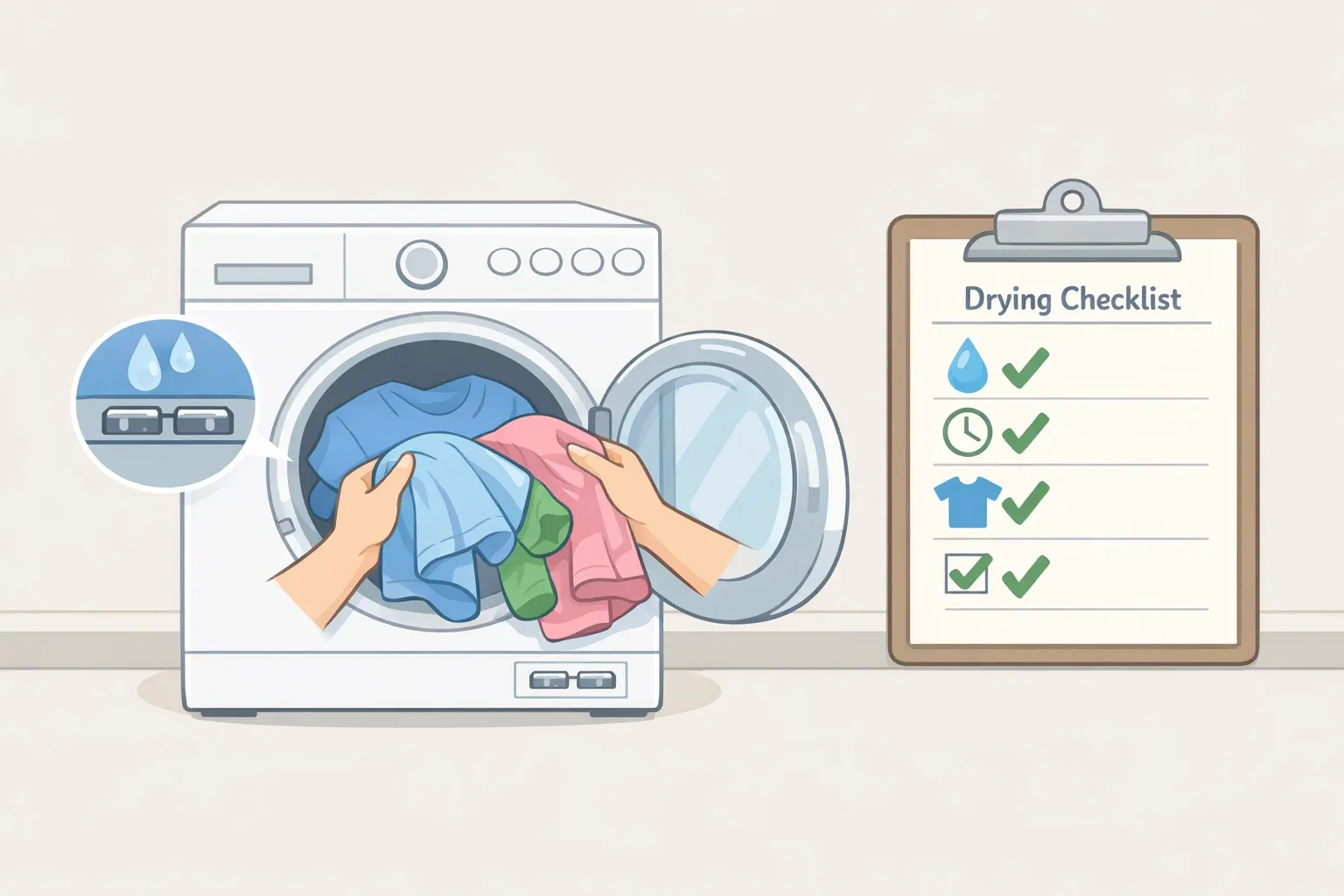
If your clothes come out bone-dry and scalding hot, your dryer ran too long. That's not a clean result; it's the beginning of fabric damage. Knowing how to dry clothes faster without overdrying comes down to one counterintuitive principle: less time in the machine, not more heat.
By the end of this guide, you'll know how to set up every load so clothes spend less time tumbling, finish dry, and come out in better shape using whatever dryer you already own with a moisture sensor (most modern dryers have one).
The core idea: faster drying without damage means helping the sensor make accurate decisions, then stopping the cycle before it runs past the point of diminishing returns. Most people do the opposite on both counts.
What overdrying actually costs: Sustained excess heat causes fiber shedding (that's what fills the lint trap), weakens fabric structure, and produces permanent shrinkage and static cling that compounds with every cycle.
The scale of the problem: U.S. household dryers consume roughly 3% of all residential energy, about six times what washing machines use, costing American households more than $7 billion a year to power, according to a University of Michigan study. Running them longer than necessary is the most avoidable part of that cost.
What "faster" means here: The goal is less machine time, not fully dry clothes straight from the drum. Remove clothes at around 80–90% dry and let the remainder finish off-machine hung on a rack, draped over a hanger, or spread in a basket. At room temperature, the last bit of moisture evaporates in minutes at no energy cost. That's not a workaround; it's the method.
University of Michigan researchers found that behavioral changes like this often deliver larger impacts than hardware upgrades, and that in some cases, households investing in more energy-efficient dryers didn't save money over the long run compared to those who simply changed how they used their existing machines. The steps below cost nothing to implement.
Prerequisites: A standard home dryer with a moisture sensor. Most modern dryers include one. No special equipment needed.
Step 1: Stop the cycle early
Pull clothes out while they still feel faintly cool or carry a trace of dampness. The Damp Dry or Damp Alert setting, available on many machines, is calibrated to stop the cycle at roughly this point, around 80–90% dry. If your dryer has it, use it.
If it doesn't, the Less Dry or Normal preset on Auto Dry is designed to stop before fabrics get overheated. These settings are not under-treating the load; they're protecting it.
What to do after: Hang clothes on a rack, put them on hangers, or spread them in a laundry basket. The remaining moisture evaporates at room temperature without heat or energy.
Why this works mechanically: Once clothes are already dry, continued heat does nothing useful. It degrades fiber structure and locks in wrinkles. The damage isn't dramatic in any single cycle, it accumulates. Fabrics that consistently reach bone-dry in the machine tend to have measurably shorter usable lives.
The cost argument: University of Michigan researchers found that combining machine drying with partial air-finishing was the second most economical and eco-friendly drying approach available, ranking above upgrading to a more efficient dryer in some cases. Full line-drying over a dryer's lifetime could save a household more than $2,100 and cut more than 3 tons of CO₂. Partial air-finishing is the realistic middle ground most households can act on immediately.
Fabric notes that matter most here: Cotton shrinks under sustained high heat. Linen is more heat-sensitive still and benefits from the lowest available setting plus early removal. Lingerie, bras, and wool are better off skipping the dryer entirely and air-drying flat or hung.
Gotcha — the machine's "Air Dry" setting is not this: That cycle circulates unheated room-temperature air inside the drum and does not dry wet clothing efficiently. Finishing clothes outside the machine after a normal heat cycle is a different thing entirely.
Step 2: Prepare the load so the sensor can do its job
The moisture sensor can only measure what tumbles past it. Load composition and prep determine whether that reading reflects the actual state of the whole load, or just the heaviest item in it.
Sort by weight, not just color: Mixed-weight loads are one of the most common causes of overdrying. When jeans and T-shirts share a drum, the sensor keeps the cycle running until the thickest item reaches the target humidity, by which point lighter garments may have endured 20 extra minutes of unnecessary heat. Sorting into two piles, heavy (denim, towels, sweatshirts) and light (T-shirts, underwear, synthetic tops), lets the sensor shut off at the right moment for the entire load.
Untangle before you load: Clothes leave the washer bundled together. Balled-up garments trap moisture at their core and restrict hot air circulation, which can keep the sensor running even when outer layers are already dry. Sixty seconds of shaking items out before loading makes a real difference.
Don't overstuff: Overloading extends cycle time and increases cost. Two properly sized loads run faster and more evenly than one overfull drum, where air can't move freely. Room to tumble is the goal, not maximum capacity.
Extra spin before drying: Running an additional spin cycle in the washer before transferring to the dryer removes excess water mechanically, reducing the dryer's workload before it starts.
Step 3: Best dryer settings to dry clothes faster without damage
Check the care label first. The symbols tell you whether a garment can be tumble-dried and at what heat. Check these before selecting any cycle. A garment with an X through the dryer symbol doesn't go in the machine at all.
For everything else:
Auto Dry over Timed Dry, almost always: Auto Dry uses moisture sensors to stop the machine when the load is ready. Timed Dry keeps heating for a fixed duration regardless of what's happening inside the drum. Ashby warns it can cause shrinkage, wrinkling, and static as a direct result reserve it for the occasional thick load that needs a short extra push, like heavy denim.
Match heat to fabric weight
Regular/Heavy Duty (high heat): Towels, denim, cotton basics
Permanent Press (medium heat + cool-down): Shirts, pants, synthetic blends the cool-down phase actively releases wrinkles
Delicate (low heat): Activewear, spandex, rayon, embellished items low heat prevents fraying, fading, and stretching in exercise clothing
Using the less dry setting on your dryer: If your machine offers dryness level options within Auto Dry, choose Less Dry or Normal rather than More Dry or Extra Dry. These lower settings stop the cycle earlier, before fabrics get overheated, and are calibrated precisely for this purpose.
How hot should a dryer get?
Dryers should stay below 150°F even on the highest setting; above that, conditions for fabric damage increase. Lab testing across multiple machines found peak temperatures ranging from 106°F to 188°F. Average operating temperatures typically run between 120°F and 155°F, with some machines capable of hitting 160°F peaks. If you're seeing consistent shrinkage despite selecting the right settings, your machine may simply run hot.
Step 4: Keep the moisture sensor working
Follow every previous step correctly, and the whole system can still break down if the sensor is compromised. This is the maintenance step most people skip entirely.
How dryer sheets blind the sensor: Waxy dryer sheets deposit a residue film over time that coats the moisture sensor's metal contacts. A coated sensor can't accurately detect humidity, so the machine keeps running past the point where clothes are already dry. Dryer sheets do reduce static and wrinkles, but that benefit comes at a sensory cost. Wool dryer balls accomplish similar static and wrinkle reduction without leaving residue.
How to clean the sensor: Look for a pair of metal strips or bars inside the drum, usually near the lint trap opening. Unplug the dryer, then wipe the strips with a soft cloth dampened with rubbing alcohol. Do this every few months, more often if dryer sheets are a regular habit. After cleaning, cycles should stop closer to the right point.
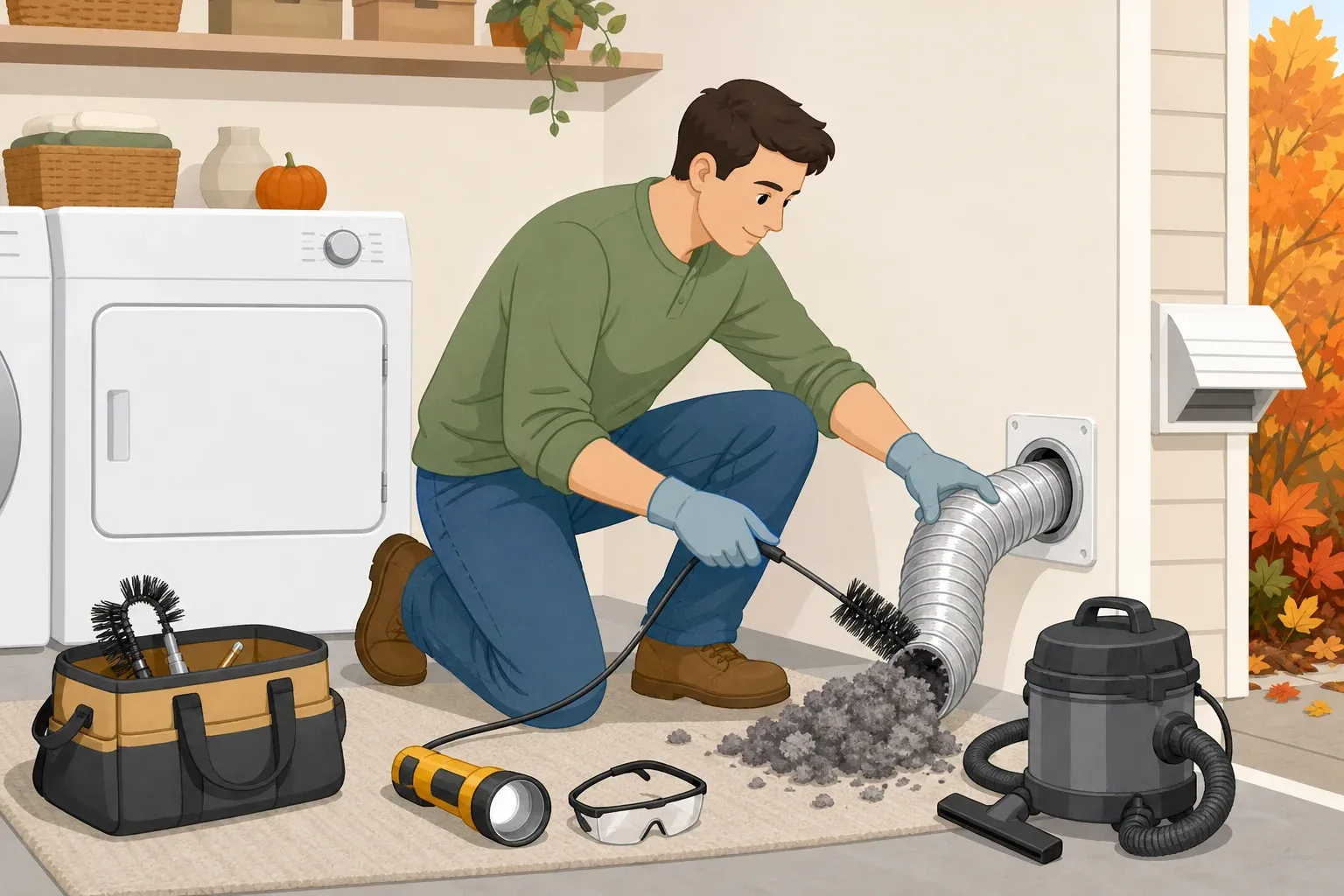
Lint trap: Clean it after every load. A clogged trap restricts airflow, extends drying time, and is a fire hazard. Annual dryer vent cleaning addresses the same problem further down the vent line.
Quick-reference checklist for your next load
Check care labels for anything that shouldn't go in the dryer or requires low heat
Sort into heavy and light loads, dry them separately
Shake out and untangle everything before loading; don't overstuff
Select Auto Dry at the appropriate heat setting, not Timed Dry
Choose Damp Dry, Damp Alert, or Less Dry if available, pull clothes out while faintly cool or slightly damp
Hang or rack the remaining items; they'll finish in minutes
Clean the lint trap before starting the next load
If clothes are still too damp: Separate heavy items from the rest and run a short Timed Dry cycle only for those pieces. Thick denim and heavy towels sometimes need it; everything else doesn't.
If clothes keep overdrying despite the right settings: Clean the moisture sensor, stop using dryer sheets, and check that loads aren't mixed by weight. One of those three is almost always the cause.
If you're buying a new dryer: Ventless heat-pump models use lower heat than standard vented dryers, making them gentler on fabrics by design. For most households, though, the machine isn't the problem. The habits are, and those are free to fix.







Comments
Be the first, drop a comment!