



How to Get Rid of Doom Piles and Stop Them From Returning
Most doom piles don't start as neglect. They start as an attempt at organization: sorting through something, prepping for a trip, or gathering items for a project. Then something interrupts the process, and the pile sits. Then more things land on it. Then it becomes the kind of problem that's easier to walk past than to face.
This guide walks through clearing one doom pile completely, from the initial sort to a final drop zone, then covers the minimal daily habit that keeps new ones from forming. By the end, the pile is gone and the conditions that created it are addressed.
What are doom piles?
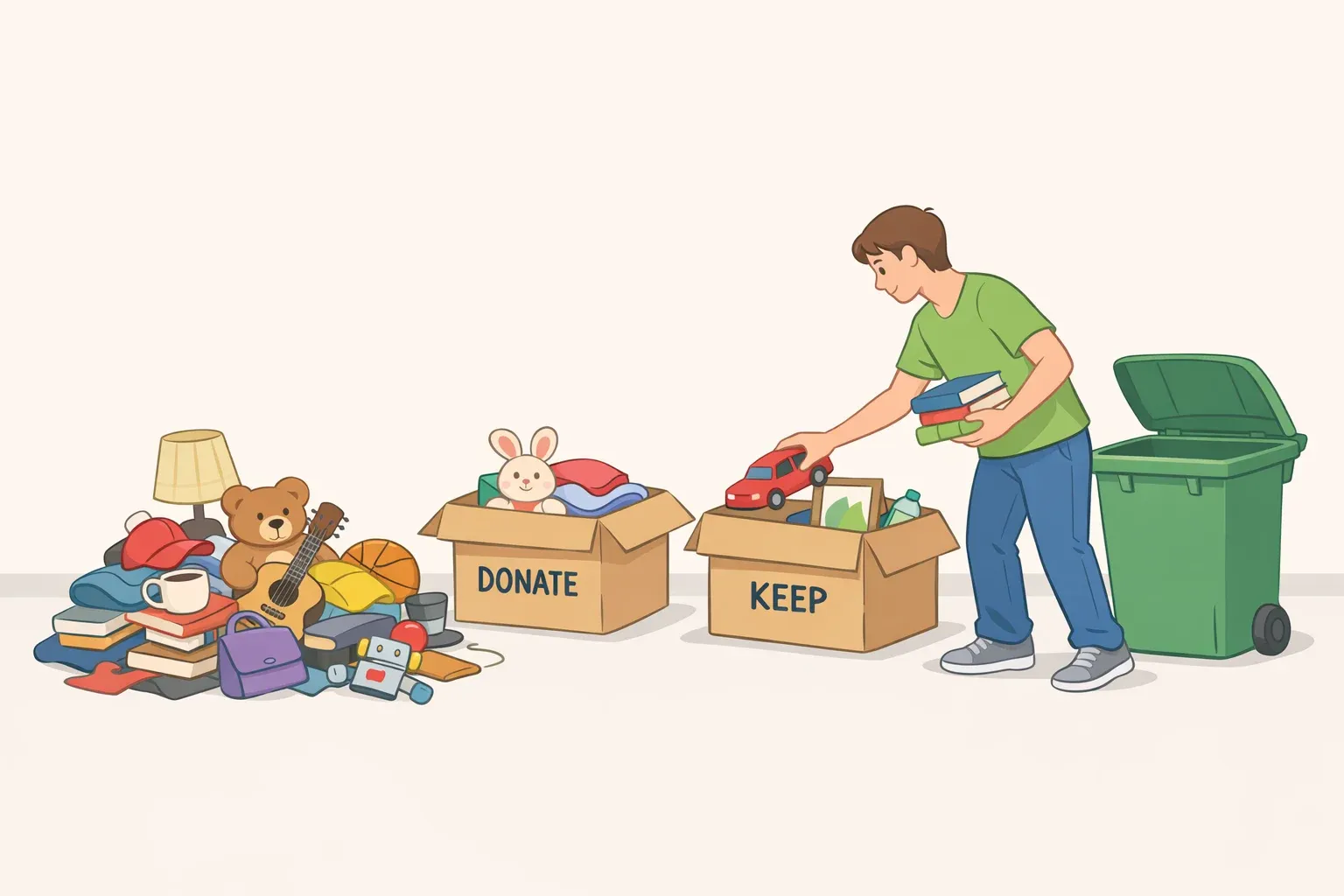
A doom pile is a mixed-item clutter accumulation created by moving things without resolving them. Usually contained in a bag, box, or corner, sometimes spread across a countertop or chair, the pile tends to hold items from unrelated categories: important papers mixed with photos, office supplies, a charger, and discount flyers that no longer apply, as professional organizer Julie Witherell describes it, Good Housekeeping reported this week.
Witherell explains that DOOM is actually an acronym: Didn't Organize; Only Moved. The pile exists because items were relocated rather than resolved. That's the whole mechanism, and it points directly at the fix.
Why doom piles form and keep growing
The term gained traction on social media, where it became particularly associated with ADHD doom piles. The association is easy to see in the organizers' examples: distractibility, time blindness, visual overstimulation, and unfinished projects all make piles easier to start and harder to finish, Good Housekeeping noted this week.
Mindy Godding, founder of Abundance Organizing, is clear that doom piles are universal. Even someone with no executive functioning challenges can end up throwing items into a bag or stacking things in a corner to quickly clear visual clutter rather than put things away. Depression and anxiety can accelerate the pattern too, Godding says.
Each item in a pile represents a deferred decision. As those unresolved items accumulate, the pile shifts from manageable to genuinely overwhelming, making it easier to defer further: a self-compounding cycle. When items get buried deep enough to be unfindable, people buy replacements, compounding both the clutter and the expense, according to Godding.
The cost isn't only financial. Psychologist Joseph Ferrari says his research shows a negative correlation between clutter levels and reported life satisfaction, the APA reported last year. A study he cites estimates Americans hold more than $7,000 in unused possessions at home.
Organizers' shared conclusion is that piles form when items don't have an easy, usable home. That's what needs fixing, not willpower.
How to get rid of doom piles completely: step-by-step doom pile organization tips
What you need before starting
Pick one pile. A kitchen counter, a chair, a box in the corner, one location only. Working multiple piles simultaneously creates new ones mid-process.
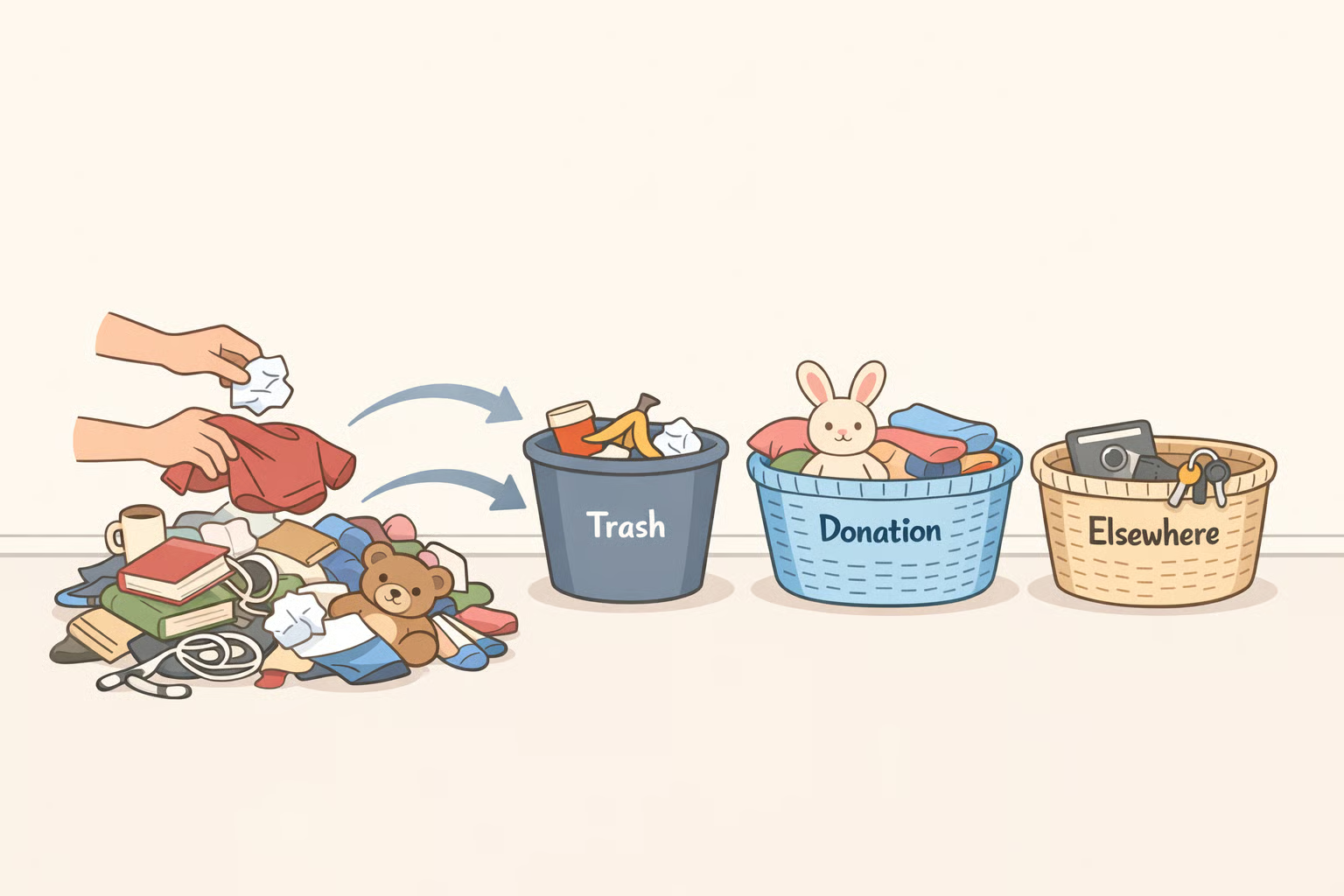
Have three destinations ready before touching anything:
- A trash bag
- A donation container
- A laundry basket or tote for items that belong elsewhere in the home
Take a photo of the pile before starting. Godding recommends before-and-after documentation to make progress visible, especially when the result is a smaller pile rather than a bare surface. Acknowledging that progress, no matter how incremental, matters, Good Housekeeping reported this week.
Step 1: Spread and sort into categories, not locations
Empty or spread the pile onto a clear surface and group like with like: paperwork in one spot, household items in another, personal items in a third. A kitchen-counter doom pile, to use a concrete example, might contain mail, a charger, a receipt or two, and something sentimental with no obvious home.
Do not start carrying things to their homes yet. Leaving the room to put one item away breaks focus and often results in that item landing on a new surface. Witherell's method is explicit when it comes to how to organize clutter piles: sort into categories first, then move each category as a batch to its assigned space, Good Housekeeping reported.
During sorting, apply a quick triage: trash it, donate it, or keep it. Sentimental items and duplicates get their own stack to decide last.
One common mistake at this stage is trying to make final decisions on every item during the sort. The sort is only about grouping. Decisions come after.
Step 2: Set a 20-minute timer and work through one category at a time
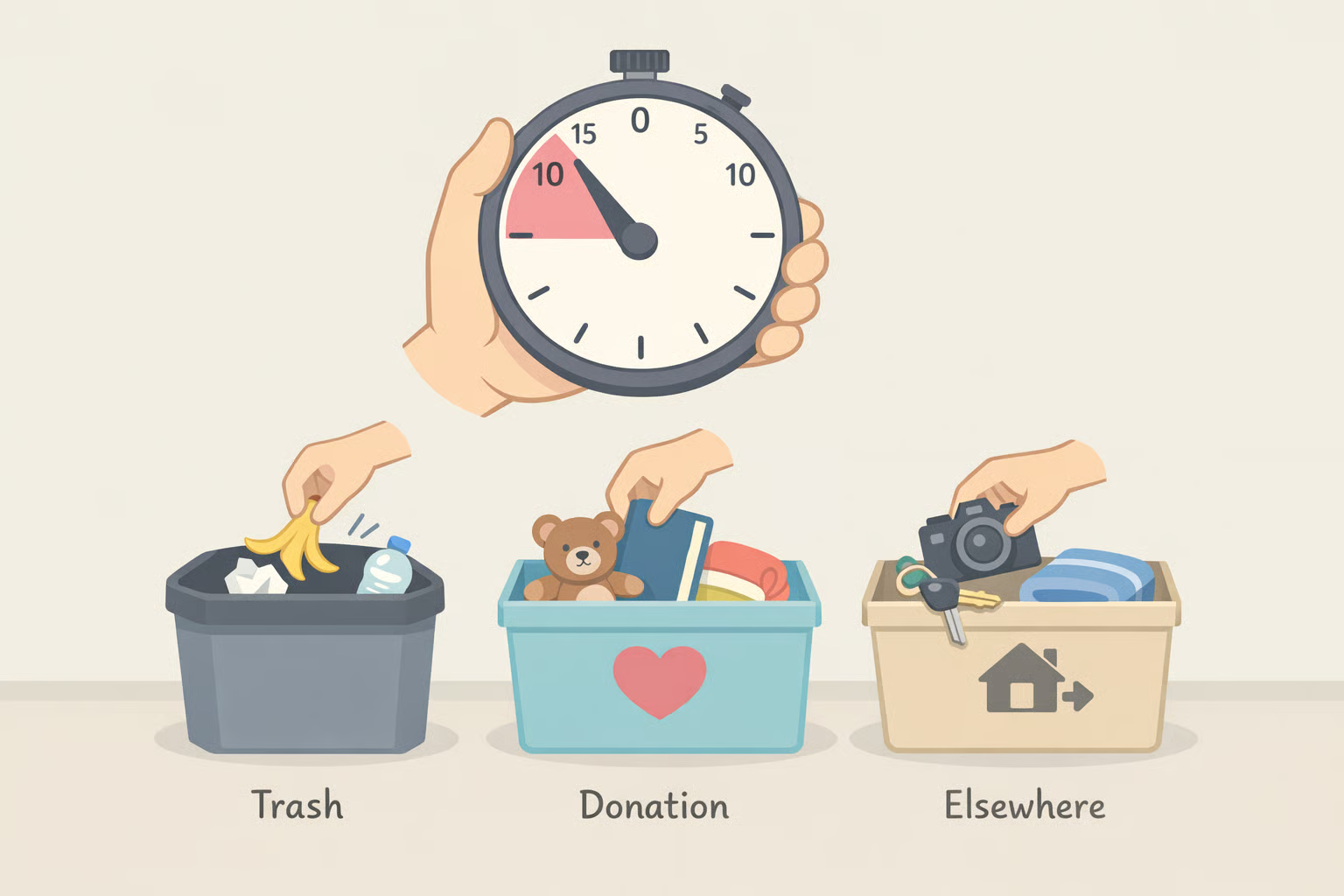
Godding's preferred technique is the "clutter sprint," a timed 20-minute burst on a single pile, focused on moving as many items as possible before the timer sounds, Good Housekeeping noted. A motivating playlist helps. The point is to make the work feel bounded rather than endless.
Work through each sorted category: trash to the bin, donations to the box, items belonging elsewhere into the basket for a single delivery run at the end. When the timer sounds, stop and take the after photo. Half a pile cleared is a pile that's half gone.
Step 3: Make one delivery run, then return
Carry the "belongs elsewhere" basket through the home and deposit each item near, not necessarily in, its final location. This is placement, not full organization.
Return to the original pile location and finish putting away what remains before opening any drawers or closets in other rooms. Finish one zone before moving to the next. That discipline prevents the "spread," where partial tidying produces three smaller messes instead of one.
Step 4: Identify every item that still has no home
Any item left after the first three steps landed in the pile originally because it had nowhere assigned to go. That's the actual problem to solve.
For each homeless item, ask: where is this most often used? That location is where it should live, based on where the room is actually used, not where things theoretically belong, per Witherell's advice. These items don't go back into a pile. They wait in a clearly labeled holding spot, a single tray or box, until Step 5.
Step 5: Build one low-friction drop zone for the homeless items
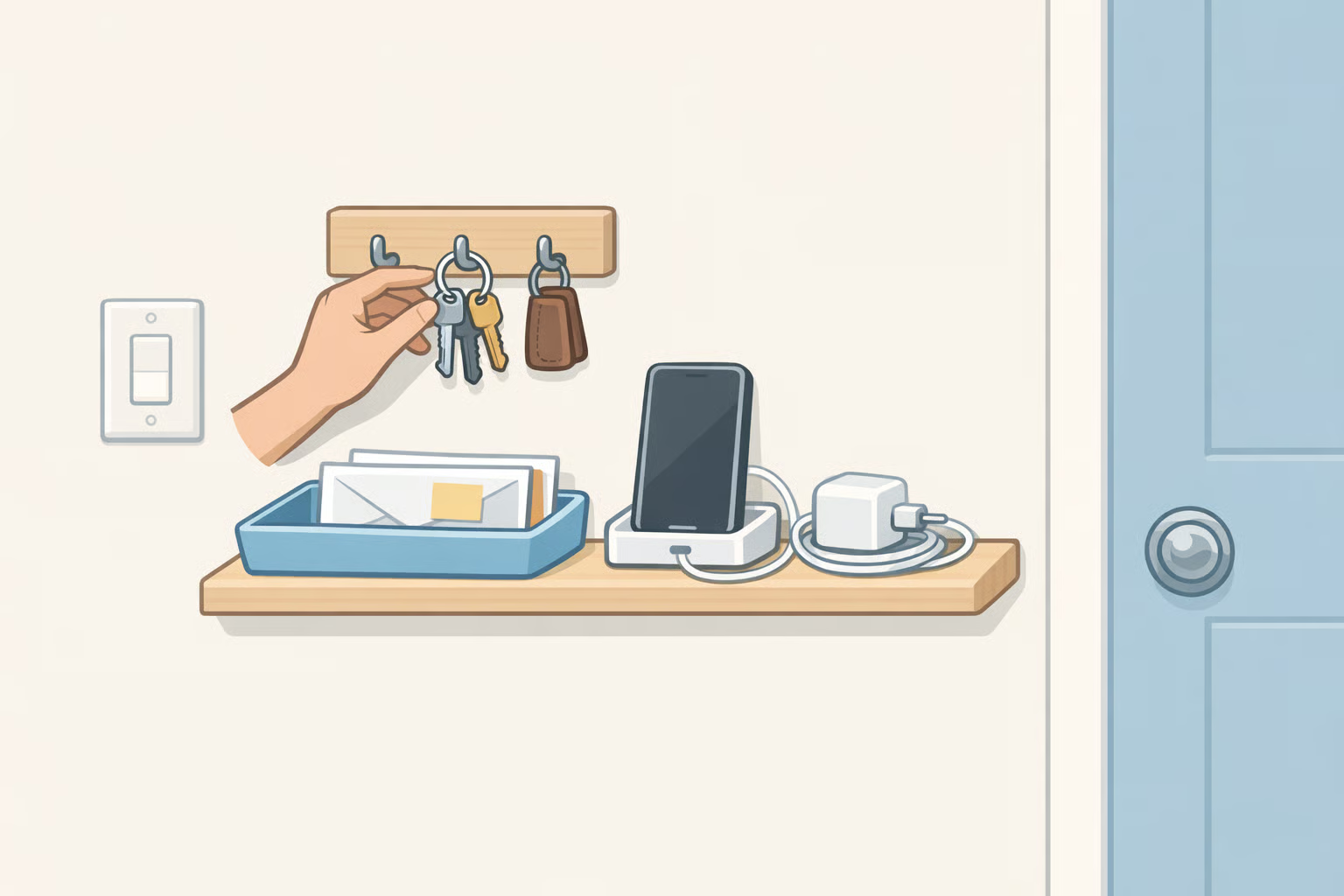
Melanie Summers, CEO and ADHD organizing specialist at I Speak Organized, frames the core principle: if it takes too many steps to put something away, people are far more likely to pile it instead. Her approach is to set up systems that generally require just one hand or one action, Good Housekeeping reported. The system that works is the one that works on your worst day.
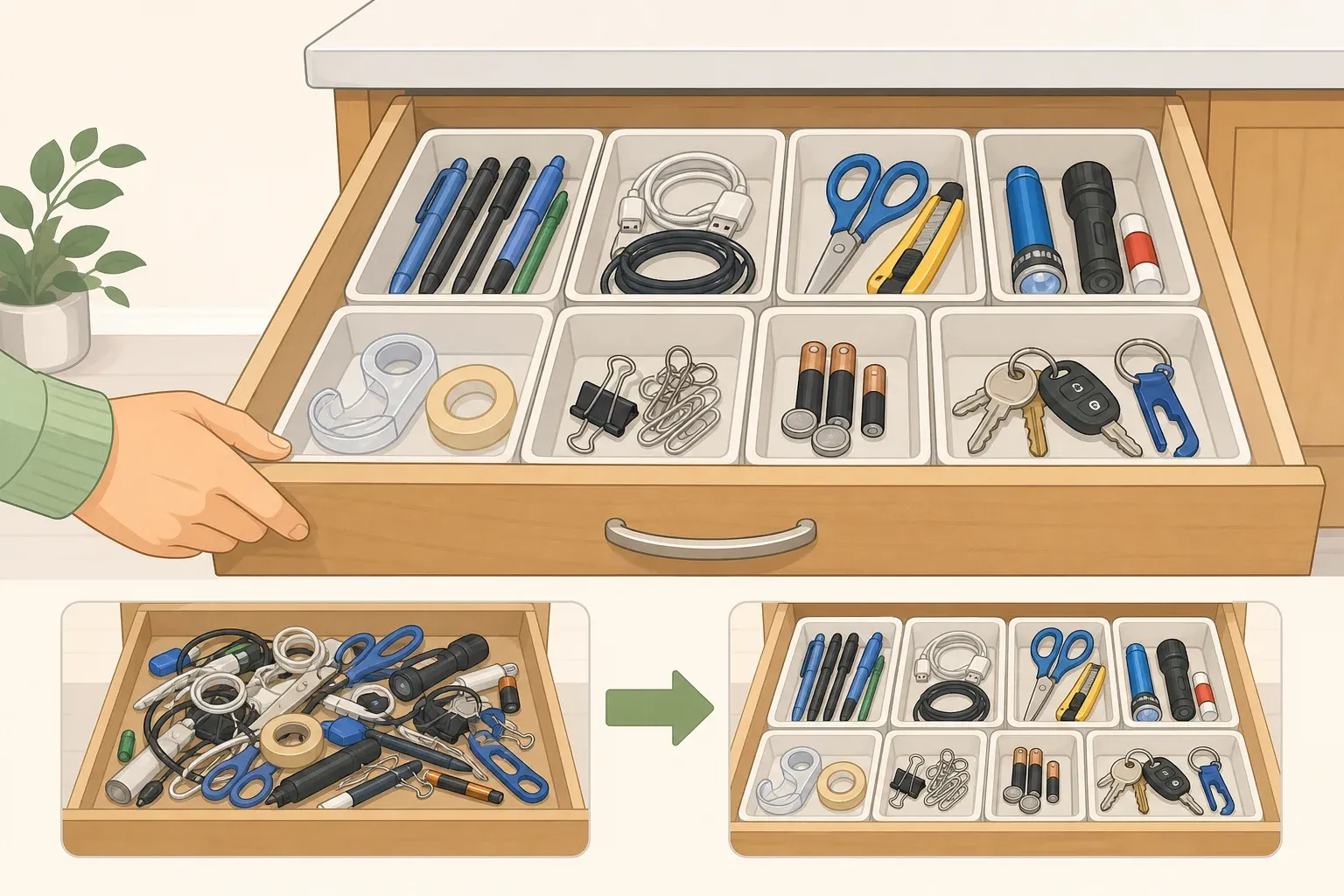
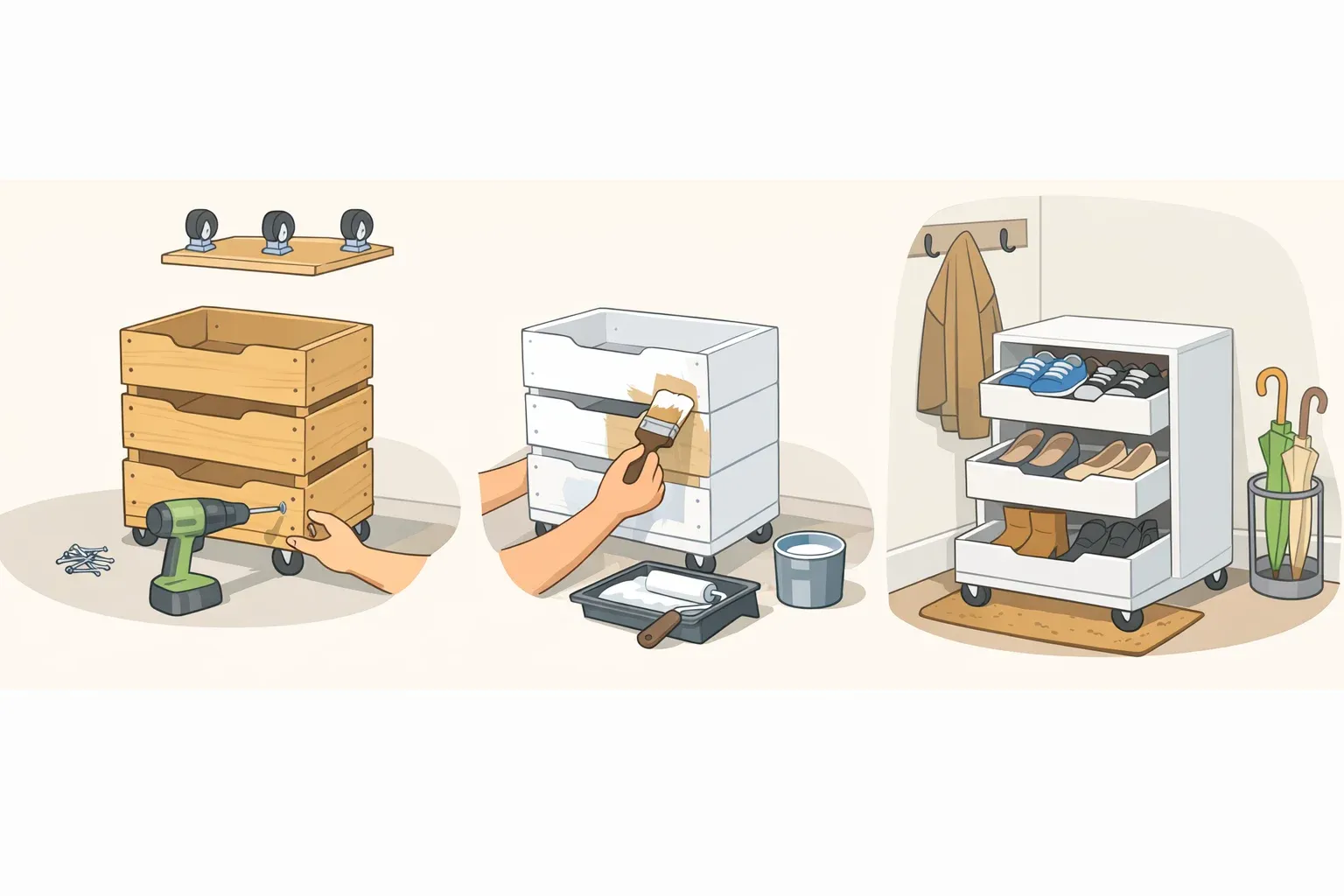
Practical one-action storage: a hook near the door for bags and keys, an open-top tray on the kitchen counter for daily mail and miscellaneous items, a basket at the foot of the stairs for things heading up. Witherell advises assigning homes based on where rooms are actually used, not how they're theoretically supposed to function. A drop zone near the front entrance catches what would otherwise land on the nearest flat surface.
Skip this step and the next pile will form in the same place for the same reason.
To make it concrete: after sorting that kitchen-counter pile, the mail gets a small open tray on the counter, the charger gets a hook or drawer near the outlet it uses, the receipt goes to trash or a labeled bill folder, the sentimental item gets a designated holding shelf. The counter is clear. Nothing required a complex system to get there.
How to prevent doom piles: the maintenance habit
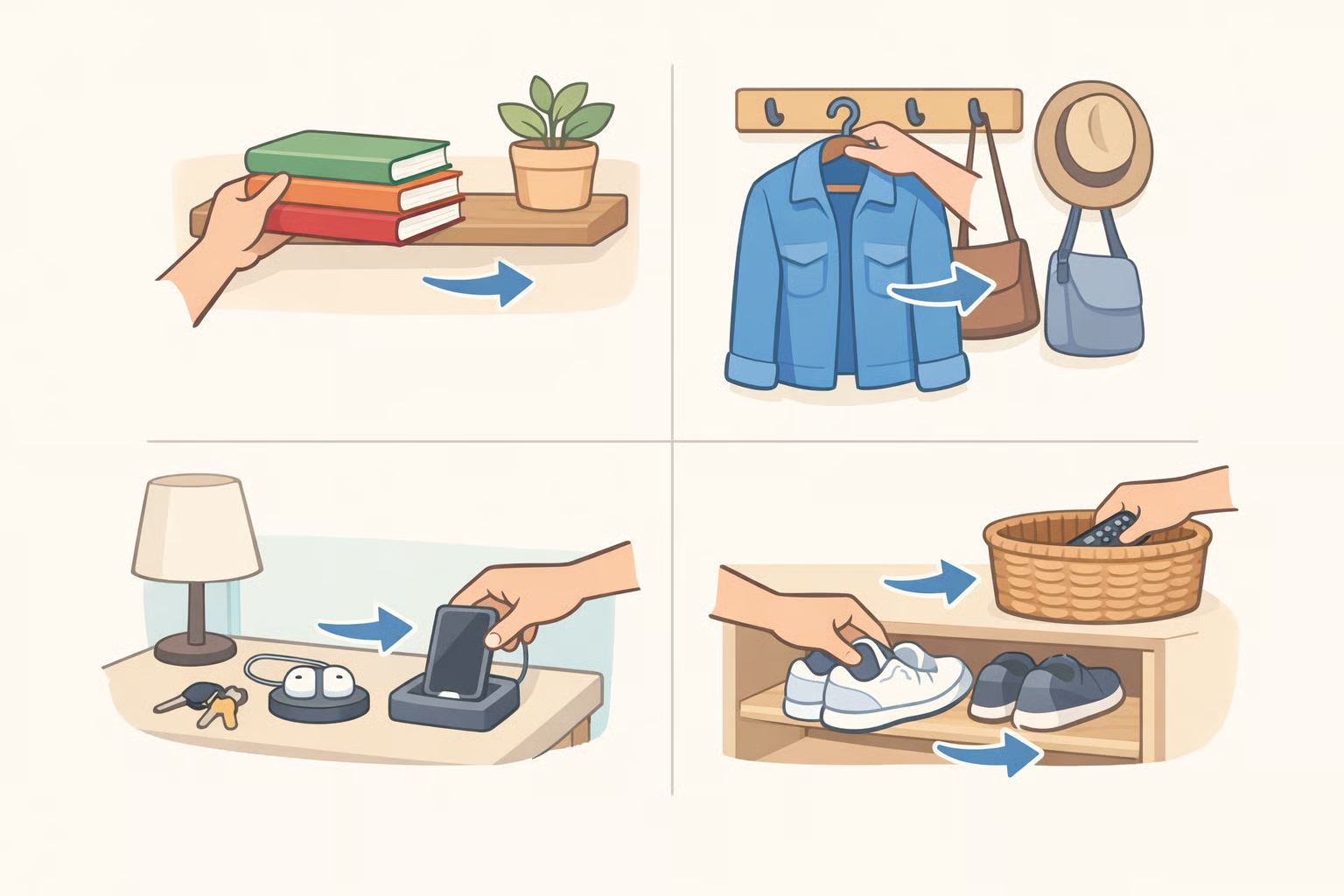
A short reset once or twice daily, returning items to the tray, hook, drawer, or basket already set up, keeps accumulation from restarting. This works because the drop zones from Step 5 already exist. The reset is mostly moving items one stop closer to home, not making decisions under pressure.
Witherell's standard is worth holding onto: a flexible system, one you can use on your worst day, is worth more than a perfect one that only works when conditions are ideal, Good Housekeeping reported. The goal is better, not perfect.
Summers frames the broader point directly: doom piles signal an overloaded person whose organizing system couldn't absorb the pressure. The fix is a more resilient system, not more discipline.
When a doom pile is something more serious
A doom pile and hoarding disorder are not the same thing, and treating them as interchangeable does a disservice to both.
The practical threshold for concern: clutter that prevents a kitchen from being used for cooking, a bed from being used for sleeping, or that creates hygiene and safety problems is no longer a clutter organization issue. At that point, it warrants professional support. According to Stanford Medicine, precarious accumulations can block fire exits, attract pests, and collapse on occupants and first responders.
Hoarding disorder involves persistent, distressing difficulty discarding possessions that impairs relationships, daily functioning, and physical safety, per Stanford Medicine. It was only added to the DSM-5 as a formal diagnosis in 2013 and affects an estimated 19 million Americans. Cognitive behavioral therapy is the current standard of care, and effective treatment can take a year or more, according to Kansas State University.
A doom pile is a systems problem that a clutter sprint can address. Hoarding disorder is a clinical condition for which a clutter sprint is not the answer.
The work shifts from recovery to maintenance
Once the pile is cleared and drop zones are in place, the daily reset replaces the clutter sprint entirely. That's the real payoff: swapping an occasional hour of rescue work for five minutes of routine. Ferrari's research is a useful reminder that even incremental clutter reduction tracks with measurable gains in life satisfaction, the APA reported last year.
The pile that made this necessary was the product of a missing system. Now there's one. Use it on the hard days, and the hard days get easier to manage.



Comments
Be the first, drop a comment!