



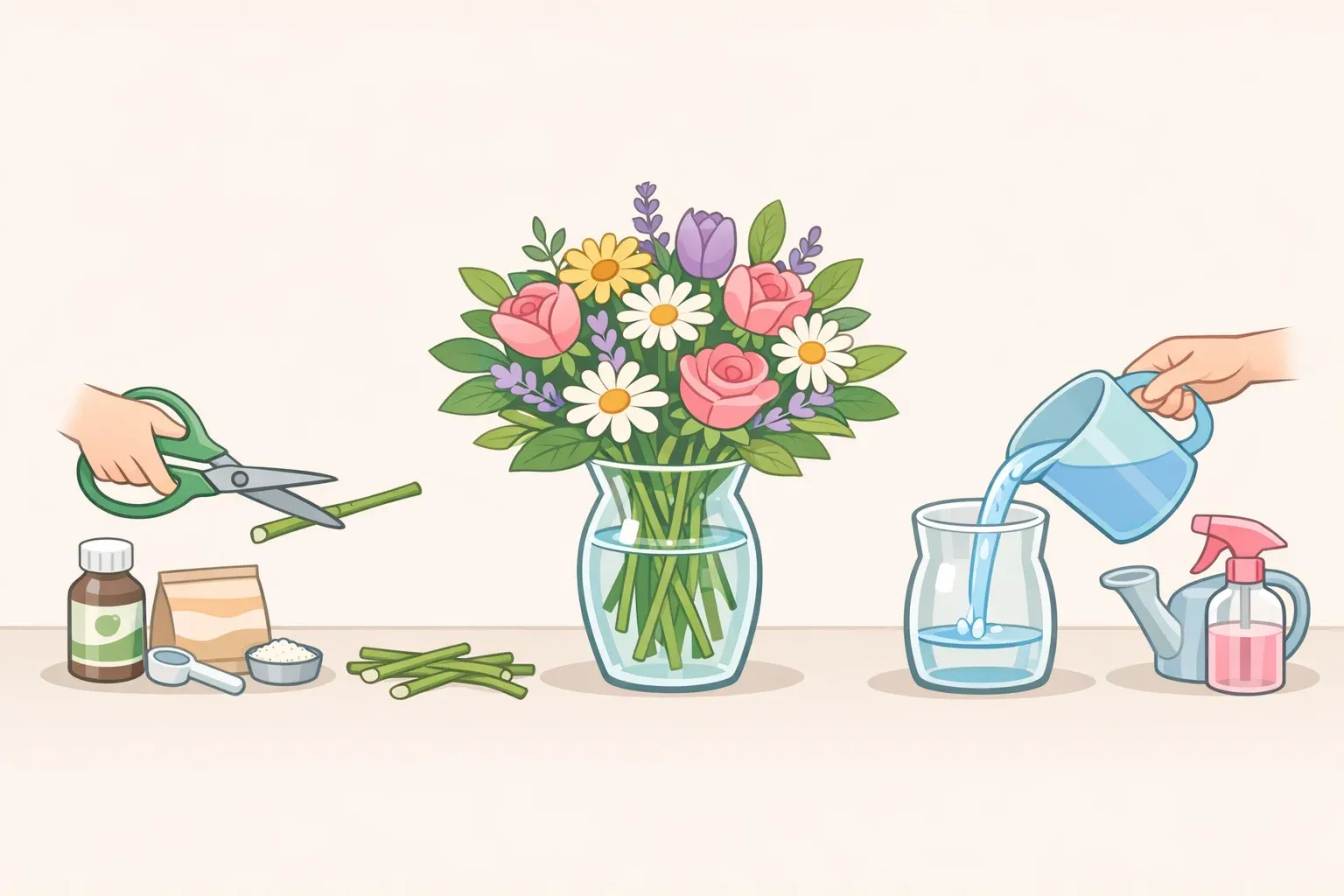
How to make cut flowers last longer: 5 practical steps
A fresh bouquet shouldn't need to be thrown out after three days. With the right care, hardy varieties like carnations and chrysanthemums can last 10–14 days; mixed arrangements typically land closer to a week, per florist guidance from Mississippi State Extension. That gap between a bouquet that lasts and one that collapses comes down to a handful of habits and understanding why makes the habits easier to follow.
Here's how to make cut flowers last longer, starting with the underlying biology: once a stem is cut, the flower keeps metabolizing, transpiring and burning stored sugars, but has no roots to replenish what it's losing. Most home-care failures trace back to two problems: stems that can no longer absorb water (blocked by bacteria or air entering the vascular tissue) and conditions that accelerate aging. Fix those two things and the rest follows (Illinois Extension).
A quick note on scope: this guide is primarily written for cut flowers from a store, market, or received as a gift. Garden growers will find the same principles apply, with a few specific steps called out where the process differs.
What you'll need:
- A vase washed with hot, soapy water
- Sharp scissors, a knife, or bypass pruners
- Commercial flower food packet (strongly preferred; DIY options discussed in Step 3)
- Cool, clean water
The highest-impact habits, in order:
- Clean vase, every time
- Angled stem recut before arranging and at every water change
- Leaves stripped below the waterline
- Commercial flower food at correct dilution
- Cool placement, away from fruit and direct sun
The steps below explain how to execute each one and what goes wrong when you skip them.
Step 1: Start with the freshest stems you can find
Good care only extends what's already there. A stressed or aging flower has a lower ceiling no matter what you do afterward.
At the store or market:
-
Check stems and blooms before buying. Look for firm stems with no sliminess, and blooms that are upright with no drooping, soft buds, or discolored petals. The seller should be keeping them in fresh water, not dry buckets. Avoid anything showing gray fuzzy mold on petals, which signals a fungal problem that spreads quickly (NC State Extension; Illinois Extension).
-
Buy flowers that are just beginning to open. For roses and other single flowers, look for only one petal unfurled. Gladiolus should have just the first two or three blooms open; sunflowers should still have a greenish center. These have more vase life ahead of them than a fully open bouquet (NC State Extension).
-
Set realistic expectations by species. Carnations and chrysanthemums routinely last two weeks with good care. Roses and gerbera daisies typically top out under a week regardless of technique (Illinois Extension). Good care extends vase life within a flower's normal range; it doesn't override biology.
If cutting from the garden:
-
Cut in early morning or evening, when plants are most hydrated. Take a container of lukewarm water (around 100–110°F) and put stems in immediately letting stems dry out even briefly can allow air to enter the vascular tissue and block uptake later (Iowa State Extension; Illinois Extension). Before cutting, keep stems off the ground and wash off any rain-splashed soil (Illinois Extension).
-
Use sharp, clean tools. Scissors tend to compress stem tissue and partially close the water-conducting vessels. A sharp knife or bypass pruner makes a clean cut that stays open (Iowa State Extension; NC State Extension). Cut longer than you think you need; trimming down is easy, adding back is not.
Step 2: How to keep fresh cut flowers alive longer starts with clean prep
This is where most bouquets are shortened before they ever go on display. Three mistakes account for the majority of early failures: a dirty vase, a flat stem cut, and leaves left in the water.
-
Wash the vase with hot, soapy water. Residual bacteria from a previous arrangement colonize fresh water within hours. A quick rinse isn't enough scrub it (Illinois Extension; Purdue Extension).
-
Recut every stem at a 45-degree angle, removing at least half an inch to one inch. The angled cut increases exposed surface area for water uptake and prevents the flat base from sealing against the vase bottom. It's the recommendation that shows up in every extension guide on the subject (Illinois Extension; Purdue Extension; NC State Extension; Mississippi State Extension).
Watch out: If a stem is exposed to air after cutting, an air bubble can enter the vascular tissue and block or sharply reduce water uptake (Illinois Extension). Cut and transfer to water immediately. For maximum protection, one source recommends cutting underwater in a bowl to eliminate any air exposure (Illinois Extension), though cutting quickly and moving straight to the vase achieves the same result for most home arrangements.
-
Strip any leaves that will sit below the waterline. Submerged foliage rots within a day or two, feeding bacterial growth that clogs stems and clouds the water. Pull them cleanly; tearing creates small wounds that become additional entry points for bacteria and increase moisture loss (Illinois Extension; Mississippi State Extension).
-
Fill the vase close to the top with cool water and condition flowers before displaying. A full vase ensures stem ends stay submerged as water evaporates between changes (Illinois Extension). Before putting the finished arrangement on display, let freshly cut stems sit in a cool, dark space for one to two hours. This conditioning period lets stems fully hydrate before they're moved to a warm room (NC State Extension).
Daffodil exception: If the arrangement includes daffodils, condition them separately for 12–24 hours before combining with other flowers. Daffodil sap contains alkaloids and polysaccharides that can cut the vase life of nearby flowers by up to half (Illinois Extension). After conditioning, transfer them directly to the mixed vase without recutting the stems.
Step 3: Use flower food and know what doesn't work
The small packet of white powder that comes with a store bouquet is worth using. The folk remedies circulating online mostly are not.
-
Use the flower food packet, following the dilution instructions exactly. Commercial preservatives contain three components working together: a carbohydrate to fuel the bloom, citric acid to lower pH (which slows bacterial growth), and a biocide to kill bacteria directly. Too concentrated or too dilute, and the balance breaks down (Illinois Extension; Purdue Extension).
-
If you don't have a packet, a DIY mix offers partial benefit treat it as a fallback, not an equivalent. Extension guidance is consistent that commercial preservative outperforms homemade options (NC State Extension). One working substitute: 3 parts cool water to 1 part lemon-lime soda, which provides sugar and mild acidification (Illinois Extension). For bacterial control, Illinois Extension recommends adding 1 tablespoon of bleach per gallon of water (Illinois Extension); NC State puts the figure at 1 teaspoon per gallon, noting that too much bleach damages plant cells (NC State Extension). Start at the lower end and err on the side of less.
Skip these entirely: Extension guidance does not support aspirin as an effective floral preservative. Pennies once contained copper, which is a mild fungicide, but modern U.S. pennies are primarily zinc and provide no useful benefit (Iowa State Extension; NC State Extension).
Step 4: Place the bouquet in the right spot
Where flowers sit in a room can shorten vase life noticeably. A few common placements cause early decline without the flowers showing any obvious sign of why.
-
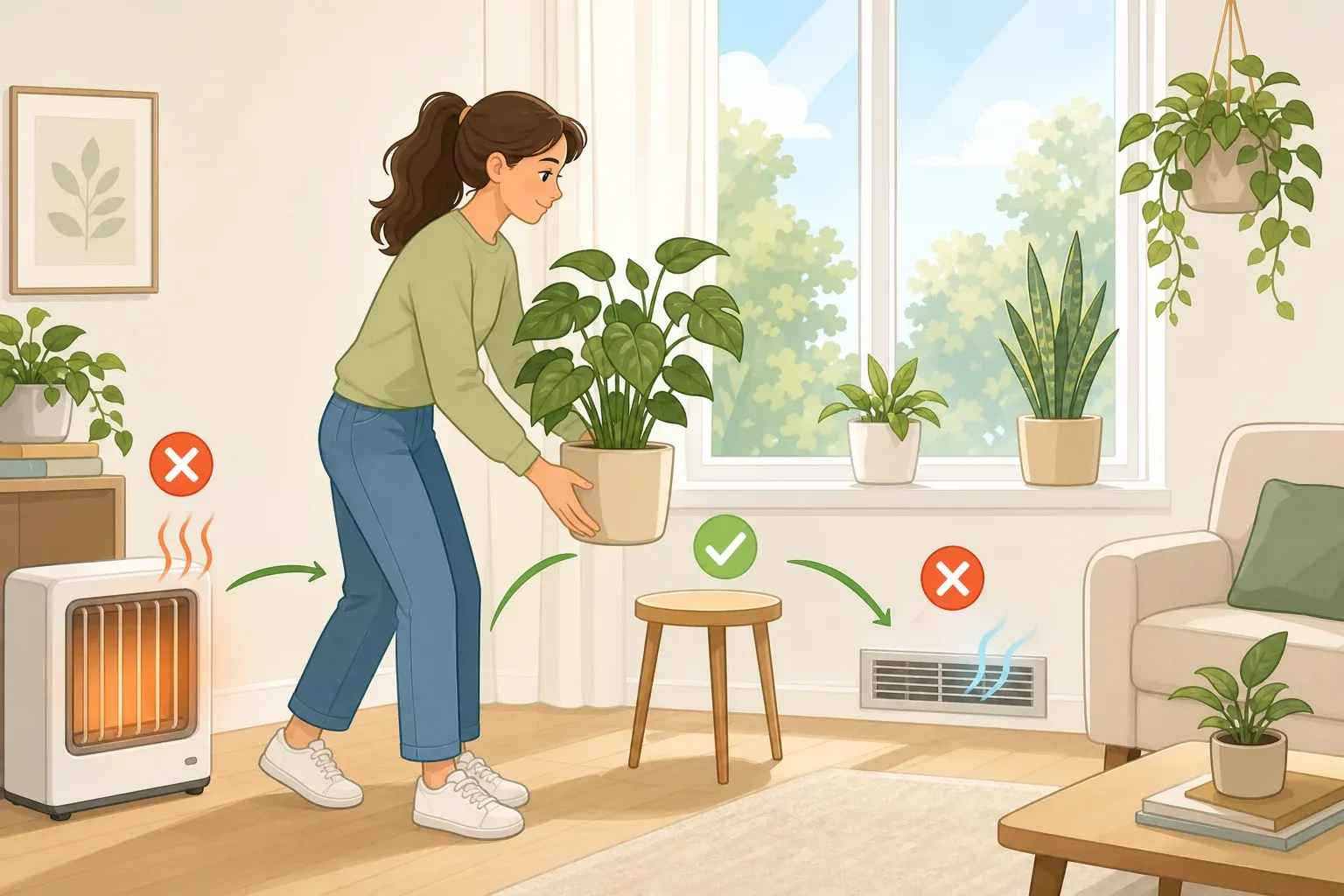
Choose a cool spot out of direct sunlight. Heat accelerates metabolism, which is exactly what you're trying to slow once stems are cut. Direct sun dehydrates blooms and speeds senescence. A bright spot without direct rays is ideal (Purdue Extension; Illinois Extension).
-
Keep flowers away from the fruit bowl and from ripening produce of any kind. Ethylene is an odorless, colorless gas released by aging fruit, ripening vegetables, and even cigarette smoke. It accelerates senescence and petal drop in many cut flowers (Mississippi State Extension; Illinois Extension). A bowl of bananas on the counter isn't an obvious threat, but it is a real one.
-
Avoid drafts, heating vents, and air conditioning vents. Moving air increases the rate at which flowers lose moisture, drying blooms faster than they can absorb replacement water (NC State Extension).
On refrigeration: Florists store most cut flowers just above freezing around 33–38°F because cold genuinely slows metabolism and extends vase life (Mississippi State Extension). Overnight cooling is a reasonable option for home arrangements, but never refrigerate flowers alongside fruits or vegetables, which release ethylene (Iowa State Extension). One important exception: tropical flowers like anthuriums and bird of paradise can suffer cold damage below roughly 50°F and should stay at room temperature (Mississippi State Extension).
Step 5: Maintain the vase every few days
The first four steps set the bouquet up well. This one keeps it going. Simple routine; the only requirement is following through.
-
Top off the water level daily. Flowers drink more than most people expect, and a stem end that dries out can start sealing. Check the vase each day and refill as needed (NC State Extension).
-
Do a full water change every two to three days, or immediately if the water clouds. Cloudy water signals heavy bacterial load. Rinse the vase, refill with fresh solution (flower food or DIY mix), and recut the stems at a 45-degree angle before returning them to the vase (Illinois Extension; Purdue Extension).
-
Remove spent flowers and yellowing leaves daily. Dying material produces ethylene and feeds bacteria, both of which accelerate decline in the remaining blooms (Purdue Extension; Illinois Extension). As the bouquet thins out, consolidate surviving flowers into a smaller vase rather than leaving them in one that's mostly empty.
Quick troubleshooting:
- Water turns cloudy quickly bacteria. Change water, scrub vase, recut stems.
- Flowers drooping despite being in water likely a blocked stem. Recut an inch off the bottom at a sharp angle and rehydrate.
- Rapid petal drop check for ethylene sources nearby (fruit bowl, ripening produce) or a heat or draft source.
- Flowers opened and faded within a day or two likely past peak at purchase or harvest. See Step 1 on selecting partially open blooms.
What to expect
There isn't a single trick here. Long vase life comes from stacking small advantages: clean water, open stems, less bacteria, less heat, less ethylene. Miss one and the bouquet may still look fine for a day. Miss several and it collapses early.
With consistent care, hardy varieties can realistically reach 10–14 days (NC State Extension). Most mixed arrangements, measured against what florists consider optimal vase life, should aim for around seven days (Mississippi State Extension). Delicate varieties like roses and gerbera daisies will still fade faster that's normal but they'll reach the end of their natural range rather than falling well short of it.
For garden growers, the next layer worth learning is species-specific harvest timing. Zinnias and dahlias should be fully open at cutting; sunflowers, gladiolus, and peonies are better harvested while still opening (Illinois Extension). That timing affects vase life as much as anything that happens afterward.

Comments
Be the first, drop a comment!