



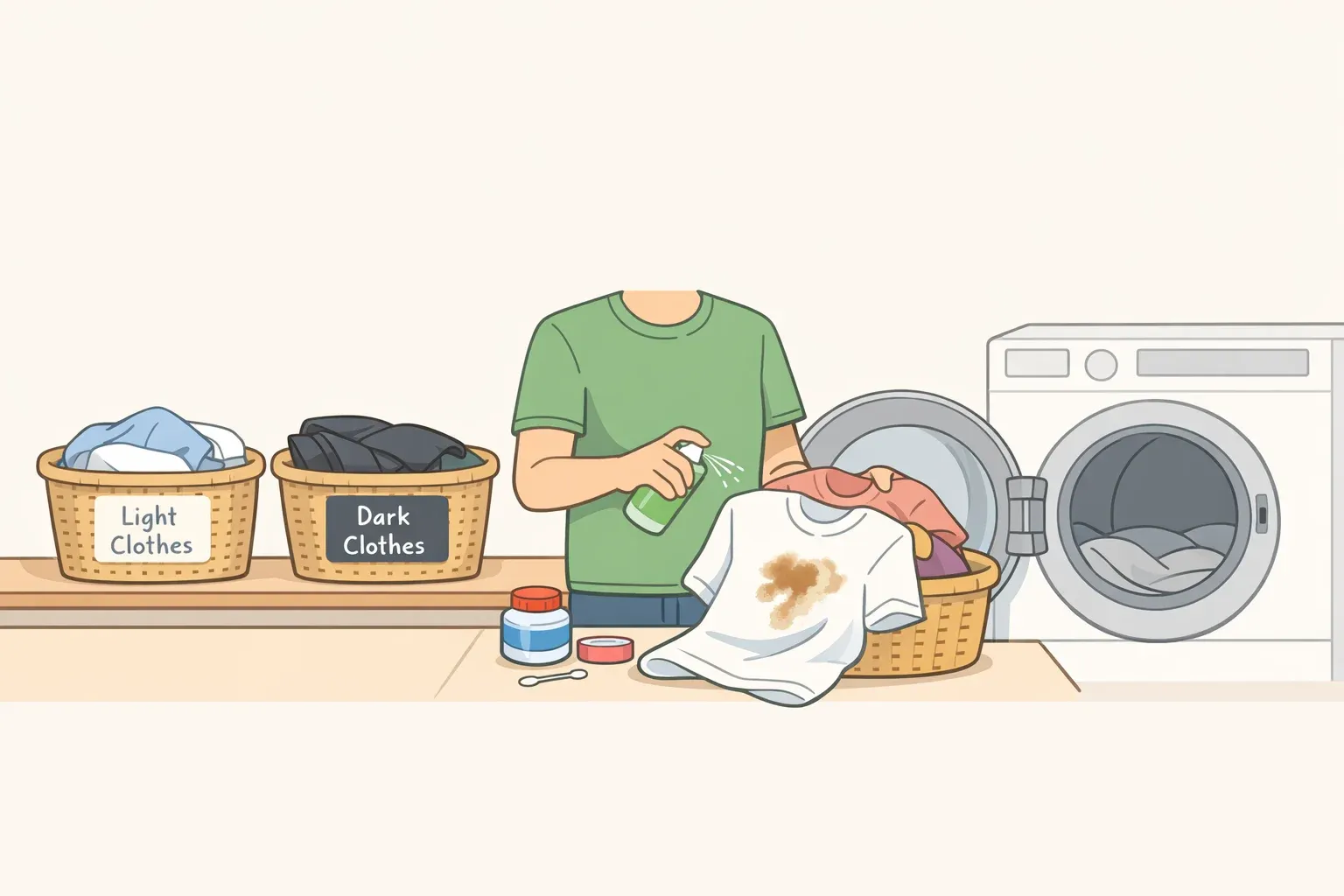
Laundry Hacks Cleaning Pros Use: Sort, Pre-Treat, Dry Right
Most laundry problems don't happen inside the machine. They happen before you load it and after you pull clothes out of the dryer. Get those two phases right, and the wash cycle mostly takes care of itself.
These laundry hacks come from two sources worth trusting: Carolyn Forté, executive director of the Good Housekeeping Institute's Home Care & Cleaning Lab, and Patric Richardson, author of Laundry Love and a laundry expert with pointed views on why clothes degrade faster than they should (Good Housekeeping). Both make the same point: consistency and process beat products every time.
Hotel housekeeping operations run on the same logic. Processing hundreds of sheets and towels daily, they depend on a tightly managed collect-sort-wash-dry-redistribute workflow where any weak link creates a backlog that ripples through the entire operation (JLA). The scale is different at home. The logic isn't.
This guide covers three steps: sort before laundry day, pre-treat stains the moment you spot them, and stop overdrying. A setup section at the end adapts all three to your household type.
Step 1: Sort when you undress, not when you load
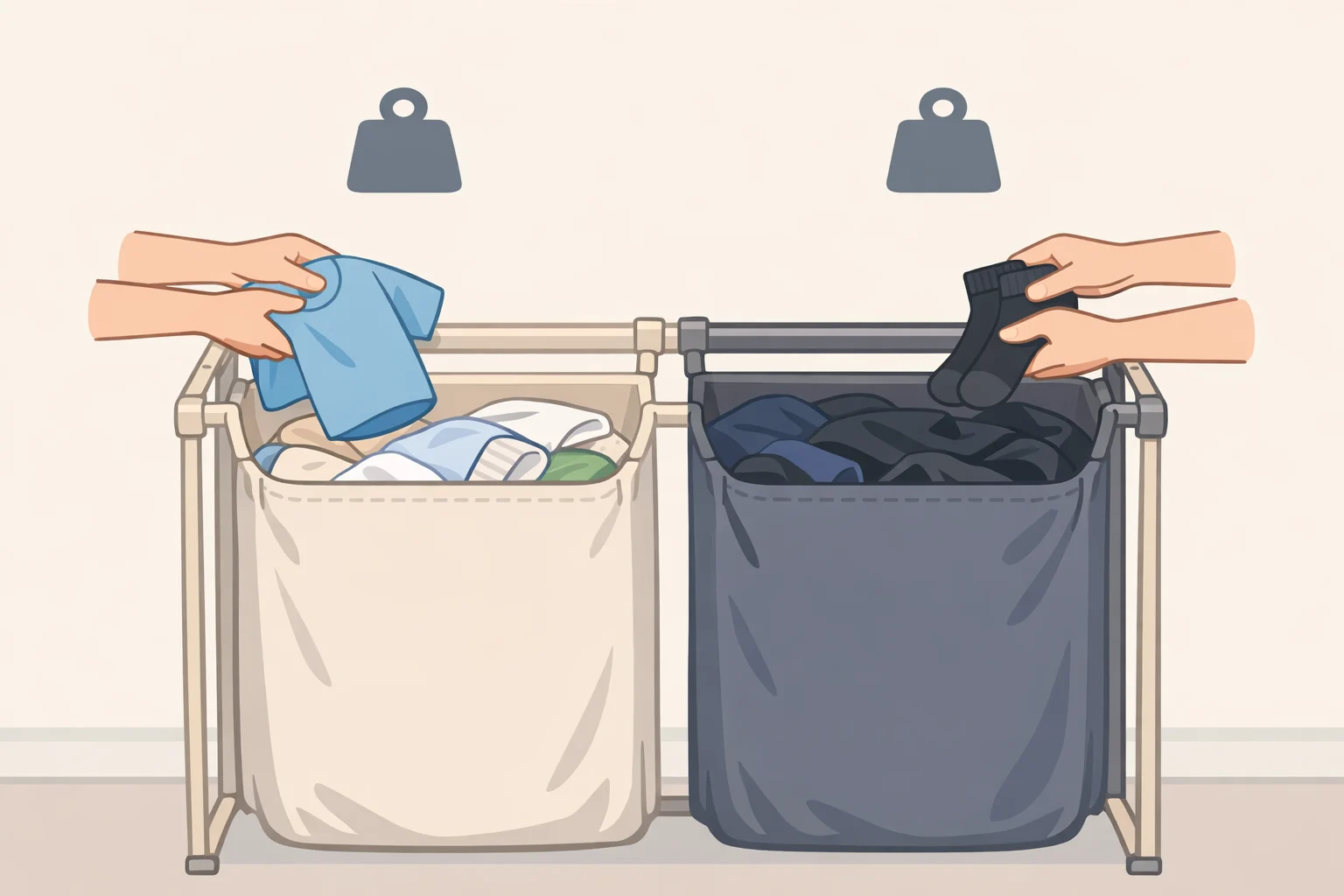
Sorting at the machine is a tax you pay on laundry day that you don't have to. You're standing in front of a mixed pile, pulling items apart, moving fast enough that stains slip past unnoticed. Forté's fix is a two-compartment bin in every bedroom so family members separate lights from darks as they undress (Good Housekeeping). Sorting happens in seconds at the hamper. On laundry day, you're loading a pre-sorted pile.
Hotel housekeeping staff follow strict segregation protocols, keeping soiled and fresh linens on separate routes with no overlap. Before anything goes into a washer, each item is sorted by fabric type and checked for stains or heavy soiling (JLA). The household equivalent isn't a laundry room overhaul. It's a double hamper.
Sort by weight as well as color. Richardson recommends grouping like items together when drying all shirts, all denim, all towels since items of similar weight dry at the same rate (Real Simple). Separate by weight at the hamper, and those groupings carry straight through to the dryer without any extra work.
Small-item control: Keep a bowl of sock clips next to the hamper so pairs enter the wash clipped together and come out matched. Forté also recommends mesh laundry bags for belts, delicates, and anything that tangles in a mixed load (Good Housekeeping). Low cost, real payoff.
Sorting at the hamper also gives you a second look at each item before it disappears into a pile. That matters for stain detection, which is the next step's entire premise.
Step 2: Treat when you spot, load to the line
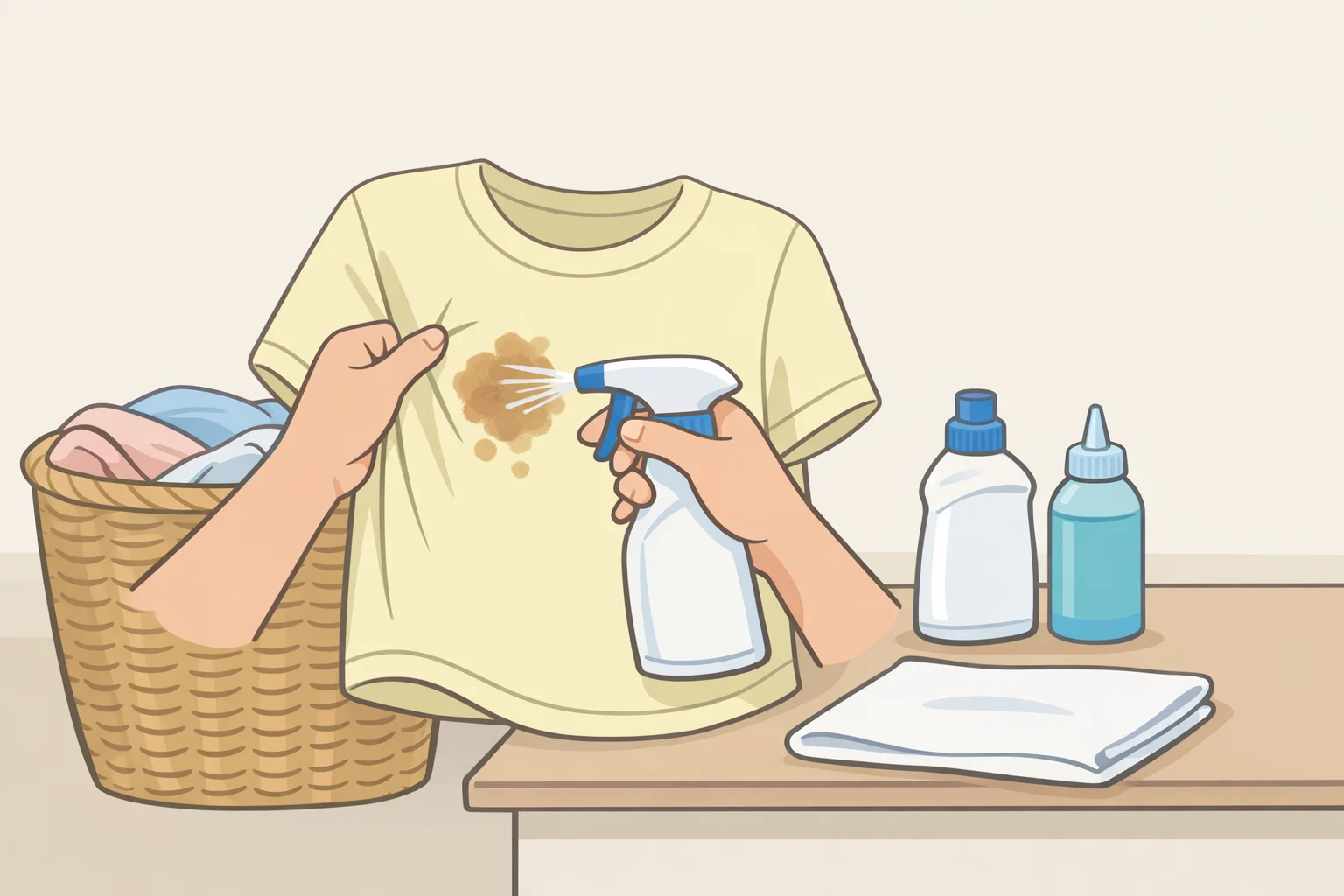
Pre-treating: the timing is the method
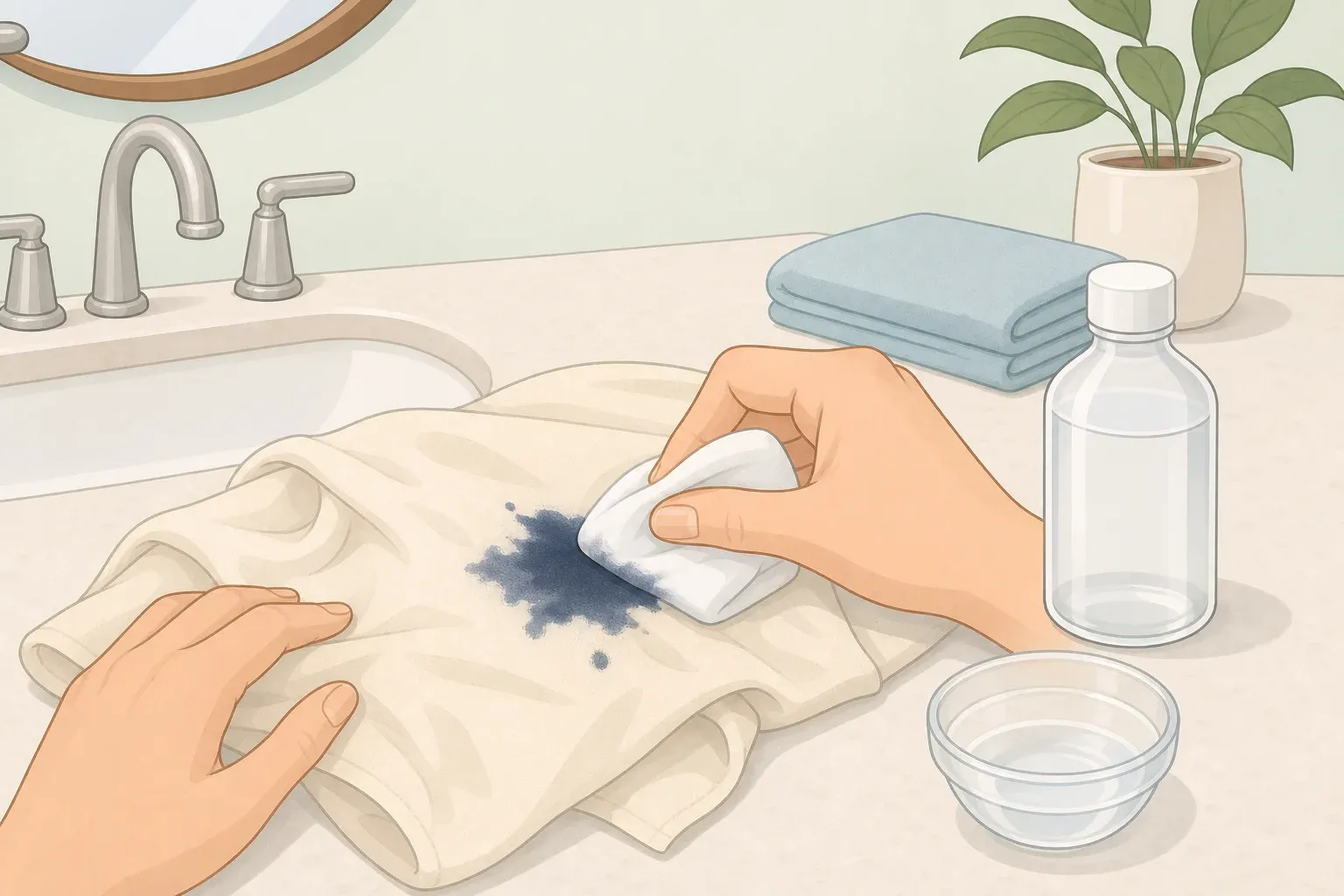
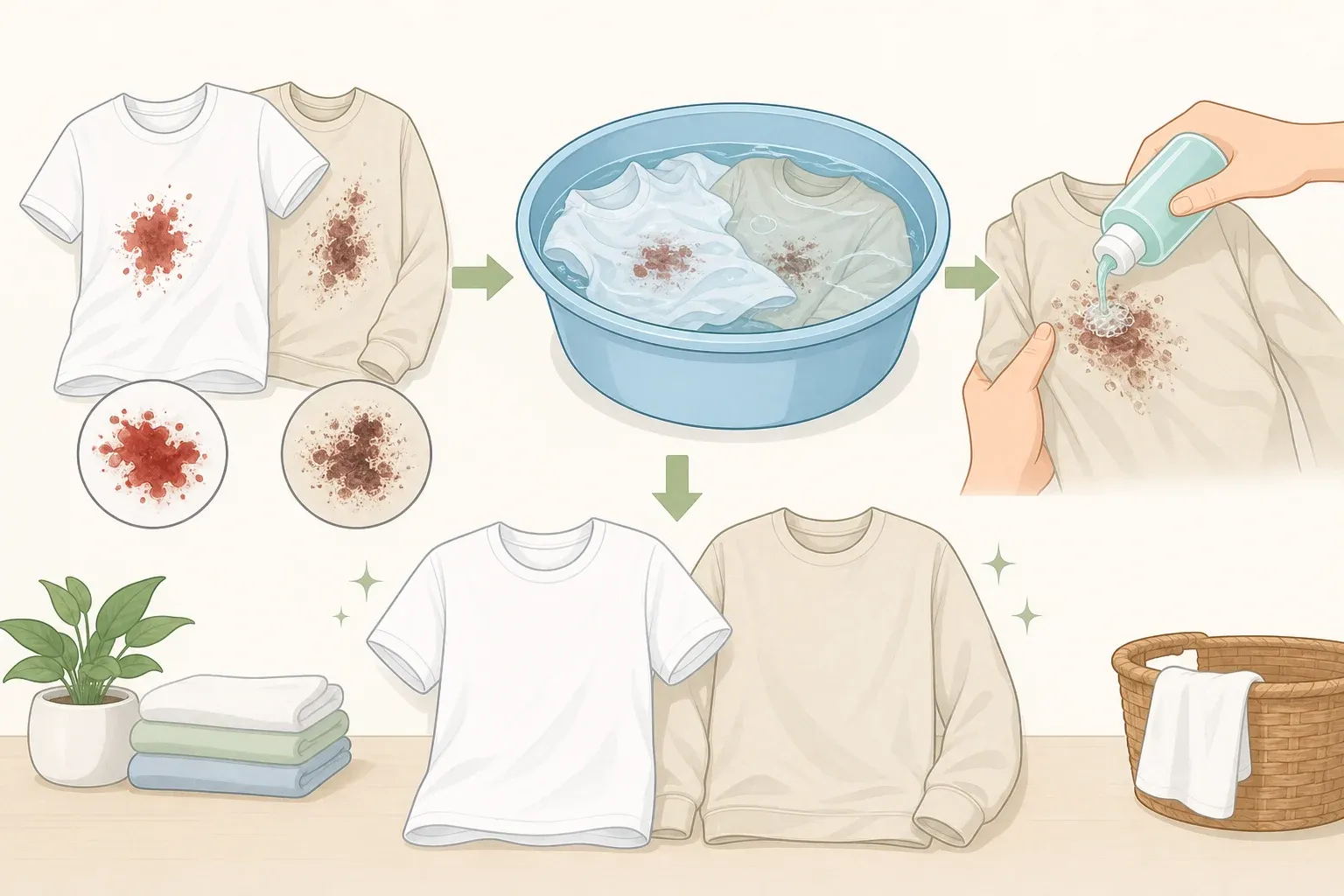
Hotel laundry staff inspect every item for stains before it goes into the machine. Stubborn marks get pre-treated with a stain-removing product before the standard wash cycle runs (JLA). That sequencing matters. Washing an untreated stain doesn't remove it it sets it. Always check after washing and before drying, because heat can make any remaining stain significantly harder to remove.
The household version is straightforward. Forté recommends a pre-treater that can sit safely on fabric for up to a week before washing (Good Housekeeping). Treat on Tuesday, wash on Saturday the product does the work in between. Keep the pre-treater near the hamper, not the washer. The right moment to apply it is when you notice the stain, not when you remember to look.
Loading and dosing: match the machine to the load
Large hotels pre-weigh loads to fill washers to their correct weight capacity, then use autodosing systems that dispense detergent by weight and fabric type, eliminating waste and ensuring consistent results (JLA). The household equivalent isn't a scale. It's two habits: don't overload the drum, and measure detergent against actual load size rather than using the cap as a scoop.
Forté notes that washers with bulk-dispensing reservoirs handle measurement automatically fill the reservoir once, and the machine doses correctly for each load (Good Housekeeping). If your machine doesn't have that feature, go by the label guidance for your actual load size rather than defaulting to a full cap. An overloaded drum agitates poorly. Excess detergent doesn't rinse out cleanly either, leaving residue that attracts more soil over time.
Step 3: Stop drying everything together and stop running the cycle too long
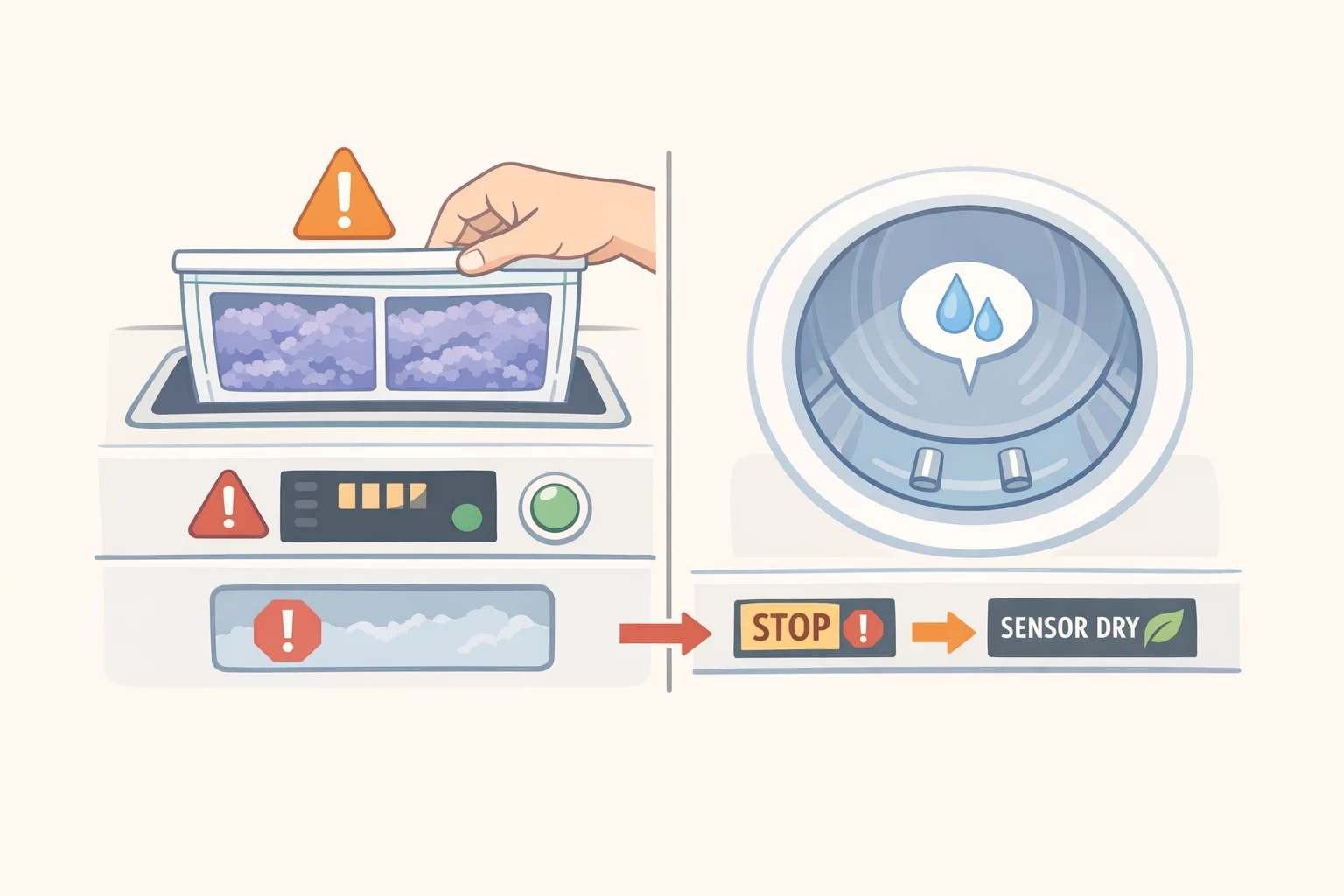
This is where the most preventable damage happens, and where most people have the clearest room to improve right now.
Richardson calls overdrying one of the biggest mistakes in home laundry (Real Simple). Check your lint trap: that accumulation is fiber lost permanently from your clothes. Cotton is twice as strong wet as it is dry, so once all the moisture has been expelled, fabric abrades against itself with every additional tumble, breaking down into thinner, duller, static-prone versions of what you bought (Real Simple). Richardson puts it plainly: "It's literally your clothes breaking down and dying."
Hotel dryers use built-in moisture sensors that stop cycles automatically once items reach the correct dryness level (JLA). No cycle runs past done. Richardson sets the same standard for home use: the goal is 100% dry, not any point beyond that (Real Simple).
Signs you're overdrying: A consistently full lint trap, static cling, fading colors, fabrics that feel thinner or rougher than they used to. These aren't aging. They're dryer damage you can stop.
How to fix it, in order:
-
Switch to medium heat. Richardson dries everything on medium, across the board. High heat dries edges faster than centers; medium heat dries more evenly and reduces scorching risk on lightweight fabrics (Real Simple). It may add a few minutes to the cycle. That's the right trade.
-
Use sensor-dry if your machine has it. This mirrors exactly what hotel dryers do. The cycle stops when moisture reaches the correct level, with no input from you.
-
If using timed cycles, shorten them incrementally. Richardson's method: reduce your usual cycle by five minutes and check the load. If everything is already dry, go five minutes shorter next time. When clothes come out just slightly damp, you've found your stopping point then stop five minutes before that (Real Simple).
-
Pull at 80% dry and hang-finish. Stop when items still feel slightly damp and hang them the rest of the way. They air-dry quickly and come out without the static that overdrying creates (Real Simple).
-
Never mix heavy and light items. By the time jeans or towels are dry, the t-shirts and lightweight synthetics in the same load are already overdried. Forté is direct: "Heavy things take longer, and by the time they are done, the lightweight items will be overdried" (Good Housekeeping). Because you sorted by weight at the hamper in Step 1, this costs you nothing extra.
One seasonal note: in winter, lower indoor humidity means clothes release moisture faster. Richardson recommends shortening dry times in cold months and suggests hang-drying synthetics indoors, which doubles as a free humidifier (Real Simple).
Laundry room hacks that make the system stick
The three steps above require modest upfront investment: a double hamper, a bottle of pre-treater, mesh bags, sock clips. The ongoing cost is zero. But they only become a system if the setup makes correct behavior the easy behavior, for everyone in the household.
Forté recommends spreading laundry across the week rather than compressing it into one session, freeing up weekend time and preventing the backlog that forces bad decisions like cramming a mixed load into an overloaded drum (Good Housekeeping). What the physical setup looks like varies by household:
-
Solo adult or couple: One double hamper positioned where you actually undress, not in a separate laundry room you have to walk to. Pre-treater on the shelf directly above it, within arm's reach. Enable sensor-dry on the dryer if available. Run a load on a weeknight rather than saving everything for Saturday. The whole point is removing the decision treated stains, sorted clothes, no Sunday scramble.
-
Family with kids: Double bins in each bedroom, labeled or color-coded for younger children. The hamper does the sorting; whoever picks it up just carries the bin. Sock clips in a bowl on top of each bin. Pre-treater lives at the hamper, not the machine, so stains get caught at the source instead of getting noticed after the dryer runs.
-
Apartment or shared laundry: Mesh bags and sock clips matter more here, since loads need to be organized before leaving the apartment. Set up a small pre-treat station near the door or closet: a spray bottle, a brush, a stain stick. Treat before you bag the load, not after you've hauled it downstairs. That two-second action at the door prevents the most common failure point in shared-laundry situations stains that get washed in because no one checked before heading to the machines.
When replacing appliances, prioritize washers with bulk-dispensing reservoirs, dryers with moisture sensors, and machines that send end-of-cycle phone alerts (Good Housekeeping). These address the three points where most households lose ground: overdosing, overdrying, and wet clothes sitting in the drum. Worth planning for at replacement time, not reasons to buy new machines today.
The four-point framework
The best laundry tips and tricks don't come in a bottle. They're sequenced decisions made before and after the wash cycle.
- Sort when you undress, not when you load. A double hamper handles this automatically and doubles as a stain-catching checkpoint.
- Treat when you spot, not when you wash. A pre-treater that holds for up to a week means there's never a wrong moment to apply it (Good Housekeeping). Check before drying, since heat can make any remaining stain harder to remove.
- Dose to the load, not the cap. Match detergent to actual load size and leave room in the drum.
- Stop drying early. Shorten cycles incrementally by five minutes until clothes come out just at the edge of damp, then stop five minutes before that (Real Simple).
Start tonight: move the pre-treater from the laundry room to the hamper. On the next load, run the dryer five minutes shorter than usual. Those two changes alone will show results before the week is out.







Comments
Be the first, drop a comment!